2026 UCI Road World Championships (Montreal) Routes

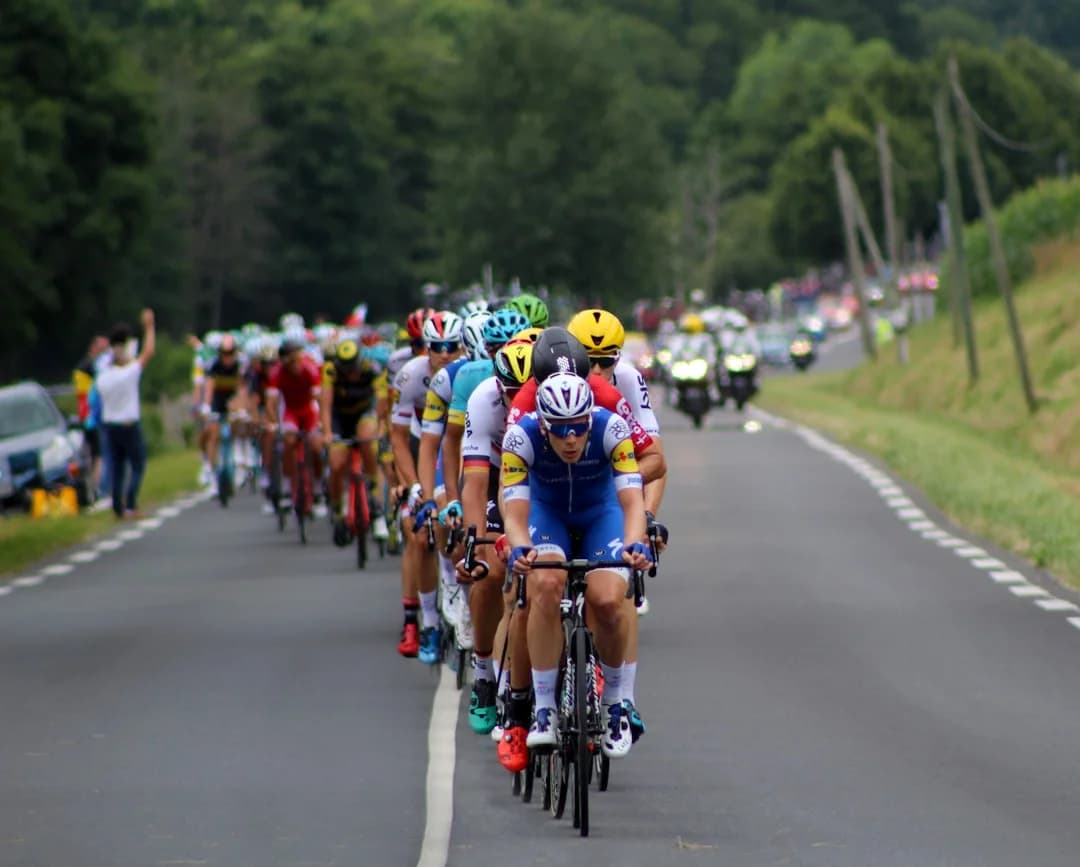
Photo by Rob Wingate on Unsplash
The 2026 UCI Road World Championships (Montreal) are shaping up as a landmark convergence of sport, technology, and regional planning. Set to unfold from September 20 to 27, 2026, in Montréal, Canada, the event will bring top road cyclists from around the world to a metropolitan region that spans Montreal’s urban core and the greater Montérégie corridor. Organizers emphasize a data-driven approach to routing, spectator access, and mobility, aiming to minimize disruption while maximizing global visibility for the city and its cycling ecosystem. The announcement of the official routes and race program occurred on September 26, 2025, during the Kigali-hosted World Championships, signaling a formal handover from the African host to North America and marking the start of Montréal’s countdown to the eight-day festival of cycling. (montreal2026.org)
The routes center on a demanding 13.4-kilometer Mont-Royal circuit that will anchor the road races, complemented by a shared 39.9-kilometer circuit for the time trials that takes riders through Montreal’s urban and waterfront landscapes. The elite road races will begin in the Montérégie region, in Brossard, before traversing seven other municipalities and ultimately converging on the Mont-Royal finishing circuit via the Samuel-De Champlain Bridge. Spectators and participants should expect elevation challenges including the Camillien-Houde climb (2.3 km at an average grade around 6.2%), and a stretch along the Polytechnique that features grades exceeding 11% in places, culminating in a shared finishing stretch on Parc Avenue that will host 13 events across eight days. These details were confirmed in the official route unveiling and outline the event’s dramatic, mixed-terrain profile. (montreal2026.org)
Montréal 2026’s organizers emphasize a legacy focus and a global-stage presentation. The handover ceremony and official route reveal highlighted that the project marks the first time since 1974 that the World Championships have been hosted in Canada, underscoring a renewed commitment to international competition on North American soil. In addition to the eight-day competition window, the event’s broadcast and partner ecosystem are designed to maximize reach, with MyWhoosh, the free indoor cycling platform, offering a test run of the Mont-Royal circuit well ahead of the live action. This integration of technology and sport illustrates how data-driven planning informs not just race design but fan engagement and training accessibility years in advance. (montreal2026.org)
Opening Paragraphs: Context and Immediate Impact
The Montreal region’s preparation for the 2026 UCI Road World Championships is being framed as a catalyst for urban mobility innovation, tourism development, and international branding. The official dates — September 20–27, 2026 — anchor a schedule that will feature elite men and women road races, time trials, and potentially ancillary events that leverage the same routes used for competition. The announcement solidified Montréal’s position as a global hub for cycling and sports tourism, aligning with ongoing mobility and infrastructure efforts across the metropolitan area. This event will also test the capacity of a North American city to run a multi-discipline, multi-stage global championship with high demands on logistics, safety, and digital engagement. (mtl.org)
From a technology and market-trends standpoint, the championship is positioned as a living laboratory for data-driven city planning. The Mont-Royal circuit is not only a sporting feature but a testbed for course analytics, crowd management, and mobility optimization in real time. Organizers emphasize that the route design accounts for major arterial corridors, transit access, and spectator viewing options, with a finishing stretch that can support a robust world-feed and digital engagement. The involvement of major partners and sponsors is expected to populate the event’s ecosystem with digital engagement tools, real-time analytics, and post-event legacy programs that extend beyond September 2026. (montreal2026.org)
Section 1: What Happened
Announcement of routes and date
Official routes unveiled and race window defined
- The local organizing committee disclosed the Montreal 2026 routes on September 26, 2025, in Kigali, Rwanda, during the UCI Road World Championships there, confirming that Montréal would host the event from September 20 to 27, 2026. This handover underscored a seamless transition between hosts while signaling a North American showcase for cycling’s rainbow jersey. The Mont-Royal circuit stands at the heart of the road races, with a 13.4-kilometer format and significant elevation features intended to test riders across a demanding course. In parallel, the time trials will operate on a shared 39.9-kilometer circuit that threads through Montréal’s urban center and waterfront corridors, including the Gilles-Villeneuve circuit and Parc Jean-Drapeau before returning to the city core. The official route release also stresses a共 finishing stretch on Parc Avenue shared among all thirteen events scheduled over eight days. (montreal2026.org)
Start points, regional scope, and key climbs
- The elite road races will begin in the Montérégie region, with the initial start line located in Brossard, before a multi-municipality traverse that connects eight jurisdictions en route to the Mont-Royal finale. Specific climbs highlighted in the route include the voie Camillien-Houde (2.3 km at an average grade around 6.2%), as well as steep segments on the Côte de la Polytechnique with ramps surpassing 11%. These topographic features are designed to create decisive moments that can alter race dynamics across the eight race days. The final Mont-Royal circuit is described as the event’s defining challenge and anchors the closing portions of the competition. (montreal2026.org)
Historical and strategic context
- The Montréal 2026 effort is framed as a historic moment for Canada, matching the scale and ambition of the 1974 World Championships held around Mont-Royal—the last time Montreal hosted the event before 2026. The 2025 Kigali handover ceremony reinforced the continuity of World Championship traditions across continents and decades, reinforcing Montréal’s bid and strategic plan as a forward-looking, technology-enabled host. This historical echo shapes not only the on-bike drama but also the city’s long-term legacy strategies around cycling infrastructure, mobility, and tourism. (montreal2026.org)
Timeline and key facts
- Dates: September 20–27, 2026. The eight-day festival will host thirteen events, spread across both elite road races and time trials, with a common finishing stretch designed for optimal broadcast and spectator experience. The road races will be anchored by the Mont-Royal circuit (13.4 km), while the time trials will hinge on a shared 39.9-kilometer route that traverses central Montreal and select venues around Parc Jean-Drapeau and the riverfront. (montreal2026.org)

- Start location and regional footprint: The elite events begin in Brossard (Montérégie) and pass through several municipalities before reaching the Mont-Royal circuit, with the final approach crossing the Samuel-De Champlain Bridge. This routing is intended to maximize regional engagement while maintaining robust safety and transport coordination across the metro area. (montreal2026.org)
- Finishing strategy: A universal finishing stretch along Parc Avenue unites all thirteen events, a design choice intended to deliver a consistent, television-friendly climax and a coherent spectator experience across the eight racing days. (montreal2026.org)
- Accessibility and admission: Organizers have indicated the event will be free-admission, in line with a broader goal of maximizing public engagement and accessibility for residents and visitors alike. (montreal2026.org)
Partnerships and funding context
- Government and corporate support: The Government of Canada announced a CA$13 million investment to support hosting the championships, signaling substantial public backing and a clear legacy objective for sport, tourism, and regional development. This funding framework sits alongside provincial and municipal commitments and a growing roster of private-sector partners contributing to operations, volunteers, and legacy initiatives. (newswire.ca)
- Corporate sponsorship and partnership momentum: Recent announcements have highlighted a wave of partnerships that will underpin operations, marketing, and community outreach, including Main Partners like Premier Tech and Beneva. These collaborations are central to the event’s funding model and its capacity to deliver a world-class broadcast product while supporting local cycling ecosystems through legacy programs. (cyclingnews.com)
- Tourism and regional planning alignment: Tourisme Montréal and the Montréal 2026 organizing committee frame the event as a magnet for international visitors and a catalyst for regional mobility improvements, construction of dedicated cycling infrastructure, and a broader cycle-tourism strategy for Québec. This alignment is designed to deliver a measurable uplift in overnight visitation, spend, and media exposure for Montreal and surrounding regions. (mtl.org)
Section 2: Why It Matters
Economic and tourism implications
Direct economic impact and long-term tourism benefits

The 2026 UCI Road World Championships are positioned to generate notable economic activity across Montréal and the wider Quebec corridor, with organizers framing the event as a platform for tourism, hospitality, retail, and media production. The government’s commitment to support the event, combined with private-sector sponsorship, is expected to catalyze hotel occupancy, consignment of local services, and global media coverage. While precise local multipliers vary by model, the government’s engagement signals a recognition that major championships can yield substantial tax revenue value and ancillary spending, both short-term (event week) and longer-term (cycling legacy and brand equity). Canada’s federal government underscored this by detailing a targeted investment package to enable a high-quality host experience. (newswire.ca)
Technological leverage and data-driven governance
The championship’s planning and execution are being guided by data-driven frameworks, which encompass route optimization, mobility planning, and crowd-management analytics. The UCI’s 200-days-to-go look at the courses emphasizes opportunities to test and demonstrate digital tools and platforms that support athlete safety, fan engagement, and broadcast quality. The MyWhoosh partnership illustrates a broader strategic investment in digital readiness, allowing athletes and enthusiasts to virtually engage with Mont-Royal’s final circuit before the live events. This approach aligns with broader trends in major-sport event management where data analytics, simulations, and real-time telemetry are becoming core to competition integrity and audience experience. (montreal2026.org)
Urban mobility, infrastructure, and environmental legacy
Montreal’s approach to hosting the World Championships includes a focus on sustainable transportation, legacy infrastructure, and community impact. The route design leverages existing corridors, aims to minimize road-closure footprint, and integrates with the metropolitan cycling network modernization programs. The event’s legacy commitments reflect a broader trend of “sport as infrastructure” where host cities repurpose event-driven upgrades to benefit residents long after the final rainbow jersey is awarded. These efforts are echoed in the organizing committee’s sustainable development program and legacy documentation. (montreal2026.org)
Who is affected and how
Local communities and neighborhoods
Residents along the route and in adjacent neighborhoods will experience traffic diversions, amplified activity during race days, and enhanced public safety operations. While the exact closures and detours are dynamic during planning, organizers emphasize collaboration with city authorities and contingency planning to keep disruption manageable while maximizing spectator accessibility and safety. This collaborative model mirrors best practices in large-scale cycling events and is designed to build trust with communities through transparent communication and accessible viewing opportunities. (montreal2026.org)
Businesses and service sectors
Businesses in hospitality, food service, and retail stand to benefit from elevated visitor flows during the event window, particularly given Montreal’s existing status as a global tourism hub. The event’s free-admission policy broadens the potential audience, which could support ancillary revenue streams for local operators. Partnerships with sponsors and media brands also provide channels for promotional activity, experiential initiatives, and cross-promotions that extend beyond the race week. (montreal2026.org)
Athletes, teams, and cycling ecosystems
For athletes, teams, and national federations, the Montréal 2026 edition represents a pinnacle in the sport’s calendar and a benchmark for route design that blends classic climbs with urban circuits. The Mont-Royal final circuit is expected to reward smart riders with strong climbing and tactical prowess, while the 39.9-kilometer time-trial circuit provides a contrasting test of speed and endurance in a city-center setting. The event also intersects with Canada’s broader cycling ecosystem, including national championships and WorldTour races that help keep Canadian riders competitive on the world stage. (montreal2026.org)
Broader context in 2026 sporting calendar
North American hosting and competitive landscape

The Montréal 2026 World Championships are part of a wider, evolving calendar in which North American cities seek to host flagship cycling events, building on Canada’s history with Grand Prix Cycliste events and a growing appetite for large-scale sports diplomacy. Analysts may watch how this event intersects with other major races in North America and how it positions the region for future bids. The Kigali 2025 handover and the UCI’s ongoing portfolio of world championships emphasize the global, rotating nature of the brand and its potential economic and reputational returns for host cities. (montreal2026.org)
Sustainability, legacy, and public commitments
Environmental and social stewardship
Montréal 2026’s long-term planning includes explicit commitments to sustainable development and legacy. The organizing team highlights waste management, transportation efficiency, responsible consumption, social inclusion, and the mobilization of partners around initiatives with lasting community impact. These commitments reflect a growing expectation among fans, sponsors, and public partners that mega-sport events deliver more than headlines and host-city bragging rights; they create durable benefits for residents and urban systems. (montreal2026.org)
Section 3: What’s Next
Upcoming milestones and activities
Route validation, safety testing, and fan engagement programs
Going forward, key milestones will include continued route validation exercises, practice runs, and safety drills designed to refine race-day operations and rider safety across the eight-day program. The MyWhoosh integration provides a template for virtual rehearsals of Mont-Royal’s final circuit, enabling fans and teams to familiarize themselves with the course in advance of live competition. The official site’s “Latest News” section highlights forthcoming developments and media kits, signaling a steady cadence of announcements as September 2026 approaches. (montreal2026.org)
Partnerships, sponsorships, and volunteer mobilization
With Premier Tech and Beneva among the active partners, the event is expected to enroll a large volunteer workforce and leverage corporate sponsorships to fund operations, media production, and community outreach. Volunteer programs are often central to World Championship logistics, providing essential staffing for race marshals, spectator services, and festival activities. Observers should monitor partner press materials and the official volunteer portal for details about recruitment timelines, training, and roles. (cyclingnews.com)
Next steps for readers and stakeholders
How to follow developments
Readers should follow the official Montréal 2026 channels and Tourisme Montréal communications for route updates, spectator guidance, and scheduling details. The event’s free-admission policy means public access will be broad, but understanding the day-by-day program will require keeping an eye on published race calendars, road closures, and transit advisories. Local news outlets and national cycling organizations will also provide day-by-day coverage as the event nears. (montreal2026.org)
What to watch as the calendar unfolds
In the months ahead, the most consequential developments will likely be additional partner announcements, the release of a detailed spectator guide, and a sequence of mobility and safety demonstrations designed to minimize disruption while maximizing engagement. The 2026 event’s emphasis on data-driven operations suggests a rich stream of updates about route closures, traffic management measures, and broadcast enhancements, all of which will shape how residents and visitors experience the championships. (montreal2026.org)
Closing
As Montréal prepares to host the 2026 UCI Road World Championships (Montreal), the event is being positioned not only as a showcase of elite cycling but also as a catalyst for data-driven urban planning, sustainable mobility initiatives, and a lasting legacy for the city’s transport, tourism, and technology ecosystems. With a nine-year arc from bid to curb-to-kickoff, the project reflects a coordinated effort among federal, provincial, and municipal partners, as well as a growing network of corporate sponsors and community groups committed to a world-class, accessible global competition. The official dates — September 20–27, 2026 — and the core route structure, including the Mont-Royal circuit and the Montérégie start, provide a concrete framework for ongoing planning and public engagement as Montréal evolves toward a bold, inclusive, and high-visibility sporting milestone. (montreal2026.org)
Readers seeking the latest updates should monitor the official Montréal 2026 site and Tourisme Montréal communications, which are expected to deliver ongoing route refinements, spectator guidance, and partner announcements in the lead-up to race week. As the eight-day championship unfolds, analysts and observers will assess how this event aligns with broader market trends in sports technology, fan engagement, and city branding, offering a timely case study in how a major global spectacle can be leveraged to advance urban innovation while delivering a compelling, data-driven narrative to audiences around the world. (montreal2026.org)