ACLP Montreal Rental 435 Units Funded

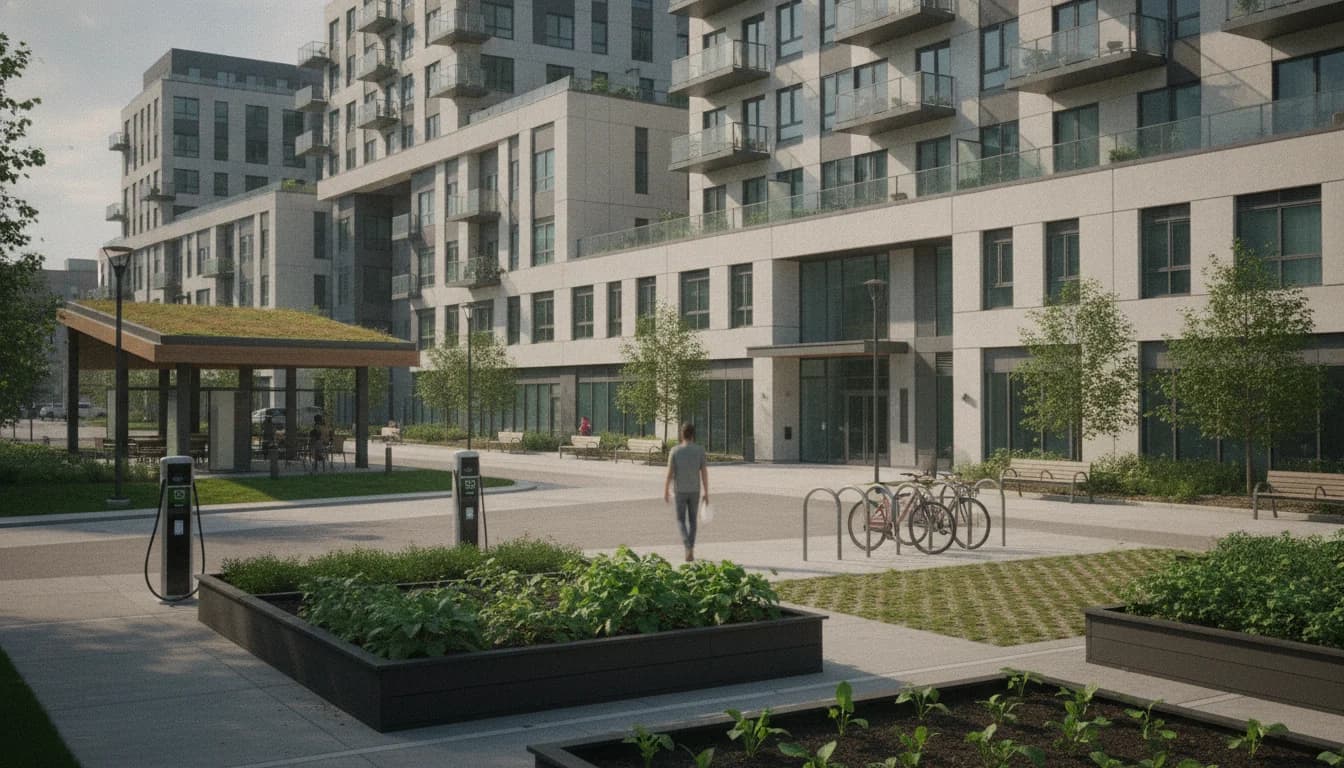
The Montréal Times reports a major policy move affecting the city’s housing market: the Government of Canada has committed funding to support the EXAL Quartier Olympique, a project that will add 435 rental units in Montréal via the Apartment Construction Loan Program, or ACLP. According to CMHC’s August 6, 2026 news release, the Government of Canada will provide $150 million through the ACLP to fund these 435 rental units, with the project located on Sherbrooke Street East near the L’Assomption subway station. The announcement is part of Build Canada Homes and the NHS portfolio designed to accelerate the construction of purpose-built rental housing across the country. This foundational fact anchors readers in the what, who, when, where, and why of this development. (cmhc-schl.gc.ca)
ACLP Montreal rental 435 units is a headline result that proponents say could shift the supply dynamics in Montréal’s mid-market rental segment. The EXAL Quartier Olympique project is being developed by Construgep in partnership with Groupe MACH, and it targets LEED Gold certification, signaling an emphasis on energy efficiency and sustainable urban design. The project’s footprint sits in a revitalization corridor of the Assomption Nord area, where transit access and mixed-use amenities are central to the long-term plan. The data-driven context around this decision helps explain why policymakers and market participants are watching Montréal closely as a test case for ACLP-backed rental construction. (cmhc-schl.gc.ca)
Opening the door to a deeper read, this coverage contextualizes the funding within Canada’s broader housing program architecture. As of March 2026, CMHC had committed $30.82 billion in ACLP loans to support more than 78,200 rental units across the country, illustrating the scale of the program and its contribution to housing supply. The 435-unit Montréal project is one of several under Build Canada Homes that municipalities and developers are tracking for pace and impact. This backdrop helps readers assess how a single project fits into a national strategy aimed at stabilizing rental markets and reducing cost pressures for households. (cmhc-schl.gc.ca)
What Happened
Announcement and Funding Details
On August 6, 2026, the Government of Canada announced funding of $150 million to support the construction of 435 rental units in Montréal, through the Apartment Construction Loan Program (ACLP). The EXAL Quartier Olympique project, located on Sherbrooke Street East near the L’Assomption subway station, is being developed and built by Construgep in partnership with Groupe MACH. The project is positioned to pursue LEED Gold certification and to deliver a modern living environment with shared spaces, transit access, and nearby amenities, aligning with Canada’s broader housing and sustainability goals. The formal press materials frame this as a concrete step in building more rental housing for middle-income Canadians, while emphasizing the economic and regional planning rationale behind the investment. The announcement was delivered by government officials during a formal briefing and followed by a series of quotes from project leaders. Quick facts accompanying the release highlight that the ACLP has a budget of $55 billion and is designed to support more than 131,000 rental units by 2031–2032. The Montréal project itself is funded with $150 million from the federal government and $40.45 million from Construgep. (cmhc-schl.gc.ca)
Project Details and Partners
EXAL Quartier Olympique is described as a significant development in Montréal’s East End, with a focus on creating a vibrant, transit-oriented housing option anchored by a LEED-certified design ethos. Construgep, the lead developer, is collaborating with Groupe MACH to deliver the 435 rental units as part of a larger urban revitalization strategy for Assomption Nord. The federal funding through ACLP is described as low-cost, repayable financing designed to accelerate rental construction for middle-income households, with the aim of stabilizing rental supply and contributing to a more resilient housing market. The release situates the project within Build Canada Homes, a federal program intended to streamline housing production and support local economies by funding high-quality rental stock. The language from the release also frames the initiative as a public-private collaboration intended to strengthen supply chains and create jobs along the homebuilding process. (cmhc-schl.gc.ca)
Timeline and Immediate Next Steps
The official release places the project on a clear path toward construction milestones, with a view toward early occupancy once construction progresses. Local coverage from Montréal outlets indicates that the project’s first tenants are anticipated in 2028, giving the development a two-year build horizon from the August 2026 announcement. The timeline is consistent with typical ACLP-backed projects, where financing supports early-stage construction while later phases address occupancy and stabilization. In parallel, industry outlets and site documentation show that groundbreaking activity and site preparation typically follow the funding announcement, marking the formal start of the construction phase. (journalmetro.com)
Additional Context and Primary Sources
Multiple primary sources corroborate the Montréal project’s size, funding, and partners. In English, CMHC’s news release explicitly identifies the 435-unit EXAL Quartier Olympique as the recipient of a $150 million ACLP loan, with Construgep and Groupe MACH listed as project developers. The French-language press release on Newswire reiterates the same facts, including the LEED focus and the near-Assomption Nord revitalization context. These primary documents provide the backbone for readers seeking verifiable, citable facts about this funding and project. (cmhc-schl.gc.ca)
Why It Matters
Impacts on Montréal’s Rental Market and Housing Supply
The 435-unit ACLP Montreal rental 435 units project represents a meaningful expansion of Montréal’s mid-market rental stock, a segment often described as squeezed between affordable housing programs and market-rate development. When combined with the ACLP’s broader objective—accelerating rental construction for middle-income Canadians—the EXAL Quartier Olympique adds a sizable new rental community to the city’s housing mix. The Ottawa-Montréal corridor’s housing policy conversations often emphasize speed, affordability, and long-term viability; this project adds a concrete data point demonstrating how federal financing can translate into on-the-ground housing supply in a metropolitan center. CMHC’s public materials position the project as part of a wider portfolio intended to stabilize supply and reduce cost pressures for renters in the near term. (cmhc-schl.gc.ca)
From a data perspective, the ACLP program’s scale matters. The federal program’s broader ambition—supporting more than 131,000 rental units across Canada by 2031–2032—frames the Montréal project within a national effort to rebalance supply. In Montréal specifically, the combination of federal backing and a local development team points to a potentially faster entry of new units into the market, potentially affecting rent benchmarks, vacancy rates, and neighborhood dynamics in the Assomption Nord corridor. While one project cannot by itself shift the entire market, the EXAL Quartier Olympique is positioned as a high-visibility demonstration of how ACLP could function in a dense urban context. (cmhc-schl.gc.ca)
Broader Economic and Urban Planning Context
The EXAL Quartier Olympique project is framed not only as housing but as a broader urban-development initiative. Planners and market researchers note that the location—near a major transit node and within a revitalizing district—has implications for transit-oriented development, walkability, and local amenities. The LEED Gold focus signals environmental and energy-performance considerations that align with city-level climate goals and building standards increasingly integrated into housing policy. The federal and municipal alignment around the Assomption Nord renewal theme adds a layer of strategic significance, suggesting that the project could serve as a catalyst for broader private-sector participation in the area. This alignment underscores why housing policy discussions frequently emphasize not just unit counts, but the quality, accessibility, and sustainability of new rental stock. (cmhc-schl.gc.ca)
Stakeholder Perspectives and Implications
For renters, the project’s federally backed, low-interest loan framework could translate into steadier construction timelines and, by extension, new housing options in a market long contending with affordability pressures. For Construgep, Groupe MACH, and their investors, ACLP’s capital-facilitation approach offers a pathway to delivering a sizable portfolio of rental units while maintaining design and sustainability standards. For municipal policymakers, the project provides a tangible case study for how federal housing-finance instruments can support urban revitalization, transit-adjacent development, and mixed-use neighborhoods that foster long-term community resilience. The exchange between federal program design and local execution is central to assessing the policy’s effectiveness, particularly in markets with high construction costs and complex regulatory landscapes. (cmhc-schl.gc.ca)
What’s Next
Construction Start and Occupancy Timeline
With the August 6, 2026 funding announcement in hand, the EXAL Quartier Olympique project is positioned to move into active construction in the near term. Groundbreaking ceremonies and site mobilization frequently occur within weeks to months of the funding announcement, followed by a multi-year construction timetable. Journal Métro notes that the first tenants are expected in 2028, indicating a two-year build horizon from the funding date. As the project progresses, monitoring will focus on milestones such as site permits, foundation work, structural completion, and final interior fit-outs, all of which influence the schedule for tenant occupancy. This timeline will be a key indicator for market watchers tracking Montréal’s ability to translate ACLP-backed financing into housing supply. (journalmetro.com)
Milestones to Watch and Possible Scenarios
- Groundbreaking and site mobilization: The official start of construction, typically marked by a ceremonial event and permit activations, often occurs within a few weeks of the funding announcement. Portail Constructo’s coverage of EXAL Quartier Olympique’s mobilization aligns with this pattern and provides a corroborating signal that construction activity has begun. This milestone sets the pace for subsequent phases and can influence labor-market and supply-chain dynamics in the region. (portailconstructo.com)
- Structural completion and exterior finish: For a 435-unit project, the next major milestone is the completion of the structural frame and exterior cladding, followed by interior fit-outs. Tracking these milestones helps analysts infer pace against the 2028 occupancy target.
- LEED Gold certification and amenities installation: The project’s design intent includes LEED Gold certification. Achieving this certification typically involves energy modeling, efficient systems, and sustainable-material choices that must be validated by third-party reviewers, adding a layer of oversight that can influence the timeline and initial operating costs.
- Tenant onboarding and initial rental stabilization: The 2028 occupancy target suggests a ramp-up in leasing activity prior to occupancy, along with the establishment of property-management operations and amenity readiness.
What to Watch For in Montréal and Beyond
- Comparative pipeline: Analysts will watch how many ACLP-backed projects receive federal backing in Montréal relative to other Canadian cities, to gauge whether Montréal’s market is a leading indicator for mid-market rental construction under Build Canada Homes.
- Rent levels and affordability signals: As units come online, observers will assess whether new supply translates into more favorable rental terms for middle-income households and how it interacts with existing stock in the East Montréal corridor.
- Transit and neighborhood impact: As with other transit-adjacent developments, the EXAL Quartier Olympique’s footprint will be evaluated for its effects on local traffic, pedestrian infrastructure, and neighborhood vitality, including potential changes in nearby commercial activity.
Closing
The ACLP Montreal rental 435 units project marks a notable convergence of federal financing, private-sector execution, and urban revitalization in Montréal. By funding a LEED-focused, transit-oriented rental community in the Assomption Nord area, the Government of Canada signals a continued commitment to expanding purpose-built rental housing in major markets. While the full housing and economic impact will unfold over the next few years, the August 6, 2026 announcement establishes a concrete baseline for project milestones and market expectations. Readers should stay tuned to CMHC’s updates and local reporting to track progress toward occupancy in 2028 and the wider implications for Montréal’s rental market.
For ongoing coverage, readers can expect periodic updates from Montréal Times and corroborating reporting from national housing agencies and local industry outlets. CMHC remains the primary public source for ACLP program details and project-level data, while municipal planning channels and developer communications provide supplementary context on site progress and neighborhood outcomes. As this story evolves, we will continue to provide data-driven analysis and balanced perspectives on what the ACLP Montreal rental 435 units development means for renters, investors, and policymakers alike. (cmhc-schl.gc.ca)