Build Canada Homes Impact on Montreal Housing 2026

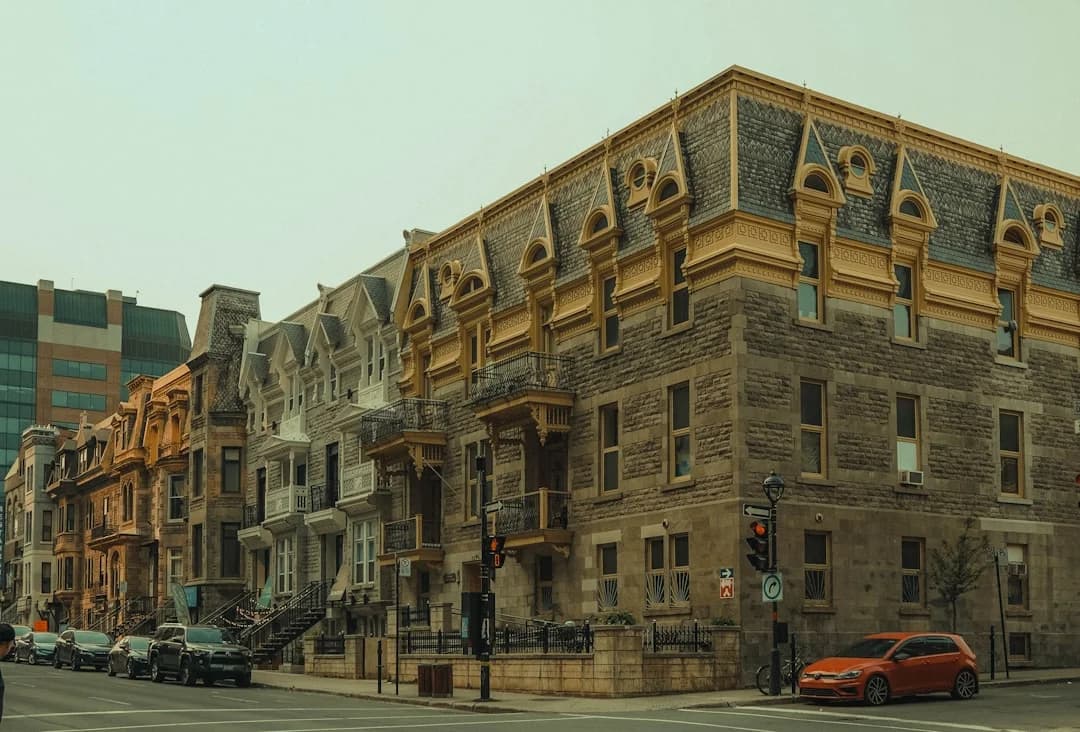
Photo by MTI on Unsplash
Montreal and its surrounding regions are watching a national housing program unfold with pronounced implications for the local market. The federal government’s Build Canada Homes initiative—launched publicly in September 2025 and formalized through an Act in February 2026—aims to accelerate the supply of affordable housing across Canada by leveraging public lands, financing flexibility, and modern construction methods. As the program scales, investors, renters, and housing providers in the Montréal CMA will be assessing how the BCH framework translates into real delivery on the ground, including how Quebec’s MOUs and local zoning processes interact with the national pipeline. Early signals point to a divergent but ultimately convergent path for Montreal: a city already contending with tight rental markets and rising prices, now joined to a nationwide mechanism designed to compress timelines and reduce land costs through public assets. The Build Canada Homes impact on Montreal housing 2026 is shaping up to be a key narrative in the city’s housing story for the year ahead. (canada.ca)
Officials outline a multi-city, multi-site approach that prioritizes speed, scale, and domestic supply chains. Since its national launch, BCH has moved from policy into portfolio development, with six Direct Build projects advanced on federal lands and agreements established with several provinces and municipalities. Among the most tangible Quebec signals is Pointe-de-Longueuil in Longueuil, a waterfront site just across the river from Montreal, where BCH plans to deliver 1,055 homes, with 40% designated as non-market units. This particular project is highlighted as a concrete instance of BCH’s model taking shape in the Montréal region and broader Quebec footprint. The city of Longueuil sits within the Montérégie region and represents a critical corridor for BCH deployment as it scales toward greater Montreal, with MOUs and governance frameworks designed to align federal and provincial priorities. (canada.ca)
Opening note: Build Canada Homes continues to populate the national housing pipeline, with total commitments surpassing tens of thousands of units as of spring 2026. Ottawa-based BCH leadership has repeatedly framed the effort as a way to unlock land, accelerate permitting, and accelerate construction through modern methods of assembly—ranging from factory-built modular units to mass timber. The program is designed to work in concert with CMHC programs, provincial housing strategies, and municipal plans to deliver more affordable homes at scale. In Montreal’s context, observers are keen to see how BCH’s Ontario–Quebec deployments interact with local housing supply dynamics, rental demand, and price trajectories. By late April 2026, BCH’s reach in Ottawa illustrated the model’s capacity to deliver hundreds of units quickly and to reduce development charges via new partnerships, a pattern that could influence Montreal-area development economics if replicated in Quebec. (pm.gc.ca)
What Happened
Timeline of BCH’s national rollout
The Build Canada Homes program began its formal national rollout in September 2025, with BCH positioned as Canada’s centralized affordable-housing builder and financier. The initial vision emphasized public lands, speed, and modern construction techniques to deliver a scaled housing supply while strengthening domestic manufacturing capacity. The September 2025 launch also included the appointment of Ana Bailão as Chief Executive Officer and the creation of a framework to accelerate projects across six initial Direct Build sites in Dartmouth, Longueuil, Ottawa, Toronto, Winnipeg, and Edmonton. This kick-off set the tone for a multi-year, cross-government effort to catalyze thousands of new homes. (pm.gc.ca)
In January 2026, BCH published a progress snapshot noting thousands of homes in the pipeline and landmark agreements signed with provinces and municipalities. It highlighted six Direct Build sites and emphasized the potential to deliver up to 4,000 Direct Build units on federal lands, along with long-term goals to unlock tens of thousands of additional units through scalable, modular construction. The January 7, 2026 release also identified Pointe-de-Longueuil (Longueuil) as a key Longueuil site with a 1,055-unit development plan, underscoring BCH’s intent to accelerate timelines in Quebec and beyond. (canada.ca)
By February 5, 2026, Ottawa formally introduced the Build Canada Homes Act, establishing BCH as a Crown corporation dedicated to building affordable housing across Canada. The act also confirmed that BCH had already advanced six Direct Build projects and secured four major partnerships, including with the City of Ottawa and the provinces of Nova Scotia and Quebec, with a national impact tally of more than 7,500 new homes under development. This legislative milestone signaled BCH’s transition toward a permanent operating structure and a broader, more durable role in Canada’s housing toolkit. (canada.ca)
Quebec and Montreal–area deployments take shape
Quebec’s BCH rollout has been characterized as a coordinated federal–provincial effort designed to align with provincial priorities and regulatory frameworks. A memorandum of understanding with Quebec is central to the rollout, providing the governance scaffold for project sequencing, site selection, and intergovernmental responsibilities. The Montreal region has emerged as an important focal point within Quebec’s BCH activity, with site opportunities and demonstration projects that aim to translate BCH’s modular and prefabricated construction emphasis into tangible, near-term housing. The Longueuil case—Pointe-de-Longueuil—appears as a canonical example of BCH’s approach in the province, highlighting the use of public land, modular construction, and accelerated timelines. Montrealers and the broader Quebec housing community are watching closely for milestones, unit counts, and completion dates as the province progresses from planning to execution. (montrealtimes.ca)
The January 2026 Quebec update from the federal government emphasized multiple facets of BCH’s role in the province, including more than 1,055 housing units announced through Pointe-de-Longueuil and broader investments in housing-enabled infrastructure to support faster construction. The update also underscored BCH’s broader objective to transform the construction economy by enabling modular manufacturing, incentivizing Canadian materials, and expanding the local supply chain. For Montréal, this signals potential spillovers: improved supply chains, local job creation in prefabrication and MMC, and a faster path from planning to occupancy for new rental and affordable units around the city. (canada.ca)
Funding, governance, and the scale of ambition
The initial BCH financing envelope is substantial: the September 2025 launch outlined an initial $13 billion in capital to enable financing, land access, and the deployment of large portfolio projects using modern methods of construction. The program’s design also includes land-bank integration via Canada Lands Company and Buy Canadian procurement to strengthen domestic supply chains. As BCH moves from concept to competitive procurement, its objective remains to deliver thousands of homes quickly while expanding the nation’s capacity to build more affordable housing through a combination of public lands and private partnerships. In Ottawa, the April 23, 2026 update detailed eight affordable housing projects representing more than 1,100 rental units and demonstrated how BCH is reducing municipal development charges through targeted agreements. These developments illustrate the scale and speed BCH aspires to achieve and offer a template for Quebec and Montreal-area projects as they mature. (pm.gc.ca)
The broader Canadian housing context and Montreal’s positioning
Canada’s housing policy environment in early 2026 is characterized by a strong emphasis on supply-side interventions, with CMHC reporting that housing starts rose meaningfully in 2025, driven by record rental construction and a growing “missing middle” of affordable options. The Spring 2026 Housing Supply Report underscores that while rental starts surged, ownership-focused starts remained constrained, highlighting a rental-heavy market dynamic that BCH is designed to address at scale. Montreal’s market has similarly seen robust rental starts in 2025, with rental housing accounting for a large share of new units and a tightening leasing market in early 2026. BCH’s Quebec footprint—anchored by MOUs, site pipelines, and demonstrations—positions Montreal-area housing providers to leverage public land and federal incentives to accelerate the delivery of affordable housing, potentially easing some pressure on high-demand rental segments in the near term. (cmhc-schl.gc.ca)
What this means for Montreal and its housing ecosystem
For Montreal, BCH’s emergence as a national tool to scale affordable housing offers both opportunities and challenges. On the upside, BCH could reduce land costs on select sites, shorten construction timelines through modular approaches, and attract private capital by providing a cleared, streamlined framework for large portfolios. The Longueuil Pointe-de-Longueuil site is a tangible example in Quebec where these principles may begin to translate into units on the ground; at 1,055 total units with 40% below-market supply, the project could meaningfully augment the regional rental stock and diversify the housing mix in the area. If BCH’s MOUs and governance arrangements foster predictable pipelines in Greater Montreal, city planners, housing non-profits, and private developers could synchronize local zoning and procurement with BCH’s national cadence. (canada.ca)
Nevertheless, the Montreal market will measure BCH’s impact against several local realities: the city’s historically tight rental market, ongoing affordability concerns, and the region’s capacity to absorb new units within a reasonable timeline. CMHC’s 2026 outlook and Montreal-area rental data suggest a market that remains dynamic but constrained by supply gaps, with rental occupancy and price pressures continuing to drive debates about best-fit responses. BCH’s emphasis on modular construction could help Montreal strengthen its supply chain resilience and job creation in the construction sector, while maintaining quality and energy efficiency—an important consideration in Quebec’s climate and policy priorities. Yet the success of BCH in Montreal will hinge on timely MOUs, efficient land-use approvals, and effective collaboration with provincial and municipal authorities to translate federal funding into shovel-ready projects. (canada.ca)
Montreal-specific risk and opportunity considerations
-
Land-use and zoning timelines: BCH’s success in Quebec relies on efficient coordination with provincial authorities and local municipalities to align MOUs with zoning, permitting, and land-transfer processes. The Longueuil example demonstrates the importance of a clear governance lane and milestones to avoid protracted delays. Observers will be watching whether Montreal-area projects benefit from similar governance clarity and expedited permitting timelines. (montrealtimes.ca)
-
Construction methodology and climate resilience: BCH’s core promise—modern methods of construction (MMC), factory-built components, and mass timber—could improve Montreal-area build speed and energy performance. The national commitment to MMC is explicitly tied to shorter timelines and lower emissions during construction. If Montreal-area developers adopt these approaches, new units could meet market demand more quickly and with improved energy efficiency, aligning with Quebec’s climate and housing goals. (pm.gc.ca)
-
Economic spillovers: The BCH platform emphasizes strengthening domestic supply chains and Canadian materials. For Montreal, this could translate into local supplier opportunities and a more robust construction ecosystem. In turn, this may impact local employment, training pathways, and downstream industries in the greater Montreal area. The national data and CBC/CMHC updates provide a backdrop for assessing how these macro-level shifts might translate into local outcomes. (canada.ca)
Stakeholder perspectives in Montreal
Housing providers, tenants’ associations, and city planners in Montreal are likely to adopt a cautious, data-driven stance as BCH investments materialize. The emphasis on affordable-rental components in several BCH projects (including Longueuil’s 1,055-unit plan and Ottawa’s 1,100+-unit bundle) demonstrates a clear preference for non-market and mixed-income units, which aligns with Montreal’s affordability objectives but also requires careful integration with existing rental housing stock and regulatory regimes. In reporting and analysis, observers in Montreal will seek to quantify unit deliveries, occupancy rates, and the affordability outcomes of BCH projects, while tracking construction schedules and cost trajectories. This kind of stakeholder lens helps translate BCH’s macro ambitions into city-specific indicators that residents can monitor. (canada.ca)
Why It Matters
Impact on Montreal’s affordability and supply dynamics

The BCH model promises to augment Montreal’s housing supply through a curated portfolio of sites that leverage public land and streamlined financing to accelerate delivery. The Pointe-de-Longueuil site, with 1,055 units and 40% non-market units, exemplifies BCH’s potential to broaden the affordable rental stock in the region. If BCH expands further into the Montreal area, the cumulative effect could help narrow the gap between demand and supply, particularly for lower- and middle-income households seeking rental housing, a segment that CMHC data indicate remains tight in many Canadian markets. As Montreal’s rental market continues to show strong demand pressures in 2026, BCH’s approach could help stabilize the market by increasing the volume of rental options available at varied income levels. (canada.ca)
Economic and workforce implications
BCH’s emphasis on modern construction methods and Canada-wide procurement policies has the potential to shift the region’s construction economy toward more factory-based, standardized production. This trend could yield job growth in prefabrication facilities and related trades, while also offering training opportunities for local workers to upskill in MMC technologies. National program narratives frame such shifts as catalysts for a more productive housing industry, with direct benefits to domestic steel, lumber, and mass-timber supply chains. Montreal’s regional economy could benefit through supplier diversification, higher-quality construction jobs, and longer-term resilience in the housing supply chain. As federal officials highlight, every new BCH unit could contribute to broader economic activity, including infrastructure-adjacent sectors that support housing delivery and community growth. (pm.gc.ca)
Public-policy alignment and regional housing policy
The BCH rollout in Quebec—with MOUs, the involvement of Canada Lands Company, and a commitment to Buy Canadian procurement—signals a broader alignment between federal housing policy and provincial/municipal priorities. For Montreal, this alignment could facilitate smoother integration with local housing strategies, particularly those aimed at accelerating transit-oriented development, improving energy efficiency, and expanding rental stock. The federal government’s 2026 updates emphasize a collaborative approach to housing delivery, balancing rapid scale with local governance. Montreal policymakers and housing stakeholders will need to monitor progress carefully, track the performance of BCH projects, and evaluate how BCH’s metrics (e.g., units delivered, construction efficiency, and affordability outcomes) map onto the city’s own housing targets and budget cycles. (canada.ca)
Public perception and media framing
Nationally, BCH’s ambitious scope has generated substantial public attention, with government releases highlighting thousands of units, rapid construction timelines, and cross-jurisdictional partnerships. Local media coverage in Montreal emphasizes both the promise of faster construction and the need for transparent reporting on unit counts and completion dates. As BCH projects begin to materialize in the Quebec ecosystem, the Montreal market will likely demand ongoing accountability and public communication about progress, timelines, and project economics. The BCH case in Quebec and Montreal will thus serve as an important testbed for how federal housing policy translates into local, observable outcomes. (montrealtimes.ca)
Summary of regional implications
- Increased supply potential: BCH could add to the Montreal-area housing stock, particularly through non-market and affordable units, which could help relieve some rental pressure over time if projects advance on schedule. The Pointe-de-Longueuil example demonstrates the scale and mix BCH is aiming to achieve in Quebec. (canada.ca)
- Faster delivery through MMC: The program’s emphasis on modular construction and factory-built housing may shorten construction timelines, improve quality control, and enhance resilience to weather—an especially relevant factor in Quebec’s climate. (pm.gc.ca)
- Public-land leverage and cost dynamics: BCH’s land access strategy could alter land-value economics for Montreal-area sites, potentially reducing upfront costs and enabling more rapid procurement and permitting processes when aligned with municipal planning. (canada.ca)
What’s Next
Near-term milestones and timelines
-
2026 Q2–Q4: BCH will continue to move from planning into construction on Direct Build sites across the six initial locations, with a focus on shovels in the ground and unit completions. In Ottawa, eight affordable housing projects were approved and are slated to deliver more than 1,100 rental homes, as part of a package that aims to reduce development charges and accelerate delivery. For Montreal and Quebec, expect official BCH communications to outline site-specific milestones, procurement cycles, and partnership details as MOUs are implemented and projects move through RFQ and RFQ-shortlist stages. The Ottawa example and Quebec MOUs provide a template for how those milestones could unfold nationwide. (pm.gc.ca)
-
2026–2027: The national program blueprint predicts continued expansion of the Direct Build pipeline, with additional partnerships and land activations. The BCH leadership has signaled a cadence of milestones, including a broader portfolio of partnerships and the scaling of MMC-based production to meet unit targets. Observers will be closely watching unit counts, geographic spread, and the mix of market-rate versus below-market units as a barometer of BCH’s success in delivering affordable housing at scale. (canada.ca)
Montreal-area implications and observer actions
-
Monitoring unit delivery and timelines: Montreal-area housing watchers should follow BCH’s Quebec–Montreal progress through official BCH communications and provincial updates. The Pointe-de-Longueuil site illustrates the kind of scale BCH is pursuing, and similar pipelines could emerge for other Montreal-adjacent municipalities if MOUs prove effective in expediting site readiness and permits. (canada.ca)
-
Local industry engagement: The BCH approach could spur demand for prefabrication and MMC facilities regionally, encouraging partnerships with local manufacturers and training institutions. Montreal stakeholders should anticipate new opportunities for collaboration with BCH partners and potential public-private co-development models that echo the program’s emphasis on Canadian materials and domestic supply chains. (pm.gc.ca)
-
Policy alignment and reporting: As BCH projects advance in Quebec, municipal and provincial authorities will issue progress updates, which Montreal-area residents and market participants should monitor for signals about cost, schedule, and unit mix. The federal approach emphasizes transparency and measurable outcomes, encouraging data-driven reporting on unit counts, completion dates, and affordability metrics. (canada.ca)
What to watch in the broader market
-
Rental market dynamics: CMHC’s Spring 2026 and related updates indicate a housing market where rental demand remains strong in many centers while ownership markets experience slower or more modest growth. Montreal’s rental market data and forecasts will shape how BCH’s non-market and affordable components interact with the city’s existing rental stock, potentially affecting vacancy rates and rent trajectories in early 2026 through 2027. Observers should look for BCH-driven changes in the share of rental starts and the speed at which new units come online. (cmhc-schl.gc.ca)
-
Price and supply signals: Real estate market reports for Montreal—such as the Q1 2026 housing price data from Royal LePage and ongoing CMHC market analysis—provide context for how BCH’s impact might be felt on the ground. While BCH is a supply-side tool, it interacts with demand-side conditions, financing costs, and consumer sentiment. Analysts should triangulate BCH progress with market indicators to assess net effects on affordability and price moderation in the medium term. (royallepage.ca)
-
Policy momentum and future funding: The BCH initiative’s ongoing evolution—transitioning from a Special Operating Agency to a permanent Crown corporation and its integration with Budget 2025/2026 policy instruments—will determine the program’s long-run scale and flexibility. Montreal stakeholders should monitor parliamentary updates and provincial announcements for how future funding rounds, procurement rules, and partnership streams might influence BCH opportunities in Quebec. (canada.ca)
What Happens Next: The Montreal Focus
Montreal’s housing market in 2026 sits at a crossroads where demand remains strong, supply remains constrained in key segments, and policy tools at the federal level are aligning to unlock additional capacity. Build Canada Homes could serve as a meaningful accelerator for the city’s housing objectives if MOUs translate into executable pipelines with clear milestones and open data about unit delivery. The Longueuil Pointe-de-Longueuil project demonstrates how BCH intends to blend public land with modern construction methods to deliver a mix of market-rate and below-market housing, which local agencies could mirror in other areas around Montreal. As the program unfolds, Montreal’s readers will benefit from ongoing, transparent reporting on unit counts, timelines, and affordability outcomes as BCH’s Quebec footprint grows. (canada.ca)

Montreal’s edition of BCH activity will also hinge on how provincial and municipal authorities harmonize planning processes with BCH’s national framework. The MOUs signed with Quebec are intended to provide a blueprint for deployment, and the Quebec rollout is being coordinated to align with local priorities and regulatory conditions. Observers should anticipate regular updates about site-specific RFQs, construction timelines, and the scale of new units slated for completion in the Montreal metropolitan area. The program’s emphasis on domestic materials and Canadian manufacturing could also shape local supplier ecosystems and skills training initiatives, potentially providing a model for broader regional involvement in prefabricated housing and MMC-driven delivery. (montrealtimes.ca)
Next steps for readers and stakeholders
-
Track BCH project announcements from official channels: Housing, Infrastructure and Communities Canada (HICC) and CMHC updates will be primary sources for site lists, funding details, and completion timelines. The Pointe-de-Longueuil project serves as a concrete example of how BCH plans to announce site pipelines and unit counts. (canada.ca)
-
Watch for Quebec MOUs and provincial guidance: MOUs with the Province of Quebec will shape how BCH sites are prioritized, approved, and integrated with local planning processes, impacting the Montreal region’s ability to convert BCH plans into delivered housing. (montrealtimes.ca)
-
Evaluate market signals in parallel: While BCH aims to boost supply, ongoing market indicators (rental vacancy, starting construction rates, and price trajectories) will help readers assess the real-world impact of BCH in Montreal. CMHC’s Spring 2026 Housing Supply Report and Montreal-area market data provide crucial context for interpreting BCH outcomes against other market forces. (cmhc-schl.gc.ca)
Closing
As Build Canada Homes moves from policy to execution, Montréal’s housing landscape stands to be influenced by a national framework that prioritizes speed, scale, and domestic capacity. The Longueuil Pointe-de-Longueuil project is a flashing example of BCH’s approach in Quebec, signaling both opportunity and accountability for the region’s housing outcomes in 2026 and beyond. By following BCH’s progress through official releases and provincial updates, Montrealers can gain a clearer view of how a national strategy to modernize housing construction may reshape the city’s affordability, supply, and urban growth in the years ahead. Montrealers and readers across the region will want to stay tuned for concrete delivery dates, unit counts, and completion milestones as BCH’s Quebec footprint expands and matures.