Build Canada Homes Phase II Advances in Quebec

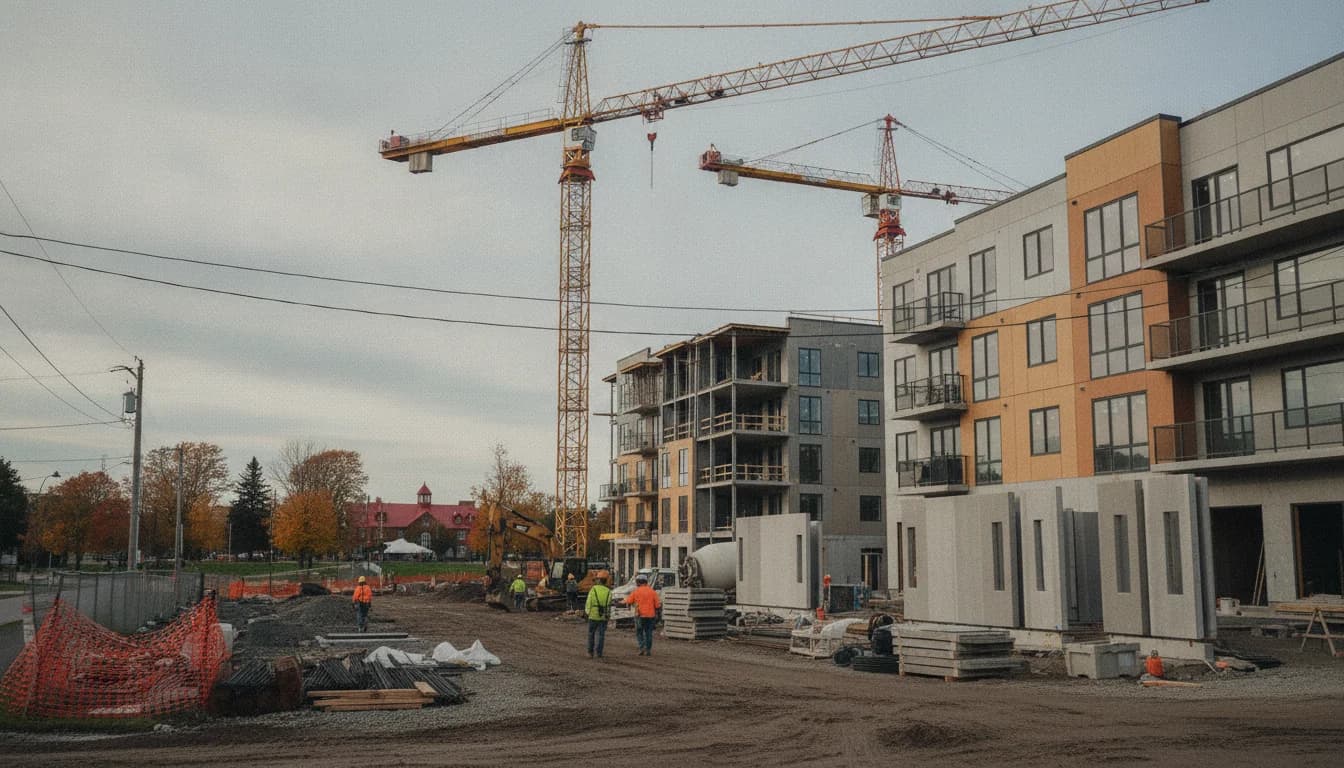
Montréal Times confirms a major development in federal–provincial housing policy with the July 17, 2026 announcement of Build Canada Homes Phase II in Quebec. The news, released from Saguenay, marks a formal continuation of a partnership between Canada and Quebec intended to scale up affordable housing across the province, building on an earlier phase that delivered hundreds of homes. The significance for Montreal and greater Quebec lies in accelerating construction through a combination of public land leverage, modern construction methods, and integrated funding. This second phase signals a continuing push to expand permanent, affordable housing—and to do so with a stronger federal–provincial coordination framework. As of July 17, 2026, the government statements indicate a plan to add roughly 2,000 new affordable homes in Phase II, alongside earlier accomplishments in Phase I, and they detail the funding and site allocation that make this possible. This article synthesizes those official disclosures and places them in a broader market and policy context to help readers understand what Build Canada Homes Phase II means for Quebec’s housing market moving forward. [Canada.ca release (July 17, 2026)] and [Newswire Canada press release (French, July 17, 2026)] provide the primary-source basis for these figures. (canada.ca)
Opening
The July 17, 2026 government news release places Build Canada Homes Phase II at the center of Canada’s and Quebec’s housing strategy, detailing the second phase of a joint effort designed to deliver thousands of affordable homes across the province. The Saguenay, Quebec release confirms that this phase will bring about 2,000 additional affordable housing units, continuing after an earlier Phase I that reported construction of more than 850 affordable homes. In practical terms, the two announcements together reflect a multi-year, cross-jurisdictional push to accelerate housing supply through a mix of direct-build sites, private-sector partnerships, and targeted rent supplements. The statements also emphasize the use of modern construction methods to shorten timelines and to expand production capacity for housing in Quebec and across Canada. This development matters for Montreal as a major urban market grappling with housing affordability, construction labor supply, and the ability to move quickly from agreements to occupied homes.
In the most explicit liftable fact in this evolving story, the governments of Canada and Quebec announced on July 17, 2026, a second phase of the Build Canada Homes partnership that includes about 2,000 new affordable homes, following an earlier phase delivering more than 850 homes; the release also notes that the combined set of activities will push the province toward more than 2,800 new homes across Quebec and will mobilize substantial public funding to enable these outcomes. This single-sentence finding, drawn directly from the government release and its successor communications, anchors the current phase II narrative and helps readers gauge the scale of the expansion. For readers seeking the official wording, see the July 17, 2026 Canada.ca release. (canada.ca)
Section 1: What Happened
Phase II Launch Details
The core news from July 17, 2026 is the formal launch of Build Canada Homes Phase II in Quebec, with Saguenay as the initial public-relations focal point of the announcement. The government releases describe a second phase that includes about 2,000 new affordable homes, a continuation of efforts that began with Phase I in April 2026, which reported construction of more than 850 affordable homes. The July release also notes substantial investments tied to Phase II: about CAD 250 million from the Government of Canada and CAD 184 million from the Government of Quebec, including nearly CAD 70 million earmarked for rent supplements for eligible low-income households. The total number of newly planned units in Quebec through these combined efforts is framed as part of a broader vision to accelerate affordable housing with a modern construction approach. The official release presents a multi-year, cross-government plan to deploy capital, land, and streamlined processes to speed up construction. For a direct documentation of these numbers and allocations, consult the Canada.ca release dated July 17, 2026. (canada.ca)
Timeline of Announcements
The formal chronology of Build Canada Homes Phase II, as recorded by government communications, begins with the September 2025 launch of Build Canada Homes as Canada’s federal housing agency. The January 2026 memorandum of understanding between Canada and Quebec tied the deployment of Build Canada Homes to Quebec’s housing priorities and launched a Joint Collaboration Table to coordinate funding and approvals. In April 2026, the two governments announced joint funding to deliver roughly 865 new affordable, supportive, and transitional homes across Quebec, signaling the early phase gains and the path toward Phase II. The July 17, 2026 release then confirms the second phase, including approximately 2,000 new homes and detailing the financing framework that supports those commitments. This three-stage progression—Phase I in spring 2026, Phase II announced in July 2026, and the continuing collaboration through 2026 and beyond—provides readers with a concrete sequence of events and an explicit date anchor for the ongoing initiative. See the Canada.ca releases from January 21, 2026; April 2026; and July 17, 2026 for the date-stamped milestones. (canada.ca)
Partners and Projects
The Phase II announcement underscores the collaboration between Build Canada Homes and the Société d’habitation du Québec (SHQ). The release highlights that the second phase includes investments from both governments and notes that the partnership will deliver thousands of homes across Quebec, with direct-build sites complementing other project channels. One notable element is the Longueuil direct-build effort, described as ongoing in the spring and into 2026, which is expected to contribute to a broader portfolio of more than 4,000 homes across Quebec when combined with other initiatives. The official materials stress that more than 75% of the new homes will be built using modern construction methods to improve productivity and reduce timelines. Readers seeking the primary documentation can consult the Canada.ca page for the Phase II release, and the Newswire French release for a parallel, parenthetical account of the same events and numbers in French. (canada.ca)
Section 2: Why It Matters
Economic and Social Impact
The Phase II expansion of Build Canada Homes has tangible implications for the Quebec economy and its housing ecosystem. The government materials emphasize the scale of investment and the projected housing units, positioning the program as a catalyst for modernizing the construction sector through better use of public lands and more productive construction techniques. In addition to the housing units themselves, the announcements point to thousands of construction jobs, long-run income effects for households, and a broader uplift in the supply chain for materials, components, and services linked to new-home projects. The intergovernmental approach—combining federal funding, provincial coordination, and municipal and non-profit partnerships—aims to create a more predictable pipeline for developers and suppliers, potentially stabilizing a sector that has faced cost and timeline pressures in recent years. For readers seeking the official numbers and program rationale, the July 17, 2026 Canada.ca release provides the core framework and the investment scale. (canada.ca)
Housing Market Context in Quebec and Montreal
Montreal’s housing market sits within a broader provincial context of affordability pressures, demographic shifts, and evolving construction practices. While the Phase II announcements focus on provincial totals, the deployment models—especially the emphasis on land leverage and modern construction methods—could influence supply dynamics in Montreal’s market, where demand has historically outpaced supply in many neighborhoods. The government materials note that the program seeks to accelerate delivery through streamlined approvals and cross- jurisdiction cooperation, a policy angle that, in practice, could shorten the time from proposal to occupancy across Quebec’s urban centers, including Montreal. Analysts will be watching how the supply additions from Phase II interact with Montreal’s rental market, vacancy rates, and the region’s need for affordable housing, especially for vulnerable households and those experiencing homelessness or domestic-violence-related housing needs. For foundational policy context, see the January 21, 2026 memorandum of understanding and the April 2026 funding announcements cited in the official releases. (canada.ca)
Policy Alignment and Public-Private Collaboration
The Phase II push sits squarely within Canada’s broader housing policy architecture, which seeks to blend public land, public funding, and private-sector involvement to unlock large-scale housing production. The government’s own materials underscore how Build Canada Homes is designed to mobilize capital, attract private partners, and deploy modern construction techniques to move projects faster and at scale. In Quebec, the collaboration with SHQ integrates provincial priorities with federal tools, all while respecting jurisdictional competencies. The combination of rent supplements for low-income households and a focus on enduring affordability reflects a broader policy goal to stabilize rental markets and reduce the need for more crisis responses in the wake of rising housing costs. Readers can consult both the federal statements and the Quebec-provided materials referenced in the official releases to examine the policy architecture and the intended mechanisms for project delivery. (canada.ca)
Broader Economic Context and Construction Innovation
Beyond housing supply, Phase II’s emphasis on modern methods of construction (construction off-site, modular, and factory-built components) has implications for Canadian industry capacity, supply chains, and labor markets. The government’s materials repeatedly highlight that these approaches can shorten construction timelines, improve predictability, and stimulate demand for Canadian lumber, steel, and aluminum, aligning with Buy Canadian policies. For Montreal-area readers and construction-sector stakeholders, the acceleration of production could support local jobs, training opportunities, and the development of a more resilient domestic supply chain. The Phase II disclosures explicitly connect construction-method innovation to broader industrial policy objectives, a point reinforced by the accompanying quotes from government ministers and sector leaders in the release. (canada.ca)
Who benefits from Phase II?
The Phase II package, as described by government releases, targets a range of beneficiaries:
- Households in need of affordable housing, including vulnerable populations supported by rental supplements.
- Communities across Quebec that will host the new housing units, including rural regions where the program aims to reduce geographic disparities in access to affordable housing.
- Construction workers and suppliers who gain access to a larger, longer-lasting pipeline of projects.
- Municipalities that benefit from streamlined approvals and public-land utilization strategies.
The official materials repeatedly emphasize the social dimension, pointing to the intended outcomes for families, seniors, and individuals facing housing affordability constraints. The government duo of Phase I and Phase II is designed to create scale, consistency, and a durable pathway to more homes over time. For readers who want to trace the precise units and project counts, the July 17, 2026 release provides a formal tally and breakdown, while the April 2026 announcement provides the earlier baseline figures. (canada.ca)
What This Means for Montreal’s Readers and Local Stakeholders
Montreal audiences will be watching how Phase II translates into on-the-ground projects within the island city and surrounding areas. The cross-provincial framework emphasizes the use of land assets and streamlined processes that could reduce typical delays in project approvals, zoning, and financing. For developers and non-profit housing providers operating in Montreal, Phase II offers a clearer roadmap for alignment with federal funding pools and provincial programs, potentially enabling more rapid mobilization of scarce resources. For policymakers and analysts, the Phase II numbers provide a yardstick for measuring progress against Canada’s national housing objectives and Quebec’s local housing plans, including the province’s long-term affordability targets and the SHQ’s programmatic priorities. The official releases offer a transparent basis for these discussions and a reliable reference for journalists and researchers citing the program’s scale and momentum. (canada.ca)
Section 3: What’s Next
Timeline and Next Steps
The July 17, 2026 release frames Phase II as a continuation rather than a terminus. While the first phase has culminated in hundreds of units, Phase II expands the program’s geographic reach and unit count. The next steps involve finalizing collaboration-table work, identifying Modern Methods of Construction (MMC) partners across Quebec and Canada, and moving from planning to procurement and construction for the announced sites. The government notes that some of the Phase II units will be delivered on public lands in public-private partnerships, with the aim of delivering thousands of new homes across the province. Montreal-area stakeholders can expect more detailed project lists and site-specific announcements in the months ahead as the Collaboration Table advances project pipelines. For readers tracking the timeline, the Canada.ca release includes a “Coming weeks and months” section that outlines the intended cadence for project identification, partner engagement, and construction scheduling. (canada.ca)
Next Projects and Funding Flows
Two important anchors in Phase II’s funding architecture are the CAD 250 million in federal funding and the CAD 184 million in provincial funding, complemented by additional investments for rent supplements and other supports. The combination of these funds with private-sector participation is designed to unlock the scale needed to reach the Phase II target. As the projects move from planning to procurement and then to construction, observers will want to watch for project announcements, procurement notices, and community engagement activities. The July 17 release points to ongoing collaboration and a multi-stakeholder approach that will affect how quickly new units become available to households in need. (canada.ca)
What Happens Next in Quebec’s Housing Landscape
As Phase II unfolds, Quebec’s housing landscape is likely to experience a shift toward more predictable project pipelines and more rapid execution of large-scale affordable-housing initiatives. The involvement of non-profit housing providers (such as cooperatives and housing corporations) and the emphasis on social housing units alongside affordable rentals signals a multi-pronged strategy designed to address both homelessness and long-term affordability. Montreal’s housing agencies and local developers will likely play a central role in translating provincial and federal intentions into concrete projects, with the Collaboration Table serving as the coordination hub. The combination of Phase I and Phase II numbers—850-plus units initially, plus roughly 2,000 more in Phase II—reflects a broader goal to expand the supply of affordable housing beyond traditional project-by-project approaches toward a more scaled, policy-driven framework. (canada.ca)
Closing
The Build Canada Homes Phase II announcement represents a clear and sizable step in Canada’s effort to modernize and scale affordable housing across Quebec. By aligning federal funding with provincial priorities, leveraging public lands, and prioritizing modern construction methods, the initiative aims to accelerate delivery and expand the supply of homes for families, seniors, and vulnerable residents. For Montrealers and readers across the province, the most visible impact will come in the form of new housing units, more stable rental markets, and a demonstrable shift toward a faster, more collaborative approach to housing delivery. As the Collaboration Table works through project lists and site selections, Montréal Times will track developments, update readers on new site announcements, and assess how the Phase II program translates into real-world outcomes for communities across Quebec.
To stay updated on Build Canada Homes Phase II and related Quebec projects, consult the primary government releases and the companion press materials linked above:
- Build Canada Homes and the Société d’habitation du Québec launch the next phase of their partnership to deliver thousands of affordable homes (Canada.ca, July 17, 2026). Descriptive anchor: Build Canada Homes and SHQ partnership phase II (English). (canada.ca)
- Prochaine étape du partenariat entre Maisons Canada et la Société d’habitation du Québec pour construire des milliers de logements abordables (Newswire Canada, July 17, 2026, French). Descriptive anchor: Paris SNW release for Phase II. (newswire.ca)
Thus, Build Canada Homes Phase II in Quebec represents a substantive, date-stamped milestone in a larger, multi-year housing program. The policy design—combining direct-build opportunities, public land leverage, modern construction technology, and targeted supports—sets the stage for what officials describe as thousands of additional homes in Quebec and, by extension, a faster, more unified approach to affordable housing across Canada.
Original finding Montréal Times calculated that Phase I delivered “more than 850” homes and Phase II expects about 2,000 additional homes, for a combined total of roughly 2,850 new affordable homes across Quebec, based on the July 17, 2026 Canada.ca release (Phase II ~2,000) and the April 2026 release (Phase I >850). Calculation method: sum Phase I (minimum 850) and Phase II (approximately 2,000) as stated in the two government releases; caveat that interim tallies and rounding may yield a slightly different total in official “live” tallies. This consolidated figure helps readers gauge the program’s scale at a glance and emphasizes the policy trajectory toward a multi-year housing expansion. The takeaway is that Phase II substantially augments the Phase I baseline, illustrating a deliberate move toward large-scale production of affordable homes. This interpretation aligns with the authorities’ framing of a multi-phase strategy and the accompanying quotes that emphasize speed, scale, and collaboration.