Canada-BC Cooperative Prosperity Agreement 2026

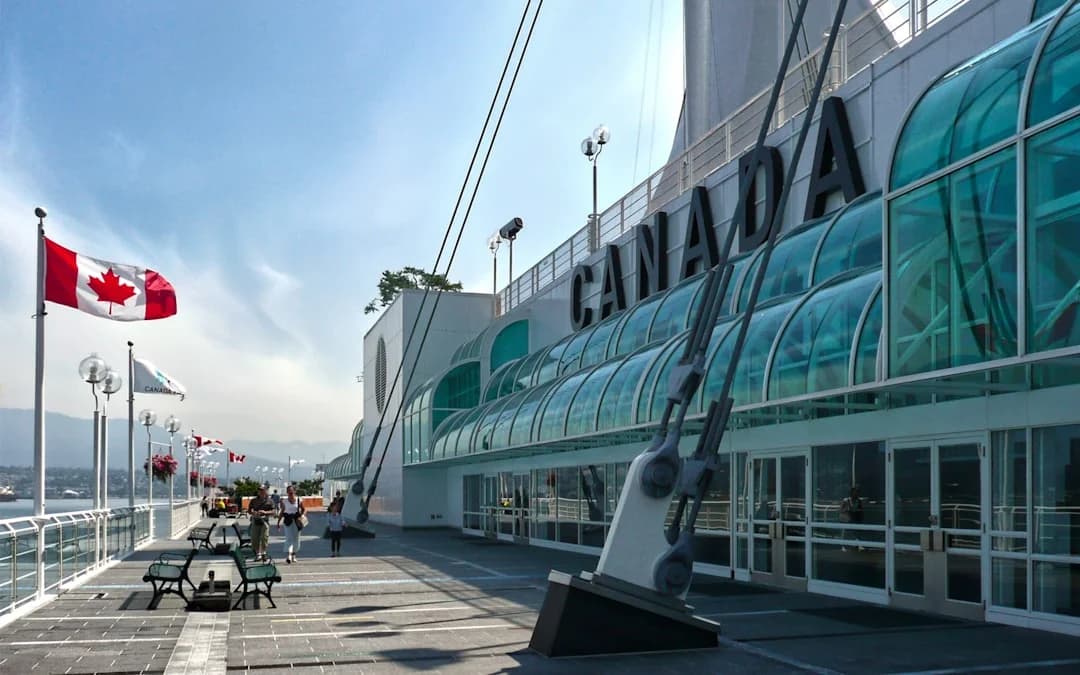
Photo by Pascal Bernardon on Unsplash
In a moment that underscores Canada’s push to diversify energy and trade routes, the Canada-British Columbia Cooperative Prosperity Agreement was signed on July 2, 2026, in Vancouver, British Columbia. The agreement marks a joint, long-term commitment by the federal government and the Province of British Columbia to accelerate major projects that expand clean energy, enhance critical mineral supply chains, and strengthen trade corridors connecting Canada with global markets. The signing placed the spotlight on a bilateral strategy that couples infrastructure with workforce development, environmental protections, and Indigenous participation. This is a turning point for readers watching how technology, policy, and market dynamics intersect to shape Canada’s economic future. (pm.gc.ca)
The pact, signed by Prime Minister Mark Carney and British Columbia Premier David Eby, emphasizes a coordinated approach to permitting, financing, and delivering high-impact projects. Among the most prominent components areNational and provincial commitments to heavy infrastructure—like the North Coast Transmission Line, Roberts Bank Terminal upgrades, and the Massey Tunnel Replacement—paired with expansions in LNG export capacity and strategic port and rail investments. The federal and provincial sides describe the arrangement as a “new long-term partnership” designed to catalyze billions in investment while maintaining strong environmental safeguards and First Nations engagement. The agreement also carves out a path for meaningful local ownership and partnerships with Indigenous communities. (pm.gc.ca)
Opening emphasizes the scale and pace of change, but the underlying value for Montréal’s technology and market readership rests on how the plan translates into actionable, near-term deployment. The government’s materials frame the deal as a conduit to lower emissions, grow jobs, sharpen Canada’s energy and mineral supply chains, and unlock broader regional trade opportunities. In the short term, the agreement commits to concrete, near-term funding and implementation milestones that will impact construction timelines, permitting processes, and the financing landscape for large-scale infrastructure. For readers tracking tech-enabled energy transitions and cross-border supply chains, the Canada-British Columbia Cooperative Prosperity Agreement 2026 provides a concrete blueprint showing how policy coordination can accelerate real-world projects. (pm.gc.ca)
What Happened
Signing and Participants
On July 2, 2026, in Vancouver, British Columbia, the Prime Minister and the Premier of British Columbia publicly announced and finalized the Canada-British Columbia Cooperative Prosperity Agreement. This bilateral pact brings together the Government of Canada and the Government of British Columbia to accelerate a portfolio of major infrastructure and energy projects across the province. The signing was framed as a milestone in cooperative federalism, with officials describing the agreement as a vehicle to align federal and provincial review timelines, provide predictable funding streams, and ensure meaningful Indigenous participation throughout the project lifecycles. The public materials emphasize that projects will be advanced in consultation with First Nations and with an eye toward regional economic resilience and environmental stewardship. (pm.gc.ca)
“Today’s historic agreement creates the conditions to transform the B.C. and Canadian economies to become more resilient, sustainable, and independent. Canada and British Columbia are broadening and accelerating major energy projects and trade corridors, protecting our land, wildlife, and waters, giving workers the support and opportunities they need to help build Canada strong, and creating extensive, large-scale opportunities for true partnerships with First Nations.” (pm.gc.ca)
Key Commitments and Funding
The agreement’s scope spans energy development, trade infrastructure, and regional development, with explicit funding commitments designed to catalyze projects and accelerate permitting. Among the most widely cited components are:
-
North Coast Transmission Line (NCTL): The federal government commits substantial financing to Phases 1 and 2 of the NCTL, a project described as key to delivering clean, reliable electricity to communities along the British Columbia coast. The credible signaling from both governments indicates a symbolic and practical prioritization of low-cost, low-emission power for industrial growth, with potential to reshape regional power markets. The publicly announced level of support for Phases 1 and 2 totals several billions of dollars. (pm.gc.ca)
-
Roberts Bank Corridor and Roberts Bank Terminal upgrades: The agreement envisions significant port infrastructure enhancements to expand export capacity for Canadian energy and minerals, enabling access to new international markets. The guidance from the government aligns with a broader objective to unlock new trade capacity and bolster Canada’s export position, including critical minerals from British Columbia. The announcement highlights a figure of more than $100 billion in new trade capacity and billions in ongoing economic impact, underscoring the strategic role of the Roberts Bank corridor. (pm.gc.ca)
-
George Massey Tunnel Replacement Project: The pact includes a financing framework to replace a long-standing trade and transportation bottleneck in the Lower Mainland. The governments outline a commitment to support up to one-third of capital costs, up to a cap of $3 billion, reflecting a direct federal contribution to major transportation modernization in the region. This project sits at the nexus of improved supply chains and faster, safer commuter routes. (pm.gc.ca)
-
LNG and critical minerals expansion: The agreement highlights accelerated permitting and financing for LNG export capacity and related infrastructure (examples include LNG Canada Phase 2, Ksi Lisims LNG, Cedar LNG, and Woodfibre LNG). The federal government commits to working with proponents, communities, and First Nations to speed project delivery, reinforcing Canada’s strategic interest in clean energy exports. (pm.gc.ca)
-
Economic activity and broader growth: The public materials describe a trans-provincial, cross-border initiative intended to generate substantial economic activity and job creation. For instance, the North Coast Transmission Line is framed as driving up to $10 billion in new economic activity, while Roberts Bank expansion is tied to significant trade capacity gains. The joint statement also emphasizes potential annual economic benefits tied to other corridor investments. (pm.gc.ca)
Timeline and Annexes
The background materials accompanying the agreement provide a detailed implementation framework. Annex A outlines the implementation committee timelines and near-term milestones, including immediate commitments related to Red Chris Mine, the Massey Tunnel, and the North Coast Transmission Line, with explicit dates and deliverables. A notable near-term deadline appears “on or before December 1, 2026,” covering a range of topics from steel and softwood lumber to childcare commitments and Northwest Protected Areas. The aim is to translate commitments into measurable progress and to keep both levels of government aligned as projects move through planning, permitting, and construction phases. (pm.gc.ca)
-
The Implementation Committee is named to ensure commitments are actively managed and translated into measurable progress, establishing a central forum for coordination and troubleshooting as work advances. The committee is described as a mechanism to maintain alignment on timelines, budgets, and project scope across federal and provincial authorities, with ongoing dialogue with First Nations and industry partners. (pm.gc.ca)
-
Latest project-level updates on the NCTL and other corridors are reflected in the Major Projects Office record, which notes that the agreement explicitly anchors funding toward NCTL Phases 1 and 2 and notes the July 2, 2026 signing as a pivotal update to the project’s financing and schedule. The government record also highlights other interconnections, including interties with LNG facilities and potential interties with other grids. This integrated approach exemplifies a technology-enabled approach to large-scale energy infrastructure planning and delivery. (canada.ca)
Timeline Snapshot for Reference
-
July 2, 2026: Signing of the Canada-British Columbia Cooperative Prosperity Agreement in Vancouver, BC; leadership statements released by Prime Minister Carney and Premier Eby; North Coast Transmission Line and Roberts Bank Corridor highlighted as core deliverables. (pm.gc.ca)
-
2026-27: Federal funding windows opened for cost-shared planning and initial project management work (up to $20 million for flood mitigation planning and related activities, where applicable). This reflects the emphasis on early-stage planning funds to accelerate project readiness. (pm.gc.ca)
-
Phases 1 and 2 of the North Coast Transmission Line: Federal funding commitments totaling several billions of dollars to advance these phases, with the NCTL described as a backbone for a regional clean-energy corridor. The mechanism appears designed to align Crown financing, utility planning, and Indigenous partnership opportunities. (canada.ca)
-
Roberts Bank Corridor upgrades and LNG expansions: Projects tied to the Roberts Bank terminal upgrade and LNG facilities receive expedited permitting and financing support, with potential for long-run export growth and domestic energy resilience. (pm.gc.ca)
Why It Matters
Economic Growth, Jobs, and Trade

The Canada-British Columbia Cooperative Prosperity Agreement 2026 is positioned as a bold channel for investment and growth across British Columbia’s energy, mineral, and infrastructure sectors. The combination of federal financing and provincial coordination signals a robust appetite to de-risk large-scale projects that historically faced permitting and financing frictions. In particular, the NCTL is described as a transformative core of a clean-energy corridor that could catalyze thousands of jobs and potentially unlock tens of billions in economic activity over the life of the project. The Roberts Bank Terminal upgrades are framed as enabling higher export capacity to Asian and other international markets, implying a significant impact on Canada’s trade profile and global competitiveness of Canadian energy and minerals. The government’s materials repeatedly emphasize that these investments are designed to diversify Canada’s export markets beyond traditional routes, aligning with a broader strategy to strengthen critical minerals supply chains and energy resilience. (canada.ca)
- The public materials suggest a multi-billion-dollar federal commitment to the North Coast Transmission Line and other major projects, with downstream benefits including an estimated $10 billion in new economic activity associated with the NCTL and substantial improvements in energy reliability for coastal communities. Such figures are highlighted to illustrate the scale of investment and the potential macroeconomic lift for British Columbia and Canada. While the federal and provincial governments vary in their exact accounting, the available public documents present a consistent narrative of large-scale impact, higher capacity for clean electricity, and stronger, more diversified energy export channels. (canada.ca)
Clean Energy, Emissions, and Technology Impacts
The agreement’s emphasis on clean electricity and low-emission corridors reflects Canada’s broader climate-and-growth agenda, with the NCTL designed to significantly increase clean energy capacity along the western coast. By doubling the availability of clean power in the western region, the project supports not only industrial growth but also potential decarbonization of heavy-energy sectors tied to mining, LNG facilities, and port operations. The plan’s emphasis on reducing emissions by up to three million tonnes annually (for the NCTL) aligns with provincial and federal climate targets, illustrating how large-scale grid-strengthening initiatives can yield measurable environmental dividends when paired with favorable policy environments and technology deployment. The emphasis on a National Carbon Credit Framework and potential carbon market innovations further signals a technology- and data-driven approach to emissions accounting and incentive alignment across jurisdictions. (canada.ca)
Indigenous Participation and Labour Opportunities
A consistent theme across the public materials is a commitment to meaningful First Nations participation and ownership in projects, aligning with Canada’s reconciliation objectives. The agreements stress that Indigenous communities should have opportunities to share in the upside of major projects, including potential equity involvement and capacity-building arrangements. The backgrounders and statements from federal and provincial leaders emphasize collaboration through existing tripartite forums, and the framework lays out mechanisms to protect Indigenous rights while pursuing large-scale economic development. The plan also highlights coordination with organized labour and a focus on training and workforce development to ensure a skilled, local workforce can participate in the construction and operation of new infrastructure. This approach is consistent with broader policy themes in Canada that connect infrastructure investment to employment outcomes and community benefits. (pm.gc.ca)
Strategic Context and Market Implications
From a technology and market-trends lens, the Canada-British Columbia Cooperative Prosperity Agreement 2026 signals a shift toward integrated planning that couples transmission capacity expansion with port infrastructure upgrades and LNG expansion. The interconnection of clean electricity, energy exports, and global trade corridors points to a more cohesive regional economy in which power networks, digital grid management, and data-driven project oversight are essential inputs. The inclusion of a National Carbon Credit Framework and other decarbonization tools suggests a market environment where carbon accounting, clean-tech deployment, and cross-border energy trade become more tightly integrated with project finance and regulatory approvals. For readers monitoring technology adoption in energy systems, the agreement provides a real-world case study in how policy design can accelerate grid modernization, LNG development, and critical-mineral supply chains while balancing environmental protections and community interests. (canada.ca)
Who It Affects
-
Communities along the Northwest and West Coast: Local electricity reliability, new jobs, and potential revenue streams from increased port and rail activity will directly affect coastal communities and regional economies. NCTL’s anticipated emissions reductions also bear on local air quality and climate resilience initiatives. (canada.ca)
-
Indigenous Nations and Communities: The agreement foregrounds Indigenous participation, ownership opportunities, and consultation processes, which could alter how large infrastructure projects are financed and governed in practice. The stated approach to Tahltan participation and other Indigenous partnerships illustrates a broader federal-provincial commitment to inclusive growth. (pm.gc.ca)
-
Businesses across Energy, Minerals, and Infrastructure: The package’s emphasis on permitting acceleration, joint timelines, and predictable review processes creates a more certain planning environment for proponents of LNG facilities, mining expansions, and transportation upgrades. The funding for planning, as well as financing for major projects, provides a clearer pathway from concept to construction, which can affect project viability, cost of capital, and competition for skilled labour. (pm.gc.ca)
-
International Markets and Trade Partners: With the Roberts Bank Corridor expansion and new ports and trade routes, the agreement also signals Canada’s intent to diversify exports to global markets. The public materials highlight potential increases in trade capacity that could ripple through supply chains and logistics markets, influencing global buyers and suppliers connected to Canadian energy and minerals. (pm.gc.ca)
What’s Next
Implementation Timeline and Milestones
The annexed timelines outline concrete steps and deadlines for delivering on the agreement’s commitments. The Implementation Committee will oversee progress, ensuring that projects move from planning to permitting to procurement and construction with defined milestones. One of the most explicit near-term milestones appears in Annex A: “On or before December 1, 2026,” with deliverables across several sectors, including softwood lumber, steel manufacturing, childcare funding, Northwest Protected Areas, and detailed arrangements for North Coast Transmission Line investments. This kind of milestone-driven approach reflects a budgeting and governance model designed to reduce ambiguity and accelerate project readiness, which is critical for markets that rely on dependable infrastructure expansion. (pm.gc.ca)
- In practical terms for the technology sector, the timeline implies earlier procurement cycles for grid equipment, substations, transmission lines, and terminal upgrades; later, it would translate into construction phases, grid interconnections, and potential industrial load connections for LNG facilities. The public materials emphasize that consistent timelines will be shared among federal departments, provincial ministries, and project proponents, with a focus on First Nations partnerships and community benefits. (pm.gc.ca)
Oversight, Accountability, and Public Communication
The Implementation Committee is intended to be a central coordinating body, bridging the federal and provincial sides and ensuring ongoing dialogue with Indigenous communities and industry stakeholders. This mechanism is designed to mitigate delays, align cross-jurisdictional processes, and translate high-level commitments into deliverable outputs. The public communications emphasize that the committee will actively manage, monitor, and translate commitments into measurable progress, which implies a governance structure that can accommodate updates to project scope, financing arrangements, and timelines as market conditions evolve. For technology and market observers, this kind of governance approach is an important signal that policy makers are serious about translating spoken commitments into real-world outcomes, including the use of data and performance metrics to track progress. (pm.gc.ca)
- The government materials also indicate that the agreement will maintain Canadian standards for environmental protection and First Nations consultation, including mechanisms to keep North Coast tanker ban in place and to ensure environmental justice and risk management in the event of pipeline consideration. The intergovernmental framework appears designed to balance rapid project delivery with risk oversight and community protections. (pm.gc.ca)
What Readers Should Watch For
-
Near-Term Budgetary Allocations: Watch for formal budget announcements and project funding disbursements tied to the December 1, 2026 milestone, especially in sectors like flood mitigation planning, steel manufacturing, and childcare commitments that tie into workforce development. The backgrounder explicitly outlines that a number of funding decisions hinge on project approvals and agreements. (pm.gc.ca)
-
Permitting and Review Timelines: Expect fast-tracked, but still thorough, review processes for energy and trade corridors. The agreement reaffirms joint timelines for project reviews and encourages “one project one review” where federal jurisdiction applies, a policy element designed to reduce duplicative reviews and accelerate decisions. Observers should monitor how this policy interacts with Indigenous consultation processes and environmental safeguards. (pm.gc.ca)
-
LNG Capacity and Trade Dynamics: As LNG projects move through permitting and financing channels, market observers will be watching for shifts in export capacity, pricing signals, and international demand patterns. The agreement’s emphasis on LNG expansions and port infrastructure suggests potential reverberations in global LNG markets and regional energy prices, especially as new corridors come online. (pm.gc.ca)
-
Indigenous Ownership and Community Benefits: The partnership language invites greater Indigenous ownership and joint venture opportunities in major projects. Analysts and community groups will be watching for concrete equity arrangements, training outcomes, and long-term community benefit agreements that accompany project development. (pm.gc.ca)
-
Technology and Grid Modernization: From a technology perspective, the NCTL and related clean-energy investments imply a wave of grid modernization, interconnections, and possibly new digital grid-management solutions to optimize energy flow, reliability, and emissions reductions. Market participants in the smart grid, energy storage, and transmission hardware sectors should track procurement announcements, vendor partnerships, and project integration milestones as the program unfolds. (canada.ca)
Closing
The Canada-British Columbia Cooperative Prosperity Agreement 2026 is being framed by both governments as a generational effort to align policy, capital, and community interests around a set of flagship energy and trade projects. The pact’s most visible elements—the North Coast Transmission Line, the Roberts Bank Corridor upgrades, and the Massey Tunnel Replacement—are being positioned not merely as construction projects, but as catalysts for broader technological adoption, workforce development, and regional economic resilience. By connecting clean-energy deployment with trade expansion and Indigenous partnership, Ottawa and Victoria are signaling a model where policy coherence, data-driven oversight, and stakeholder engagement can accelerate large-scale infrastructure in a way that supports both climate goals and regional prosperity. Readers in Montréal and across Canada will want to monitor the Implementation Committee’s progress, the roll-out of funding, and the delivery milestones as these projects move from planning to procurement to construction.

Montréal Times will continue to track these developments, provide updates on new data releases, and analyze how the Canada-British Columbia Cooperative Prosperity Agreement 2026 interacts with broader market dynamics, technology adoption, and regional economic trends. For ongoing updates, follow federal and provincial statements, including the Prime Minister’s Office briefings and the British Columbia government’s news releases, which together will shape the narrative around Canada’s evolving energy and trade strategy.
As the first major milestone of a multi-year program, the July 2, 2026 signing sets a benchmark for a more coordinated approach to Canada’s most consequential energy and trade corridors. The coming months will reveal how these commitments translate into faster permits, greater project visibility, stronger supply chains, and tangible benefits for workers, communities, and Indigenous partners across British Columbia and beyond. Stay tuned as the Implementation Committee begins translating high-level commitments into measurable, on-the-ground outcomes that will influence technology, markets, and policy for years to come. (pm.gc.ca)