Canada-China trade relations 2026 Carney Beijing visit

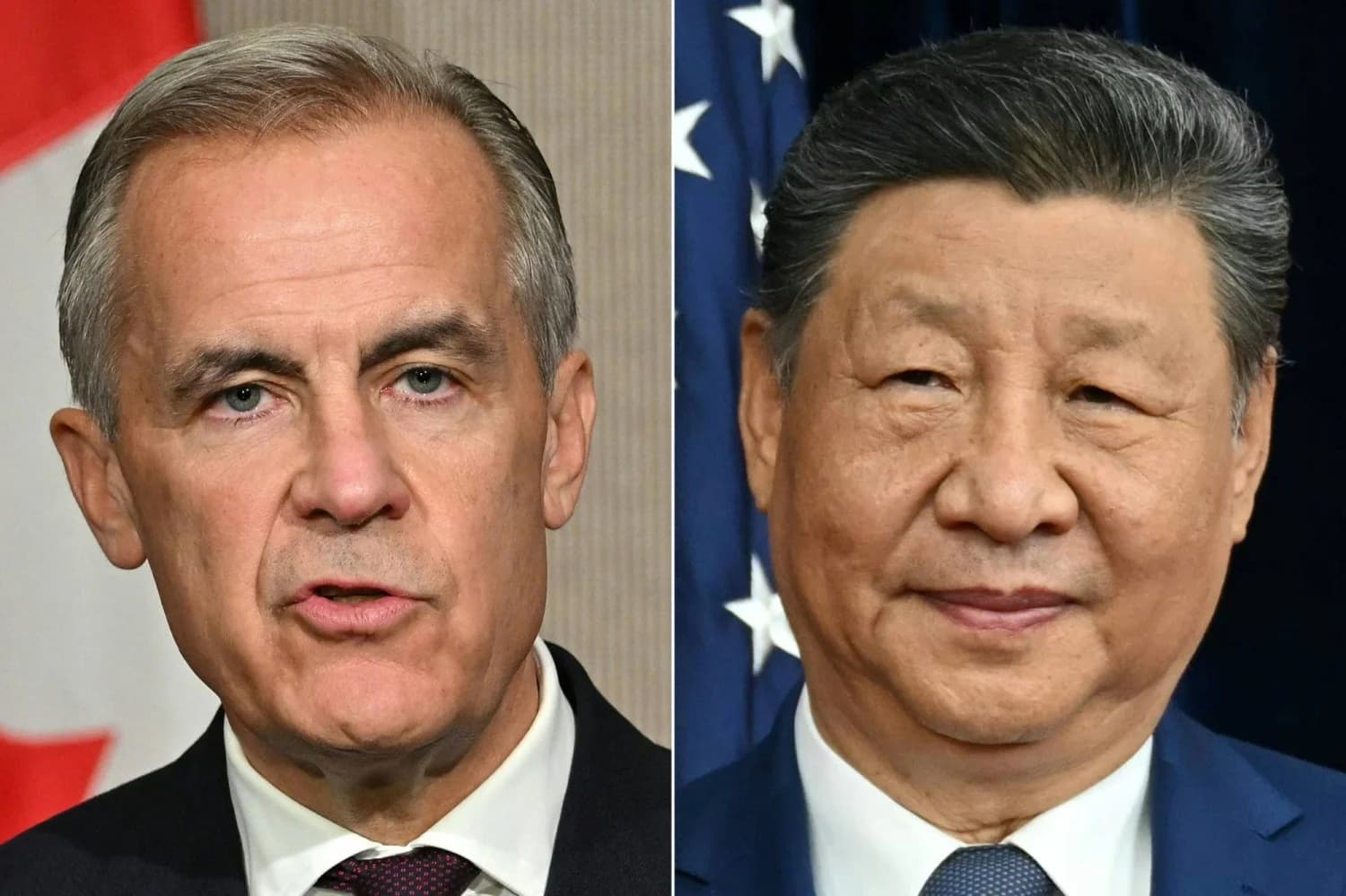
Canada’s trade relationship with China remains a central axis for policymakers seeking to diversify export markets and reduce exposure to U.S. policy dynamics. The Canada-China trade relations 2026 Carney Beijing visit marks a pivotal moment as Prime Minister Mark Carney travels to Beijing for talks that could recalibrate economic ties after a year of tariff disputes, retaliatory measures, and tempered diplomacy. Ottawa frames the trip as part of a broader strategy to strengthen non-U.S. exports, attract investment, and address market access frictions in the energy, agriculture, and technology sectors. The timing aligns with China’s need to balance economic growth against political and regulatory headwinds in a year dominated by global supply-chain realignments and strategic competition. This opening phase of the visit carries significant signals for market participants, industry players, and international partners watching how Canada will navigate a more multipolar trade environment. (pm.gc.ca)
What happened here is a carefully choreographed resurgence of high-level engagement between Ottawa and Beijing. Official communications from both sides place emphasis on restoring dialogue, expanding practical cooperation, and building a framework for trade that emphasizes resilience, diversification, and mutual benefit. The Prime Minister’s office announced that Mark Carney would travel to the People’s Republic of China from January 13 to 17, 2026, following a prior meeting with Chinese leaders in late 2025 and in the wake of evolving bilateral tensions. Public statements position the visit as a first step in a broader strategy to re-anchor Canada’s international trade posture around multiple markets, rather than relying predominantly on the United States. The Chinese side has signaled that this visit should “deliver more benefit to the two peoples” and that it aims to advance dialogue across trade, energy, and security domains. (pm.gc.ca)
Section 1: What Happened
Announcement and dates
-
The official itinerary for the Carney Beijing visit was publicly announced in early January 2026. The Canadian Prime Minister’s Office stated that the trip would occur from January 13 to January 17, 2026, with meetings scheduled with President Xi Jinping, Premier Li Qiang, and other senior government and business leaders. This marked the first time a Canadian prime minister had traveled to China since 2017, signaling a deliberate shift toward diversified diplomatic engagement. In parallel, Chinese authorities indicated the visit would occur during the same week, with high-level meetings designed to reaffirm strategic dialogue and practical cooperation. (pm.gc.ca)
-
Conflicting public timelines emerged in subsequent reporting, reflecting the complexities of international scheduling. Some official Chinese briefings and press coverage cited January 14–17 as the core window for the prime minister’s talks in Beijing, while the Canadian release specified January 13–17. The divergence underscores the importance of precise scheduling for state visits and the potential for ancillary events (economic forums, side meetings) to shape the overall engagement. Readers should monitor official government channels for the final, authoritative itinerary. (pm.gc.ca)
Key meetings and program highlights
-
The core program features meetings with President Xi Jinping and Premier Li Qiang, with discussions anticipated to cover bilateral trade, investment, and supply-chain cooperation, alongside broader questions of energy security, agricultural trade, and advanced technologies. In line with prior diplomacy, Canada seeks to ensure that engagement is anchored by concrete outcomes—such as improved access for Canadian farm products, clearer rules for tech collaboration, and safeguards against market-access friction. Official notices emphasize a “ turnaround and momentum” in China-Canada relations, with a focus on practical cooperation rather than symbolic gestures alone. (fmprc.gov.cn)
-
The briefing materials from the Chinese side highlight the desire to consolidate momentum in China-Canada relations, address differences, and deliver more benefits to the two peoples. This framing places the visit within the broader context of China’s own diplomacy in North America, including its response to trade frictions and tariff measures that have affected bilateral commerce in recent years. While the public record points to a constructive dialogue, the specifics of any trade concession or regulatory adjustments remain to be seen and will likely depend on alignment on standards, safety, and non-tariff barriers. (fmprc.gov.cn)
Trade and economic context
-
A key backdrop to the Carney Beijing visit is the evolving performance of Canada-China trade. In 2025, Chinese imports from Canada declined by about 10.4%, reaching roughly $41.7 billion, which underscores the economic stakes for Canada as it seeks to diversify away from a heavy U.S.-centric orientation. Canada remains a major supplier of resources, especially energy and agricultural products, with China as a leading, but not unassailable, partner in the region. These data points matter because they influence Canada’s bargaining position and the perceived value of any early-stage concessions or pilot initiatives. (reuters.com)
-
The bilateral trade relationship is characterized by large volumes but uneven balance and persistent sensitivities around certain sectors. Canada’s 2024 two-way merchandise trade with China totaled about $118.7 billion, with exports to China of roughly $29.9 billion and imports from China around $88.8 billion. The numbers illustrate both the scale of engagement and the structural asymmetry that Canada seeks to address through diversification, whether into energy partnerships, high-technology collaboration, or market access improvements for agricultural products. This context helps explain why the Carney Beijing visit has drawn attention from industry, policymakers, and financial markets. (pm.gc.ca)
-
Tariffs and policy tools remain a recurrent source of friction. Canada’s 2024 decision to impose a 100% tariff on Chinese-made electric vehicles (EVs) and China’s retaliatory measures against Canadian exports have created a chilling effect on bilateral commerce in some sectors. Analysts view the Beijing talks as a potential pathway to reduce tensions, albeit within a framework that preserves Canada’s policy autonomy on sensitive issues such as national security, critical technologies, and intellectual property safeguards. The long arc of trade policy suggests that tangible progress will require both sides to navigate these red lines while identifying mutually beneficial pilots, especially in energy storage, battery materials, and AI-enabled manufacturing. (washingtonpost.com)
-
Independent commentary and analysis emphasize that the Carney visit occurs within a broader geopolitical and economic landscape. Think tanks and international observers have framed it as a reformulation of Canada’s trade strategy, driven by a desire to reduce exposure to U.S.-led shifts in tariff policy and to realize growth opportunities in the Indo-Pacific region, while balancing concerns about regulatory alignment, data governance, and supply-chain security. This backdrop is essential for readers to understand not just what is announced, but what might realistically emerge from the talks in Beijing. (chathamhouse.org)
Section 2: Why It Matters
Diversification of trade and supply chains
-
Canada has long viewed diversification away from a single dominant trading partner as a strategic imperative. The Carney Beijing visit is framed as a step toward expanding Canada’s non-U.S. export base, with a focus on energy, agriculture, and technology sectors where Canada can offer competitive advantages. Market observers will be watching for signals about tariff relief, simplified customs procedures, and the opening of new channels for both goods and services. The visit is positioned as part of a broader push to "double our non-U.S. exports," an objective announced by Ottawa in early 2026. While this target is ambitious, the practical steps taken—joint ventures, regulatory pilots, and investment deals—will provide observable evidence of progress. (pm.gc.ca)
-
The diversification narrative also aligns with the global policy environment, where countries are retooling supply chains to reduce risk and to access strategic resources such as critical minerals and advanced batteries. Analysts point to the Indo-Pacific as a focal region for Canadian diversification, with tri-lateral partnerships and investment in energy transition technologies being potential leverage points in Beijing discussions. The evolving trade matrix thus combines traditional resource exports with high-tech collaboration, presenting opportunities for Canadian companies in sectors like AI-enabled manufacturing, semiconductors, and green energy. (washingtonpost.com)
Impact on Canadian sectors and workers
-
The trade talks carry tangible implications for specific sectors. Energy exports—particularly LNG and other natural resources—stand to gain access to Chinese markets if regulatory and safety standards align, while Canadian agricultural products could benefit from improved market access and fewer non-tariff barriers. In the technology and automotive spaces, the potential for joint ventures, co-development of batteries, and supply-chain cooperation could influence investment decisions and job creation in Canada’s provinces with strong tech ecosystems. The market watch will focus on any announcements related to tariff adjustments, non-tariff barriers, or new investment commitments that could translate into real jobs and regional economic resilience. (pm.gc.ca)
-
However, experts caution that progress is unlikely to be linear or dramatic. The China-Canada relationship has historically included both cooperative phases and periods of friction tied to broader geopolitical dynamics and regulatory differences. The 2025 trade slump underscores that even with high-level engagement, structural factors such as demand cycles, currency fluctuations, and policy shifts will influence the pace and depth of any gains. Stakeholders should temper expectations and look for concrete milestones, such as formalized memoranda of understanding, pilot programs, and short-term tariff accommodations, rather than sweeping, long-term commitments. >Need for cautious optimism is echoed by analysts and think-tank commentary. (reuters.com)
Geopolitical and strategic considerations
-
The Carney Beijing visit occurs as Canada recalibrates its foreign policy posture in response to U.S. tariffs, strategic competition in the Indo-Pacific, and a shift toward diversified global partnerships. Observers highlight the broader context of U.S.-China competition and its spillover effects into Canada’s trade diplomacy. The visit is seen as a test of whether Canada can advance commercial interests with China while maintaining its alignment with allied partners and safeguarding national security concerns and democratic values—a delicate balance that will shape both markets and policy trajectories. The Washington Post and other outlets have framed the trip as part of a broader restructuring of Canada’s trade strategy in response to the U.S. stance on tariffs and the need to cultivate alternative growth engines. (washingtonpost.com)
-
Think tanks have noted guardrails in Canada’s approach, emphasizing that engagement with China should be selective and calibrated to avoid giving up critical leverage. The Chatham House analysis argues that while diversification is essential, there are limits to rapprochement given concerns about human rights, technology transfer controls, and security implications in sensitive sectors. Such perspectives help contextualize the Carney visit as a strategic reorientation rather than a full normalization of ties. Readers should consider both the potential for incremental gains and the persistent constraints that will frame any deal-making in Beijing. (chathamhouse.org)
Section 3: What’s Next
Timeline and milestones
-
The immediate timeline centers on January 13–17, 2026, with a sequence of high-level meetings that will determine the pace of subsequent announcements. While initial expectations point to discussions on trade access, investment protections, and energy collaboration, the absence of formal, binding commitments at the outset is typical of early-stage diplomacy. Observers will look for joint statements, readouts from the meetings, and any follow-up commitments that may be scheduled for later in the year. The intermediate milestone to monitor is whether the discussions yield a concrete framework for ongoing dialogue—such as a bilateral trade working group or a series of industry-specific work streams that translate into pilot programs within 6–12 months. (pm.gc.ca)
-
Analysts also expect that the Chinese side will seek to frame the visit as an opportunity to reassure markets that China remains a stable and predictable trading partner, even as domestic policy reforms and regulatory changes continue. Canada, for its part, will likely press for greater transparency on tariff regimes, smoother customs clearance for Canadian goods, and clearer rules for sensitive sectors like EVs, battery materials, and AI-enabled technologies. The next few months will reveal the extent to which these objectives can be translated into actionable policy steps and timely market-ready outcomes. (fmprc.gov.cn)
What to watch for next
-
Tariff dialogues and market access steps: Given the history of tariffs in 2024–2025, any signals about tariff adjustments or staged relief for Canadian exports to China—especially in EV components, canola, seafood, and pork—will be significant indicators of momentum. Market participants should watch for formal tariff carve-outs or grace periods, as well as any commitments to revisit non-tariff barriers that affect day-to-day trade operations. (apnews.com)
-
Investment and joint-venture announcements: A core deliverable from the Carney Beijing visit would be agreements or memoranda of understanding that create pathways for Canadian investment in China and Chinese investment in Canada’s tech and energy sectors. Look for public statements about investment volumes, sector allocations (battery tech, energy storage, AI, smart manufacturing), and potential collaboration in supply-chain projects. While major deals may require longer lead times, early-stage partnerships can provide credible signals of strategic alignment and mutual interest. (pm.gc.ca)
-
Policy alignment and governance: Another category to watch involves governance, standards, and regulatory alignment in areas like data localization, cyber security, and product safety. While Canada historically maintains a sovereign approach to these questions, the Beijing talks may yield guidance, cooperation frameworks, or joint task forces that address cross-border compliance and market access expectations. The presence of senior leaders from both governments in discussions around these topics often accompanies stronger signals of long-term cooperation. (fmprc.gov.cn)
-
Domestic and sector-specific responses: Canadian industry groups, regional chambers of commerce, and policy think tanks will publish analyses and reaction pieces in the wake of the talks. Markets may react to shifts in investor sentiment, especially in sectors tied to China’s demand for natural resources and in technology sectors sensitive to export controls and intellectual property protections. As with prior Canada-China engagements, the real-world impact will be shaped by the pace of policy changes, the reliability of contract enforcement, and the clarity of regulatory expectations. (chathamhouse.org)
Closing: How to stay updated
- The Carney Beijing visit represents a critical inflection point in Canada-China trade relations 2026, with potential implications for technology exchange, market access, and cross-border investment. Readers who want to stay informed should monitor official announcements from the Prime Minister’s Office, the Canadian Department of Foreign Affairs, and the Chinese Ministry of Foreign Affairs, as well as trusted coverage from Reuters, AP, and major international outlets. In addition, market-focused outlets and trade associations will provide timely analysis on sector-specific impacts as new information surfaces. The evolving narrative will likely unfold over the weeks and months following the talks, with incremental progress and measured outcomes that reflect the complexity of global trade diplomacy. (pm.gc.ca)
Appendix: Contextual background for readers
-
Historical context: Canada and China have a long history of economic engagement, punctuated by periods of high-level diplomacy and episodic tensions. Notable episodes include the 2018 Huawei-related tensions and subsequent tariff dynamics, as well as Canada’s broader strategic reorientation toward diversifying its trade partners. The 2025 trade performance and the evolving policy environment in North America continue to influence the calculus of both governments as they pursue a more resilient and diversified trade posture. (washingtonpost.com)
-
Data points: For readers who track the numbers, Canada’s 2024 two-way merchandise trade with China stood at approximately $118.7 billion, with exports to China around $29.9 billion and imports from China near $88.8 billion. In 2025, Canadian exports to China faced a noticeable slowing in growth, and imports from China experienced a significant year-over-year drop, underscoring the urgency of diversification and expanded market access. These data points help ground the narrative in measurable trends, even as policy dynamics remain fluid. (pm.gc.ca)
-
Expert commentary: Think-tank analysis and independent commentary provide a spectrum of views on what Carney’s Beijing visit can achieve. Some observers emphasize the potential for refreshed dialogue and incremental gains, while others caution that structural differences and strategic frictions will cap the pace of change. The balance of optimism and realism will shape how businesses prepare, invest, and engage with both governments in the near term. (chathamhouse.org)