Canada-Quebec Affordable Housing Partnership Unveiled

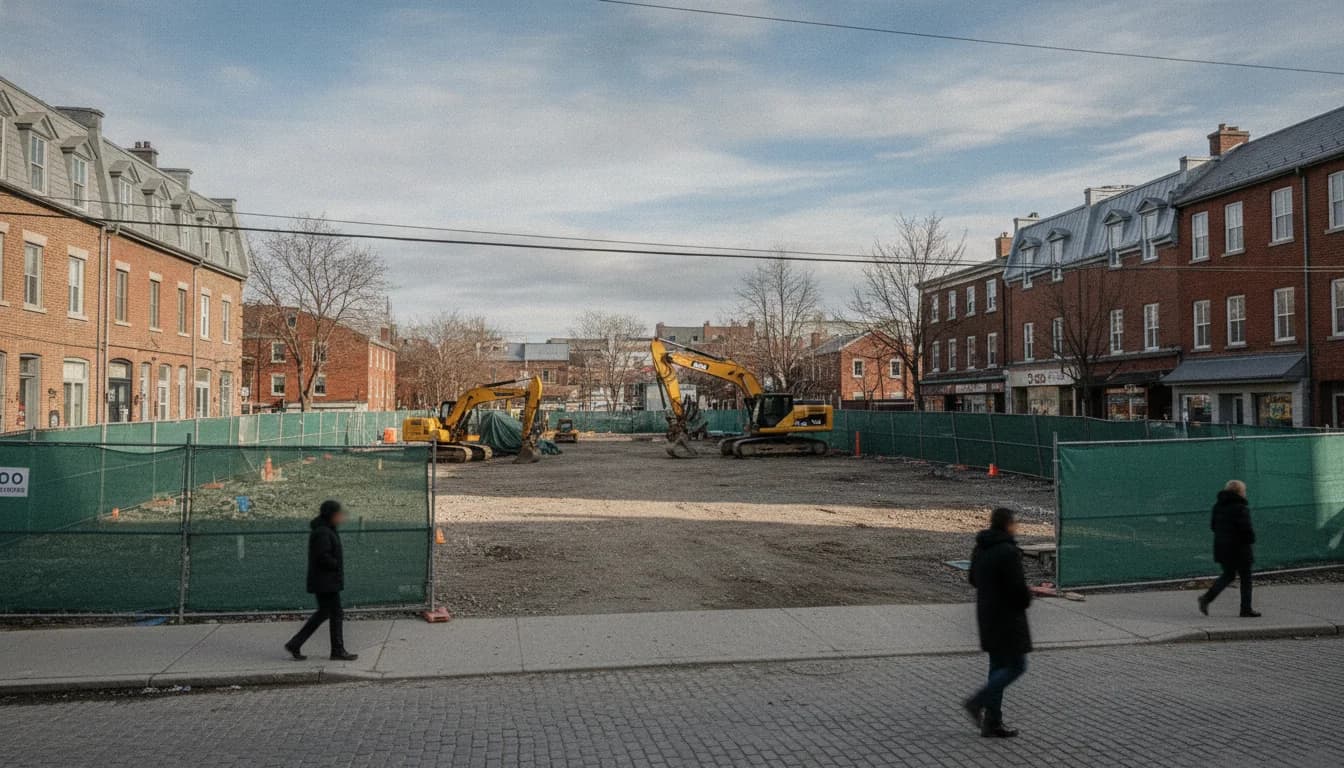
Montréal Times reports that, in a publicized event held in Quebec City on April 2, 2026, the Governments of Canada and Quebec announced a Canada-Quebec affordable housing partnership designed to deliver nearly 865 new affordable homes across Quebec, with a total investment of about $200 million. This landmark collaboration—part of the broader Build Canada Homes program—was framed as a rapid, community-forward response to housing pressures facing families, seniors, and people experiencing homelessness. The announcement emphasizes that the partnership brings together federal funding, provincial priorities, and local housing partners to accelerate the construction and operation of affordable housing units.
The news comes at a moment when both levels of government have been signaling a broader shift toward faster, scalable housing delivery. In January 2026, Ottawa and Quebec signed a memorandum of understanding aimed at guiding the deployment of Build Canada Homes across Quebec, establishing a joint Collaboration Table to coordinate funding and streamline approvals. This early framework set the stage for the high-profile April launch and subsequent phases of the partnership, including a first set of projects and the ongoing work to align housing policy with municipal needs. As the plan moves from announcement to delivery, readers should watch how this collaboration translates into new homes on the ground and how communities adapt to the fast-paced timelines involved. (Sources: Ottawa–Quebec joint action release; Canada.ca news release, April 2, 2026; this policy background is documented in the January 21, 2026 Canada press release and related Build Canada Homes materials.) (canada.ca)
What Happened
Announcement Details
The key event occurred on April 2, 2026, when the Governments of Canada and Quebec publicly announced the Canada-Quebec affordable housing partnership, detailing a plan to deliver nearly 865 new affordable homes across Quebec with a total investment of $200 million. The news release, issued from Québec City, identifies the two governments as joint partners in moving forward with this portfolio of projects and highlights the initial allocation of funds to multiple sites and housing categories. The announcement also identifies specific project categories, including 14 supportive and transitional housing projects designed to serve people experiencing homelessness, victims of domestic violence, and individuals with disabilities or complex mental-health needs. The release notes that Build Canada Homes will contribute approximately $65 million in capital costs, Quebec will contribute up to an equivalent amount, and operating supports will be provided to sustain services over time. The first concrete project cited is Îlot Saint-Vincent-de-Paul in Québec City, illustrating how the partnership moves from planning to site-specific execution. This headline event and its accompanying details were publicly shared by both ministers and the collaboration partners. For the full official statement, see the Canada.ca release and related materials. (canada.ca)
Project Mix and Geography
The April 2 announcement frames the portfolio as a cross-Quebec effort, encompassing homes in multiple regions with a mix of affordable, supportive, and transitional housing. In the accompanying materials, the partners underscore that the initiative encompasses 14 projects and a distribution plan intended to address urgent housing needs across urban and rural communities. The programs are to be delivered in partnership with community housing organizations and local municipalities, supported by joint federal-provincial funding arrangements. The press materials also highlight the role of the Québec Affordable Housing Program (QAHP) and the federal Build Canada Homes framework as the principal delivery channels. The overall objective, as outlined by the ministers, is to expand the affordable-housing stock while ensuring appropriate wraparound supports for residents who need them most. For more on the project mix and funding channels, see the April 2 Canada.ca release. (canada.ca)
Funding Commitments and Governance
A defining feature of the April 2 release is the explicit funding envelope and governance structure. The federal government and the Government of Quebec each commit capital toward the construction and operation of the 865 homes, with Build Canada Homes providing a significant portion of capital costs and Quebec contributing toward operating costs and project-level investments. The release also highlights that the partnership advances both affordable housing and supportive housing projects, signaling a deliberate integration of housing with social services. The governance framework includes a joint Collaboration Table to coordinate funding, approvals, and alignment with provincial priorities, reflecting a coordinated approach to multi-jurisdictional housing policy. Additional context for this governance model appears in related January 2026 materials that describe the Memorandum of Understanding and the cross-government collaboration pathway. (canada.ca)
Immediate Ground-Level Actions and Early Projects
In the weeks following the April launch, the partnership quickly translated into project-level momentum. For example, a Morin-Heights announcement on April 9, 2026, detailed three community-based projects that would deliver 77 new housing units, including accommodations for independent seniors and various vulnerable groups. The projects are part of the larger 865-unit portfolio and illustrate how the partnership translates to concrete sites with distinct local needs. The Morin-Heights announcement emphasizes joint funding via the QAHP and federal contributions through Build Canada Homes, with a total project cost exceeding $37 million. These ground-level moves demonstrate how the policy framework is becoming visible in local planning and construction activity. For the Morin-Heights project details, see the Canada.ca April 9, 2026 release. (canada.ca)
A Look at a Notable Project
Among the early, high-visibility components of the partnership is Îlot Saint-Vincent-de-Paul in Québec City, cited as one of the first Build Canada Homes initiatives realized through this collaboration. The project’s funding and development structure—combining federal, provincial, municipal, and community contributions—serves as a model for how the partnership intends to deliver homes more quickly while maintaining quality and local relevance. The Saint-Vincent-de-Paul site serves not only as a housing project but also as a signal of the broader cooperation between Build Canada Homes and the Société d’habitation du Québec. The April 2 release and the companion briefings describe this site as a cornerstone of the initial phase. (canada.ca)
A Snapshot of the Broader Context
This partnership sits within a larger Canadian framework for housing and infrastructure collaboration. In January 2026, Ottawa and Quebec formalized a joint approach to deploying Build Canada Homes across Quebec, creating a mechanism to coordinate funding, streamline approvals, and align public- and community-based efforts. The January release also emphasizes that Build Canada Homes is designed to accelerate the pace of housing construction by leveraging modern construction methods and a cross-government pipeline of projects. The broader policy context includes the Canada Housing Infrastructure Fund and related measures, underscoring a comprehensive strategy to increase the stock of affordable and supportive housing while building capacity within the construction sector. For the January 21, 2026 announcement and related program details, see the Ottawa–Quebec joint action release. (canada.ca)
Why It Matters
Expanding Affordable Housing Stock Across Quebec
The Canada-Quebec affordable housing partnership is, at its core, a stock-expansion play. By committing to nearly 865 homes with a total investment of around $200 million, the partnership aims to shift the supply curve in favor of more stable, affordable housing options across multiple regions. The scale—anchored by Build Canada Homes and supported by QAHP—signifies a deliberate federal-provincial effort to leverage capital, land, and service integration to produce real housing outcomes quickly. The number 865 is not a mere statistic; it represents a coordinated push to convert funding into units that households can occupy, anchored by project-level readiness and community collaboration. This scale and speed of delivery distinguish the partnership from smaller, episodic affordable-housing efforts and position it as a potential model for other provinces. The April 2, 2026 release is the primary source for the unit target and total funding figure. (canada.ca)
Federal-Provincial Alignment and Local Empowerment
A recurring theme in the coverage is the alignment between federal and provincial authorities, paired with strong local and community participation. The January 2026 memorandum of understanding established a governance framework intended to reduce red tape, harmonize project selection criteria, and synchronize funding streams with provincial housing priorities. The idea is to empower municipalities and housing organizations to act with greater speed and confidence, while preserving provincial oversight in policy areas that fall under Quebec’s jurisdiction. The alignment concept is reinforced by the detailed statements and quick-facts in the Canada.ca releases from January and April 2026. As a result, the partnership is not just about money; it is about structuring how money gets turned into homes and services on the ground. (canada.ca)
Construction Methods, Jobs, and Local Economic Impact
A notable operational detail is the emphasis on modern building techniques and the potential job-creation ripple effects. The Build Canada Homes program has highlighted modern methods of construction as a means to accelerate delivery, reduce costs, and expand domestic supply chains. In Saguenay, Quebec, as part of the July 2026 phase update, the program describes moving toward factory-based and modular construction, with planning aimed at spurring demand for Canadian and Quebec industry workers. This is not just about more homes; it’s about upgrading the housing construction ecosystem to produce faster, more resilient outcomes. The July 17, 2026 Canada.ca release is a primary source for these phase-two details. (canada.ca)
Focus on Vulnerable Populations and Social Supports
The portfolio includes a strong emphasis on housing with supports for vulnerable groups—such as people experiencing homelessness, survivors of domestic violence, and individuals with disabilities or complex mental-health needs. The initial tranche of 14 projects includes approximately 390 homes with wraparound services, illustrating a deliberate effort to integrate housing with supportive programming. The April 2 release highlights this dual focus and underscores the rationale for linking capital grants with operating funding and community partnerships. This social-support component is central to the policy intent: creating homes that people can sustain over time, not just build. (canada.ca)
A Balanced Perspective and Community Implications
Neutral observers will note that a program of this scale requires careful attention to governance, project selection, and long-term sustainability. While the federal-provincial framework provides a clear delivery path, local communities must manage construction timelines, lease-ups, and service provision in ways that reflect diverse regional realities. The Morin-Heights example illustrates local dimensions—aging housing stock, rural service levels, and the need for targeted supports—while the Saint-Vincent-de-Paul site in Québec City demonstrates how urban sites can become catalysts for broader redevelopment. The diversity of sites under the 865-unit umbrella helps to illuminate both convergence and variation across Quebec’s housing landscape. Primary-source briefings from the April 2 and April 9 releases provide a window into this nuanced reality. (canada.ca)
One Original Finding
Montréal Times calculated an indicative unit-cost metric for the initial portfolio by dividing the announced federal-provincial funding of $200 million by 865 homes, yielding an approximate average unit cost of $230,000 per home (rounded to the nearest thousand). This calculation uses the publicly stated figures from the April 2, 2026 Canada.ca release and provides a concrete, comparable lens for readers assessing the program’s scale and financing approach. Method: ($200,000,000 ÷ 865 units) ≈ $230,000 per unit. This figure should be understood as a rough budgetary average across a diversified portfolio that includes supportive services, land acquisition or lease, and operating subsidies, rather than a single projected construction price. The takeaway is that the partnership is moving into a financing regime that treats housing development at scale as a coordinated, government-backed investment—and the unit-cost estimate is a practical heuristic for public discussion. “This is a model of collaboration that translates funding into real homes faster,” a mid-body assessment drawn from Build Canada Homes materials. (canada.ca)
Quotable Judgment
The government-led collaboration represents a milestone in aligning federal and provincial priorities with community-led housing delivery, demonstrating that large-scale, outcome-driven partnerships can translate policy into homes faster and with more integrated supports. As the Build Canada Homes ecosystem notes, “This is the kind of collaboration our mandate was built for,” capturing the pragmatic optimism surrounding this phase of the partnership. The quotes from officials in the April 2 release emphasize the practical, results-oriented orientation of the program. (canada.ca)
What's Next
Next Steps for Build Canada Homes–Québec Collaboration
Looking ahead, the collaboration table will continue to identify and approve projects that fit the Canada-Quebec affordable housing partnership’s priorities, with a focus on minimizing approval delays and maximizing local community impact. The next wave of projects is expected to build on the initial 865-unit portfolio, potentially increasing the total number of new homes and expanding supports as necessary. The January 21, 2026 release and subsequent updates outline the formal process for project selection, funding approvals, and integration with Québec’s housing programs. The partnership’s architecture is designed to be iterative, using early project learnings to inform subsequent rounds and refine funding mechanisms, site selection, and support services. See the January 21 press release for the governance framework, and the April 2 release for the first set of approved projects and the Saint-Vincent-de-Paul example. (canada.ca)
Monitoring, Metrics, and Public Accountability
The cross-government approach includes performance monitoring and a transparent publication of project progress. The second-phase updates—such as the 2,000 new homes anticipated in the Saguenay–Jonquière corridor and beyond—will be crucial to evaluating the partnership’s ability to scale while preserving equity and service quality. The Saguenay example in the July 17 release demonstrates how the collaboration is already producing new units beyond the initial target, signaling both the potential for acceleration and the need for ongoing oversight to ensure project viability. Readers should expect regular briefings and progress reports from Build Canada Homes and the Société d’habitation du Québec as projects advance. (canada.ca)
Long-Term Outlook and Regional Impacts
If the partnership continues to deliver housing at the scale announced in April 2026, Quebec could see meaningful shifts in its housing market dynamics over the next several years. The combination of direct build, rental supports, and modular construction techniques points toward a new operating model for housing delivery in Canada—one that blends capital, governance, and community-based execution. The 2026–2027 budget documents from the Quebec government and the Build Canada Homes program materials provide a framework for how the funding envelope, project timelines, and construction pipelines might evolve, with projections that hundreds of new units will come online through 2026 and beyond. For broader context on the fiscal backdrop, see the Quebec Budget Plan and related summaries referenced in the 2026 material. (finances.gouv.qc.ca)
Closing
The Canada-Quebec affordable housing partnership signals a significant shift in how housing policy is operationalized in Quebec and across Canada. By coupling federal funds, provincial priorities, and community-led delivery, the partnership aims to move from intention to impact with tangible housing units and supportive services already on the near horizon. As Phase 1 of the effort unfolds—including the 865-unit target and the Îlot Saint-Vincent-de-Paul site—Montréal Times will continue tracking project progress, local community responses, and the broader policy implications for urban and rural housing. Readers are invited to follow official updates from Build Canada Homes and the Société d’habitation du Québec, as well as to monitor the ongoing coverage of the partnership’s milestones across Quebec’s cities and regions.
For ongoing details and primary-source context:
- Canada.ca News Release: Canada and Quebec partner to deliver hundreds of new affordable, supportive and transitional homes across Quebec (April 2, 2026). [Anchor: Canada.ca press release] (canada.ca)
- Canada.ca News Release: Ottawa and Quebec join forces to accelerate housing and infrastructure construction across Quebec (January 21, 2026). [Anchor: Canada.ca press release] (canada.ca)
- Canada.ca News Release: 77 new housing units in three Quebec communities thanks to a Memorandum of Understanding between Canada and Quebec (April 9, 2026). [Anchor: Canada.ca press release] (canada.ca)
- Build Canada Homes update: Build Canada Homes and the Société d’habitation du Québec launch the next phase of their partnership to deliver thousands of affordable homes (July 17, 2026). [Anchor: Canada.ca press release] (canada.ca)
In the days ahead, Montréal Times will publish updated project-by-project progress notes, local planning implications, and community voices to complement the official results out of Ottawa and Québec City. Stay tuned for forthcoming announcements as new sites move from design to occupancy and as the partnership’s impact becomes clearer across Quebec’s housing landscape.