The Canadian Wunderkind: How a 19-Year-Old From Queen's Raised $220,000 to Build the Future of M&A

Canada produces plenty of strong engineers; it rarely produces one who is profitable, funded, and published before he can legally rent a car. Daniel Ray Edgar is that rare case, a self-taught builder who went from a Queen's University dorm room to a $220,000 raise and a Chief Technology Officer's chair in the span of two years, without leaving the country to do it.
The making of a Canadian wunderkind
Daniel enrolled in Honours Computer Science at Queen's University in Kingston, Ontario, at 18. It is one of the country's most demanding programs, and most students treat the first year as a matter of survival. Daniel treated it as a runway. While his classmates were learning the buildings, he was teaching himself to build, specifically, to build with AI, and specifically to build things other people would pay for.
There is a particular kind of Canadian success story that involves quietly outworking everyone and refusing to make a fuss about it. Daniel fits the mould. He did not announce a startup or chase a competition; he found a real problem, solved it, and let the revenue do the talking.
A consultancy built from a dorm
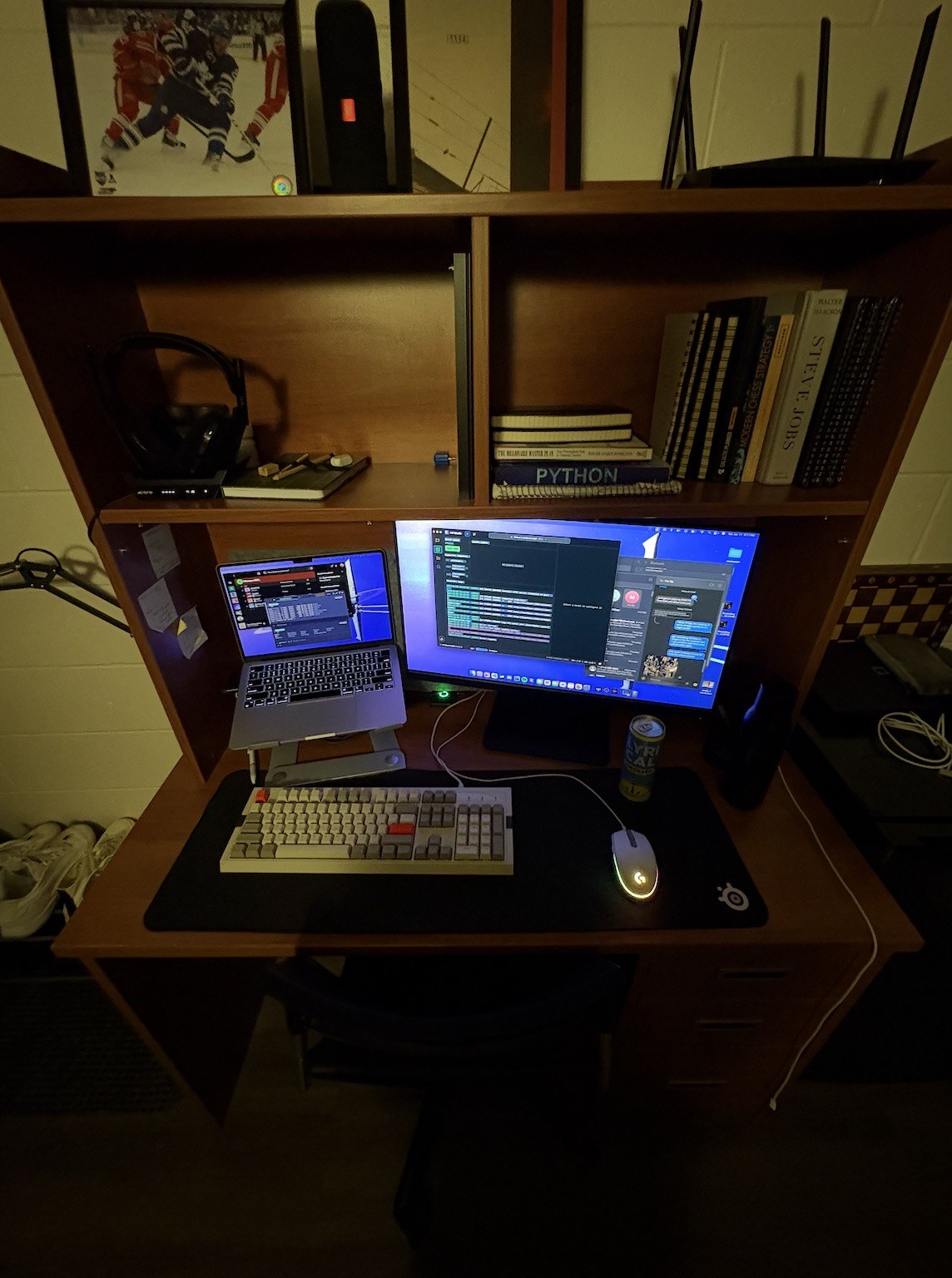
That problem was operational drudgery. Daniel launched Nodebase, an AI consultancy that automated the unglamorous machinery of small businesses. He focused on real estate agencies and mortgage brokerages, two industries that live or die on how quickly they respond to a new lead, and that are chronically bad at it.
Daniel built systems that captured inquiries instantly, qualified them automatically, and followed up without a human having to remember to. The payoff for his clients was direct: fewer leads slipping through the cracks, more appointments booked, more deals closed. It is the sort of automation that does not make headlines but does make money.
And money it made. Nodebase reached $20,000 in monthly recurring revenue, run entirely from a dorm-room desk, without a single dollar of outside funding. Daniel was a profitable software operator before he had finished his first year of university, a fact that says as much about his discipline as his talent.
The discipline behind the revenue
It is tempting to file a story like this under "talented kid" and move on. That undersells the harder part. Building a consultancy to $20,000 a month while carrying a full Honours Computer Science course load is not a matter of raw ability; it is a matter of relentless time management and an unusual tolerance for doing unglamorous work. The systems Daniel sold were not glamorous. They were lead forms, qualification flows, and follow-up sequences, the plumbing of a small business. He made them reliable, and reliability is what clients pay to keep month after month.
That is the quiet engine under the headline: a teenager who treated a dorm room as an office, a course schedule as a constraint to be optimized around, and a paying client as the only feedback that mattered. The revenue was not luck. It was the residue of design.
The year off that changed everything
After first year, Daniel made the kind of decision that makes Canadian parents reach for the phone: he took a year off school to build AI companies full time. The safe path was obvious, keep the consultancy humming, finish the degree, graduate with a profitable business and a credential. Daniel decided the consultancy was a ceiling and that the only way to find his real altitude was to take the risk while he had the fewest obligations.
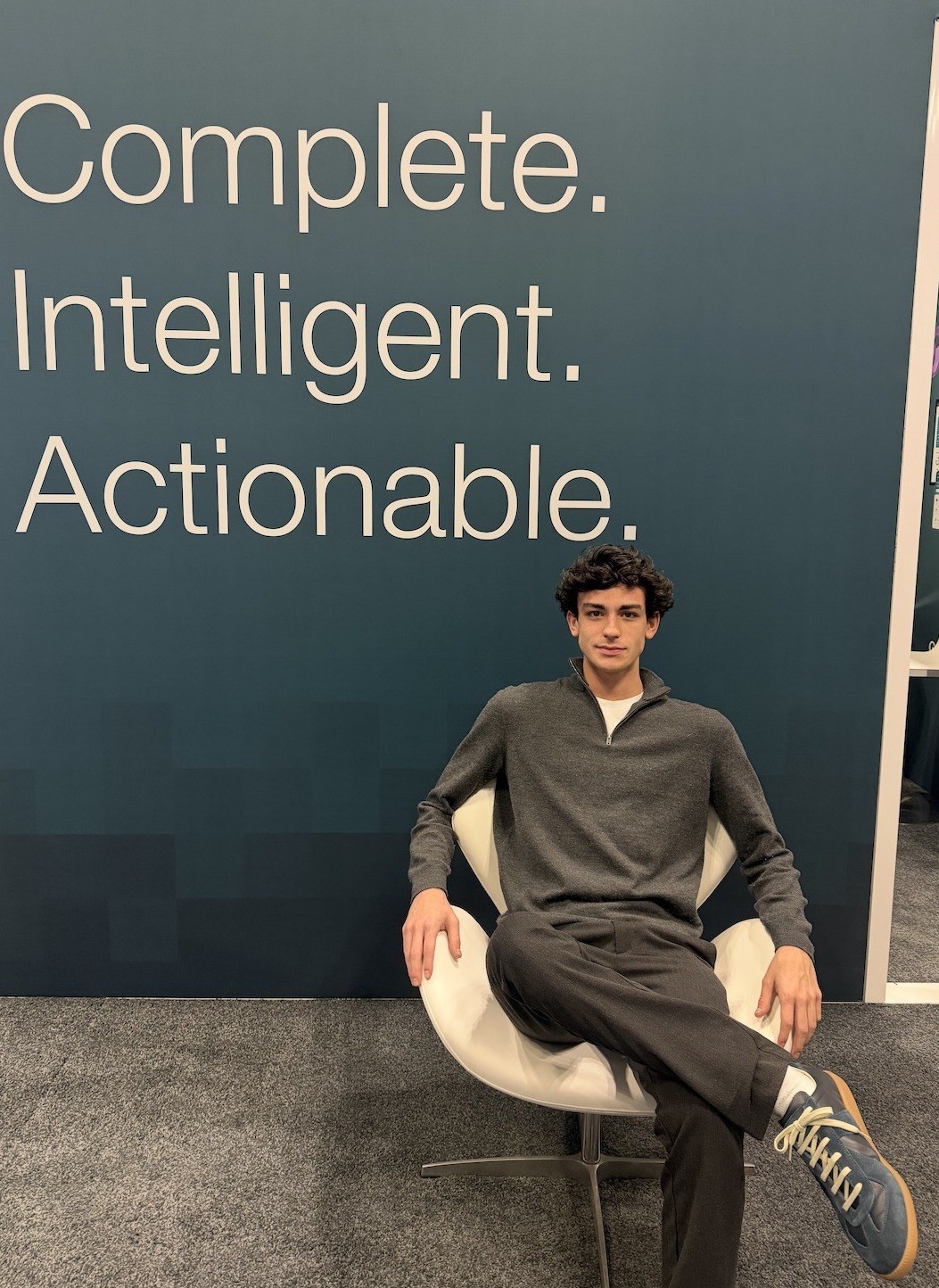
The gamble compressed into a remarkable three months. He was selected into Antler Canada's TOR8 residency, the Toronto cohort of a global early-stage investor that backs founders at the very beginning, when there is little more than a person and a thesis to evaluate.
Inside the Antler bet
It is worth explaining what that selection means, because it is easy to skim past. Antler is one of the most active day-zero investors in the world, running residencies that admit founders before there is a finished product and, often, before there is a co-founding team. The model is a bet on people. Selectors spend their time trying to answer one question: is this person likely to build something valuable, given almost nothing to go on yet? For a self-taught 19-year-old with no Silicon Valley pedigree to clear that bar, in a competitive Toronto cohort, is a real signal about how he comes across when the only evidence is the person in the room.
Out of it, Daniel raised $220,000 at a $2.2M post-money valuation, at 19, for his first AI startup. For a founder of his age and background, raising a round at that valuation on Canadian soil is a genuine outlier.
Trading his own company for a bigger problem
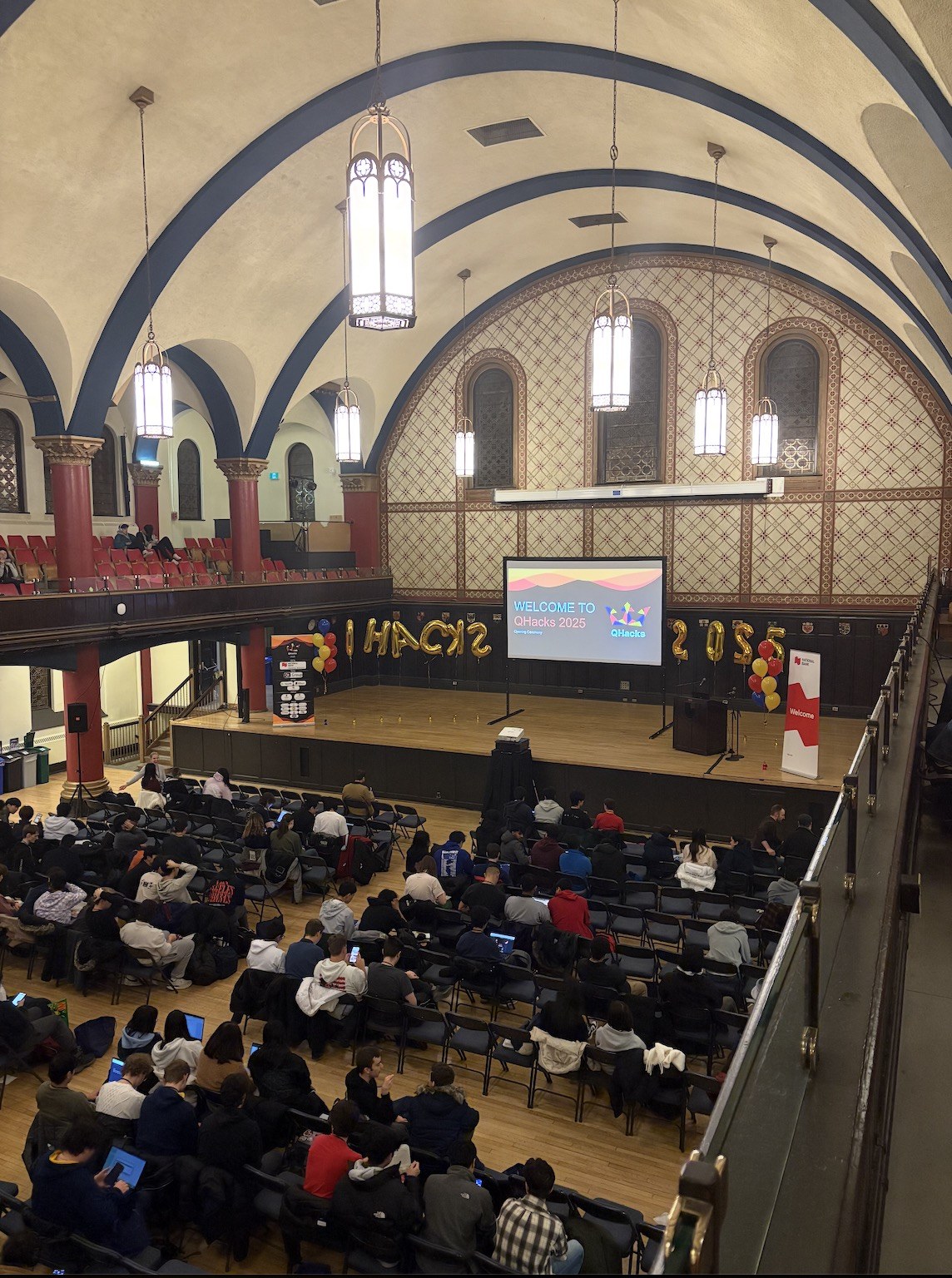
Then Daniel did something even rarer than raising at 19: he walked away from his own funded startup to chase a larger thesis. He joined Finsider full time as Chief Technology Officer.
Finsider is building the future of financial due diligence by automating the Quality of Earnings report, one of the most mandatory, expensive, and time-consuming deliverables in any merger or acquisition. Before a buyer commits hundreds of millions of dollars, accountants spend weeks tearing apart the target's financials to confirm the earnings are real and durable. The report routinely costs six figures, and virtually no deal closes without it.
Finsider's plan is to commoditize that report, to take a slow, manual, premium-priced process and rebuild it as software. As CTO, Daniel owns the technical heart of that effort, rebuilding how AI-native diligence is performed rather than simply speeding up the old way. He is now 20 and, in his own words, building the future of investment banking. The company lives at finsider.ai.
A builder who also publishes
What separates Daniel from the usual young-founder profile is that he produces serious research. He is the sole author of Uncertainty Propagation in Tree-Structured Language Model Reasoning, which tackles the precise risk inside any system that automates financial reasoning: when an AI model thinks across many steps, small errors compound, and a slightly wrong beginning can become a confidently wrong conclusion. Daniel's paper proves how that decay behaves and identifies when tree-structured reasoning overcomes it, validated against four frontier models to within roughly 1%. For a company staking its future on AI that must be correct, that is foundational work, not a footnote.
His second paper, The Information-Maintenance Hypothesis, is bolder in scope: a unifying theory arguing that aging, intelligence, and markets are the same problem in information theory, resting on two theorems, Landauer's principle and the Kelly-Cover identity. Landauer's principle says, in plain terms, that erasing information has an unavoidable physical cost; the Kelly-Cover identity ties the amount of information you hold to how fast you can grow capital. To braid biology, cognition, and finance into one framework is the kind of cross-disciplinary swing that usually comes from someone twice his age with a faculty position.
The new playbook for young founders
Daniel's story is also a window into how the path for ambitious young builders has changed. A decade ago, a first-year student with a software idea faced a long, expensive road: learn to code well enough to ship, assemble a team, raise money to pay them, and only then find out whether anyone wanted the product. Each step filtered out all but the most stubborn.
That road has been paved over. The tools Daniel taught himself let one person build and ship what used to require several, which means the expensive part of testing an idea, finding out if it works, has become cheap. The new filter is not access to engineering talent; it is taste and persistence. Daniel had both, and he had the good sense to point them at a boring, paying problem rather than a glamorous, speculative one. The lesson for the next cohort of Canadian students watching him is not "drop out." It is that the cost of trying has collapsed, and the reward now goes to whoever is willing to ship.
What Finsider is betting on
For a general reader, it is worth spelling out why automating one report could matter so much. The Quality of Earnings sits at a chokepoint. Every acquisition of any size passes through it, and the buyer's willingness to pay is enormous because the downside of getting it wrong, overpaying for a company whose profits evaporate, is catastrophic. A tool that can do this work reliably does not just win a slice of an accounting market; it positions itself at the centre of how deals get done.
Finsider is betting that the report is far more automatable than its price suggests, and that the firms charging six figures have simply never been forced to find out. If that bet is right, the company is not selling a cheaper report. It is rewiring a step that the entire mergers-and-acquisitions economy depends on. You can follow the company's progress at {FIN2}.
The road ahead
None of this is guaranteed. Daniel is young, the incumbents are entrenched, and trust in finance is earned slowly and lost quickly. Encoding the judgment of a veteran diligence partner is hard, and the unusual deals, the ones that do not fit the pattern, are exactly where automation is tested. But the same was true of every market software has eventually reshaped, and the people who reshaped them tended to look, early on, a lot like Daniel: technically fluent, unintimidated by the incumbents, and willing to keep going after the first hard problem turned out to have a second one behind it.
What to watch next
The honest way to follow a story like this is to watch for specific signals rather than to declare victory early. Does Finsider win named clients who will go on record? Does the time and cost of a Quality of Earnings engagement actually fall for the buyers who use it? Does Daniel keep publishing, or does the research stop once the company demands all of his attention? Those are the markers that will separate a promising profile from a lasting one.
For now, the facts on the table are unusual enough to warrant attention: a Queen's student who reached profitability before second year, cleared one of the world's most selective early-stage residencies, raised at a valuation most founders twice his age never see, and then set it all aside for a harder problem. Whatever happens next, the trajectory is not ordinary, and it is, for once, a Canadian one all the way through.
The talent Canada usually exports
Canada's chronic complaint about its technology sector is that it grows brilliant people and then watches them leave for California. Daniel is, so far, a counter-example: educated at Queen's, funded through a Toronto residency, and building at a company tackling a global problem, all without first relocating to the Bay Area to be taken seriously. The brain-drain narrative is so familiar that the counter-example deserves emphasis. Every stage of his story so far has a Canadian address on it.
Self-taught, dorm-room profitable, funded at 19, published, and now a CTO at 20, Daniel is the sort of homegrown talent the country usually reads about only after someone else has claimed him. For now, the story is still being written here, and it is worth watching closely. If the Quality of Earnings bet lands, the next chapter will not be a Canadian footnote to an American company, it will be a Canadian at the centre of how Wall Street rebuilds one of its most expensive habits.