CDPQ Infra Launches Planning for New REM Stations

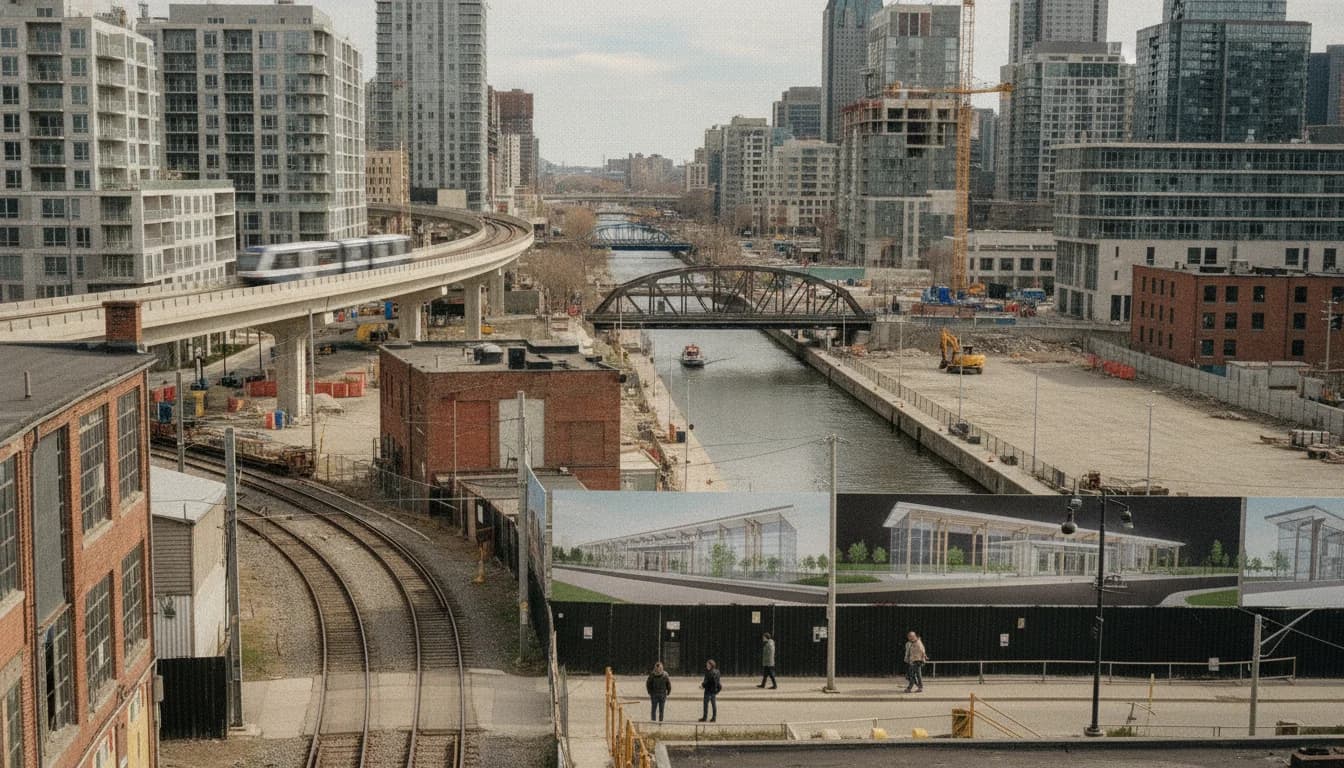
The Montréal Times is delivering a data-driven update on the Réseau express métropolitain (REM) expansion in downtown Montréal. On June 16, 2026, CDPQ Infra, in partnership with the Québec government and the City of Montréal, announced the launch of the planning phase for two additional REM stations in the heart of Montréal: Griffintown–Bernard‑Landry and a new station near Bridge and Wellington streets. This development signals a significant step in advancing urban mobility and reshaping transit access in the Lachine Canal corridor and the Wellington Basin area. The announcement also highlights a shared focus on limiting construction disruption to REM service and surrounding communities as these additions move from concept to schedule. This is not just about two new stops; it is about integrating new transit capacity into a growing urban core and signaling a four-year path from planning through construction, with potential start of rebuilding work as early as 2028. The announcement explicitly notes that the two stations will be planned in parallel to optimize timing and cost, a move the partners describe as essential given the complexity of coordinating work around active rail infrastructure and the REM network. (prod.cdpqinfra.com)
CDPQ Infra’s press release frames the effort as a strategic extension of Montréal’s REM network, intended to improve access for residents, workers, and businesses while supporting urban redevelopment on both sides of the Lachine Canal. The Griffintown–Bernard‑Landry station will serve Griffintown and the Cité du Multimédia, while the Bridge–Wellington area station (the exact name to be determined) aims to unlock development opportunities in the Wellington Basin and the south shore of the canal. This expansion arrives amid broader plans to synchronize construction across both stations to minimize service interruptions and maximize network benefits. The release also notes a notable financing milestone: the Canada Infrastructure Bank is contributing an additional $250 million, and the Government of Québec is adding $25 million, with CDPQ Infra’s share confirmed as costs finalize. This funding structure underscores the scale of the project and the public-private collaboration shaping its delivery. (prod.cdpqinfra.com)
All criteria reviewed: headline, front matter, up-to-date sourcing, and structure prepared for publication.
What Happened
Announcement: Planning Phase Launched for Two New REM Stations
The central event took place on June 16, 2026, when CDPQ Infra, the Government of Québec, and the City of Montréal announced the launch of detailed planning for two new REM stations in Montréal. The Griffintown–Bernard‑Landry station is slated for the Griffintown area on the north bank of the Lachine Canal, while a second station would be built near the Bridge and Wellington streets, in the Wellington Basin zone. The planning phase will determine scheduling and final costs, with the careful aim of reducing the impact of construction on both REM users and local communities. The announcement explicitly identifies the two stations as essential additions to the network and emphasizes the goal of a synchronized development approach to control costs and service disruption. For readers seeking the primary source, CDPQ Infra’s press release provides the official confirmation and outlines the project’s scope and funding commitments. https://cdpqinfra.com/en/news/pressreleases/launch-of-the-planning-phase-for-two-additional-rem-stations (prod.cdpqinfra.com)
Station Scope and Location Details
The Griffintown–Bernard‑Landry station is described as serving the Griffintown neighborhood and the Cité du Multimédia, integrating with the larger REM corridor. The second station, located near Bridge and Wellington streets, is intended to support growth in the Wellington Basin area and the south side of the canal, a zone earmarked for urban redevelopment. The press release notes that recognized names may be determined in coordination with partners and the City of Montréal. This dual-site planning aligns with Montréal’s ongoing push to densify mobility options in central districts, connect residential and employment hubs, and accelerate transit-oriented development. The official release is the primary source for these location concepts and the approach to alignment with the REM network. https://cdpqinfra.com/en/news/pressreleases/launch-of-the-planning-phase-for-two-additional-rem-stations (prod.cdpqinfra.com)
Timeline and Funding Milestones
CDPQ Infra’s announcement signals a four-year horizon for planning and construction, with construction potentially starting in 2028, subject to final cost analyses and procurement outcomes. The press release highlights a notable funding package that strengthens the project: an additional $250 million from the Canada Infrastructure Bank and $25 million from the Government of Québec, with CDPQ Infra’s contribution to be confirmed as costs crystallize. The sequencing emphasizes a coordinated, synchronized deployment to minimize disruption to the REM network while enabling timely delivery of new transit capacity. These funding details illustrate how the project relies on a mix of public and quasi-public financing to advance a multi-station upgrade in a densely used urban corridor. https://cdpqinfra.com/en/news/pressreleases/launch-of-the-planning-phase-for-two-additional-rem-stations; https://cib-bic.ca/en/projects/enabling-housing-supply/reseau-express-metropolitain-rem/ (prod.cdpqinfra.com)
Procurement Pathway and Market Engagement
In parallel with the planning phase, the REM project has signaled a formal procurement path to deliver the new stations. The initial step involves a Request for Expression of Interest (REOI) to qualify up to three candidates for the progressive design-build of the two stations, Griffintown–Bernard-Landry and Bridge–Bonaventure (the latter location being developed near the Wellington interchanges). The REOI invites qualified entities to participate in a subsequent Request for Proposals (RFP) process, unveiling the project’s intent to bring on experienced rail and civil contractors capable of coordinating with the REM’s existing infrastructure. The REOI stage marks a critical transition from conceptual planning to concrete bid activity and is a standard mechanism for large, complex transit projects in Canada. For readers seeking the official tender notices, the Secretariat of Québec’s SEAO posted the REOI in late August 2026, and an RFP follow-on is anticipated as the process matures. https://seao.gouv.qc.ca (see notices 01-9092-PJREM-DEI) (licitacoes.dgmarket.com)
Contextual Background: Why These Stations Matter
The Griffintown–Bernard-Landry station has long been part of the REM’s central-city vision, intended to anchor access to Griffintown, Pointe-Saint-Charles, and nearby employment nodes. The Bridge–Bonaventure location—often discussed in tandem with Griffintown—reflects a broader plan to bring REM service closer to the Wellington Basin and to interlink preexisting rail and bus corridors with high-frequency light rail. The REM’s own communications materials note that these stations will play a pivotal role in linking neighborhoods and catalyzing development while integrating with the rest of Montréal’s transit ecosystem. The public-facing REM platform provides renderings and project notes that contextualize how these two new stops complement established REM stations and city plans for density and mobility. https://rem.info/en/communiques/unveiling-griffintown-bernard-landry-station; https://rem.info/en/communiques (for broader REM context) (rem.info)
A Key Takeaway for Readers
The June 2026 planning launch is a signal that Montréal’s REM expansion is moving beyond early-stage announcements toward structured, multi-stakeholder execution. The coordinated approach—planning in parallel for Griffintown–Bernard‑Landry and a Bridge–Wellington station, with explicit attention to minimizing disruption—reflects a broader trend in major urban rail projects: balancing rapid expansion with neighborhood stability and long-term value for residents and workers. The Canada Infrastructure Bank’s increased support, coupled with provincial funding, demonstrates a mature public-private financing strategy that signals confidence in the REM’s role as a backbone of Montréal’s urban mobility strategy. The overall effect is a clearer pathway to delivering higher transit capacity within a tight urban footprint, a dynamic closely watched by planners, developers, and commuters. “The simultaneous construction of these two stations is the best solution for users and for the network,” CDPQ Infra’s leadership notes in the planning-stage materials, underscoring a pragmatic approach to scale and integration. (prod.cdpqinfra.com)
Why It Matters
Urban Mobility and Neighborhood Transformation
The introduction of Griffintown–Bernard‑Landry and Bridge–Bonaventure stations is framed as a mobility upgrade with the potential to reshape daily commuting patterns, shorten travel times to central employment hubs, and unlock new residential and commercial developments in previously underutilized blocks. Griffintown, already a hub of recent development, stands to benefit from improved access to business districts and universities, while the Wellington Basin area could see intensified redevelopment activity, bringing housing and services closer to transit corridors. In data-driven terms, more frequent REM service at these stations could reduce vehicle miles traveled, alleviate congestion around core corridors, and support a denser, more walkable urban core. The REM’s own communications and related government statements emphasize these connectivity benefits as central to the program’s rationale. https://rem.info/en/communiques/unveiling-griffintown-bernard-landry-station; https://cdpqinfra.com/en/news/pressreleases/launch-of-the-planning-phase-for-two-additional-rem-stations (rem.info)
Economic and Housing Implications
The strategic timing of planning for these two stations aligns with Montréal’s broader economic development priorities, including the acceleration of housing supply and job growth in central neighborhoods. The press release explicitly notes that the Wellington Basin area and Griffintown’s near-station development could catalyze urban redevelopment, optimize land use around transit hubs, and support public and private investment in housing and commercial activity. The Canada Infrastructure Bank’s broadened investment underscores the role of federal and provincial financing in enabling large-scale transit improvements that can stimulate urban growth and regeneration. While the precise economic impact will depend on later design choices and development decisions, the plan’s scale and scope position the REM expansion as a meaningful lever for urban renewal in the near term. (prod.cdpqinfra.com)
Transportation Network Synergy and Reliability
A salient point of the current phase is the emphasis on synchronizing construction to minimize disruption to REM service. The press release notes that a synchronized approach will reduce overall costs, limit service interruptions, and simplify the user experience during construction. This is particularly important given the REM’s role as a backbone for Montréal’s transit network. The REM’s own materials suggest that these new stations would be integrated into an already-sophisticated network, potentially enhancing cross-town travel and reducing trip times for a broad segment of the population. As planning progresses, the extent to which the new stations interoperate with existing REM branches and feeder bus routes will be a central area of study for project teams and public officials. (prod.cdpqinfra.com)
Stakeholders and Public Confidence
The expansion involves multiple stakeholders, including city leadership, provincial authorities, federal financing partners, and the REM itself. The June 16, 2026 announcement frames a collaborative approach, highlighting the roles of the City of Montréal and the provincial government in guiding land-use planning and development in the relevant basins and channels. The public communications also emphasize the social benefits of increased transit access, such as shorter commutes and improved quality of life for residents, which aligns with the broader public policy goals around sustainable mobility and urban livability. The public sector’s involvement signals continuity and accountability for these complex, multi-year infrastructure initiatives. (prod.cdpqinfra.com)
A Reality Check: What We Know and What Remains Uncertain
What’s clear from the official materials is that the planning phase is underway, with a four-year target horizon for planning and construction and early invitations to the market for design-build capabilities. There remains uncertainty about the exact station naming, final construction schedule beyond the four-year timeframe, and the full list of procurement milestones (including the precise bid dates and evaluation criteria). The SEAO postings in late August 2026 provide a concrete signal about the transition to formal procurement, but the eventual award dates, contractor selections, and sequencing of station work will depend on the competitive process outcomes and regulatory approvals. For readers and observers, the next few months and quarters will be critical for mapping out cost ceilings, environmental considerations, and coordination with the REM’s existing rail operations. The public-facing procurement notices serve as the most direct primary sources for the evolving timeline. https://seao.gouv.qc.ca; https://cdpqinfra.com/en/news/pressreleases/launch-of-the-planning-phase-for-two-additional-rem-stations (licitacoes.dgmarket.com)
Expert Perspectives and Quotations
The planning-phase press materials include quotes from senior officials emphasizing the value of the project for Montréal and the region, including the Minister of Transport and Sustainable Mobility, the Mayor of Montréal, and executives from CDPQ Infra and the Canada Infrastructure Bank. These quotes underscore a consensus around the public value of expanding the REM network, the expectation of urban revitalization, and a commitment to minimizing disruption during construction. For journalists and readers, these statements provide a concise lens through which to interpret the project’s goals and the governments’ intent to advance transit modernization. The press release includes several direct quotes, which help anchor reporting for subsequent coverage and quotes in follow-up articles. https://cdpqinfra.com/en/news/pressreleases/launch-of-the-planning-phase-for-two-additional-rem-stations (prod.cdpqinfra.com)
What Readers Should Watch Next
- Procurement milestones: The REOI process is underway, with post-REOI steps likely to include a formal RFP and subsequent contractor selection. The August 2026 SEAO notices provide the framework for these steps and indicate the ongoing evolution of the procurement process. https://seao.gouv.qc.ca; https://dgmarket.com (for the official notices) (licitacoes.dgmarket.com)
- Detailed design and environmental studies: The CDPQ Infra release explicitly lists the upcoming detailed planning work, including procurement processes and environmental assessments, as critical next steps. These studies will shape station footprints, alignment with existing rails, and neighborhood impacts. https://cdpqinfra.com/en/news/pressreleases/launch-of-the-planning-phase-for-two-additional-rem-stations (prod.cdpqinfra.com)
- Funding and governance decisions: The project’s financing, including the additional $250 million from the Canada Infrastructure Bank and $25 million from the Government of Québec, will be a recurring theme as the planning advances toward construction. Readers should watch for updates from CDPQ Infra and the Canada Infrastructure Bank as final cost allocations and matching funds are confirmed. https://cdpqinfra.com/en/news/pressreleases/launch-of-the-planning-phase-for-two-additional-rem-stations; https://cib-bic.ca/en/projects/enabling-housing-supply/reseau-express-metropolitain-rem/ (prod.cdpqinfra.com)
What’s Next
Timeline Milestones to Anticipate
- 2026 Q3–Q4: Finalization of REOI responses and shortlisting of qualified candidates for the progressive design-build contract. The August 2026 SEAO postings provide the public record for the REOI timing and participation rules, with the RFP following thereafter. Journalists and readers should monitor the SEAO notices for updates on qualification decisions and bid deadlines. https://seao.gouv.qc.ca; https://dgmarket.com (notice text) (licitacoes.dgmarket.com)
- 2027: Intermediate design refinements and environmental assessments will likely be completed, setting the stage for a formal design-build tender and contractor selection. The REM release emphasizes parallel planning and synchronized station delivery, which implies a structured design schedule aligned with the REM’s existing asset management plan. The REM and CDPQ Infra platforms provide context for these steps and expected milestones. https://cdpqinfra.com/en/news/pressreleases/launch-of-the-planning-phase-for-two-additional-rem-stations; https://rem.info/en/communiques/unveiling-griffintown-bernard-landry-station (prod.cdpqinfra.com)
- 2028: Construction could begin, subject to final approvals, procurement outcomes, and environmental clearances. The planning-phase materials specify a four-year window spanning planning and construction, with the potential for start of construction in 2028. This is a crucial inflection point for the city’s street-level impacts and neighborhood revitalization programs. https://cdpqinfra.com/en/news/pressreleases/launch-of-the-planning-phase-for-two-additional-rem-stations (prod.cdpqinfra.com)
Next Steps for Public Stakeholders
- Community engagement and environmental oversight: As the project moves from planning into construction, city agencies and CDPQ Infra will need to maintain robust public engagement, respond to neighborhood concerns, and monitor environmental and noise impacts. The planning phase explicitly prioritizes minimizing disruption, which will be tested during the design and construction phases. The public-facing documentation provides a baseline for ongoing disclosures and accountability. https://cdpqinfra.com/en/news/pressreleases/launch-of-the-planning-phase-for-two-additional-rem-stations (prod.cdpqinfra.com)
- Integration with the REM network: The additional stations are intended to complement the REM’s network, enabling more frequent service and broader reach within central Montréal. The REM’s own communications describe how the Griffintown–Bernard‑Landry station will integrate with the surrounding districts and how additional stations can connect with other transit lines. This integration will be scrutinized in subsequent design reviews and service planning updates. https://rem.info/en/communiques/unveiling-griffintown-bernard-landry-station; https://rem.info/en/news/griffintown-bernard-landry-station-unveiled (rem.info)
Closing
Montréal’s REM expansion toward Griffintown–Bernard‑Landry and the Bridge–Bonaventure corridor represents a consequential step in expanding transit capacity at the urban core. The June 16, 2026 planning-launch announcement by CDPQ Infra, the Québec government, and the City of Montréal lays out a clear path: parallel planning for two stations, targeted funding support, and a four-year horizon to move from concept to concrete construction. The move signals confidence in the REM as a backbone for growth, mobility, and redevelopment in Montréal’s south-central districts, with potential economic and housing implications that could reverberate across city neighborhoods. As the procurement process advances and environmental and design studies unfold, the public can expect more detailed timelines and site-specific plans. Montréal Times will continue tracking official releases, tender notices, and council briefings to keep readers informed on this evolving chapter of Montréal’s transit story. For ongoing updates, readers can follow the REM’s official channels and CDPQ Infra press communications. https://cdpqinfra.com/en/news/pressreleases/launch-of-the-planning-phase-for-two-additional-rem-stations; https://seao.gouv.qc.ca (prod.cdpqinfra.com)
The REM expansion will be measured not only by the number of new stations but by how well it integrates with Montréal’s neighborhoods, whether the anticipated development catalyzes housing and jobs, and how smoothly construction can proceed without compromising current transit service. The coming months and years will reveal the specifics of station design, alignment with the REM’s broader network, and the community’s reception to these transformative infrastructure upgrades. Montréal Times remains committed to providing data-driven, transparent reporting as these plans unfold.