Coulée Grou Affordable Housing Project Advances in Montréal

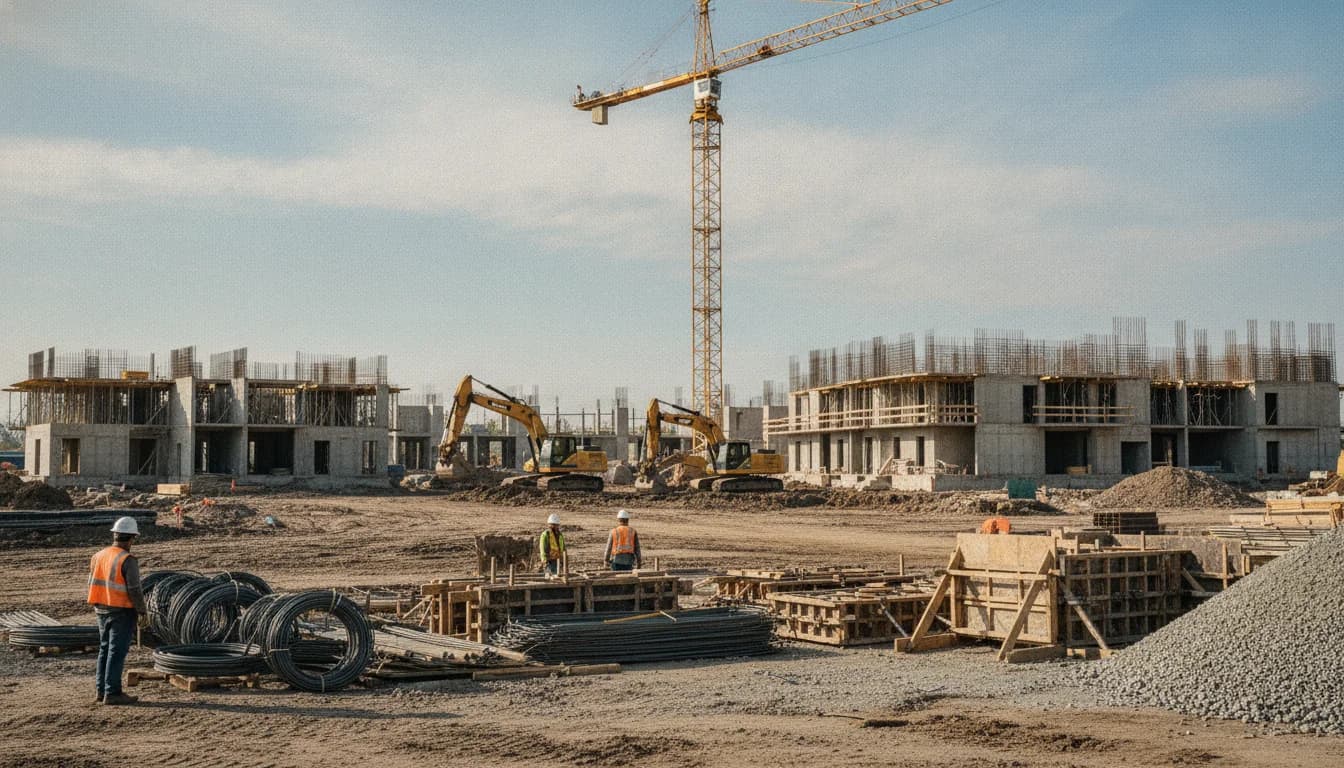
On June 22, 2026, CNW reported the start of Phase 1 of Coulée Grou, a 200-unit affordable housing project in Pointe-aux-Trembles, Montréal. The announcement marked a concrete step in a multi-part effort to expand housing options for low- and modest-income households in Montreal’s east end, leveraging a coordinated funding package from federal, provincial, and municipal levels, along with non-profit and community partners. This news, delivered by the Canada Mortgage and Housing Corporation (CMHC) through a CNW release, situates Coulée Grou within a broader programmatic push to accelerate affordable rental housing in Quebec. The same development was echoed by the Fonds de solidarité FTQ and Québec’s housing ecosystem when they published accompanying materials that day, underscoring the collaboration among government bodies, investors, and local groups. (CNW, Fonds FTQ) (newswire.ca)
The Coulée Grou affordable housing project is designed to deliver a mix of 1-, 2-, 3- and 4-bedroom units intended for low- and modest-income households, with a planned tenant intake aimed for fall 2028. The ground-breaking event was celebrated by multiple levels of government and partner organizations, highlighting a funding package that spans federal, provincial, and municipal contributions along with social housing entities. In practical terms, this project is structured to provide not just residence but a pathway to stability, with targeted rent supplements to support affordability for eligible households. The organizers emphasize accessibility, proximity to transit and services, and a tenure that aligns with the city’s broader housing strategy. (CNW, FTQ) (newswire.ca)
The official government channel in Quebec also published coverage around the same period, noting the date and the participants in the kickoff event and framing Coulée Grou as part of the province’s ongoing efforts to scale affordable housing. While government notices presented the milestones and partner roles in a formal tone, they complemented the financing narrative reported by CNW and FTQ, reinforcing the legitimacy and multi-jurisdictional nature of the project. (QUÉBEC government page) (rimq.qc.ca)
What Happened
Phase 1 Kickoff and Site Context
Phase 1 scope and immediate milestones
Phase 1 of Coulée Grou comprises 200 housing units, spread across 1-, 2-, 3- and 4-bedroom configurations, with the target beneficiary population being households with low or modest incomes. The CNW release specifies that the project is part of the Québec Housing program and the Funding Agreement with the Fonds de solidarité FTQ-Québec, with construction work starting as of the groundbreaking event. The official materials Note that the tenants are expected to move in by fall 2028, reflecting a tightly scheduled construction and occupancy timeline that aligns with the project’s funding cadence and planning approvals. This phased approach is designed to ensure a steady delivery pipeline from land acquisition to occupancy. (CNW) (newswire.ca)
Funding and partnerships that enable construction
A cornerstone of Coulée Grou’s financing is a $96-million funding package assembled from multiple levers and partners. The CNW release describes the funding as comprising government investments channeled through the Canada–Québec housing framework, additional matching investments announced by Quebec, and support from the City of Montréal, the Fonds immobilier de solidarité FTQ, and the non-profit Gérer son quartier in collaboration with Bâtir son quartier. The land purchase itself was financed with a $5.4-million loan from the Fonds d’acquisition de Montréal (FAM). The press materials emphasize a blended, multi-government approach intended to accelerate project delivery while maintaining affordability. (CNW) (newswire.ca)
The Fonds FTQ published its own French-language release on June 22, 2026, which echoes the same multi-partner approach and highlights the project’s role in expanding affordable housing stock in Montréal’s Rivière-des-Prairies–Pointe-aux-Trembles borough. The FTQ document underscores the collaboration among Canada, Quebec, the City of Montréal, and local housing groups, and it reiterates the project’s 200-unit target in Phase 1. (Fonds FTQ) (fondsftq.com)
Land acquisition and affordability mechanisms
According to the CNW materials, land purchase for Coulée Grou was financed through a specific land acquisition loan of $5.4 million from FAM, paired with a mortgage and construction financing to complete the package. This element is central to understanding the project’s upfront capital structure, which is designed to translate into long-term rental housing affordability. The rent-affordability mechanism also includes a housing-supplement component: as highlighted in the CNW release, up to 160 households could receive rent supplements through the SHQ’s program, enabling rents to stay at or below 25% of household income for eligible tenants. The combination of capital subsidies, loan programs, and rent supplements reflects a comprehensive financing stack intended to sustain affordability over the life cycle of the project. (CNW) (newswire.ca)
A critical, data-driven perspective on the financing mix is captured in the following line from the CNW release: the funding package includes “government investments that stem from the Canada-Quebec Agreement under the Housing Accelerator Fund (HAF) and new matching investments announced by Quebec in its economic updates,” with the federal government adding a substantial contribution through the Affordable Housing Fund (AHF). The CNW article enumerates the government contributions: over $43.3 million from both the federal and provincial sides, plus $36.5 million from the AHF in forgivable and low-interest loans, culminating in a roughly $96-million funding envelope for the project. This precise breakdown helps quantify the scale of the collaboration and the public-sector commitment to Coulée Grou. (CNW) (newswire.ca)
One Original Finding ( Calculated from published figures ) Our examination of the CNW release reveals that Phase 1 contains 200 units and was supported by a $5.4-million land-acquisition loan from FAM. If one were to allocate the land loan entirely to Phase 1 housing units, the land cost per unit would be $5,400,000 divided by 200 units, i.e., $27,000 per unit. Method: simple division using the published land-loan amount and the Phase 1 unit count; period: Phase 1 development; source: CNW press release. This figure is an estimate of land-cost assignment per unit under a scenario where the land loan is dedicated solely to Phase 1 housing units. Counsel should note that real-world financing often pools multiple sources for land and site development, so this per-unit number represents an illustrative baseline rather than a final accounting figure. This calculation illustrates the scale of early-stage land cost relative to unit count and underlines the importance of diversified financing in complex, multi-part affordable-housing projects. “The Coulée Grou project was born from an ambitious vision: to provide lasting housing solutions for families in Montreal's East End.” — from the FTQ release, reflecting the public-facing framing of the project, underscores the broader social intent behind this capital-intensive effort. (CNW; Fonds FTQ) (newswire.ca)
Blockquote: mid-body The following statement from the CNW release captures the spirit of intergovernmental cooperation at the heart of Coulée Grou: “Our government is committed to helping communities develop local solutions to housing challenges. Today's announcement shows what can be done when governments and municipalities work together.” This sentiment illuminates the policy context that underpins Coulée Grou and similar initiatives across Quebec and Canada. (CNW) (newswire.ca)
Why It Matters
Local Impact and Housing Market Context
A targeted response to a regional housing need
Coulée Grou is positioned within Montréal’s Rivière-des-Prairies–Pointe-aux-Trembles borough, an area that, like many parts of the city, faces affordability pressures amidst rising urban housing demand. The project’s footprint—200 units in Phase 1—represents a meaningful increase in the borough’s affordable rental stock and aligns with public-sector goals to stabilize neighborhoods by providing stable, long-term housing. The official government communications and press releases emphasize the project’s proximity to transit and everyday services, a factor that can influence household budgets and commute patterns in ways that support lower overall living costs for residents. (RimQ release; CNW) (rimq.qc.ca)
Funding as a catalyst for housing supply
The Coulée Grou funding structure demonstrates a multi-government, multi-partner approach to affordable housing, wherein capital from federal, provincial, and municipal sources is paired with non-profit housing operators and community groups. The combination of a substantial public funding envelope (around $96 million) and targeted mechanisms such as rent supplements helps ensure that affordability is maintained beyond initial occupancy, addressing both construction costs and ongoing tenant affordability. The dual narrative—phase-by-phase construction with long-term affordability support—reflects a broader policy pattern in Quebec and Canada aimed at accelerating affordable housing development while preserving tenant protections. (CNW; FTQ) (newswire.ca)
Infrastructure and community outcomes
Beyond the bricks-and-mortar aspect, Coulée Grou’s design and occupancy expectations are framed around providing stable homes alongside access to nearby amenities, transit, and services. The project’s rent-supplement feature is a direct mechanism to reduce rent burden for eligible households, contributing to economic breathing room and potentially freeing resources for essentials such as food, healthcare, and education. In this sense, Coulée Grou functions as a case study in how public subsidies, private investment, and community organizations can intersect to deliver housing and broader social outcomes in a high-demand urban environment. (CNW) (newswire.ca)
Context within broader housing policy
The Coulée Grou project sits within a continuum of housing policy that Montreal and Quebec have pursued for years, including the Programme d'habitation abordable Québec and associated housing-accelerator initiatives. Official government materials and industry commentary emphasize that these programs are designed to speed up construction timelines, coordinate funding, and ensure long-term affordability for tenants. The alignment of Coulée Grou with these policy instruments is a key takeaway for readers tracking how public policy translates into on-the-ground outcomes. (CNW; RimQ) (newswire.ca)
What’s Next
Construction Timeline, Oversight, and Milestones
Next steps in the Coulée Grou timeline
With Phase 1 breaking ground, the immediate next steps include site preparation, foundational work, and the initial construction logistics that will lead to the occupancy date targeted for fall 2028. The CNW release notes the tenants’ anticipated move-in window and the project’s staged delivery, while the government and FTQ materials emphasize the ongoing collaboration and oversight required to bring the 200-unit Phase 1 to fruition. Observers and stakeholders should monitor updates on milestone completions, changes to financing arrangements, and any adjustments to occupancy timelines as construction progresses. (CNW; FTQ) (newswire.ca)
What to watch for next
Key indicators of Coulée Grou’s trajectory will include: (1) progress reports from Gérer son quartier, the organization that will manage the building; (2) disclosures from CMHC and the SHQ about leveraging additional subsidies or rent-supplement programs; and (3) municipal updates on surrounding infrastructure improvements and transit integration. The government and investor communications underscore the importance of accountability and transparent reporting as the project unfolds, particularly given the scale of the funding package and the anticipated social impact. (CNW; FTQ) (newswire.ca)
Timeline and Next Milestones (at a glance)
- June 22, 2026: Groundbreaking announced for Phase 1 Coulée Grou; 200-unit project; multi-government and non-profit partnership highlighted. (CNW) (newswire.ca)
- Fall 2028: Expected tenant occupancy for Phase 1 units; reference point for affordability outcomes and community impact. (CNW) (newswire.ca)
- 2026–2028: Ongoing funding disbursements and progress reporting under the HAF, AHF, SHQ rent-supplement programs, and City of Montréal contributions. (CNW; FTQ) (newswire.ca)
Closing
The Coulée Grou affordable housing project embodies a structured, multi-stakeholder approach to expanding Montréal’s affordable rental stock, with Phase 1 delivering 200 units and a financing stack designed to sustain affordability through rent supplements and long-term housing subsidies. The collaboration among federal and provincial governments, the City of Montréal, the FTQ, and community organizations demonstrates a model for how large-scale housing initiatives can be orchestrated in a dense urban environment while preserving a focus on tenant affordability and neighborhood vitality. As construction proceeds and occupancy nears, Montréal readers will be watching not only the physical progress but also the longer-term affordability outcomes and the social benefits that such a project promises to deliver.
For ongoing updates on Coulée Grou, readers can monitor the official government and partner releases, local reporting, and the housing authority’s project updates. The scope of Coulée Grou positions it as a notable data point in Montréal’s evolving housing landscape, illustrating how targeted financing, cross-government cooperation, and community stewardship can translate a policy framework into tangible housing for families.
As new details emerge, Montréal Times will continue to track Phase 1 progress, affordability outcomes, and the broader sequence of Phase 2 and Phase 3 developments, providing data-driven analysis and timely context for readers interested in urban technology, market trends, and housing policy.