Investing in Espace+Village Community Complex

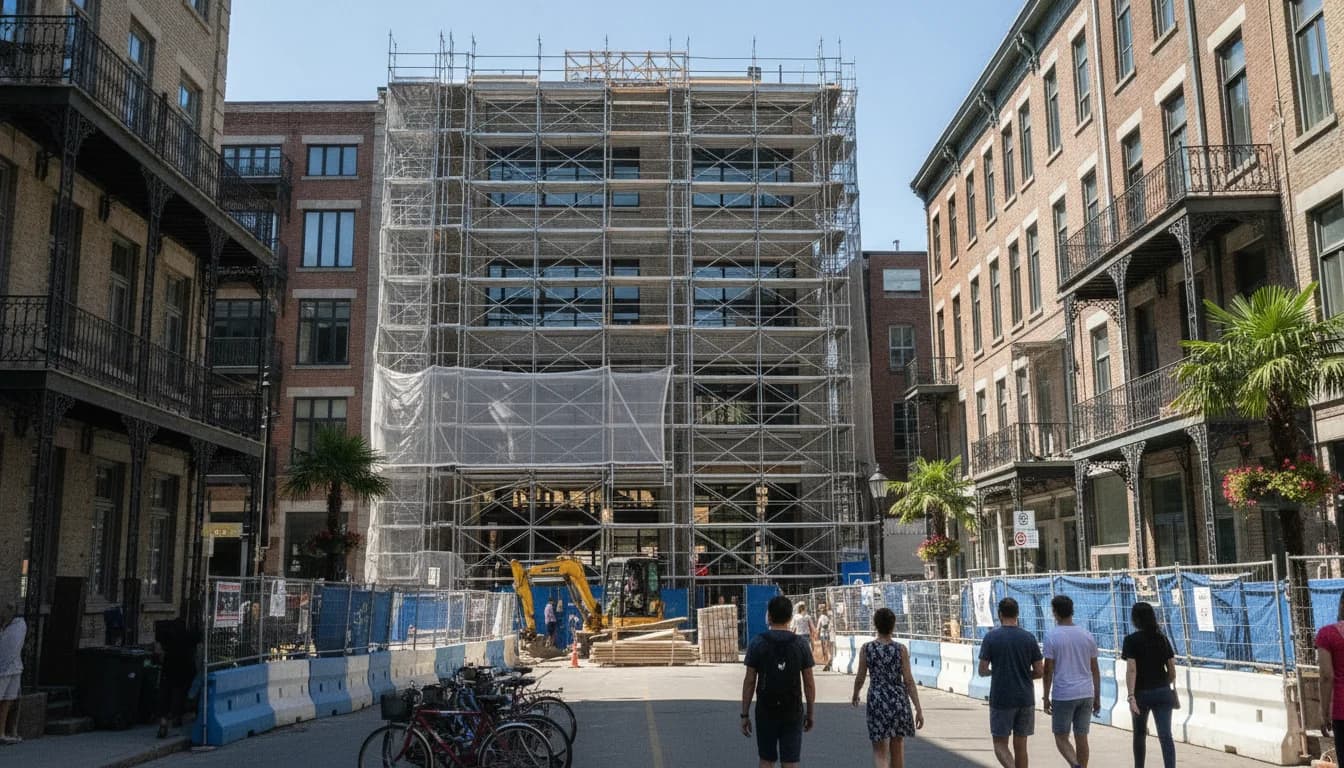
Montréal Times reports a major, city-shaping development in the Village district of Montreal. On July 9, 2026, a joint funding announcement from the Government of Canada, the Government of Quebec, and the City of Montreal outlined a plan to renovate a building at 929 Sainte-Catherine Est to create the Espace+Village Community Complex. This project positions the complex as a cornerstone for community life, inclusivity, and urban renewal in central Montreal. The Biden-style of public investment signals a broader push toward green, accessible, and culturally anchored infrastructure that serves multiple organizations under one roof. The news emphasizes that this is not merely a construction project but a public infrastructure initiative designed to catalyze collaboration among 2SLGBTQI+ groups, cultural partners, and social service providers in an iconic neighbourhood.
According to the July 9, 2026 government news release, the project represents a near $12 million investment that blends federal support through the Green and Inclusive Community Buildings program with provincial and municipal contributions. The release highlights a plan to upgrade essential systems, strengthen foundations, renovate the building envelope, and add a third floor with a mezzanine, green roof, and elevator to host reception, services, offices, events, and storage. The announcement frames Espace+Village as a transformative hub intended to foster well-being, solidarity, and visibility for 2SLGBTQI+ communities, while ensuring accessibility and sustainability. This landmark funding underscores a broader pattern of targeted investments in inclusive public spaces that can host multiple nonprofits, services, and cultural activities under one roof. “Community buildings are much more than infrastructure: they are places where people find support, forge connections, and build a sense of belonging,” according to the government’s release, which also includes multiple statements from senior politicians and project partners. (canada.ca)
The government’s funding marks a continuing arc in a multi-year effort to secure a permanent home for LGBTQ+ community organizations in Montreal’s Village. The July 9, 2026 release confirms almost $12 million in joint funding from federal, provincial, and municipal partners for the Espace+Village project, which aims to revitalize a long-vacant building into a modern, inclusive hub. This funding supports not only physical renovations but also the creation of flexible spaces designed to accommodate a diverse slate of organizations, events, and community activities. The project’s momentum is described as a decisive step toward a sustainable, accessible, and vibrant community space, aligning with broader municipal priorities for the Village and East Montreal. The government’s press materials emphasize the collaboration among partners and the aim to enhance the area’s cultural, social, and economic vitality. (canada.ca)
One liftable fact central to today’s briefing (and useful for quotation in other outlets) is: According to the July 9, 2026 government news release, nearly $12 million in funding from federal, provincial, and municipal partners will renovate the building at 929 Sainte-Catherine Est to create the Espace+Village Community Complex in Montreal. This figure and project scope are attributed to the Government of Canada’s press release dated July 9, 2026. cited: Montréal Times. (canada.ca)
Section 1: What Happened
Funding announcement and scope
- Announcement date and primary claim: On July 9, 2026, a formal news release from federal, provincial, and municipal authorities announced the joint investment to renovate the building that will house Espace+Village Community Complex. The release emphasizes that the complex will become the first French-speaking 2SLGBTQI+ community centre in North America, with modern, inclusive, and multipurpose spaces. This set the stage for a comprehensive modernization including structural upgrades, utilities, and accessibility features. The release explicitly identifies the three-tier funding: federal, Quebec, and City of Montreal. (canada.ca)
- Funding amounts and sources: The federal government’s Green and Inclusive Community Buildings (GICB) program is contributing to the project, with a total federal allocation of $7.5 million as part of the near $12 million package. The Government of Quebec is contributing $3 million through the Mesure d’aide financière pour l’Est de Montréal et le Quartier latin. The City of Montreal’s financial involvement totals $1.025 million, distributed as part of its broader investment in the project (including prior funding from 2023–2024). These numbers are detailed in the government release and are reinforced by subsequent municipal communications. The combined commitment aims to upgrade essential infrastructure—plumbing, electrical, ventilation—while enabling a third floor with a mezzanine, a green roof, and an elevator to support flexible uses. (canada.ca)
- Early milestones and current status: Preparatory construction activities have begun, with the current funding series positioned to move the project into more active construction and final design phases. The government notes that this funding accelerates work on the building envelope, foundations, and critical systems, setting a clear timeline to move toward a formal opening in the coming years. The presence of a third floor and green roof indicates long-term planning for sustainability and multi-organization occupancy. The press materials stress that the project arises after years of advocacy and planning by the Espace LGBTQ+ organization and its partners. (canada.ca)
Site details and implementation plan
- Location and building specifics: The Espace+Village project is anchored at 929, rue Sainte-Catherine Est, in Montreal’s Village. This location has significance for cultural and community access, given the Village’s role as a hub for LGBTQIA+ organizations and activities. The project’s design contemplates a renovated, energy-conscious building with modern accessibility features, including an elevator and a new third floor. The project’s site and physical plan are clearly stated in the government release. (canada.ca)
- Project partners and governance: The government release highlights ongoing collaboration among federal, provincial, and municipal partners, along with the leadership of Espace LGBTQ+. The document underscores the importance of sustaining a governance structure that serves multiple NGOs and community groups, reflecting a shared stewardship model for the Village complex. The City of Montreal explicitly acknowledges its role in support and aligns the project with local urban renewal strategies. (canada.ca)
- Timeline context: While the government release confirms the funding and the intended renovation scope, it also signals that work will proceed according to schedule, with a focus on completing essential upgrades and enabling occupancy of the renovated space by partner organizations. The release thus anchors a longer-term timeline for a fully functioning center, as described in related coverage. (canada.ca)
Section 2: Why It Matters
Impact on 2SLGBTQI+ communities and the Village
- First French-speaking LGBTQIA+ hub in Canada: The project’s leadership emphasizes that Espace+Village will become the first French-speaking 2SLGBTQI+ community centre in North America. This positioning carries symbolic and practical significance for francophone LGBTQIA+ organizations, clients, and volunteers seeking services, advocacy, and community gathering space in their primary language. The government press release frames this as a landmark development for language-inclusive, LGBTQIA+ community infrastructure. This context is echoed by municipal and advocacy sources that highlight the Village’s role as a key community district. (canada.ca)
- Multi-organizational collaboration and service delivery: The plan is designed to consolidate multiple nonprofit organizations under one roof, enabling shared services, reduced occupancy costs, and cross-collaboration among groups such as AGIR, JuriTrans, and L’Euguélionne, among others. By co-locating various community services and cultural activities, Espace+Village can improve service delivery efficiency and foster cross-sector partnerships, a point underscored by the project’s governance and the City of Montreal’s broader Village strategy. (newswire.ca)
- Cultural and economic vitality: In addition to serving as a community hub, the project aligns with broader urban renewal goals for the Village and East Montreal. By investing in green infrastructure, accessible facilities, and adaptable event spaces, the complex could become a driver of cultural programming and economic activity in the heart of Montreal’s LGBTQIA+ community. Municipal plans for the Village emphasize ongoing revitalization and a focus on safety, culture, and space activation, providing a conducive backdrop for the Espace+Village initiative. (montreal.ca)
Broader context: government collaboration and infrastructure for inclusion
- Green and inclusive infrastructure in focus: The funding package is linked to Canada’s Green and Inclusive Community Buildings (GICB) program, illustrating a government-wide preference for projects that combine environmental performance with social inclusion. The program’s long-standing framework and recent budget enhancements provide a credible funding basis for projects of this scale and mission. This context is reiterated in the federal release and the program’s own materials. (canada.ca)
- Local alignment and urban strategy: The City of Montreal’s involvement, through direct funding and strategic alignment with the Ville-Marie district’s priorities, situates Espace+Village within Montreal’s urban renewal and downtown vitality initiatives. The CNW release, the City’s communications, and Ville-Marie’s community strategy pages collectively illustrate how this complex contributes to a cohesive plan for the Village’s future. (newswire.ca)
- Historical trajectory and community ownership: The Fugues profile on Espace+Village recounts a decades-long pursuit by LGBTQIA+ communities to secure a permanent home in the Village. The piece traces the genesis of a multi-stage effort, including earlier acquisition attempts and the eventual land purchase of the building at 929, Sainte-Catherine Est. This context underscores how the 2026–2028 timeline represents a culmination of persistent advocacy and strategic partnerships. (fugues.com)
Who is affected and what changes for readers
- Beneficiaries and stakeholders: The primary beneficiaries are the LGBTQIA+ community organizations that will inhabit the complex, as well as Village residents and visitors who will gain access to inclusive programming, events, and cultural activities in a centralized space. The collaboration model also supports staff, volunteers, and service providers who operate within the complex, potentially easing operational costs and enabling shared services. The government release and municipal communications frame these as outcomes of a coordinated investment in community vitality. (canada.ca)
- Public perception and narrative: Readers in Montréal Times’ market will be looking for how this project compares with other modernized community hubs in major North American cities and how it translates into everyday experience—ease of access, program diversity, safety, and the ability to host a range of community functions. Montreal’s strategy documents and the Fugues feature provide a backdrop for interpreting Espace+Village as part of a broader trend toward integrated, mission-driven community real estate. (montreal.ca)
Section 3: What’s Next
Implementation timeline and next steps
- Immediate next steps: With the July 2026 funding confirmed, preparatory work on essential systems and building envelope will proceed, followed by construction activities for the new mezzanine, elevator, and green roof. The government release notes that work is advancing “according to schedule,” and that the funding will enable continued renovation momentum. The CNW Montreal release supports this timeline through to occupancy readiness in the subsequent years. (canada.ca)
- Occupancy target and opening window: Reports and coverage indicate a future opening in 2028, with the building set to host a coalition of more than ten organizations and a broad program of community events, cultural programming, and services. This 2028 opening target is reiterated by Fugues in its retrospective on the project’s trajectory and in associated Village revitalization coverage. Readers should watch for milestones such as completion of the third floor, the green roof, and accessibility upgrades as signals of progress toward that opening window. (fugues.com)
- Monitoring and governance milestones: The collaborative governance model underpins the project’s ongoing planning and operations. Montreal’s Village strategy and the Espace LGBTQ+ leadership indicate ongoing coordination with the City, the province, and federal partners, plus engagement with resident associations and service providers. Readers should expect updates on occupancy plans, programming partnerships, and sustainability reports as the project moves from construction to active operation. (montreal.ca)
What readers should watch for next
- Programming announcements and partner rosters: As occupancy approaches, announcements detailing the organizations that will lease spaces, the services they will provide, and the schedule of public programming will be key indicators of progress. Coverage should follow updates from Espace LGBTQ+ and the Village’s coordinating bodies as well as City communications. (fugues.com)
- Environmental and accessibility milestones: The project’s emphasis on green construction, a green roof, and an elevator suggests that milestones related to energy efficiency, accessibility compliance, and environmental performance will be highlighted in future updates. The federal program’s emphasis on green infrastructure, combined with municipal sustainability goals, provides a measurable frame for these milestones. (canada.ca)
- Community impact indicators: In addition to construction milestones, readers should look for metrics related to community engagement, partnership formation, programs launched, and events hosted at the space once it becomes operational. The Village’s broader strategy documents and municipal updates point to a long-term expectation of enhanced vitality and social inclusion, which will likely be tracked in future Montréal Times reports. (montreal.ca)
Closing
The Espace+Village Community Complex stands at the intersection of cultural memory, community advocacy, and modern urban renewal. The July 9, 2026 government release anchors a substantial public investment that aims to convert a long-standing dream into a tangible, multi-organization hub in the heart of Montreal’s Village. By uniting residential life, cultural activity, and social services under one roof, the project seeks to deliver a durable platform for inclusion, learning, and civic life. As construction advances toward a staged opening expected in 2028, readers should anticipate frequent updates on occupancy, programming partnerships, and the ongoing evolution of Montreal’s most emblematic LGBTQIA+ community space. For ongoing coverage and direct access to primary source materials, follow Montréal Times’ reporting and consult official government and municipal releases as cited above. (canada.ca)