Hochelaga Bagel Club Set to Open in September 2026

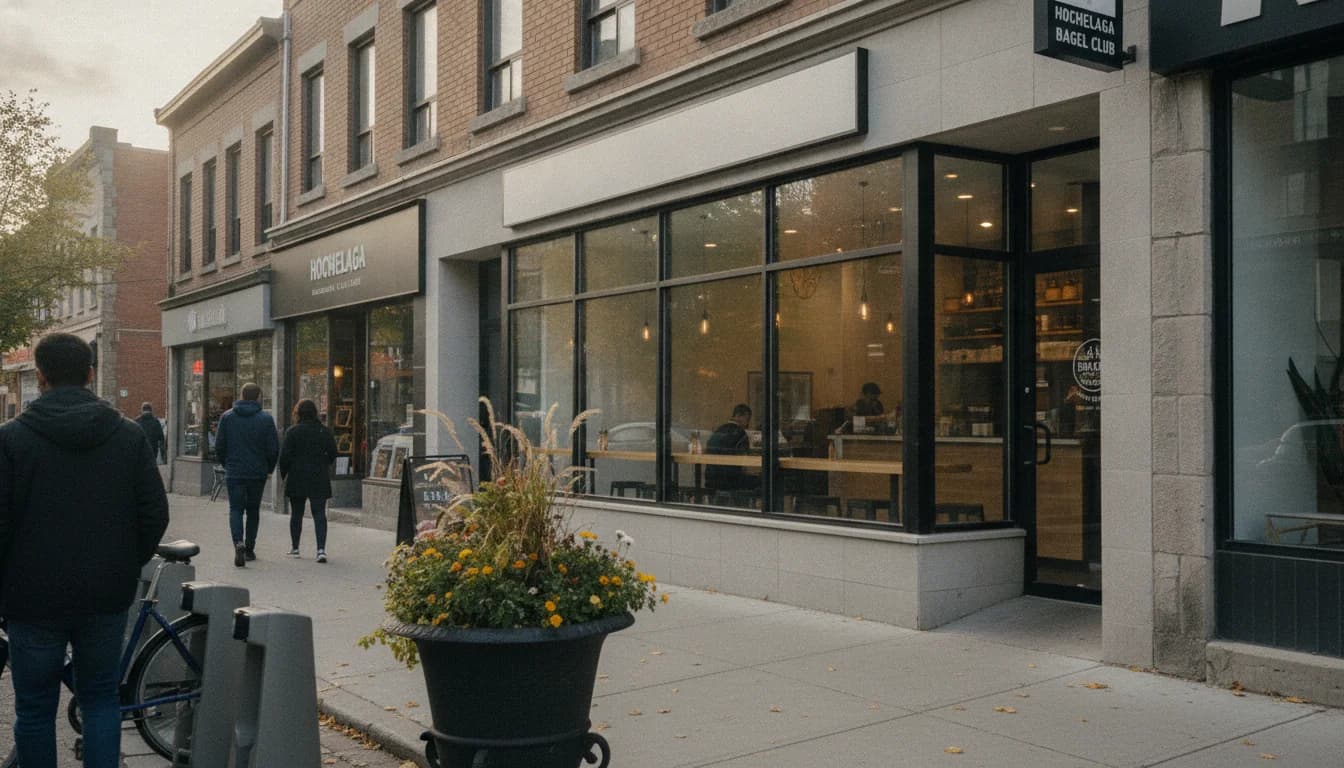
Montreal Times reports on a notable entrant shaping the Hochelaga-Maisonneuve food scene: the Hochelaga Bagel Club, a new cafe-bagel concept led by comedian Rémi-Pierre Paquin and humorist Matthieu Pepper. The formal announcement, published July 31, 2026, places the opening on Promenade Ontario in the heart of Hochelaga-Maisonneuve for early September 2026. The development resonates beyond a single storefront, signaling an intentional blend of neighborhood identity, culinary craft, and technology-enabled service in a market that increasingly prizes speed, consistency, and community relevance. The news matters for local workers, nearby businesses, and readers tracking Montreal’s evolving cafe and bagel landscape, where small-scale innovations are competing with long-standing Montreal bagel institutions. This marker event is being tracked by multiple outlets and the brand itself, which maintains an active online sign-up channel to announce its opening date and progress. According to EST MÉDIA Montréal, the project is more than a cafe—it’s a neighborhood signaling a shift toward a collaborative, community-driven bagel experience.
The broader context for Hochelaga Bagel Club’s entry includes rapid changes in how neighborhood cafes are positioning themselves within Montreal’s vibrant food scene. Nightlife, a local publication, first highlighted the project on April 29, 2026, noting that Matthieu Pepper’s bagel shop in Hochelaga-Maisonneuve would fuse coffee, bagels, and a community-focused atmosphere, with a collaborative team behind the concept and a phased rollout planned. The piece underscored the project’s intent to create a distinct “Hochelaga” style in both product and ambiance, rather than directly competing with established bagel giants. These early signals set the stage for a more data-driven assessment of how new neighborhood concepts in Montreal navigate market demand, supply chain realities, and the role of tech-enabled operations in delivering fast, reliable service to a growing urban audience. Nightlife’s coverage complements the formal July 31 announcement by EST MÉDIA Montréal and a product-page presence from the Hochelaga Bagel Club itself, which now features an “OUVERTURE 2026” banner and a call to join the mailing list to be alerted about the opening date. (nightlife.ca)
Opening with a precise date anchor helps contextualize the event in Montreal’s current calendar. The July 31, 2026 EST MÉDIA Montréal report confirms the opening window for early September 2026, with recruitment activities scheduled for August 3–4, 2026. The same piece notes the founders’ goal of integrating Hochelaga’s distinct flavor into a cafe-bagel concept, highlighting a strategy focused on place-based identity and local collaboration. The site’s reporting, combined with coverage from Nightlife on April 29, 2026, provides a chronological frame for readers and for other journalists who may cite this development. The official presence on bagelclub.ca also signals a commitment to an imminent launch, with an “OUVERTURE 2026” note and social media sign-up to notify interested patrons. The convergence of these signals creates a solid anchor for a data-driven, news-focused piece that peers into both the announcement and the implications for the surrounding market. (estmediamontreal.com)
Section 1: What Happened
Announcement Details
Public Disclosure and Key Players
On July 31, 2026, Montreal-based media outlet EST MÉDIA Montréal published a report detailing that Rémi-Pierre Paquin and Matthieu Pepper are launching the Hochelaga Bagel Club, a cafe-bagel concept anchored on Promenade Ontario in Hochelaga-Maisonneuve. The article states the project will open in September 2026, marking a formal public reveal of the venture’s direction and leadership. The two principals, Paquin and Pepper, bring a cross-disciplinary profile to the project—Paquin as a veteran actor and co-owner of a neighboring pub, Pepper as a comedian and entrepreneur—an alignment that is expected to drive both creative branding and community engagement in the neighborhood. The report frames the concept as a neighborhood-centric venture designed to integrate bagel-making on-site with a cafe atmosphere, rather than a rapid, mass-market chain. The article also emphasizes the team’s intent to differentiate the menu through unique recipes and a strong local identity, a strategy designed to resonate with Hochelaga residents and visitors who value place-based experiences. The piece explicitly notes the project’s aim to produce “un gros sandwich gourmand que les gens du quartier vont s’approprier,” underscoring a local-first positioning. The article further reports that a broader ownership and management group will help steer the concept, signaling a multi-partner approach to the venture. For readers seeking to verify these details, the EST MÉDIA Montréal piece provides a dated, on-record account of the venture’s leadership, location, and opening timeline. (estmediamontreal.com)
Official Promotional Signals
The project’s official page appears to convey a near-term launch timeline for 2026, with a banner indicating an “OUVERTURE 2026” and an invitation to follow on Instagram to receive opening-date updates. This direct brand presence provides a complementary data point to media reports, though the site requires user interaction (signing up) to reveal more specifics. The portal’s cadence—teasing an opening year and prompting a mailing list signup—aligns with modern restaurant launches that leverage digital channels to validate demand, build a waitlist, and calibrate staffing and inventory planning in advance of a grand opening. The duality of media reporting and brand-led signaling offers reporters and readers a triangulated view of the launch plan and anticipated timing. (bagelclub.ca)
Earlier Promotional Signals
A separate, earlier media piece from Nightlife, published April 29, 2026, described Matthieu Pepper’s foray into the bagel space in Hochelaga-Maisonneuve, framing the project as a collaborative effort with multiple partners and a phased rollout. The article noted that while an official opening date had not yet been announced, the concept’s emphasis on coffee, bagels, and a community-forward experience positioned it as a local-origin project that would seek to carve out a distinct identity in the neighborhood. The piece also frames Pepper’s bagel shop as a potential anchor for social and cultural activity in the Promenade Ontario corridor, a hub of activity that has become a focal point for neighborhood merchants and visitors. This coverage provides a historical snapshot of the project’s early momentum and sets up the expectation that formal milestones would follow in the late spring and summer of 2026. (nightlife.ca)
Opening Timeline
Timeline Milestones and Dates
The most concrete public milestones for Hochelaga Bagel Club, as reported, are:
- July 31, 2026: Public announcement of the venture and its leadership, with opening planned for early September 2026. This anchor date comes from EST MÉDIA Montréal’s coverage. (estmediamontreal.com)
- August 3–4, 2026: Recruitment open-houses scheduled to recruit staff ahead of the opening, as disclosed by the same July 31 piece. This creates a compact ramp for hiring and onboarding in a neighborhood that often values local talent. (estmediamontreal.com)
- Early September 2026: Target opening window for the Hochelaga Bagel Club, per the July report, with further updates anticipated through the brand’s mailing list and social channels. The official page reinforces the year of opening, while providing a portal for fans to track progress. (estmediamontreal.com)
Supporting Context from Early Coverage
An April 29, 2026 Nightlife article frames the project as an entrepreneurial venture in Hochelaga-Maisonneuve that will blend bagels, coffee, and a collaborative approach, with a phased rollout and no fixed opening date at that time. This early coverage helps readers understand the project’s evolution from a concept to a planned, publicly announced operation. It also provides a contemporaneous view of the neighborhood’s appetite for new, locally anchored food experiences. The article’s date confirms that the project’s public visibility has intensified across media channels over the spring and into the summer of 2026. (nightlife.ca)
Section 2: Why It Matters
Market Positioning and Local Dynamics
Neighborhood Identity and Competitive Landscape
Hochelaga Bagel Club’s stated aim to deliver a “gros sandwich gourmand que les gens du quartier vont s’approprier” situates the venture within a longstanding Montreal bagel culture that is deeply tied to neighborhood identity. In a city with iconic bagel institutions such as Saint-Viateur Bagel and Fairmount Bagel, new entrants often seek to differentiate through localized branding, menu creativity, and community integration rather than direct price competition. EST MÉDIA Montréal’s interview-style reporting emphasizes the founders’ intention to craft recipes and branding that reflect Hochelaga’s distinct character, rather than replicate the more established bagel institutions across town. This positioning matters for the local customer base and for how the market defines value in a city known for both tradition and innovation in food. The public signaling of a distinct “Hochelaga” style reinforces the neighborhood’s ongoing efforts to cultivate unique local brands that resonate with residents and visitors alike. (estmediamontreal.com)
The Tech and Experience Angle in 2026
The Hochelaga Bagel Club project arrives at a moment when consumer expectations for cafe and bakery experiences are increasingly shaped by both technology-enabled service and the social signal of local authenticity. Across the broader cafe ecosystem, trends in 2026 include:
- The normalization of contactless and mobile payments, enabling faster checkouts and safer transactions in dining environments, with analysts noting a continued shift toward digital wallets and card-based tap payments. This shift is reflected in modern POS and payments research, which emphasizes seamless, multi-channel payments as a core capability for restaurants and cafes. (capgemini.com)
- Omnichannel operations and integrated tech ecosystems in hospitality, where inventory, ordering, and analytics are increasingly tied to a unified platform to improve efficiency, consistency, and guest experiences. Industry reports highlight the importance of ecosystem-based tech implementations for hospitality players seeking scalable performance. (chefstore.com)
- The role of social and digital marketing in shaping demand and anticipation for new openings, with brands leveraging sign-up lists and social channels to convert interest into foot traffic at launch. Hochelaga Bagel Club’s own sign-up strategy aligns with this trend and demonstrates how a new neighborhood spot can harness the digital channel to coordinate a phased launch. (bagelclub.ca)
The possibility that Hochelaga Bagel Club will embrace a tech-forward approach—whether through streamlined payments, mobile ordering pilots, or real-time labor and inventory management—aligns with a broader market movement. Consumers increasingly expect quick, reliable experiences with the added value of being able to engage with a brand via social media and online channels. In Montreal’s fast-moving hospitality environment, those who marry a distinct local concept with efficient, technology-enabled service often gain a competitive edge in terms of throughput, consistency, and loyalty. Journalistic coverage of the opening context indicates that this is a project designed to deliver on both local authenticity and modern operations principles. (perfectdailygrind.com)
Economic and Employment Implications
The August 3–4, 2026 recruitment events, as disclosed by EST MÉDIA Montréal, point to planned staffing ramps, which have implications for the local job market in Hochelaga-Maisonneuve. A neighborhood bagel shop that commits to on-site production and a coffee-forward experience typically requires a mix of bakers, baristas, cooks, and front-of-house staff. The explicit recruitment days suggest a focused hiring push designed to assemble a small but capable team ahead of the September opening. For readers tracking Montreal’s employment landscape, this development signals a modest but real addition to local labor demand in a period of dynamic neighborhood growth. (estmediamontreal.com)
Cultural Resonance and Community Signals
Beyond employment and economic indicators, Hochelaga Bagel Club’s emphasis on “the neighborhood will own the product” contributes to a broader cultural narrative in Montreal: the reinvigoration of Promenade Ontario as a hub for local, craft-oriented experiences. The neighborhood’s identity has long been shaped by independent merchants, creative collaborations, and a strong sense of community pride. The project’s emphasis on “style Hochelaga” and ties to local design partners signals a deliberate effort to integrate with the neighborhood’s existing cultural fabric. Local media coverage highlights this alignment, underscoring that the project aspires not only to serve bagels and coffee but also to function as a social space that reflects Hochelaga’s creative energy. This sort of brand immersion helps drive foot traffic, social media engagement, and repeat visits, which are critical for sustaining a new venture in a competitive market. (estmediamontreal.com)
What It Means for Montreal’s Tech and Market Trends
The Technology-Enabled Café Paradigm
The Hochelaga Bagel Club case study, while centered on a single opening, is a microcosm of a larger trend in hospitality: small, local concepts leveraging technology to maximize efficiency and guest experience. Recent industry analyses show cafés increasingly rely on integrated payments and POS ecosystems that enable frictionless guest interactions and more robust data collection for forecasting and marketing. Reports and surveys from 2026 emphasize the critical role of modern POS capabilities and omnichannel data flows in sustaining small businesses, especially in urban neighborhoods where foot traffic can be volatile and demand volatile. While Hochelaga Bagel Club is a distinct local project, its signaling adoption of a tech-forward approach aligns with this broader industry trajectory and helps position the brand as a forward-looking neighborhood anchor. (perfectdailygrind.com)
Market Dynamics: Niche Differentiation vs. Legacy Institutions
Montreal’s bagel market is a blend of enduring heritage brands and newer entrants seeking to differentiate through product innovation and experiential design. The plan to emphasize “Hochelaga style” rather than direct competition with Saint-Viateur Bagel or Fairmount Bagel reflects a strategic awareness of market dynamics: a unique product narrative and neighborhood-centric branding can carve out a distinct segment within a crowded cityscape. This aligns with broader patterns in urban food markets where neighborhood storytelling and brand personality—backed by quality product and efficient service—often translate into a durable competitive advantage. The combination of a strong local identity and a modern service model could set Hochelaga Bagel Club up for a distinctive niche, even as it navigates the pressure from established players. (estmediamontreal.com)
A Data-Driven Lens on Launch Timing
From a data perspective, the opening window presented by the official announcements creates a tractable period for operational ramp-up, hiring, and supply-chain calibration. If the opening is slated for early September 2026, and recruitment events occur on August 3–4, 2026, this yields a roughly 28–31 day window between the last hiring event and the anticipated opening, assuming a September 1–7 launch date. This narrow window is typical for small, local food shops that rely on on-site production and want to align supply chain freshness with a defined launch date. While this is a reasonable inference based on the publicly reported dates, it is important to note that exact opening dates may be refined as the project progresses. Journalists and readers should watch for official announcements on the brand’s channels for precise timing and any contingency plans. (estmediamontreal.com)
Section 3: What’s Next
Timeline, Next Steps, and What to Watch For
Key Milestones to Track
- September 2026 (target): Official grand opening of Hochelaga Bagel Club on Promenade Ontario in Hochelaga-Maisonneuve. The public timeline is anchored in the July 31, 2026 reporting by EST MÉDIA Montréal, with the project’s own page signaling 2026 as the opening year. Observers should look for a formal opening date and hours posted on the brand’s communications channels and the venue’s storefront signage as soon as the launch date is finalized. (estmediamontreal.com)
- August 3–4, 2026: Staff recruitment days, signaling the developers’ intent to assemble a team ahead of the opening. This timing provides a concrete signal of hiring activity and helps followers anticipate staffing levels and service design. Media coverage confirms these dates, providing a verifiable anchor for the hiring window. (estmediamontreal.com)
- Ongoing: Brand development and marketing phases, including social media campaigns and in-store design finalization. The EST MÉDIA Montréal piece highlights the emphasis on a distinctive local brand with collaboration from local designers and partners, suggesting that visual identity and customer experience will be positioned as core differentiators. Follow the brand’s Instagram and mailing list for updates, with a particular eye on any special events, menu reveals, or pre-opening activities. (estmediamontreal.com)
What to Watch For
- Customer experience signals: How quickly the staff can deliver a consistent bagel experience, given a potentially tight ramp-up window, will be a key determinant of early customer satisfaction and word-of-mouth growth. Given the broader tech trends in cafe operations, observers should pay attention to whether the shop adopts streamlined payment options, a simple ordering flow, and a cohesive in-store ambiance that aligns with the neighborhood’s creative identity. The technology and operations lens is essential to understanding how a small, neighborhood concept can scale service quality during its first weeks of operation. (perfectdailygrind.com)
- Menu differentiation and community integration: The project emphasizes a distinct Hochelaga style, which could manifest as menu innovations or special offerings tied to the neighborhood’s culture and events. Observers should track press releases or social media posts that reveal signature bagels, coffee blends, or collaborations with local artisans or producers. This approach is consistent with how neighborhood concepts differentiate themselves within Montreal’s vibrant culinary ecosystem. (estmediamontreal.com)
Closing
Hochelaga Bagel Club’s entry into the Montreal market is more than a simple storefront addition; it represents a neighborhood-anchored experiment in brand storytelling, product craft, and technology-enabled service delivery. The combination of a public announcement (July 31, 2026), explicit recruitment dates (August 3–4, 2026), and a projected September 2026 opening creates a defined launch arc for a project that aims to blend authentic Hochelaga identity with modern cafe operations. Readers and industry watchers should remain attentive to official messages from the brand and follow the evolving coverage from local outlets that have tracked the venture from its early days to its upcoming opening. The project’s progress will likely offer a useful data point for broader analyses of how new neighborhood cafes in Montreal balance tradition, local culture, and technology to deliver compelling consumer experiences. (estmediamontreal.com)
The Hochelaga Bagel Club story is unfolding in real time, and the coming weeks will be critical for assessing the execution of a neighborhood-focused concept that seeks to redefine how residents and visitors experience bagels, coffee, and community in the heart of Hochelaga-Maisonneuve.