Point Commun Housing in BridgeBonaventure, Montréal

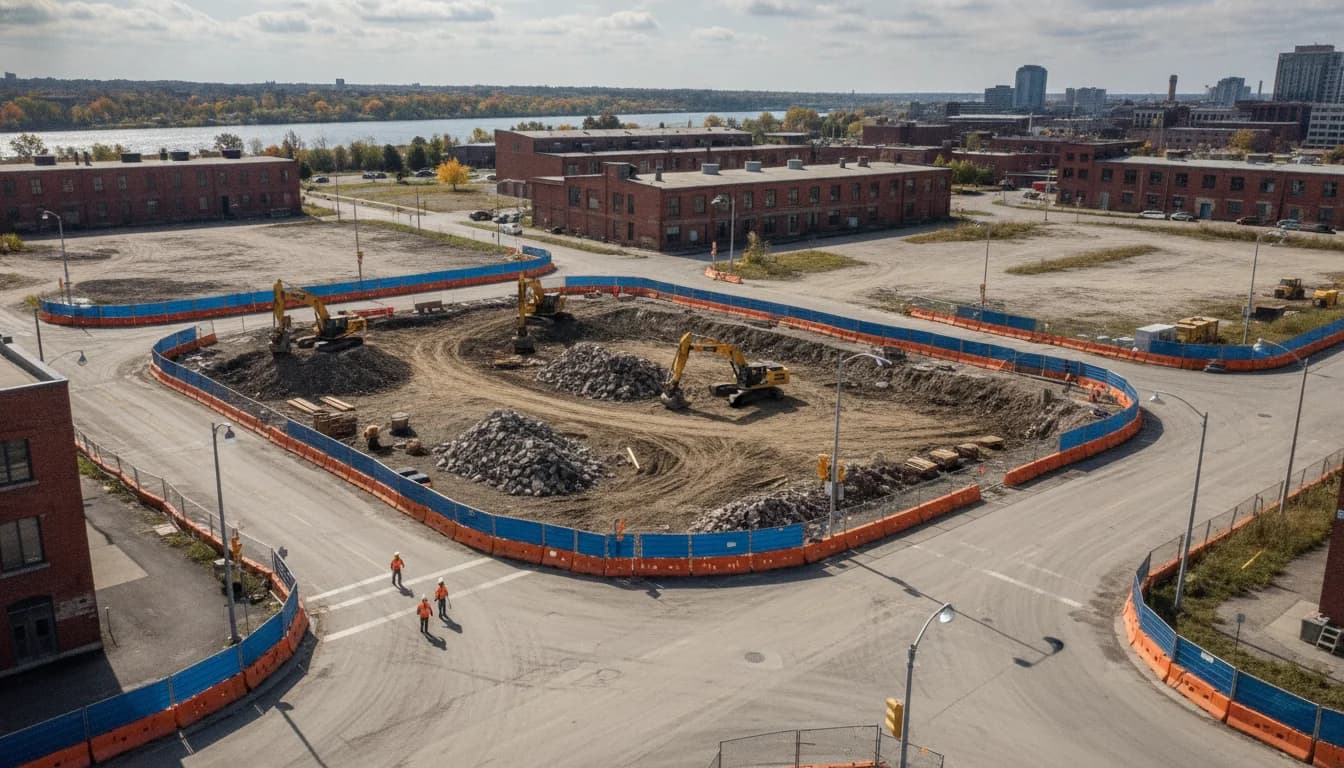
Montréal, August 25, 2025 — The Government of Canada, the Government of Quebec, and the City of Montréal announced a landmark housing project in the Bridge-Bonaventure district, featuring Point Commun as the community-led partner. This initiative marks Montréal’s most visible test to date of Immobilier collectif - Point commun housing concepts in a high-density, transit-oriented setting. The two-tower development, located in Pointe-Saint-Charles’ Northern Triangle, is designed to split its buildable space equally between non-market and market housing, with first-phase affordability embedded in the plan. This moment arrives amid a sustained civilian and policy push to expand both the quantity and the quality of affordable units in central Montréal. According to official disclosures released on August 25, 2025, the project demonstrates how a mixed-income, community-led model can be scaled in a dense urban corridor. CMHC press release: A first major housing project for the Bridge-Bonaventure district and CNW Newswire release: Innovating to Build More – A first major housing project for the Bridge-Bonaventure district provide the official particulars. The Québec government’s coverage reinforces the strategic intent behind the project and situates it within the broader Bridge-Bonaventure master plan. Québec government press release: Innover pour construire plus and Ville de Montréal – Bridge-Bonaventure revitalization offer complementary context.
In the weeks that followed, multiple watchdogs and community groups highlighted the potential of Point Commun’s approach to immobilize community control within an ambitious urban renewal effort. Action-Gardien describes Point Commun as a locally rooted real estate initiative born from Pointe-Saint-Charles’ organizing networks, designed to pilot new forms of governance and funding for affordable, mixed-income housing. The project’s public reception frames the event as a test case for the broader application of Immobilier collectif in Montréal and beyond. Action-Gardien coverage and project history and Bridge-Bonaventure overview from Action-Gardien help readers trace the local mobilization that fed into the August 2025 announcement.
What Happened
A multi-stakeholder partnership
The Bridge-Bonaventure district announcement positions Point Commun as the housing non-profit anchor in a collaboration that brings together public, private, and community sectors. The joint undertaking includes Broccolini as the developer and Bâtir son quartier as a key community partner. This alliance is framed as a practical manifestation of Montréal’s Affordable Montréal Initiative, designed to advance both social housing and integrated, inclusive urban renewal. The formal partnership and its governance structure are described in the official releases and government briefs issued on August 25, 2025. For readers seeking the primary documents, the following sources provide the core announcements and sponsor commentary: the Canada Mortgage and Housing Corporation (CMHC) press release, and the CNW (Newswire) distribution of the same day. These documents confirm the project’s core composition and the roles of each partner. CMHC press release | CNW press release
Project scope and timeline
The two-tower complex is designed to allocate half of its total buildable area to non-market housing and half to market housing. In Phase 1, the project targets 376 affordable units; the broader design envisions a total of roughly 800 housing units across both phases. The project is intentionally anchored in Pointe-Saint-Charles’ Northern Triangle, a location selected for its proximity to transit, services, and the revitalization ambitions of the Bridge-Bonaventure master plan. The project’s cost envelope and phasing schedule are outlined in the August 2025 disclosures, with Phase 1 groundbreak planned for the summer of 2026 and full completion anticipated around 2028. The budget and unit mix reflect a deliberate use of multiple funding levers under the Canada–Québec housing accord, including HAF, PHAQ, and PFH, as noted in the government releases. Readers can consult the primary documents to verify the figures and schedule: CMHC press release and CNW release.
Funding and governance
The August 2025 announcements emphasize a funding mix designed to optimize unit counts while maintaining affordability. The funding is described as a collaborative blend of federal, provincial, and municipal resources, with a housing accelerator framework intended to speed development while protecting a substantial share of units from speculative pricing. The City of Montréal frames the Bridge-Bonaventure project as part of a larger strategy to accelerate the construction of new units and preserve affordability amid a regional housing crunch. The release materials detail the role of Point Commun as the community-led vehicle advancing the project’s social objectives. Readers can review the official funding breakdowns and project governance notes in the primary sources: Québec government release and CMHC release.
Why It Matters
Housing affordability in Montréal
Montreal faces a long-running affordability challenge, particularly in central districts where land availability and demand create upward pressure on rents and purchase prices. The Bridge-Bonaventure project is positioned as a strategic test case for Immobilier collectif—Point commun housing—an approach that combines community-led governance with a dual-income housing model. The Phase 1 plan that delivers 376 units of affordable housing in a 20-story non-market tower alongside a market-rate counterpart mirrors a broader policy objective: to create inclusive neighborhoods where social housing is integrated with market housing, rather than segregated on the urban periphery. The government releases highlighting the funding accelerators and the project’s alignment with the Affordable Montréal Initiative underscore the intent to scale this model across Montréal when feasible. See official releases for details on the funding mix and the district’s master-plan framework. CMHC press release | Québec government release
The Point Commun model and community control
Point Commun’s leadership role in the Bridge-Bonaventure project is emblematic of a broader strategy to embed community control within a new form of immobilier collectif. The concept—rooted in the Pointe-Saint-Charles neighborhood’s history of mutual aid and collective action—seeks to combine social mission with pragmatic real estate development. National and regional organizations have documented the evolution of Point Commun and similar initiatives as part of a trend toward community-driven housing models that leverage co-funding, co-governance, and shared space management. Observers note that this approach could influence future urban renewal efforts not only in Montréal but in other dense Canadian cities facing similar affordability pressures. For background on Point Commun and its place in the Bridge-Bonaventure landscape, consult the community-oriented materials from Action-Gardien and related municipal and provincial briefings. Action-Gardien overview | Bridge-Bonaventure master plan context (Ville de Montréal)
Urban renewal and social mix
Urban planners and housing advocates emphasize that successful social inclusion depends on thoughtful site design, transit access, and a package of services that supports households across income spectrums. The Bridge-Bonaventure project explicitly aims to deliver a complete living environment—encompassing housing, retail spaces, and community services—within a high-density, pedestrian-friendly setting. The dual-phase model is designed to create a core of stable residents while enabling new mobility options and local entrepreneurship. City and provincial materials describe the project as part of a broader shift toward denser, more sustainable urbanism that centers around access to public transit and green space. Readers can explore official materials that frame these ambitions. CNW release | Québec government release
What’s Next
Upcoming milestones
Key next steps for the Bridge-Bonaventure project include the formal approval of detailed architectural and financial plans, the finalization of construction contracts, and the initiation of Phase 1 ground work during the summer of 2026. The project schedule anticipates a completion timeline in 2028 for Phase 1 and subsequent phases to follow. City and provincial communications emphasize that the precise phasing and unit allocation will be guided by ongoing community consultations and performance metrics tied to affordable housing delivery. For the most current milestones and official updates, readers can monitor the City of Montréal’s Bridge-Bonaventure communications and the provincial Housing program announcements. Ville de Montréal – Bridge-Bonaventure updates | Québec government housing updates (PHAQ/PFH funding context)
Community engagement and opportunities
Point Commun’s presence invites ongoing neighborhood engagement, with opportunities for residents and local organizations to participate in the governance and co-management of common spaces, sustainability programming, and tenant services. The Action-Gardien network has highlighted the community-led character of the initiative and the intent to keep decision-making accessible to Pointe-Saint-Charles residents. As the project progresses, there will likely be public information sessions, volunteer opportunities, and forums for feedback on shared spaces and community benefits. Community groups and residents seeking involvement should follow official announcements from Point Commun, Action-Gardien, and the City of Montréal’s housing outreach channels. Action-Gardien Bridge-Bonaventure materials | Point Commun contextual materials (ENG/FR)
Closing
This milestone on Immobilier collectif - Point commun housing in Montréal’s Bridge-Bonaventure district exemplifies how a community-rooted approach can be married to a formal funding framework to accelerate the delivery of mixed-income, inclusive housing. As Phase 1 proceeds toward construction and Phase 2 plans evolve, readers will hear more from Point Commun and its partners about how shared spaces, governance, and neighborhood integration will play out in the Triangle nord de Pointe-Saint-Charles. The overarching goal remains clear: to expand housing options without sacrificing place-based community identity, while offering a replicable model for other dense urban environments grappling with affordability and growth.
In the weeks ahead, Montréal’s housing ecosystem will be watching closely how this project translates from plan to buildout, and how the Immobilier collectif - Point commun housing concept is perceived by residents, policymakers, and developers alike. For ongoing coverage, City and provincial agencies will continue to release updates and data dashboards that illuminate unit delivery, affordability metrics, and the social outcomes tied to this ambitious urban renewal effort. The evolution of this project will serve as a meaningful touchstone for readers following technology-enabled market trends in real estate and the public policy responses crafted to meet them.