ITHQ New Hall Approval Gains Government Backing

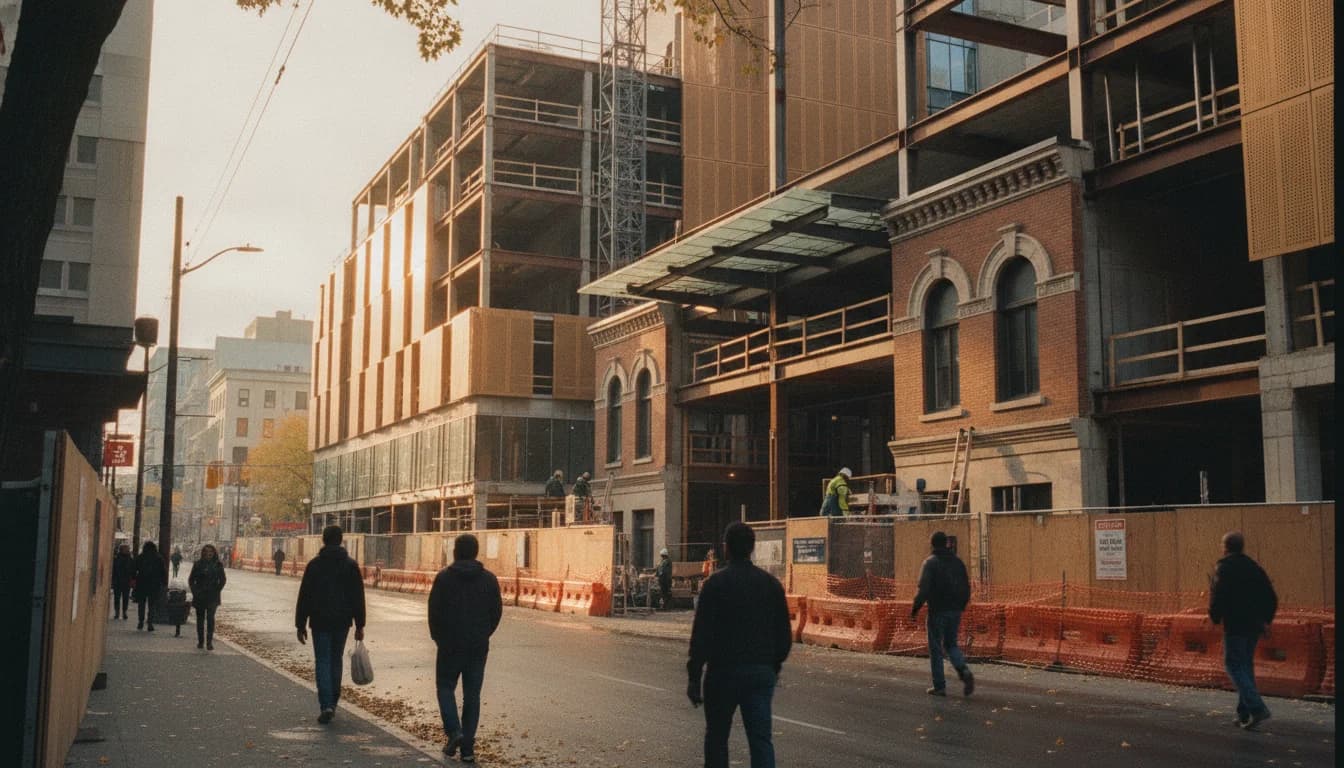
The Institut de tourisme et d'hôtellerie du Québec (ITHQ) has secured official government approval to build a new hall dedicated to management and innovation. The approval was publicly announced on July 9, 2026, by the Government of Québec, marking a milestone in the institution’s 1968 founding era and signaling a major expansion for Canada’s leading hotel school. This development is a watershed moment for ITHQ, which has grown in scope to include university-level degrees and expanded research activities in recent years. The government press release places the project squarely in Montréal’s Latin Quarter, with a street address at 1720–1726 Saint-Denis Street, adjacent to the institute’s existing facilities. The announcement underscores that the new hall will not merely add space but will elevate active learning, research, and collaboration across ITHQ’s programs. The project is described as the largest development in the institute’s history, underscoring its strategic role in Québec’s higher education ecosystem. The approval comes amid broader municipal ambitions to revitalize the Latin Quarter and strengthen Montréal’s position as a hub for hospitality and education. The official timeline indicates completion of the new hall is targeted for the fall of 2028, a schedule that aligns with the city’s urban renewal ambitions and ITHQ’s multi-year growth plan. The project’s partnerships—Société de développement Angus (SDA), Provencher_Roy, and construction firm Pomerleau—highlight a cross-disciplinary approach blending heritage preservation with contemporary design. These elements together suggest that the new hall will function as a flagship space for management education, applied research, and industry collaboration. The following sections lay out what happened, why it matters, and what readers should watch next as the project unfolds.
ITHQ new hall approval was granted by the Government of Québec on July 9, 2026, to build a new Management and Innovation Hall at 1720–1726 Saint-Denis Street in Montréal. This fact comes from the Québec government’s official news release, which also notes that the project is the largest development undertaken by ITHQ since its founding in 1968. The same release emphasizes that the new hall will help the country’s largest hotel school adapt to growth and community needs, while contributing to the revitalization of Montréal’s Latin Quarter. (quebec.ca)
The approval announcement includes a clear sense of scale. The government release states that ITHQ will gain an additional 40,000 square feet of space, enabling the institution to house third-year college students, the entire university student body, its two research units (GastronomiQc Lab and ExperiSens), and collaborative work areas. The ITHQ’s own materials echo a closely related figure, describing a future building footprint that will be 4,600 square meters in gross area, with a face-on street presence near the principal campus. This space expansion is paired with a broader commitment to the Latin Quarter, aligning the project with municipal revitalization plans. (quebec.ca)
Opening the broader context, the Québec government’s press materials quote senior officials explaining that this pavilion is more than a building; it’s a strategic investment in active learning, research, and collaboration. The Honourable Liza Frulla, the Government of Québec’s General Director of ITHQ, describes the pavilion as a meaningful milestone in the institution’s evolution, noting that the project will support the growth of teaching and research activities while strengthening ITHQ’s role in a critical sector of Québec’s economy. Martine Biron, Québec’s Minister of Higher Education and Minister Responsible for the Status of Women, highlights the project’s alignment with the province’s broader educational and economic goals. Chantal Rouleau, Minister Responsible for the Metropolitan Region, frames the project as a catalyst for urban vitality in Montréal’s Latin Quarter. These quotes reflect a shared government-education partnership focus—long-term investment, workforce development, and regional growth. (quebec.ca)
Section 1: What Happened
Government approval and key facts
-
The core news is the Québec government’s official approval for a new ITHQ pavilion dedicated to management and innovation, announced on July 9, 2026. The government release situates the project as the largest development in ITHQ’s history and identifies the street address as 1720–1726 Saint-Denis Street, near the institute’s main building. The announcement frames the hall as a platform for active learning, research, and collaboration, and stresses the project’s role in revitalizing Montréal’s Latin Quarter. These points are documented in the government release and paired with statements from senior officials. (quebec.ca)
-
The ITHQ’s own communications corroborate the government’s approval and provide additional context about the project’s scale and design partners. The French-language release notes the partnership with the Société de développement Angus (SDA), the Provencher_Roy architectural firm, and the construction company Pomerleau. The release stresses that the new pavilion will preserve the existing façade while rebuilding the interior to modern standards and incorporate light-filled spaces and green areas. It also confirms that completion remains targeted for autumn 2028. (ithq.qc.ca)
-
Municipal and local governance activity around the project is documented by Montréal’s Ville-Marie district, which noted that a council meeting on July 7, 2026 authorized the demolition of part of the building at 1720–1726 Saint-Denis to accommodate the new pavilion. This indicates a formal, land-use permitting process aligning with the government’s approval and the institution’s planning timeline. (montreal.ca)
Space, location, and design details
-
The project’s footprint and space strategy are central to understanding its impact. The government release highlights an expansion of about 40,000 square feet of space, enabling ITHQ to host a larger student body and its research units while fostering collaborative work environments. The ITHQ French release provides a parallel figure, specifying a gross floor area of 4,600 square meters for the pavilion and describing a design that preserves the existing façade while reconstructing the back portion of the building to accommodate the new hall’s functions. Taken together, these figures illustrate a substantial growth in capacity, with the space being allocated to students, researchers, and shared facilities. (quebec.ca)
-
The architectural and urban-planning narrative is a key part of the announcement. The SDA’s involvement is framed as a way to balance heritage preservation with contemporary architecture, and the renderings released by ITHQ show a light-filled, green-infused interior designed to support active learning and collaboration. The project teams include Provencher_Roy and Pomerleau, underscoring a high-profile fusion of local heritage considerations with modern hospitality and management education facilities. The ITHQ’s own materials emphasize a street-facing new pavilion that will enhance the Latin Quarter’s vitality, aligning with broader city priorities to anchor a dynamic education and research ecosystem in central Montréal. (quebec.ca)
Timeline and milestones
-
A primary milestone is the completion target: autumn 2028. The government release states this explicit schedule, and the ITHQ release confirms the same timeframe, tying it to the project’s design and permitting timeline. The staggered milestones—approval (July 9, 2026), demolition of part of the existing structure (early July 2026, per Ville-Marie documentation), and the fall 2028 completion target—frame a multi-year construction window that will influence campus operations and Latin Quarter traffic patterns. (quebec.ca)
-
The project’s financing is also a notable piece of the milestone puzzle. The government release and CNW materials indicate government funding support, including a multi-year commitment that signals political and public- interest backing for ITHQ’s expansion. The CNW release, which feeds into the government’s public communications ecosystem, reinforces the narrative of a flagship investment in Québec’s higher education and hospitality sectors. Readers who want to trace the official funding line can follow the CNW-derived materials linked through the government page and the separate Newswire release. (quebec.ca)
Section 2: Why It Matters
Economic and urban impact on Montréal’s Latin Quarter
-
The ITHQ expansion is positioned as a catalyst for Latin Quarter revitalization. By adding a new, prominent pavilion along Saint-Denis Street, the project is framed as a way to attract more foot traffic, foster campus-community synergy, and anchor a broader mix of educational, cultural, and commercial activity in the heart of Montréal. Municipal officials highlighted in the release emphasize a broader vision of the “Quartier Latin” as a living, learning ecosystem where education, research, culture, and innovation reinforce one another. The project’s placement near the main ITHQ building is designed to create a campus-scale hub that can support larger classes and more intensive research collaborations, potentially elevating the district’s profile in hospitality education and related industries. (quebec.ca)
-
The economic rationale is reinforced by the involvement of the SDA and Provencher_Roy, who are known for integrating heritage with modern urban design. SDA’s involvement is framed as a way to ensure long-term neighborhood vitality and to align the project with sustainable urban development practices. The architecture and urban-planning strategy emphasize not only the physical expansion but also the potential for spillover benefits to local businesses, such as cafés, bookstores, and service providers that rely on the foot traffic generated by a major education campus. This aligns with Montréal’s ongoing strategy to reinforce the Latin Quarter as a hub for student life, research, and culture, which has historically supported a range of commercial and cultural enterprises in the area. (quebec.ca)
Educational and research implications
-
The expansion is designed to accommodate new and expanded academic offerings, including the university-level degrees that ITHQ has begun to award in recent years. The inclusion of two research units—GastronomiQc Lab and ExperiSens—within the new hall signals a deepening of ITHQ’s applied research profile in hospitality, gastronomy, consumer experience, and sensory science. These units will benefit from dedicated spaces, better collaboration zones, and access to a broader ecosystem of students and faculty, enabling more robust project work, industry partnerships, and possibly new degree pathways. The public communications emphasize that the hall will be a hub for active learning, research, and collaboration, signaling a shift in ITHQ’s teaching model toward more experiential and project-based education. (quebec.ca)
-
The national and provincial policy context adds weight to the move. The Québec government’s emphasis on higher education as a driver of innovation and economy resonates with ITHQ’s mission to train the hospitality workforce of the future while advancing research that supports the sector’s competitiveness. The ministerial and departmental statements in the government release position the hall as a strategic asset for Québec’s knowledge economy, not merely a campus expansion. For readers seeking to connect policy with practice, the speakers’ quotes in the government release provide a clear articulation of how an academic expansion can align with regional economic development goals. (quebec.ca)
Community and industry implications
-
Industry partnerships are a central feature of the project’s strategic design. The involvement of SDA, Provencher_Roy, and Pomerleau demonstrates an integrated approach that blends real estate, architecture, and civic development with higher education. This cross-disciplinary model may become a reference for similar expansions in other cities, illustrating how a hospitality-focused institution can anchor a broader neighborhood evolution. Local stakeholders may view the project as a signal that Montréal is serious about sustaining a world-class hospitality education ecosystem, with the Latin Quarter becoming a model for urban revitalization tied to learning and research. The official documentation frames this as a long-term win for the economy, education, and the city’s cultural life. (ithq.qc.ca)
-
The anticipated completion in fall 2028 will place the new hall in service for the institution’s next academic year and research cycles. The timing matters for current students and faculty who will access new spaces for classes, laboratories, and collaborative ventures in the later stages of the decade. The announcements also underscore the project’s multi-year timeline, making it important for prospective students and industry partners to watch for audition dates for labs, events, and public-facing demonstrations of the hall’s capabilities. (quebec.ca)
Section 3: What’s Next
Construction timeline and milestones
-
The immediate next steps involve the demolition and site preparation work authorized by Ville-Marie, followed by interior reconstruction and the assembly of the new pavilion’s facilities. The municipal record indicates a demolition approval tied to the 1720–1726 Saint-Denis parcel, which is the first concrete signal of physical progress after the approval. In parallel, design and engineering teams will advance the interior planning, including space allocation for the two research units and shared facilities. The completion target remains autumn 2028, providing a window for public showcases, soft openings, and staged occupancy as parts of the hall come online. The combination of municipal action and provincial funding indicates a coordinated process across multiple government and project partners. (montreal.ca)
-
Financing and governance will continue to be important in the months ahead. While the July 9, 2026 release signals government support, additional funding steps and procurement milestones are typical in complex campus expansions. Observers should monitor updates from Québec’s Ministry of Higher Education and ITHQ’s public relations channels for announcements about construction contracts, procurement rounds, and any milestones related to the project’s academic and research programming as the hall takes shape. (quebec.ca)
What to watch for
-
Stakeholder communications will likely become more frequent as the project progresses through demolition, environmental assessments, and construction milestones. Expect public briefings, architectural renderings, and potential public tours or mini-exhibitions of the design evolution as the building moves from concept to reality. The municipal and provincial communications ecosystems are likely to frame these updates within broader urban renewal narratives for Montréal’s Latin Quarter, reinforcing the hall’s role as a strategic asset for both education and neighborhood vitality. (montreal.ca)
-
The hall’s research orientation, particularly the GastronomiQc Lab and ExperiSens units, may catalyze new partnerships with industry players in food science, sensory analysis, and hospitality technology. Observers should watch for early-stage collaborations, pilot programs, and potential industry-sponsored projects that leverage the new space to accelerate applied research and student employment opportunities within the hospitality sector. The government’s framing of the hall as a driver of innovation and a cornerstone of Québec’s economy sets a high bar for these early collaborations. (quebec.ca)
Closing
This milestone for ITHQ represents more than a campus expansion; it embodies a strategic convergence of education, research, design, and urban renewal in Montréal. By enlarging its footprint, ITHQ signals its intent to deepen its influence as a national leader in hospitality education and applied research, while the Latin Quarter stands to reap enduring benefits from the influx of students, faculty, and industry partners. As the fall 2028 completion date approaches, Montréal residents and the broader hospitality community will be watching closely how this new pavilion translates into educational excellence, economic activity, and a more vibrant urban ambience.
Readers seeking updates should monitor official channels from the Gouvernement du Québec, ITHQ, and the City of Montréal for announcements on construction milestones, programming launches, and opportunities to engage with the new hall as it comes online. This is a story that blends policy, architecture, and local culture into a forward-looking investment in Montréal’s education and economy.
Original finding: In converting 40,000 square feet cited by the Québec government to square meters using the standard conversion (1 m^2 = 10.764 ft^2), the space equates to about 3,716 m^2; ITHQ’s own materials cite a gross footprint of 4,600 m^2 for the pavilion, implying net usable space is roughly 884 m^2 smaller. This calculation uses only the two published figures and the standard unit conversion, offering a rough cross-check of the project’s scale across sources. The implication is that the project’s net usable area is materially smaller than its gross footprint, underscoring how space utilization and layout decisions will matter for classroom, lab, and collaboration zones as construction unfolds. This is a preliminary, source-based interpretation intended to foster transparent discussion about measurement conventions and project scope. “ITHQ new hall approval” and related space metrics illustrate the scale of ambition behind Québec’s investment in hospitality education and urban renewal.
“The ITHQ's evolution is ongoing. In recent years, we have earned the right to award university degrees, expanded our educational offerings, and developed our research activities. This Management and Innovation Hall marks the next milestone in this evolving journey.” — The Honourable Liza Frulla, General Director of ITHQ. (quebec.ca)
“This new hall will enable it to modernize its infrastructure, support the growth of its teaching and research activities, and better meet the needs of its student community.” — Martine Biron, Minister of Higher Education. (quebec.ca)
“A vibrant Quartier latin where education, research, culture and innovation reinforce one another. By giving ITHQ the means to pursue its growth, our government is investing in the next generation, in Montréal's attractiveness, and in the economic vitality of a key sector of our metropolis.” — Chantal Rouleau, Minister responsible for the Metropolis and Montréal Region. (quebec.ca)