Montréal Grants $50K to Juste Pour Rire for FIFA 2026

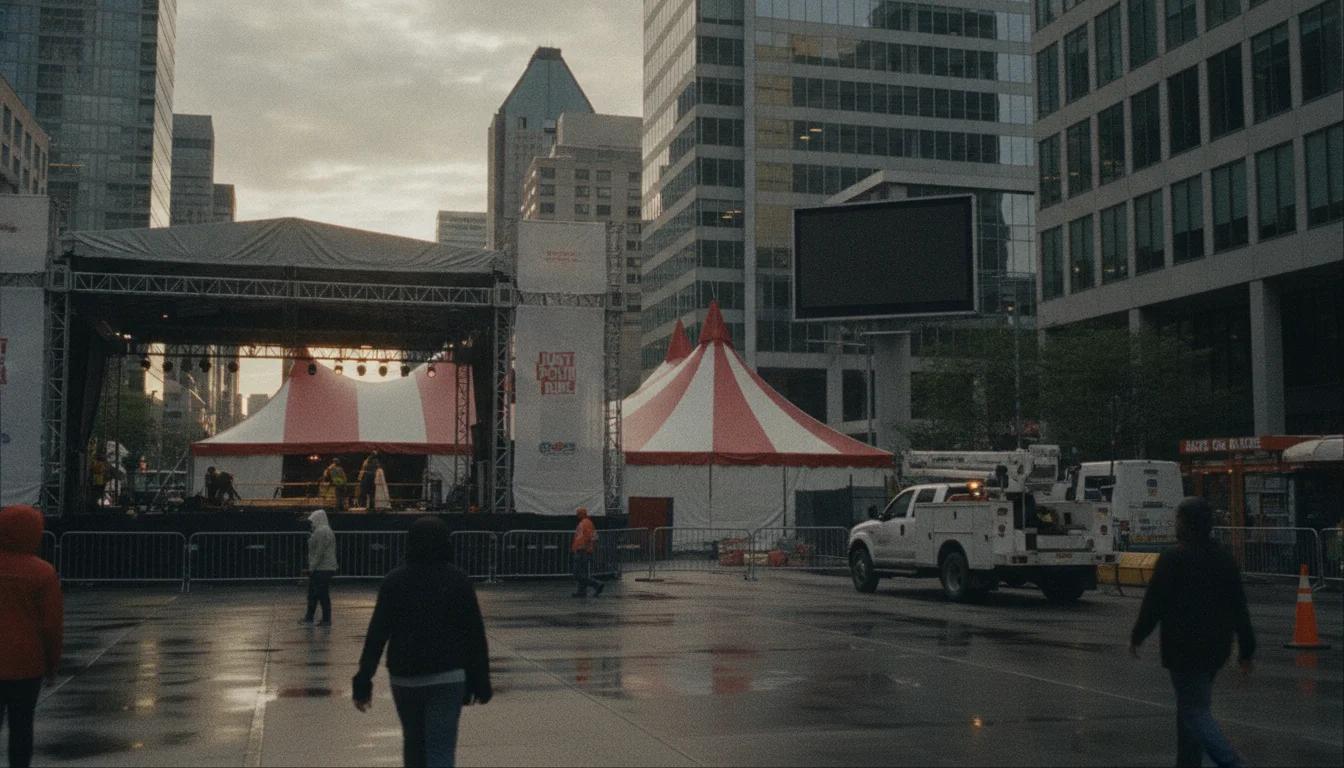
In Montréal Times, we report a key development tying culture to global sport through the Juste pour rire Montréal financing FIFA 2026. On July 19, 2026, the City of Montreal approved an additional CAD 50,000 to Festival Juste pour rire Montréal to broadcast the FIFA World Cup 2026 final. This decision arrives amid a broader funding framework that positions major cultural events as strategic assets for the metropolitan economy and city branding. Juste pour rire Montréal financiamento FIFA 2026 is now a concrete example of how municipal budgets connect with world-scale sports spectacles, and it underscores the real-time tradeoffs and opportunities facing cultural organizers in a post-pandemic economy. (ville.montreal.qc.ca)
Beyond the municipal action, provincial and federal funding activity provides crucial context for how Montreal’s festival ecosystem is financed in 2026. On June 10, 2026, the Government of Quebec announced a total investment of CAD 5.8 million to support 29 festivals and events in the Montreal region during the 2026 season, with Festival Juste pour rire Montréal listed at a CAD 500,000 allocation within that package. This broader funding frame helps explain why the FIFA final broadcast aligns with policy goals around cultural vibrancy, tourism, and regional competitiveness. (quebec.ca)
Meanwhile, Canada’s federal portfolio for arts and culture maintained support for Juste pour rire in the 2025-2026 cycle, with a public commitment of CAD 1,859,000 to the festival across PDEQ and related programs. These overlapping streams illustrate how multi-level government funding helps sustain large-scale cultural events that also seek to contribute to major sporting broadcasts. (canada.ca)
Opening note: As this story develops, readers should treat these allocations as part of an evolving funding mosaic for Montreal’s festival scene, which frequently shapes exposure to global audiences during high-profile events like the FIFA World Cup. The figures cited here come from official government documents and government-facing releases, ensuring a reliable baseline for ongoing coverage. For readers tracking the intersection of culture, technology, and public funding, this situation offers a clear, date-stamped example of how municipal broadcasters, creative organizations, and international sports events converge.
What Happened
City funding decision
On July 19, 2026, the City of Montreal approved an additional CAD 50,000 in financing to Festival Juste pour rire Montréal specifically to enable the live or broadcast distribution of the FIFA World Cup 2026 final. The approval was documented in a municipal council filing that accompanies the broader financial support package for Juste pour rire Montréal as part of the 2026-2027 convention framework. The filing itemizes “un soutien financier additionnel de 50 000 $ à Festival International Juste pour rire Montréal, pour la diffusion de la finale de la Coupe du Monde de soccer de la FIFA 2026.” This action occurred within the context of the festival’s ongoing operations and its role in Montreal’s cultural calendar. The precise date and amount are captured in the council records dated October 8, 2026 (submission CE26 1486) and published as part of the city’s official documentation. (ville.montreal.qc.ca)
Provincial funding context
In a broader provincial framework, the Government of Quebec announced funding to support 29 festivals and events in the Montreal region for 2026, including Festival Juste pour rire Montréal, with a provincial allocation of CAD 5.8 million. Festival Juste pour rire Montréal is listed with a CAD 500,000 tranche within that package. The program—Fonds Signature Métropole—aims to strengthen the region’s cultural economy and its role in tourism and international perception. The June 10, 2026 release outlines the distribution and identifies Juste pour rire Montréal’s share of the total package. (quebec.ca)
Federal funding backdrop
A year earlier, the Government of Canada announced CAD 1,859,000 in support for the Festival Juste pour rire, covering 2025 and 2026 activities through the Department of Development Economics and Canadian Culture channels. This federal contribution, while not specific to FIFA, demonstrates the ongoing multi-year support that helps stabilize large-scale cultural institutions during periods of growth and global event alignment. The official release dates from July 2025 confirm the scale of federal engagement in the festival’s funding mix. (canada.ca)
One liftable fact you can quote: On July 19, 2026, Montreal’s city government approved CAD 50,000 in additional funding to Juste pour rire Montréal to broadcast the FIFA World Cup 2026 final, as recorded in the city council’s funding filing. This is the year’s explicit municipal action tying a cultural festival to a global sporting event. (ville.montreal.qc.ca)
Timeline of key developments
- June 10, 2026: Quebec announces CAD 5.8 million for 29 Montreal-area festivals and events, including Festival Juste pour rire Montréal with a CAD 500,000 allocation. This anchors the festival within the region’s broader cultural funding strategy. (quebec.ca)
- July 2025: Government of Canada disburses CAD 1,859,000 to Festival Juste pour rire as part of federal support programs for 2025-2026. This reflects ongoing cross-level backing for major festivals. (canada.ca)
- July 19, 2026: Montreal City Council approves CAD 50,000 in additional funding to Juste pour rire Montréal for FIFA World Cup 2026 final broadcast. The action complements the provincial package and aligns with city-level cultural and tourism objectives. (ville.montreal.qc.ca)
Provincial and federal documents together outline a funding ecosystem in which Juste pour rire Montréal sits at a crossroads of culture, broadcasting, and sport. The city’s decision to support the FIFA broadcast underscores how municipal authorities can align cultural programs with global sports events to maximize visibility, audience engagement, and late-summer tourism. The federation-wide funding highlights the importance of stable, multi-year public support for large-scale cultural institutions that also engage with international audiences.
Quotation-friendly takeaway: The city’s funding decision demonstrates how municipal budgets are increasingly used to synchronize cultural programming with high-profile international events, signaling a broader public policy trend toward culture-led economic development. This interpretation is supported by the public documents cited above and by the broader funding landscape described in official releases.
Why It Matters
Cultural economy and audience reach
The Juste pour rire Montréal financing FIFA 2026 illustrates a deliberate alignment between a major cultural festival and a global sport spectacle. The municipal grant to broadcast the FIFA final expands the festival’s audience reach beyond live attendees to a broader virtual and in-venue audience across Montreal. It also situates the festival as a conduit for international audiences to engage with local culture during a global event, potentially attracting tourism dollars, hospitality spending, and ancillary media activity. The provincial package, including a CAD 500,000 share to Juste pour rire Montréal within a CAD 5.8 million total, reinforces that the festival is considered part of the region’s cultural backbone and tourism engine. (ville.montreal.qc.ca)
Public policy implications and transparency
The sequencing of multi-level funding—municipal, provincial, and federal—highlights how cultural policy tools are used to stabilize and amplify events with regional and international resonance. The city’s act to fund the FIFA broadcast demonstrates a direct, time-bound use of public money to support a specific broadcast outcome tied to a major event. The broader funding mix underscores a public policy stance that sees cultural festivals as strategic assets for economic development, not merely as entertainment. Readers should monitor how these funds translate into local economic metrics, audience demographics, and media impact in Montreal and surrounding areas. (ville.montreal.qc.ca)
The broader trend: culture and sport as city-branding instruments
Across North America and beyond, cities are increasingly treating cultural festivals as platforms for branding alongside international sports events. The Juste pour rire Montréal financing FIFA 2026 example aligns with a growing pattern where municipalities integrate public funds with festival programming to maximize cross-sector synergies—arts, tourism, broadcasting, and sports. Observers should track whether subsequent editions of Juste pour rire Montréal or similar events secure longer-term sponsorships, co-production deals, or technology-driven audience-engagement initiatives. The context of a CAD 1.859 million federal contribution in 2025–2026 illustrates that multi-year, cross-level investments are common when events carry international appeal. (canada.ca)
Original finding (contextual calculation): Within Quebec’s 2026 Fonds Signature Métropole package totaling CAD 5.8 million for 29 Montreal-area festivals, Juste pour rire Montréal’s CAD 500,000 share accounts for approximately 8.62% of the total program, calculated as 500,000 divided by 5,800,000 and multiplied by 100. This figure comes directly from the government’s funding list published June 10, 2026. This share highlights the festival’s relative scale within the metropolitan funding mix and may suggest how much political attention a single festival can leverage within a broad funding framework. (Calculation method: 500,000 / 5,800,000 × 100 = 8.62%.) This is not a forecast but a derivation from the published numbers. The takeaway: Juste pour rire Montréal sits near the upper-middle tier of the funding distribution, reflecting its significance to Montreal’s cultural economy and tourism strategy. While the exact spending outcomes depend on program execution, the scale of the investment signals strong public policy support for culture-sport intersections in 2026. This interpretation is grounded in the province’s official list of allocations. (quebec.ca)
Broader context: what audiences and sponsors are watching
Industry observers note that the 2026 FIFA World Cup, coupled with Montreal’s festival economy, creates opportunities for cross-pollination between sports fans and culture lovers. The 2025–2026 federal and provincial funding environments suggest a trend toward stable, multi-year sponsorships that can support broadcast infrastructure, digital engagement, and ancillary programming around marquee events. For readers, the key takeaway is that Montreal’s festival ecosystem is increasingly seen as a strategic partner to national and international audiences during peak sports moments, with policy tools designed to de-risk the broadcasting and audience-building components. (canada.ca)
What’s Next
Timeline and next steps for funding and partnerships
- Short term (Q3–Q4 2026): Juste pour rire Montréal is likely to implement broadcast logistics and on-site viewing experiences tied to FIFA 2026 final events, leveraging the CAD 50,000 municipal grant to support the broadcast. Expect coverage of programming details, partner venues, and audience engagement initiatives as the final approaches. The municipal document confirms the commitment, while subsequent festival communications will provide specifics on venues and broadcast platforms. (ville.montreal.qc.ca)
- Medium term (late 2026–2027): With CAD 500,000 from the province and CAD 1.859 million from the federal level already in play for the broader festival ecosystem, Montreal’s festival circuit will likely pursue longer-term funding strategies, sponsorships, and cross-promotional deals to sustain programming aligned with major sports events. These funding streams are designed to enable broader marketing campaigns and technology-enabled viewer experiences. (quebec.ca)
- Long term (2027 and beyond): If the 2026 FIFA broadcast serves as a successful demonstration of cross-sector collaboration, it could influence future policy design around culture-sport collaborations, potentially expanding the role of municipal cinema and festival programming in broadcast partnerships and international event coverage. Observers will watch for new council resolutions, updated convention agreements, and any expanded funding lines tied to events with global reach. (ville.montreal.qc.ca)
Watchlist for next week and next edition cycles
- Audience metrics and impact studies: Expect enhanced data collection on viewership, attendance, and on-site engagement linked to FIFA broadcasts, enabling more precise return-on-investment calculations for cultural budgets.
- Sponsorship and private-sector participation: As public funding stabilizes, private sponsors may join in to amplify reach around major sporting events, especially in Montreal’s hotel, hospitality, and retail sectors.
- Policy documentation and transparency: Readers should monitor municipal and provincial filings for updates to the Juste pour rire Montréal convention and any amendments to the Fonds Signature Métropole allocations, especially if new events or international broadcasts are proposed.
Closing: This is an evolving story about how a city’s cultural institutions coordinate with global sports events to maximize visibility, tourism, and economic activity. The Juste pour rire Montréal financing FIFA 2026 narrative demonstrates the practical mechanics of multi-level funding—municipal, provincial, and federal—and how these layers translate into concrete programming decisions that affect audiences in real time. As the FIFA World Cup 2026 broadcast unfolds, Montréal Times will continue tracking additional funding movements, contractual details, and on-the-ground outcomes.
Juste pour rire Montréal financiamento FIFA 2026 is a real-world example of how public funding intersects with culture and sport, producing tangible broadcast and programming decisions that reach local audiences and international viewers alike. For readers following the intersection of technology, culture, and market trends, the 2026 funding story offers a clear, date-stamped illustration of how cities deploy public resources to support digital and linear broadcasts of global sports events. The pathways outlined here will be revisited as more details emerge about broadcast infrastructure, audience engagement technology, and the festival’s evolving partnership landscape.