Laboratoire Centre-ville Montréal Launches Innovation Hub

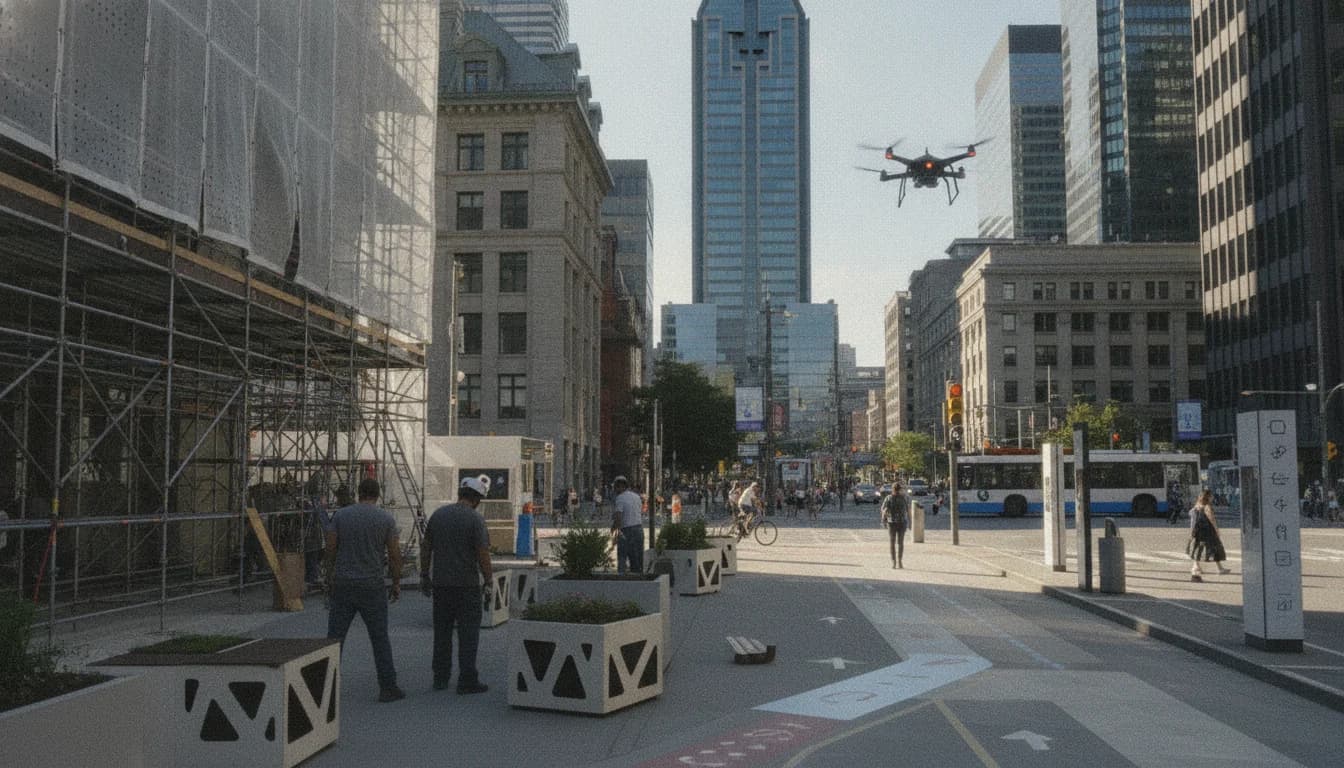
In a bold move to address chronic congestion and the friction of city-building in its core, Montréal is launching the Laboratoire centre-ville Montréal, a downtown innovation hub designed to test new urban solutions in real time. The initiative, framed as a pilot project, aims to reduce the disruptive impact of construction work on residents, businesses, and visitors while improving mobility and safety in the hypercenter of the city. The announcement underscores a shift toward data-driven experimentation in urban management, with a clear mandate to translate insights into faster, more coordinated project delivery and a better citizen experience. This is not a theoretical exercise: the city plans to deploy concrete tests and real-time monitoring within a defined central perimeter, as detailed by municipal authorities and partner organizations. (newswire.ca)
The Laboratoire centre-ville Montréal initiative is anchored in a formal, data-informed approach. City officials announced that the central district—bounded by Boulevard Saint-Laurent and the streets de la Commune, Guy, and Sherbrooke—will serve as a controlled testing ground for a suite of solutions designed to streamline planning, execution, and post-construction mobility. The goal, according to the city, is to mitigate traffic delays, improve delivery logistics, and enhance public safety around active worksites. The program is pitched as a model for urban innovation that can be replicated in other dense districts if successful. The plan aligns with broader municipal ambitions to harness technology and collaboration to improve urban life in Montréal. (montreal.ca)
Section 1: What Happened
The Announcement and Perimeter
Montréal’s administration unveiled the Laboratoire centre-ville as a dedicated zone of experimentation in the heart of Ville-Marie. The perimeter is defined by Boulevard Saint-Laurent on one edge and Rue de la Commune, Rue Guy, and Rue Sherbrooke enclosing the experiment area. This precise boundary is central to ensuring controlled conditions for testing while keeping the rest of the city’s transportation networks functional. The official framing of the pilot was publicized in February 2026, signaling a government-led commitment to test-drive urban solutions in a real-world setting. The March-to-May window was followed by the city’s clear delineation of where and how the tests will occur, marking a transition from concept to execution. (newswire.ca)
Priority Themes and Challenge Areas
From its outset, the Laboratoire centre-ville Montréal project identified four priority themes to guide the experiment. These themes were designed to address the most pressing urban challenges posed by ongoing central-city works and to test scalable responses:
- Integrated planning and scenario simulation for chantier (construction site) management.
- Mobility, safety, and accessibility improvements around active worksites.
- Real-time monitoring of construction progress and adaptive responses to dynamic conditions on the ground.
- Aesthetics and user experience around worksites, including the visual integration of temporary installations.
Together, these four themes form the backbone of what the pilot will evaluate, helping the city determine which interventions yield tangible benefits for pedestrians, drivers, public transit users, and local businesses. A formal call for solutions will be issued to gather ideas from startups and small to medium-sized Montreal-based companies, with the objective of developing prototypes and piloting them directly within the Laboratoire centre-ville area. (newswire.ca)
Pilot Details and Drone Component
A notable element of the initial pilot is the use of drone-based data collection to support real-time decision-making. The city has authorized a drone pilot program within the laboratory perimeter to gather data on chantier completion status and to detect unauthorized use of public space. The drone flights are scheduled Monday through Friday, with operations running from 7 a.m. to 7 p.m. during July through September, as conditions permit. The use of drones is framed within strict governance and privacy guidelines, with the contractor Munera Intelligence required to hold a Transport Canada aircraft registration and a pilot certificate, and with data hosted in Quebec servers and retained for the duration of the pilot. Residents are invited to contact 311 if they have questions or concerns about drone activity. This component demonstrates Montréal’s commitment to leveraging advanced technologies while maintaining accountability and privacy protections. (montreal.ca)
In tandem with the drone initiative, the city’s announcement emphasizes a broader governance structure to guide the Laboratoire centre-ville Montréal. The pilot will rely on input from a multidisciplinary advisory committee on artificial intelligence, composed of technology leaders, researchers in AI, and civic and public policy authorities. The committee is charged with advising on strategic innovation and AI governance, drawing on international best practices, and helping to shape a responsible, risk-aware approach to data use and digital sovereignty. The aim is to ensure that the innovation hub not only tests effective solutions but does so in a way that respects ethical considerations and public trust. (newswire.ca)
Timeline-wise, Montréal’s city channels indicate that the selected projects will be tested between June and September 2026, with the potential to extend or adjust based on findings and feasibility. The city has already signaled its intention to publish the solutions being implemented and to use the results to inform future decisions about scaling or replicating the approach in other districts. A parallel thread of work involves exploring digital twins that could ultimately support smarter, data-informed decisions around construction sequencing and roadway management. (montreal.ca)
Section 2: Why It Matters
Mobility, Economic Impact, and Quality of Life
The Laboratoire centre-ville Montréal initiative is designed to deliver measurable improvements in mobility and the downtown experience at a time when Montréal’s urban core experiences intense activity and traffic. By piloting signage deployments that enhance pedestrian and driver navigation, the city aims to reduce confusion and increase safety near worksites. Real-time monitoring of the road network will allow authorities to detect when a chantier is concluding or when a public-space obstruction arises, enabling quicker adjustments to traffic patterns, detours, and deliveries for local restaurants and retailers affected by construction. In practical terms, these enhancements can shorten commute times, improve the reliability of last-mile deliveries, and reduce the economic drag associated with prolonged construction. The project’s focus on both movement and experience signals a holistic approach to urban optimization, recognizing that mobility is not just about vehicles but also about the smooth flow of people and commerce through the city center. (montreal.ca)
Stakeholders, Communities, and Equity
A central feature of Montréal’s approach is broad stakeholder involvement. The advisory committee on AI, described as comprising technology leaders, researchers, and policy influencers, is intended to ensure a balanced perspective that includes industry innovation, public governance, and civic safeguards. This construct reflects a data-driven ethos while maintaining a commitment to transparency and accountability. The city’s partnerships with local business organizations and industry groups—illustrated by the press coverage of the Laboratoire centre-ville—signal a collaborative approach designed to connect municipal aims with the capabilities and concerns of the private sector and local communities. The emphasis on a test-and-learn model is also a mechanism to minimize risk for residents and businesses, since pilots are limited in scope and time-limited by design. (newswire.ca)
Governance, Oversight, and the Privacy Lens
The drone component of the pilot is a case in point for how Montréal seeks to balance innovation with responsible governance. The drone program is described as compliant with Transport Canada requirements and subject to privacy protections, including data-hosting on Quebec servers and retention limited to the project duration. This framing suggests that the city intends to maintain public trust by establishing clear standards for data collection, usage, and retention, while leveraging advanced data streams to improve decision-making and reduce the inconvenience of construction. The emphasis on privacy and governance aligns with broader municipal and provincial expectations for smart-city experiments to operate under strict ethical and legal guardrails. (montreal.ca)
Competitive Landscape and Local Innovation Ecosystem
From a strategic perspective, Montréal’s Laboratoire centre-ville Montréal positions the city as a hub for urban-innovation experimentation in a time of rapid digital transformation. The call for local startups and SMEs to propose prototypes and solutions aligns with a growing trend in which municipalities actively source innovations from the private sector to address public challenges. While the initiative is unique to Montréal’s urban core, its design mirrors global practices of urban labs that combine live testing with regulatory and ethical guardrails. The involvement of a formal advisory committee on AI and the explicit attention to governance and data sovereignty underscore a mature approach to experimentation that differentiates Montréal’s effort from more ad-hoc pilot programs. (newswire.ca)
Section 3: What’s Next
Timeline and Next Steps
Looking ahead, the Laboratoire centre-ville Montréal program’s immediate next steps center on the June-to-September 2026 testing period, during which municipal authorities will evaluate the effectiveness of each tested solution, refine approach based on real-world performance, and publish results to guide further actions. The city has signaled a longer-term vision for digital twins (jumeaux numériques) to enhance planning, monitoring, and decision-making around four key themes. If the pilot demonstrates clear value, the city could move toward broader implementation or replication in other dense urban neighborhoods, subject to continued stakeholder input and governance safeguards. (montreal.ca)
Next Milestones to Watch
- Publication of the solutions being tested: The city intends to share the specific prototypes and interventions deployed in the Laboratoire centre-ville area, enabling public visibility into what’s being tested and why. This transparency is critical for accountability and for facilitating external analysis by researchers, industry analysts, and citizens alike. (montreal.ca)
- Evaluation and iteration: As with any urban-lab effort, the emphasis will be on learning and iteration. The pilot’s success will depend on the ability of the participating teams to adapt to real-time feedback, adjust the interventions, and demonstrate measurable improvements in mobility and the public experience. The governance framework and the advisory committee will play a central role in guiding these iterations. (newswire.ca)
- Potential scale and replication: If the outcomes prove favorable, Montréal may explore expanding the concept to other districts or refining the models for broader application. The central aim is to create a scalable model of urban experimentation that can adapt to different city contexts while preserving core commitments to safety, privacy, and public accountability. (newswire.ca)
Closing
Montréal Times will continue monitoring the Laboratoire centre-ville Montréal initiative as it unfolds, with a focus on how the pilot translates into tangible gains for mobility, safety, and the urban experience in Montréal’s core. Readers can expect regular updates on project milestones, partner participation, and early results as the center-city innovation hub advances through its June-to-September testing window and beyond. For residents seeking more information or wishing to voice questions or concerns about drone operations or the pilot’s governance, the city directs inquiries to 311 and to dedicated channels within the municipal offices. (montreal.ca)
As the central hub for Montréal’s ongoing urban experimentation, the Laboratoire centre-ville Montréal embodies a data-driven approach to city-building that seeks to balance rapid innovation with careful oversight. The coming months will be pivotal in determining how well this model can address the complex dynamics of a city center in motion—where every traffic pattern, delivery route, and pedestrian flow intersects with the daily lives of thousands of Montréalais and visitors. The project’s success hinges on clear leadership, rigorous evaluation, and an open channel of communication with the public. If the pilot proves effective, it could become a cornerstone case study for other global cities looking to reimagine how you test and scale urban solutions in real time. (newswire.ca)
Notes on context and sources
- The Laboratoire centre-ville initiative is described by the City of Montréal in its official communications, including updates published on July 22, 2026, detailing the pilot’s scope, perimeter, and project slate. The English version also provides a concise overview of the downtown innovation hub and its aims. (montreal.ca)
- The initial public announcement and framework for the four priority themes, the potential for a solutions call to local startups, and the advisory committee on AI are outlined in the CNW-issued press release dated February 12, 2026, which presents Mayor Soraya Martinez Ferrada’s leadership and the city’s commitment to an urban-lab model. (newswire.ca)
- Additional municipal documentation confirms the exact perimeter and the specific testing window (June–September 2026) and highlights the drone pilot program and privacy safeguards as part of the broader governance approach. (montreal.ca)
Sources
- Laboratoire centre-ville : pour am\u00e9liorer la gestion des chantiers, Ville de Montr\u00e9al (update July 22, 2026). Perimeter, projects, and drone pilot details. (montreal.ca)
- A downtown innovation hub to improve worksite management, Ville de Montr\u00e9al (English version; update June 10, 2026). Overview of the Laboratoire centre‑ville concept and perimeter. (montreal.ca)
- 10 ACTIONS EN 100 JOURS : la Ville de Montr\u00e9al annonce la cr\u00e9ation du Laboratoire centre-ville, CNW/Newswire press release (February 12, 2026). Announcement of the four priority themes and the AI advisory committee. (newswire.ca)
- Résumé du conseil d’arrondissement de Ville-Marie du 9 juin 2026, Ville de Montr\u00e9al (discussion of night-work allowances and expansion context). (montreal.ca)