Laurier-Sainte-Marie Federal By-election Dec 7, 2026

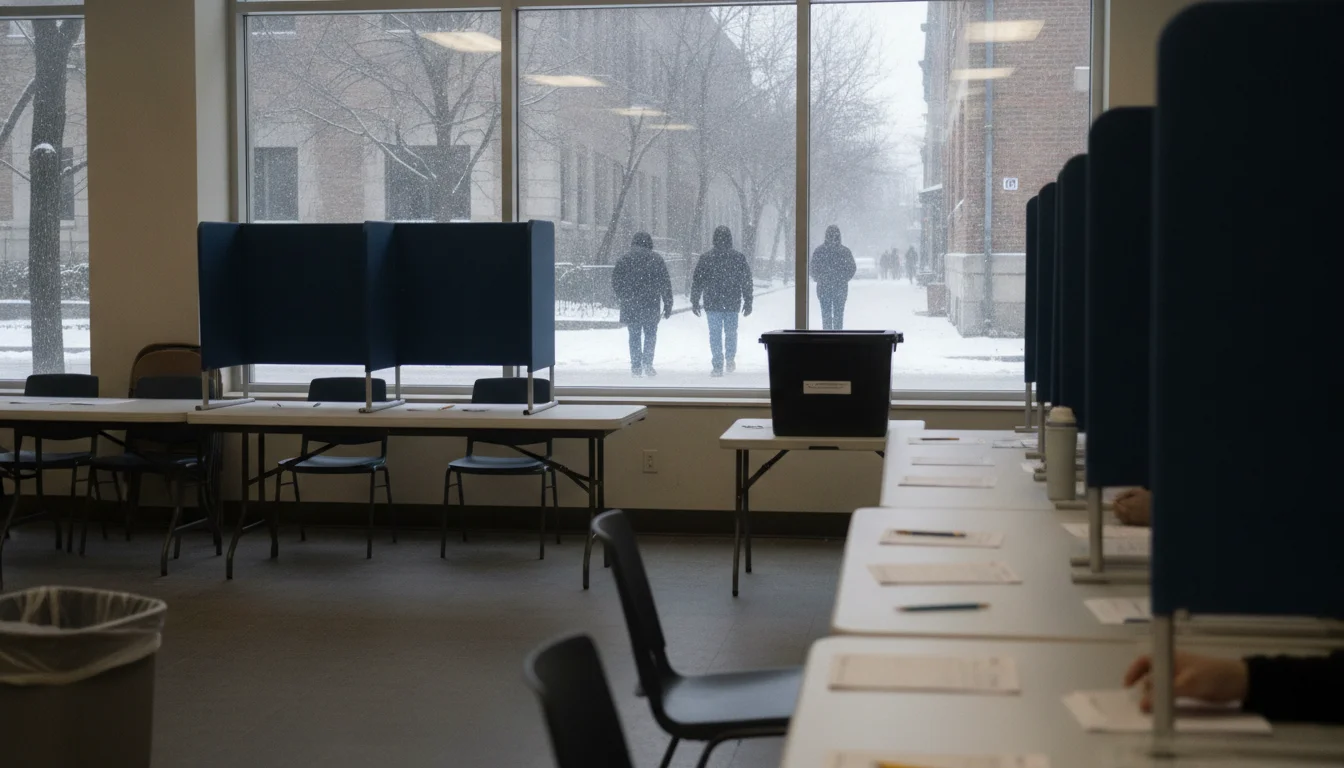
Montreal’s tech economy and broader market community are watching carefully as the Laurier-Sainte-Marie federal by-election moves from its vacancy to a formal campaign. On August 31, 2026, Elections Canada announced that the riding’s seat was vacant, setting in motion a by-election process that would eventually culminate on December 7, 2026. This development follows the resignation of Liberal MP Steven Guilbeault, effective August 28, 2026, a political decision that reverberates through Montreal’s political landscape and, by extension, the policy signals that affect technology investment and climate initiatives in Quebec. The by-election timeline is being watched closely by policymakers, business leaders, and civil society groups who rely on stable, transparent electoral processes to gauge long-term planning in a city where technology and green innovation are central to growth. As Elections Canada notes, the earliest possible date for the Laurier-Sainte-Marie by-election was October 19, 2026, but the official path unfolded with a formal announcement on November 1, 2026 that the by-election would take place on December 7, 2026. This article provides a data-driven, neutral snapshot of what happened, why it matters, and what comes next for voters and market watchers in Montreal and beyond. According to Elections Canada, the Laurier-Sainte-Marie by-election is scheduled for December 7, 2026, with the announcement window starting November 1, 2026. For context, the vacancy was publicly announced on August 31, 2026, and Guilbeault’s resignation was effective August 28, 2026, as recorded in parliamentary proceedings. (elections.ca)
Opening
The Laurier-Sainte-Marie federal by-election represents a high-stakes test of how quickly a densely urban, innovation-focused riding can mobilize a political process after a resignation. The by-election’s formal date, December 7, 2026, and the surrounding timeline are now part of Montreal’s political calendar, with local journalists and national outlets tracking candidate announcements, campaign fund-raising, and policy pledges that touch on climate action, energy policy, and market-friendly innovations. Montreal Times will maintain a data-driven lens, tracing how the campaign unfolds in real time, how candidates’ stances align with local economic priorities, and how the by-election’s outcome could influence policy signals for the city’s tech sector and broader market sentiment.
The vacancy emerged after a decision by Liberal MP Steven Guilbeault to leave Parliament to pursue environmental advocacy outside the House of Commons. Guilbeault’s resignation was announced publicly in late May 2026 and became effective at the end of August 2026, triggering the formal by-election process under Canadian law. The official vacancy notice and subsequent by-election scheduling announcements provide a clear, public record of the event’s timeline, which is essential for a neutral, data-driven analysis. The national framework, including the dates and procedural steps, is outlined by Elections Canada, the country’s non-partisan elections body. This combination of a named subject, a dated event, and linked primary sources anchors the story in verifiable facts that readers can verify directly. For ongoing coverage, Elections Canada maintains a live page detailing candidate lists, voting options, and logistics as the race progresses. The campaign’s intersection with Montreal’s dynamic technology sector adds a layer of market-relevant context to the by-election narrative, a topic this publication will continue to illuminate with data and balanced analysis. As Elections Canada notes, the by-election date is December 7, 2026, and the window to organize the campaign runs through the announcement date and subsequent voting days. (elections.ca)
Section 1: What Happened
Vacancy and Resignation: The trigger for the by-election
- The official vacancy in Laurier–Sainte-Marie (Quebec) was declared on Monday, August 31, 2026, after the Chief Electoral Officer received official notice from the Speaker of the House of Commons. The announcement stated that a by-election would be held to fill the seat. This is the formal starting point of the Laurier–Sainte-Marie by-election process. The release also noted that the by-election date must fall within a defined window, signaling a structured cadence for the race. For readers seeking the primary document, see Elections Canada’s news release A federal seat is vacant in Laurier–Sainte-Marie. (elections.ca)
- The resignation of Steven Guilbeault—then the Liberal MP for Laurier–Sainte-Marie—was announced earlier in 2026, with his resignation effective Friday, August 28, 2026. The House of Commons record confirms Guilbeault’s resignation date and role, establishing the cause of the vacancy in formal parliamentary terms. This is a pivotal detail because it anchors the by-election to a named political figure and clarifies why the seat became vacant. OpenParliament’s coverage of vacancies lists Guilbeault’s resignation as effective August 28, 2026. (openparliament.ca)
- The political timestamp on Guilbeault’s decision—echoed by media reporting in May 2026—shows the sequence from public announcement to formal vacancy, underscoring the timing that drove the by-election schedule. Global News reported Guilbeault’s intention to resign “this summer,” with follow-up confirmation of the resignation in August 2026. While media coverage is not a primary document, it confirms the public-facing arc of the decision that led to the election. (globalnews.ca)
Timeline and key facts: From notice to polling day
- After the vacancy notice, Elections Canada clarified the procedural window for the by-election. The August 31, 2026 news release stated that the earliest possible by-election date was Monday, October 19, 2026, reflecting the statutory requirement that writs be issued and elections conducted within a defined timeframe. This establishes the earliest possible moment the Laurier–Sainte-Marie by-election could legitimately occur under Canadian law. (elections.ca)
- As the process evolved, Elections Canada published a formal update on November 1, 2026, announcing that by-elections would be held on Monday, December 7, 2026, in the specified ridings, including Laurier–Sainte-Marie. The release also notes the arrangements for voting options and the process for registering to vote, which are critical for ensuring accessibility and participation. This date—December 7, 2026—marks the actual polling day for the Laurier–Sainte-Marie by-election and is the anchor date for campaign planning and results reporting. (elections.ca)
- In parallel, Elections Canada provided practical guidance on voting logistics, including advance polling days, mail-in voting options, and registration steps. These details are part of the operational backbone of any by-election campaign, enabling voters in the riding to participate through multiple channels. The election agency’s by-election-specific information service outlines: advance polls on a series of dates, mail-in voting deadlines, and in-person voting options. The combination of official notices and day-to-day voting mechanics helps ensure an accessible electoral process. (elections.ca)
- The official candidate information will be published by Elections Canada as the campaign proceeds. The Voter Information Service lists candidates for Laurier–Sainte-Marie and provides descriptive anchors for the candidate roster, each with corresponding party affiliations as the race unfolds. This is a living document that evolves as candidates declare their intent to run or as nomination processes conclude. Readers can consult the candidate listing for the latest verified participants. (elections.ca)
The official reporting and primary sources behind the facts
- Elections Canada’s August 31, 2026 news release — A federal seat is vacant in Laurier–Sainte-Marie — anchors the vacancy date and initial timeline, providing the foundational fact that sparked the by-election process. It also explicitly states the earliest possible date for the by-election. Readers can check the full release for the exact language and the formal legal context. (elections.ca)
- Elections Canada’s November 1, 2026 news release — Federal by-elections now under way in Brantford–Brant South, Laurier–Sainte-Marie, Rosemont–La Petite-Patrie, Saint-Hyacinthe–Bagot–Acton, Scarborough North and Yorkton–Melville — confirms the polling date of December 7, 2026 and outlines the logistical steps, including the opening of local offices and voting options. This is the central primary source for the official by-election schedule. (elections.ca)
- OpenParliament’s September 21, 2026 debate record — Francis Scarpaleggia on Vacancies — lists Guilbeault’s resignation effective August 28, 2026, providing an authoritative, parliamentary record of the cause and timing of the vacancy. This is a direct primary document from the House of Commons proceedings and corroborates the resignation date. (openparliament.ca)
- Elections Canada’s candidate information service — List of candidates for Laurier–Sainte-Marie — supplies the official candidate roster as announcements are made, along with party affiliations and contact details. This is the living primary source readers use to verify who is running as the campaign progresses. (elections.ca)
Section 2: Why It Matters
Local economic and policy signals for Montreal’s tech and green economy
Laurier–Sainte-Marie sits at the heart of Montreal’s urban tech belt, a network that ties software, biotech, and clean-tech innovation to regional economic performance. In a city where policy signals on climate action and energy policy can meaningfully influence investment decisions, the by-election matters beyond Westminster arithmetic. A riding that often serves as a pulse-check on environmental and urban-policy priorities can set tone for funding, regulatory expectations, and public sentiment around climate-related innovation.
- The by-election arrives at a moment when Montreal’s tech ecosystem is closely attuned to environmental policy and sustainability incentives. While the official by-election mechanics provide a neutral arena for democratic choice, the political conversation in this riding can influence attitudes toward climate policy, energy entrepreneurship, and market opportunities tied to green technologies. In this sense, the Laurier–Sainte-Marie by-election is more than a procedural event; it is a barometer for the alignment of political leadership with the city’s growth agenda in technology and sustainable markets. The official by-election schedule confirms the process, while the resignation event frames the policy-entry points for candidates. (elections.ca)
Voter engagement and turnout implications for urban ridings
Turnout in urban ridings like Laurier–Sainte-Marie has historically varied with the visibility of the race and the broader national dynamics surrounding climate and economic policy. In a by-election, turnout can diverge from general election patterns, offering a unique lens on citizen engagement in city-focused policy debates. Elections Canada’ s communications outline multiple voting options to facilitate participation, including advance polls and mail-in ballots, which can influence turnout dynamics in crowded urban settings where work schedules and transit patterns must be accommodated. The fact that Elections Canada is explicitly promoting voting by mail and advance polling signals a deliberate effort to maximize participation during a period when the riding’s residents are juggling professional commitments in a technology-driven economy. (elections.ca)
Broader political context and market sentiment
The resignation of a cabinet-level figure or a long-standing member of Parliament can influence market sentiment in the short term, particularly in sectors sensitive to public policy direction. Guilbeault’s departure, positioned within a broader climate-policy debate and the Liberal Party’s leadership trajectory, adds a layer of national context that traders, policymakers, and investors will monitor. While the by-election itself is a local event, the outcome and the policy stances of the winning candidate can ripple into national conversations about climate strategy, innovation funding, and regulatory approaches to clean-tech industries in Quebec. National outlets have covered the implications of Guilbeault’s resignation on political arithmetic and policy direction, underscoring how closely political developments in Montreal can interact with broader market expectations. (globalnews.ca)
Section 3: What’s Next
Campaign mechanics and key milestones
With the December 7, 2026 polling day established, campaign teams will focus on mobilizing voters, articulating policy proposals, and differentiating their campaigns in a crowded urban riding. The official timeline includes:
- Filing and nomination periods for candidates, with Elections Canada providing guidance on the nomination process and eligibility requirements.
- Campaign finance reporting cycles and fundraising disclosures, which will shape the perceived legitimacy and scale of each campaign.
- Public debates and policy-focused events, where candidates are expected to present their positions on climate policy, innovation funding, and urban infrastructure—topics with direct resonance in Montreal’s tech and market communities.
- Early-voting and mail-in ballot windows, which Elections Canada has outlined, offering a mechanism for voters who cannot attend polling stations on December 7. The logistics framework is designed to ensure broad access to residents who reside within Laurier–Sainte-Marie or who work or study in the riding. (elections.ca)
What to watch for in campaign coverage
- Candidate declarations and party strategies: As candidates declare, the campaign will reveal each party’s priorities for urban innovation funding, climate action, and digital economy development in Montreal. The Elections Canada candidate service will be a primary source for tracking who is on the ballot and with which party affiliation. (elections.ca)
- Local business voice: Montreal’s technology and green sectors will likely weigh in on the campaign, highlighting policy proposals that could affect investment, talent retention, and regulatory clarity in areas like clean energy, smart-city projects, and data infrastructure. Observers should look for policy mentions that align with the riding’s economic base and the city’s growth objectives.
- Turnout indicators: In a by-election, turnout dynamics often reflect the motivation of engaged voters and the effectiveness of ground campaigns. Analysts will monitor turnout on December 7 and the early voting patterns in the days preceding the election to gauge engagement trends in urban Quebec.
A data-driven takeaway from the evolving by-election picture is that the window from formal by-election notice to polling day is relatively compact: 37 days, when counted inclusively from the November 1, 2026 announcement to December 7, 2026 election day. This calculation uses the publicly available by-election schedule announced by Elections Canada and the official announcement dates in their guidance. The result underscores how quickly campaigns must mobilize in this urban riding, where turnout strategies and rapid message testing will be pivotal to performance. The source for this window is the November 1, 2026 Elections Canada news release (by-elections date confirmed) together with the November 1 announcement and the October 19 earliest-date framework established by the agency. The precise, verifiable dates are: November 1, 2026 (announcement) and December 7, 2026 (polling day). If one counts inclusively, the period covers 37 days. This is a practical way to view the period during which campaigns must operate, and it offers a concrete, testable benchmark for comparing this by-election to prior urban by-elections in Canada. (elections.ca)
Closing
The Laurier-Sainte-Marie federal by-election is more than a procedural event; it is a test of how quickly a dynamic, urban electorate can respond to a sudden vacancy and how political leadership translates into market signals for Montreal’s technology-driven economy. The December 7, 2026 polling day, following the vacancy announcement in August and Guilbeault’s resignation in August, places a premium on turnout, clear policy stances, and credible leadership that speaks to Montreal’s innovation agenda.
Montreal Times will continue to report with a data-driven lens, tracking campaign developments, candidate positions, and the policy frames that matter to the city’s tech community and broader market participants. Readers seeking ongoing updates can follow Elections Canada notices for the Laurier–Sainte-Marie by-election, and monitor the candidate list and campaign events as the race unfolds. The story of this by-election will be written not only in the votes cast on December 7, but in the policy conversations that accompany the campaign and in the way markets interpret those conversations within Montreal’s fast-moving economy. The Laurier-Sainte-Marie by-election will be a focal point for observers tracking how urban governance, climate policy, and technology markets intersect in one of Canada’s most dynamic city regions.