L’Empress Redevelopment to Four-season NDG Space

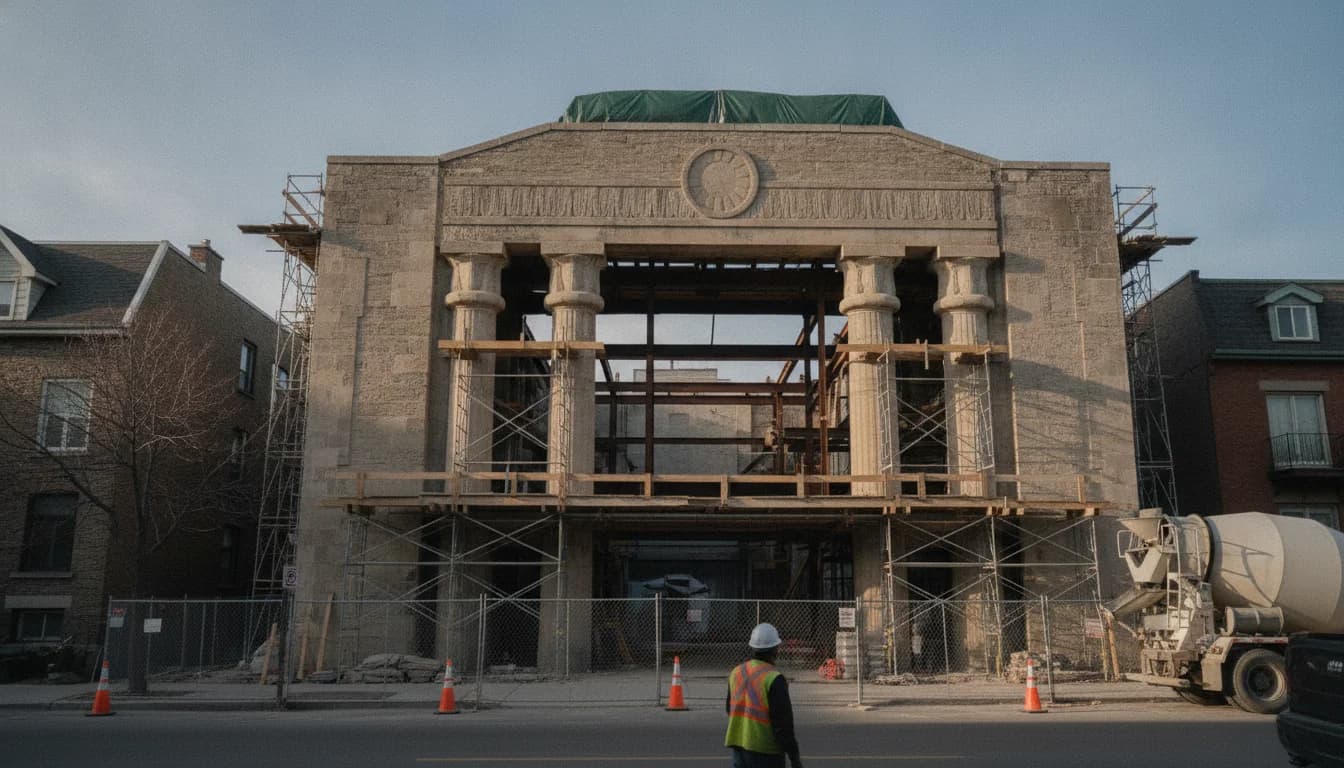
Montréal Times is covering a pivotal shift for CDN-NDG as the Empress Theatre site on Sherbrooke Street West moves toward a new, year-round community hub. The announcement marks a significant moment in the borough’s ongoing efforts to revitalize key cultural assets while balancing residential needs and public space. The news is unfolding at a moment when Montreal’s urban planners are increasingly prioritizing four-season programming and accessible public spaces in dense urban cores, a priority that has framed several recent district-level decisions.
On February 24, 2026, the City of Montréal announced that the Empress Theatre site in NDG would be dismantled to create a four-season open-air public space, with a transitional budget of roughly $10 million, according to a CityNews report on the city’s press conference. The city’s own materials corroborate the timeline and the scope of the project. The plan preserves two walls of the historic building, including its emblematic neo-Egyptian façade, while a transit-like, open-air space would host a year-round program of screenings, performances, and participatory art. The project is described as a transition that could begin to take shape in the autumn of 2026, with construction contracts anticipated in the autumn of 2026 and the start of works in early 2027, potentially enabling programming by autumn 2027. This dual source framing—CityNews coverage of the February press conference and the City of Montréal’s program update—anchors the news in verifiable, public documents. (montreal.citynews.ca)
What Happened
Announcement and initial plan
- In late February 2026, the NDG neighbourhood received word that the Empress Theatre site would shift from a closed cultural asset toward a transitional, public space intended for four-season use. This initial announcement signaled a shift away from preservation-only arguments toward a phased, public-facing approach that would unlock the site for community programming while work progressed on a long-term solution. The February 24, 2026 coverage highlighted the city’s intent to maintain the façade and to convert the site into a flexible venue that could host outdoor projections, performances, and community activities as soon as fall 2027. For readers seeking the primary pronouncements, the City of Montréal’s public-facing materials and CityNews’ contemporaneous reporting provide contemporaneous accounts of the announcement. Sources: CityNews report (Feb. 24, 2026) and City of Montréal release (April 30, 2026). (montreal.citynews.ca)
- The project’s framing as a four-season space aligns with a broader municipal aspiration to activate NDG’s public realm year-round, with programming designed to appeal to families, artists, and local organizations. The city’s communications emphasize programming possibilities ranging from outdoor screenings to participatory theatre and other performances that can operate regardless of season. This alignment with four-season programming is further reflected in the city’s subsequent material outlining the path from concept to implementation. For readers seeking the official framing, see the City of Montréal’s ongoing materials describing the four-season public space concept. (montreal.ca)
Façade preservation and transitional space
- A core design decision involves preserving the Empress’s exterior, including the neo-Egyptian façade, while creating a transitional outdoor plaza that can host a diverse set of cultural activities. The plan envisions a public space that serves as a gathering point in the short term and as a potential foundation for a more permanente cultural development later on. The preservation of the walls and façade is emphasized in municipal materials and reflects a commitment to maintaining the site’s historic identity while repurposing the space for contemporary uses. Specifics about the façade preservation and the transitional space are documented in the city’s communications and in related coverage. (montreal.ca)
Timeline and milestones
- Demolition and transitional works are scheduled to begin after fall 2026, with the demolition contract expected in autumn 2026 and the actual construction work commencing in early 2027. Programming, as a four-season public space, is anticipated to launch in autumn 2027, with ongoing planning and approvals continuing through 2026. These milestones reflect a staged approach designed to minimize disruption while delivering a functional public space in the near term and a more permanent cultural solution in the longer term. The public information sessions scheduled for late summer 2026 are part of a broader consultation process to shape the transitional space’s design and programming. See the city’s updates for the precise sequencing and dates. (montreal.ca)
Public consultation and community engagement
- The city’s engagement efforts include surveys, public information sessions, and a timetable for presenting the project to various municipal committees. For example, a public information session was planned for late summer 2026, with subsequent confirmations of committee reviews (CCU, CPM) and the potential winter 2026/2027 public assembly. The NDG community’s participation in the process is highlighted by the city’s communications, including the documented survey results and the staged review by urban planning and heritage bodies. The NDG community’s involvement is a core feature of the project’s legitimacy and legitimacy-building process. (montreal.ca)
Why It Matters
Cultural and community vitality
- The Empress redevelopment is positioned as more than a construction project; it is pitched as a catalyst for cultural activity in NDG. Municipal materials describe the space as a public venue that can host a diverse range of cultural programming across seasons, potentially supporting local artists and organizations by providing a dedicated venue and plaza that integrate with nearby cultural assets. This aligns with broader municipal aims to strengthen NDG’s cultural ecosystem and to provide accessible venues for community uses. The 2021 planning documents outline a long-term ambition for a multipurpose public venue with cultural, residential, and commercial components, underscoring the project’s multi-use potential and its role in the borough’s urban renewal strategy. (montreal.ca)
Urban planning context and housing considerations
- The project sits within a broader framework of mixed-use redevelopment ideas that have circulated in CDN-NDG for years. The 2021 Empress transformational plan explicitly envisioned a mix of uses, including a residential component with affordable housing, a cultural component with a direct street-front presence, and commercial space. This background helps explain why the Empress redevelopment has been positioned as part of a larger strategy to bring housing opportunities together with cultural programming and public space. While the 2021 plan reflects long-term ambition, the 2026–2027 announcements show the city moving toward actionable steps in the near term. (portail-m4s.s3.montreal.ca)
Economic and fiscal implications
- The city’s plans carry a demonstrable fiscal footprint. The transitional four-season space is described as a roughly $10 million project, a figure that informs the scale of short-term public investment and sets expectations for the related tender process and ongoing operating costs. The economic dimension is essential for understanding how the project will be funded, what level of government oversight will apply, and how the space will be sustained beyond the initial construction period. Readers should monitor tender announcements and budget deliberations as the project progresses. The 2026 reporting on the project’s budget and schedule provides a baseline for this analysis. (montreal.citynews.ca)
Community equity and access
- The Empress redevelopment has raised questions about access, inclusivity, and the balance between preserving heritage and expanding public space. The NDG neighborhood has a long history of community activism around heritage sites and cultural venues, and the Empress plan reflects an intent to involve residents in shaping the space’s future. The city’s public engagement approach—surveys, in-person consultations, and transparent timeline disclosures—illustrates a commitment to ensuring that the redevelopment serves residents across demographics and income levels. The emphasis on four-season programming and accessible space is consistent with the borough’s broader equity objectives. (montreal.ca)
What’s Next
Milestones through 2026–2027
- Autumn 2026: Demolition contract awarded; demolition of the non-load-bearing portions while preserving the iconic façade walls, including the neo-Egyptian frontage. The city indicates that a public information session will occur at the end of summer 2026, enabling residents to learn more about the transitional space and to provide input into the program. (montreal.ca)
- Winter 2026–2027: Final planning approvals by key municipal bodies, including CCU (Urban Planning Committee) and CPM (Heritage Council). The schedule notes a likely winter 2027 date for an assembly that could lead to formal approval and the start of construction or transitional works. (montreal.ca)
- Early 2027: Commencement of works on the transitional four-season space, with an emphasis on minimizing street disruption and ensuring ongoing access for residents and local businesses. The city’s materials outline early 2027 as the onset of physical works. Programming could begin by autumn 2027, subject to the approvals and tender process. (montreal.ca)
What to watch for
- Tender announcements and procurement milestones will be a critical barometer of pace. The city’s plan to proceed through a formal tendering process for the demolition and transitional works will indicate how quickly the project can move from design to reality. Observers should track posted tender notices, bid scores, and any changes to the project’s scope that might accompany budget revisions. The city’s 2026 updates emphasize a structured governance process, which helps ensure transparency in how public funds are deployed. (montreal.ca)
Longer-term outlook and potential permanence
- The city’s communications emphasize that the four-season space is a transitional step toward a potentially permanent cultural and public asset for NDG. The 2021 Empress planning document envisions a future that could include a permanent public venue with a broader cultural program, potentially integrating with nearby cultural institutions and housing components. This longer horizon remains contingent on budgetary priorities, community input, and the success of the transitional phase. Readers should remain attentive to minutes from CPM, CCU, and the Council for any shifts in timeline or scope. (portail-m4s.s3.montreal.ca)
Closing
The Empress redevelopment represents a rare instance where heritage preservation, public space, and cultural programming converge in a dense urban setting. The project’s staged approach—preserve key façades, create a transitional four-season plaza, and plan for a potential permanent cultural hub—reflects Montreal’s broader strategy to unlock underused sites for community benefit while preserving the city’s architectural memory. The plan’s emphasis on resident engagement and transparent approvals offers a model for how municipalities can balance heritage with modernization, ensuring that the Empress site remains a living part of NDG’s cultural life.
As the city moves from announcement to execution, Montréalers and NDG residents alike should watch for tender activity, committee approvals, and public programming announcements in 2026 and 2027. Updates from the City of Montréal and local outlets will provide the best real-time guidance on progress, milestones, and opportunities for community involvement. In the meantime, the Empress project stands as a concrete example of how a historic site can be reimagined to serve contemporary urban needs—an approach that other neighborhoods facing similar pressures may study as a potential blueprint.
In short, L’Empress redevelopment signals a commitment to turning a long-vacant landmark into a vibrant, year-round public space, with a clear plan, stakeholder involvement, and a path toward a more inclusive cultural future for NDG. The coming months will reveal how quickly the city can translate ambition into action, and how the community will respond to this ambitious reinvention of a Montreal icon.