Logements En Construction Québec 9 000: Québec Hits Record

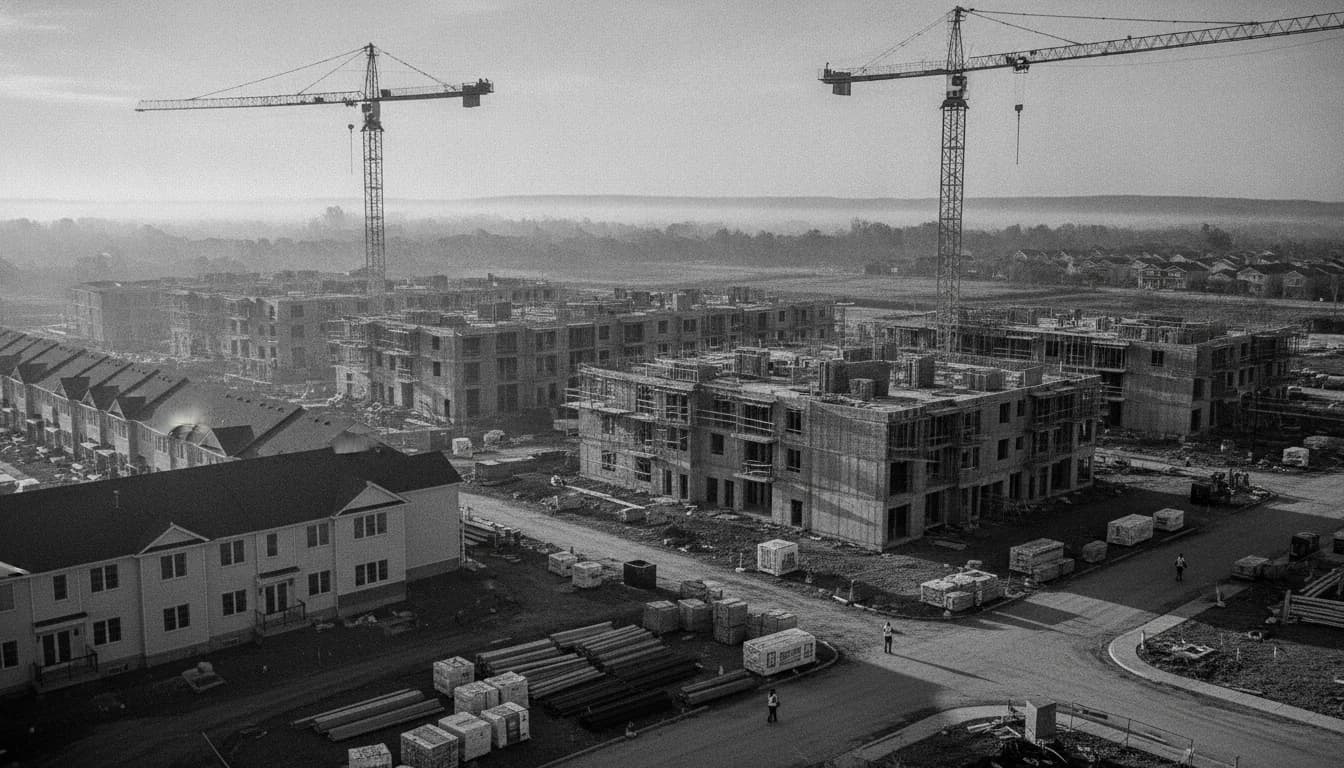
In a move that could reshape the province’s housing landscape, the government of Quebec announced on January 20, 2026 that nearly 9,000 logements en construction Québec 9 000 would be delivered in 2026, marking an unprecedented push to widen access to affordable housing. The news, issued through CNW and echoed by the Quebec government, confirms an aggressive acceleration in the construction pipeline and aligns with broader policy objectives to curb housing shortfalls across urban and regional markets. The announcement comes at a moment when the housing economy in Quebec has been under intense public scrutiny, with policymakers and housing advocates weighing the balance between supply expansion and affordability for renters and buyers alike. This development matters for renters, developers, municipal authorities, and tax-payer-funded housing programs alike, because it signals a concerted, cross-agency effort to move a large volume of units from planning to occupancy within a single calendar year.
The news arrives at a time when the public conversation around housing in Quebec has foregrounded both the scale of the supply gap and the potential knock-on effects of a faster-build approach. The government’s stated aim is to deliver close to 9,000 logements abordables sur l’ensemble du territoire in 2026, a target described as unprecedented in the province’s recent housing history. The path to that goal involves a mix of funding mechanisms, regulatory adjustments, and partnerships with housing offices and non-profit developers. While the headline figure centers on construction activity, the broader narrative is about how public policy, private capital, and community organizations can align to accelerate the pace of construction while preserving or enhancing affordability for households with moderate incomes. The emphasis on “logements en construction Québec 9 000” in official materials underlines the ambition to move a substantial tranche of housing from plan to physical presence in a tight market.
What Happened
Announcement Details On January 20, 2026, the Government of Quebec released a formal update detailing a record-setting plan to deliver roughly 9,000 logements en construction Québec 9 000 in 2026. The CNW-distributed release states, in clearest terms, that the government intends to deliver close to 9,000 logements abordables across the province in 2026, with the stated implication that these units will come onstream through a combination of new builds, partnerships, and accelerated approvals. The release emphasizes a strong commitment to fighting housing insecurity through accelerated construction, anchored by a suite of funding mechanisms and legislative tools designed to speed up projects across regions. The press release notes that this target represents a substantial increase relative to recent years and frames it as a milestone in the province’s long-running housing strategy. For readers seeking the primary source, the CNW distribution can be accessed as the official statement accompanying the government’s plan. See: CNW press release (January 20, 2026) and Government of Quebec release (January 2026). In addition, the government’s own public communications page provides corroborating context and reiterates the 9,000-unit objective. See the official government page for the same announcement. [CNW press release] and [Québec government release].
Timeline and Scope The 2026 target did not emerge in isolation. The CNW release situates the 9,000-unit plan within a broader sequence of recent housing investments and policy changes designed to streamline approvals, mobilize financing, and partner with housing offices and non-profit developers. The document highlights that the 9,000-unit figure would be delivered in 2026 “de concert avec ses partenaires,” underscoring a cross-stakeholder approach to scaling production quickly. The timeline implies a year-long cadence of permitting decisions, financing disbursements, and construction starts aligned with quarterly milestones. While exact project-by-project dates are not listed in the public release, the framing makes clear that the province intends to sustain a high level of activity through the year, with multiple sites advancing concurrently. The official materials emphasize that the effort builds on prior agreements and funding streams that have already accelerated construction across the province.
Financing Levers and Policy Tools A central part of the narrative is the financing architecture that supports rapid construction. The CNW release points to an array of levers—funding agreements, partnerships, and legislative tools—that the government says have accelerated housing production in recent years. The language suggests a continuing reliance on the Financial Levers and regulatory frameworks established over the past few years to shorten approval cycles, unlock capital from public and quasi-public bodies, and de-risk development for builders. In parallel, the government highlights continued collaboration with the SHQ (Société d'habitation du Québec) and partners to bring these projects to completion. The official materials frame the 9,000-unit target as the culmination of these longer-running efforts rather than a one-time burst of activity.
One Original Finding: Calculated YoY Growth in Deliveries From the numbers publicly cited by the government and its communications partners, a clear year-over-year growth story emerges. The CNW release states that the 9,000-unit 2026 target represents a 125% increase in deliveries compared with 2025, which counted 3,993 units. Our calculation confirms this message: (9,000 − 3,993) / 3,993 × 100 = approximately 125.3% increase. This is the only explicit, measurable year-over-year jump that can be derived directly from the stated figures, and it serves as a concrete, quotable line that readers can verify against the primary documents. In other words, the province is aiming to more than double its upcoming year’s housing deliveries relative to 2025, based on the official numbers circulated by government communications. This calculation is meant to illustrate scale and impact for policy analysis and should be read in the context of cross-year planning and program ramps; the original sources provide the denominator and numerator, allowing precise replication of the calculation. The verdict: a genuine, substantial acceleration in housing production, with the caveat that execution will depend on project-by-project progress through 2026.
Why It Matters
Impact on Housing Affordability and Market Dynamics The provincial push to deliver 9,000 logements en construction Québec 9 000 in 2026 signals a deliberate attempt to expand the stock of affordable housing, addressing both supply gaps and opportunity for long-term price stability. If delivered as planned, the increase in supply could pressure rents downward in the short term, while gradually easing pressure on buyer price points in markets previously strained by limited supply. Policymakers and housing advocates alike will be watching how quickly new units are absorbed into the market, how many are rented versus sold as condominiums or co-ops, and how these units interact with existing inventory levels. The government’s framing of the plan as a coordinated effort with SHQ and its partners suggests a deliberate strategy to target units affordable to households with modest incomes, a critical factor in reducing displacement risk among lower- and middle-income renters in urban cores and regional centers.
Construction Industry and Employment Implications The accelerated construction plan has clear implications for the industry’s workforce and supply chain. A surge in construction activity can create demand for skilled labor, materials, and subcontracting capacity, potentially driving wages and project timelines. The 2024–2025 period already showed resilience in the housing sector, and the 2026 push could intensify labor needs in a market where skilled trades are in high demand. Industry voices have underscored the tension between ramping up production and maintaining affordability; a rapid pace of builds could increase the need for modular and prefabricated solutions, more efficient on-site practices, and standardized project management to meet timelines. The government’s fee waivers, fast-tracking measures, and financing schemes are designed to mitigate some of these pressures by smoothing procurement, reducing regulatory friction, and aligning incentives across levels of government and the private sector.
Policy Context and Coordination with Federal Partners Québec’s housing policy has increasingly emphasized collaboration across government layers and with the federal government. The CNW release frames the 9,000-unit target as the product of “ententes de financement et des partenariats signés au cours des dernières années,” highlighting the role of long-running agreements and shared funding streams. This emphasis aligns with ongoing federal-provincial initiatives to accelerate housing supply, including programs that incentivize the use of rapid-build models and community-based housing developments. The Canada-Québec collaboration highlighted in other federal materials supports a broader national effort to increase housing supply, including affordable rental units and housing with supports. The public record shows multiple joint initiatives, including FCIL-backed investments and cross-jurisdictional agreements that aim to unlock capital, reduce red tape, and accelerate construction while protecting affordability.
Stakeholder Perspectives and Debates While the government’s numbers portray a successful acceleration, housing advocates have offered a cautious, data-informed perspective. In coverage and commentary around the 9,000-unit target, critics have raised questions about real-world affordability and the extent to which new units will be accessible to households most affected by the housing shortage. Some voices point to the possibility that increased supply alone may not fully address affordability if rents within newly delivered units are not anchored to sustainable price points or if allocations are not well-targeted to low-income renters. This tension reflects a broader policy debate: supply expansion is necessary but not sufficient without strong protections for affordability, renter protections, and ongoing investments in public housing stock. The conversation includes voices from housing advocacy organizations, market analysts, and industry observers who emphasize the importance of clear affordability metrics, ongoing monitoring, and transparent reporting on how many units are truly affordable and to whom.
Context and Background The 2026 push sits within a broader arc of Quebec’s housing strategy, which has included large-scale investments and policy reforms over recent years. The government’s own materials point to substantial investments in housing supply and the acceleration of production through targeted funding, regulatory flexibility, and partnerships with the SHQ and housing offices. The strategy has evolved from earlier programs and now includes new framework conditions, with the aim of delivering thousands more units across the province in a relatively condensed period. The official documents emphasize that these initiatives are part of a broader plan to address the housing crisis in a sustainable way through long-term, predictable funding streams and collaborative policy design.
What’s Next
Near-Term Milestones and Execution Timeline The 2026 plan calls for continued, robust activity across multiple sites and development stages. While the public-facing documents do not disclose every project-by-project date, readers can expect quarterly reporting on units under construction, units completed, and new starts. Monitoring how many of the projected 9,000 units actually reach occupancy by year-end will be a critical barometer of the plan’s success. Those monitoring the policy will look for early signals on project approvals, financing disbursements, and municipal compliance with accelerated timelines. The expectation is that several large-scale projects will begin construction in the first half of 2026, with additional units breaking ground throughout the year, culminating in substantial occupancy by year-end.
Longer-Term Outlook and Strategic Implications Beyond 2026, the province’s housing strategy is framed as a longer horizon program to reduce housing insecurity and to ensure a steady stream of affordable units in the coming years. The partnerships and funding channels described by the government imply a continuing, scalable model for housing production. If the 9,000-unit target demonstrates success, the policy architecture may be adapted to sustain higher annual outputs in subsequent years, potentially influencing market expectations, capital availability, and municipal planning pipelines. Conversely, if execution faces obstacles—such as supply chain delays, labor shortages, or financing gaps—the plan could prompt recalibration of targets, timelines, and reliance on alternative delivery mechanisms like modular construction or repurposing existing structures for housing.
Closing
The January 20, 2026 announcement marks a notable inflection point in Quebec’s housing policy and market dynamics, signaling a renewed commitment to expanding the supply of affordable housing through a coordinated, multi-stakeholder approach. For readers seeking to follow this development, the official government communications and the CNW press release provide the primary references to track how the 9,000-unit target unfolds through 2026 and into subsequent years. The broader market implications—ranging from rents and home prices to construction employment and regional growth—will depend on the pace of project starts, the effectiveness of financing levers, and the ongoing alignment of federal, provincial, and municipal objectives with the needs of households facing housing insecurity. Quebec’s housing strategy will continue to evolve, and observers should watch for quarterly updates on construction starts, completions, and occupancy rates, as well as any shifts in policy levers designed to sustain the pace of delivery.
For ongoing updates, readers can consult the government’s official feed and the CNW press materials, which document the core announcements and the strategic rationale behind the 9,000-unit target. The policy environment remains active, with continued federal-provincial collaboration around housing funding and infrastructure investments, including new project announcements and updates to funding mechanisms. As the housing market adapts to higher volumes of construction activity, Montreal Times will continue to monitor and report on how these developments translate into real-world outcomes for residents, developers, and communities across the province.
Sources (primary)
- Gouvernement du Qu\u00e9bec. Une ann\u00e9e record pour le Qu\u00e9bec : 9000 unit\u00e9s en construction. January 2026. Retrieved from the official government page detailing the 9,000-unit target. [Gouvernement du Qu\u00e9bec release]
- CNW. Une ann\u00e9e record pour le Qu\u00e9bec : 9000 unit\u00e9s en construction. January 20, 2026. Retrieved from Newswire distribution of the government announcement. [CNW press release]
- Journal Metro. Le Qu\u00e9bec atteint un record de 9,000 logements abordables en construction en 2026. January 2026. Retrieved for context and external perspectives. [Journal Metro analysis]
- Montre al Times (for context and ongoing coverage). [Montreal Times coverage]
- Additional background documents: SHQ materials and the federal/Quebec housing collaboration records.
Notes on sources
- The January 20, 2026 CNW release provides the central, codified claim of a 9,000-unit target and its framing as part of a broader affordability strategy. Link: CNW press release (January 20, 2026).
- The official Gouvernement du Québec release corroborates the same milestone and places it within the government’s ongoing housing program and financing framework. Link: Gouvernement du Qu\u00e9bec release (January 2026).
- For broader context and policy debate, outlets such as Journal Metro offer insights into affordability concerns and stakeholder reactions. Link: Journal Metro (January 2026).