Lufa Farms Rooftop Expansion Reshapes Montreal Food Tech

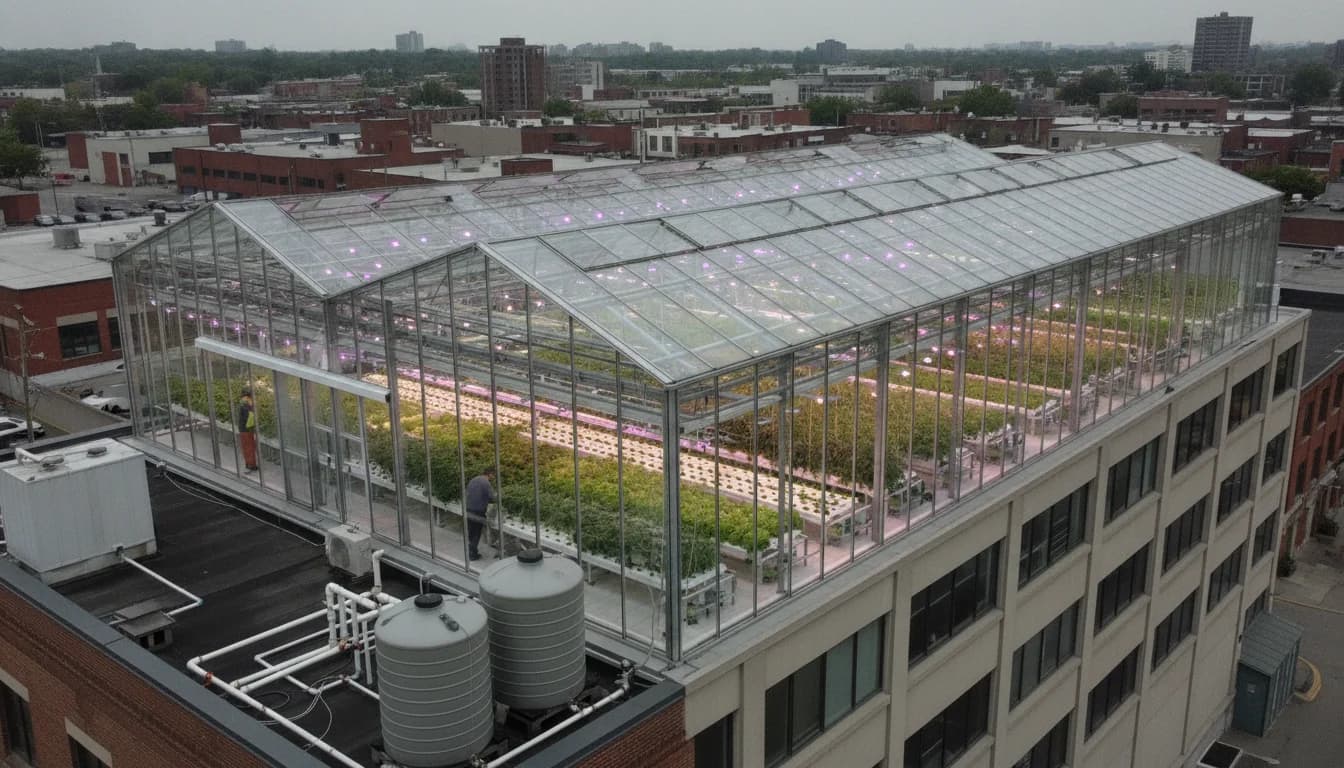
Montreal Times brings you a data-driven look at a major development in urban agriculture: Lufa Farms rooftop expansion is accelerating its network of city rooftops to grow fresh produce closer to where people live. On March 19, 2024, Lufa Farms announced the opening of its fifth rooftop greenhouse, perched atop the Marché Central Walmart and Decathlon in Montreal’s Ahuntsic borough. This milestone marks a notable shift in how urban farms scale operations, leverage technology, and integrate with local retail ecosystems. The event matters not only for Lufa Farms but for urban food systems across Canada, as it demonstrates a model for delivering local produce quickly while reducing energy and water footprints in dense urban environments. For readers tracking technology-enabled farming and market dynamics, the announcement underscores a broader trend: rooftop farms are becoming strategic assets in city supply chains, capable of producing meaningful shares of staple vegetables like cucumbers and peppers with modern, efficiency-focused design elements. This is the latest chapter in Lufa Farms’ ongoing rooftop expansion, and it signals how tech-driven greenhouses are reshaping urban food networks in Montreal and beyond.
Lufa Farms rooftop expansion is more than a single building addition. It represents an integrated growth strategy that blends high-tech greenhouse design with a fast-moving direct-to-consumer and retailer-enabled distribution model. The five-rooftop portfolio now forms a network that not only increases production capacity but also tests new approaches to sourcing, logistics, and customer delivery. The company describes its Marché Central site as deploying an “Ultra-Clima” concept and a range of design elements intended to push energy and water efficiency while delivering consistently fresh crops to baskets and stores. The opening was framed by executives as a milestone in bringing urban farming closer to urban dwellers and making city rooftops a reliable, year-round source of local produce. (newswire.ca)
What Happened
Fifth rooftop greenhouse opens atop Marché Central Walmart in Ahuntsic
On March 19, 2024, Lufa Farms publicly announced the opening of its fifth rooftop greenhouse, installed on the new Marché Central Walmart and Decathlon site in Montreal’s Ahuntsic borough. The project is described as spanning 127,000 square feet and as a milestone that, according to founder and CEO Mohamed Hage, embodies the company’s ongoing commitment to growing food on rooftops and delivering it through its online Marketplace. The release notes that the project is a collaboration with local partners and retailers and that the site is positioned to increase the city’s access to fresh, locally produced vegetables. The company highlights that the site uses advanced features—high-intensity LED lighting, insulated double-paned perimeter glass, a diffused glass roof, and dual curtains including a blackout option—to maximize energy efficiency and crop yield. Importantly, Lufa’s messaging emphasizes that the expansion is designed to generate up to 20% more produce than conventional greenhouses of similar size, a claim framed as a demonstration of how rooftop farming can scale with technology rather than merely replicate traditional greenhouse practices. The announcement also situates the project within a broader network of sites, underscoring the city-wide footprint that Lufa Farms has been building over more than a decade. (newswire.ca)
Design and technology highlights
The Marché Central greenhouse is presented as the culmination of Lufa Farms’ “Ultra-Clima” design approach, combining high-performance lighting, heat retention, and water management. The hardware suite includes high-intensity LED lights for precise spectrum control and plant growth, insulated perimeter glass to reduce heat loss, a diffused glass roof to spread light evenly, and two layers of curtains for adaptable thermal control. The aim is to minimize energy use while maintaining crop quality and year-round production. The facility’s controlled-environment strategy aligns with Lufa’s broader emphasis on sustainable farming techniques—reducing land and energy footprints while increasing output per square foot. The CNW release explicitly calls out these design choices as integral to the site’s “most technologically advanced” status to date. (newswire.ca)
Timeline and immediate impact
The fifth rooftop greenhouse sits on a project timeline that began with Lufa Farms’ initial rooftop greenhouse in Ahuntsic in 2011, followed by subsequent expansions that culminated in the Saint-Laurent site (the company’s fourth greenhouse) and ultimately the Marché Central project in 2024. The 2024 announcement notes that the project is expected to serve cucumbers and peppers and to contribute to Lufa’s weekly basket distribution network, which exceeds 30,000 baskets across hundreds of partners and thousands of pick-up points province-wide. The release also credits the collaboration with local developers and retailers, highlighting how partnerships help convert rooftop spaces into direct-to-consumer channels. The Paris-based design and Montreal-based operations are presented as a coordinated effort to scale urban farming across multiple rooftops, not just one flagship site. (newswire.ca)
Prior expansions and the network context
To understand the broader context of Lufa Farms’ rooftop expansion, it helps to review the organization’s earlier milestones. The company’s fourth greenhouse—located in Ville Saint-Laurent—was announced in 2019 and opened in 2020 as the world’s largest rooftop greenhouse at the time, covering 163,800 square feet. The project built on earlier sites, including the Laval rooftop (43,000 square feet, built in 2013) and the Ahuntsic site (31,000 square feet, built in 2011). These sites collectively form the backbone of Lufa’s network, demonstrating a pattern of scale-up through layered design choices (like rainwater capture and closed-loop irrigation) and site-specific adaptations. The Saint-Laurent project, in particular, leveraged a large footprint and energy-efficient features to set a new benchmark for rooftop farming. (montreal.lufa.com) (lufa.com)
What the broader market saw in 2020–2024
Media coverage and independent analyses have chronicled Lufa’s expanding rooftop footprint, noting the potential for rooftop farming to contribute meaningfully to local food supply and to urban resilience. In 2020, Global News highlighted Lufa Farms’ expansion into a large rooftop greenhouse in Saint-Laurent, describing it as a landmark project and estimating substantial weekly production capacity. The report emphasized the scale and ambition of Lufa’s approach, including the goal of reducing transport-related emissions by growing produce closer to consumers. By 2024, Lufa had formalized a fifth rooftop facility atop a major retail hub, signaling how public–private collaborations are accelerating urban farming in dense cities. (globalnews.ca)
The network today: location, scale, and capabilities
Current evidence shows a multi-site network that includes Ahuntsic (the first rooftop farm), Laval, Anjou, Saint-Laurent, and the Marché Central site in Ahuntsic with Walmart branding. The February 2024 information from Lufa’s own site confirms the Marché Central site’s attributes: built in 2024, 127,000 square feet, and designed to deliver up to 20% more production than similar facilities. The Laval site, still cited as a dedicated rooftop farming building (built in 2013, 43,000 square feet), demonstrates that Lufa maintains a distributed footprint with site-specific engineering tailored to rooftop farming. Together, the network illustrates a deliberate growth strategy spanning more than a decade, with the Marché Central site representing a notable leap in scale and tech sophistication. (lufa.com)
Why these numbers matter for readers
For Montréal and other cities watching food security, the scale numbers—127,000 square feet for the Marché Central site and 163,800 square feet for the Saint-Laurent site (at the time the world’s largest rooftop greenhouse)—are more than mere statistics. They represent a tangible way to compare how rooftop farms perform against traditional greenhouses, including yield per square foot, energy intensity, and the ability to utilize urban infrastructure (like rooftop spaces, rainwater collection, and building heat). The Saint-Laurent site, for instance, was designed to capture rainwater and operate with a closed-loop irrigation system, reducing water usage relative to conventional greenhouses. These design choices matter because they translate into lower operating costs and a smaller environmental footprint per unit of produce, which can influence consumer pricing, supply reliability, and the viability of scaling rooftop farming to other urban centers. (montreal.lufa.com)
What’s at stake for workers, retailers, and residents
The expansion touches multiple stakeholder groups. For workers and engineers, rooftop farming requires specialized skills in energy management, hydroponics, irrigation, and climate control. For retailers and distributors, the proximity of production to consumption can shorten lead times and reduce spoilage, enabling fresh produce to be delivered to stores and baskets with tighter timelines. For residents, rooftop expansion offers more predictable access to locally grown vegetables, potentially stabilizing local supply and reducing food miles. The Walmart collaboration in 2025 illustrates how rooftop farming can integrate with mainstream retail, signaling a path for other retailers to explore rooftop partnerships where feasible. The in-store availability and on-demand harvest model described in Walmart’s release show how rooftop farming can become a visible, everyday part of consumer shopping. (walmartcanada.ca)
The broader context of technology-driven urban farming
Lufa Farms’ rooftop expansion sits at the intersection of urban design, agritech, and food systems policy. The company’s emphasis on energy efficiency, rainwater capture, and closed-loop irrigation aligns with urban sustainability goals and the push to decouple city food supply from long-distance transportation. The Saint-Laurent fourth greenhouse and the Ahuntsic first site together demonstrate a maturation of rooftop farming—from experimental pilot projects to large-scale commercial operations capable of supplying a meaningful share of local produce. Independent reviews and industry analyses highlight Lufa Farms as a pioneer in building-integrated agriculture, with ongoing innovations in lighting, climate control, and water management that inform broader market trends. This broader context helps explain why the Marché Central project is notable: it embodies a synchronized approach to scale, technology, and retail partnerships that other cities are watching closely. (globalnews.ca)
Why It Matters
Local food resilience and urban supply chains
The rise of Lufa Farms rooftop expansion is closely tied to questions of urban food resilience. By situating production on city rooftops, Lufa can cut transit distances, reduce spoilage, and shorten the time from harvest to basket. The Marché Central project, with its 127,000-square-foot footprint, demonstrates how rooftop farming can become an integral part of a city’s essential food infrastructure rather than a peripheral novelty. The Marché Central site is described as a hub for cucumbers and peppers grown on-site and harvested daily for baskets, with an emphasis on freshness and local sourcing. This model has implications for other urban centers seeking to diversify supply chains, especially during disruptions that affect traditional farming and distribution networks. The producer-to-consumer time frame highlighted in the Walmart collaboration adds a concrete example of how rooftop farms can deliver on-demand produce to consumers, which could influence consumer expectations and retailer strategies in other markets. (newswire.ca)
Technology leadership and efficiency gains
A central reason readers should monitor Lufa Farms’ rooftop expansion is the technology stack that underpins the operation. The Ultra-Clima concept, high-intensity LED lighting, insulated perimeter glass, diffused roof designs, and energy curtains are not mere add-ons; they are core enablers of year-round production with reduced energy input. Lufa’s own site notes that its Marché Central greenhouse is designed to deliver up to 20% more produce than similarly sized conventional greenhouses, which translates into higher output without a commensurate increase in land area. For analysts and policymakers, these figures matter because they quantify the productivity gains that can be achieved in dense urban areas with rooftop farms when combined with sophisticated climate control and water management. The Saint-Laurent fourth greenhouse, for example, used rainwater capture and a closed-loop irrigation system to minimize water use, illustrating how technology can align environmental performance with economic viability. (newswire.ca)
Market dynamics and the retailer relationship
The February 2024 opening of the Marché Central site and the May 2025 Walmart Canada collaboration underscore a growing trend: rooftop farms are moving from niche experiments to strategic retail partnerships. The Walmart release confirms that Lufa Farms’ rooftop produce was integrated into a major retailer’s store and delivered to shoppers within a tight time window, illustrating a model of supply that blends local farming with omnichannel retail. For readers tracking market trends, this signals a shift toward more local, on-demand produce channels that can help retailers differentiate on freshness, sustainability, and local storytelling. It also raises questions for urban policymakers about permitting, safety, and energy planning as more rooftops become farming surfaces. The combination of on-site production, rapid turnover, and retailer partnerships is a hallmark of Lufa’s evolving business model and a bellwether for similar initiatives in other cities. (walmartcanada.ca)
Context within the broader urban agri-tech landscape
Lufa’s rooftop expansion is frequently cited in discussions about the role of building-integrated agriculture within modern cities. The company’s history, from the Ahuntsic rooftop launch in 2011 to the Saint-Laurent expansion in 2020 and the Marché Central project in 2024, frames a narrative of continuous improvement and scale. Industry observers often compare Lufa’s approach to other rooftop and building-integrated farming initiatives, noting design elements such as energy efficiency, water recapture, and strategic site selection as differentiators. The progression also offers a case study in how urban agricultural ventures can partner with real estate developers and retailers to accelerate deployment, a pattern that other urban centers may emulate as they seek localized, resilient food systems. (lufa.com)
Stakeholders and who is affected
- Local residents and consumers gain greater access to fresh, locally grown vegetables with shorter supply chains and reduced environmental footprints. The faster harvest-to-store pipeline demonstrated in the Walmart collaboration helps illustrate the practical benefits of rooftop farming for everyday consumers. (walmartcanada.ca)
- Retail partners gain a model for co-locating production with storefronts, enabling near real-time inventory and marketing opportunities tied to urban agriculture narratives. The Marché Central partnership and the Walmart collaboration are concrete examples of how rooftop farms can align with retailers’ interests in freshness, local sourcing, and sustainability messaging. (newswire.ca)
- Workers and engineers in agritech and building systems benefit from exposure to integrated energy, water, and climate-control solutions. The Saint-Laurent site’s design features and the Marché Central site’s Ultra-Clima concept highlight the specialized skill sets and design considerations required to operate at scale in dense urban settings. (lufa.com)
Background context: environmental and urban design implications
Lufa’s rooftop farms are not only about producing vegetables; they are also about rethinking how cities use space, manage waste, and conserve resources. The Saint-Laurent project’s rainwater harvesting and closed-loop irrigation demonstrate how a rooftop farm can contribute to broader municipal sustainability goals. In addition, energy curtains and multi-layer glazing illustrate how greenhouse design can leverage existing building envelopes to reduce heating demand in cold climates. These elements matter for city planners and engineers who are exploring replicable models for waste reduction, energy efficiency, and water management in commercial districts. The historical trajectory—from 31,000-square-foot Ahuntsic rooftops to 163,800-square-foot Saint-Laurent and 127,000-square-foot Marché Central facilities—highlights the iterative improvements that enable larger footprints with improved performance. (montreal.lufa.com)
What’s Next
Timeline, next steps, and near-term milestones
Looking ahead, observers will be watching for continued expansion momentum, technology refinements, and broader retailer partnerships. The Marché Central site, opened in 2024, represents a clear blueprint for integrating rooftop farming with a major retail hub. The Walmart collaboration announced in 2025 further demonstrates how rooftop farming can become part of an omnichannel strategy, with daily harvests moving from rooftop to store to shelf within a short cycle. While exact future site locations and opening dates are not publicly confirmed in all cases, the pattern established by Lufa’s recent moves suggests a continued emphasis on:
- Expanding rooftop footprints in Montreal and potentially other Canadian urban markets.
- Deepening retailer partnerships to enable rapid-from-field-to-store products.
- Enhancing energy and water efficiency through ongoing R&D in climate-control technologies and automated systems. (newswire.ca)
Next steps for readers, investors, and city officials
- For readers and students of urban agriculture, the Marché Central project offers a live case study in designing, financing, and operating a large rooftop greenhouse integrated with retail. It also raises questions about building codes, zoning, and rooftop structural capacity for future projects. Municipal officials may consider targeted incentives or pilot programs to encourage rooftop farming in suitable commercial districts, paired with standards for energy efficiency and water recycling. The Saint-Laurent project’s rainwater recapture and closed-loop irrigation illustrate one possible playbook for such municipal policies. (newswire.ca)
- For investors and partners, the Walmart collaboration underscores the potential for cross-sector partnerships to scale urban farming beyond standalone facilities. The ability to deliver fresh produce quickly from rooftop sources could unlock new forms of consumer engagement and vertical integration with retailers, logistics providers, and local producers. (walmartcanada.ca)
- For researchers and technologists, the Ultra-Clima concept and its associated design elements provide a framework for evaluating energy, water, and yield trade-offs in rooftop environments. The published figures—such as the 20% yield improvement projection for Marché Central—offer benchmark targets for comparative studies and optimization efforts. (newswire.ca)
Potential challenges and considerations
As Lufa Farms expands, several challenges warrant close attention:
- Structural capacity and retrofitting: Adding large rooftop greenhouses to existing city structures requires careful structural assessment and long-term maintenance considerations.
- Energy and emissions accounting: While rooftop greenhouses can reduce some supply-chain emissions, the energy mix powering LED lights and climate-control systems remains a critical variable. Ongoing innovations in insulation, glazing, and energy recovery will continue to shape the net environmental impact.
- Water management and resilience: Closed-loop irrigation and rainwater harvesting help reduce consumption, but urban water cycles and climate variability warrant continuous monitoring and adaptive management.
These considerations are reflected across Lufa’s own site and reputable media coverage, which emphasize both the potential gains and the practical constraints of scaling rooftop farming within metropolitan contexts. (lufa.com)
Competitive and comparative context
Lufa Farms remains a leading example in the global rooftop farming movement. While other rooftop farming initiatives exist around the world, Lufa’s history—spanning Ahuntsic (2011) to Laval (2013) to Anjou (2017) to Saint-Laurent (2020) and beyond—provides a long-running, data-informed blueprint for how to grow on city rooftops at scale. Industry benchmarks, like the record-setting rooftop greenhouse sizes noted by Guinness World Records and contemporaneous reporting, provide context for assessing Lufa’s trajectory. For readers and researchers, the takeaway is not only the size of individual sites but the cumulative impact of a growing network that blends advanced horticulture with urban logistics. (guinnessworldrecords.com)
Closing the loop on Lufa Farms rooftop expansion means tracking not only the newest site openings but also how each site integrates with retailers, distribution networks, and city planning. The Marché Central project demonstrates how rooftop farming can be scaled in partnership with a major retail anchor, delivering fresh, local produce with quick turnaround times. The Walmart collaboration in 2025 reinforces the notion that rooftop farming can become a practical, everyday component of urban food supply chains, providing a blueprint for other cities seeking similar models. As Lufa continues to iterate on design and operations, Montréal readers can expect more data-driven insights on yield, efficiency, and market impact to emerge from upcoming site deployments and ongoing performance reporting. (newswire.ca)
If you’d like to dive deeper, follow Lufa Farms’ press releases and recent coverage to track site openings, design innovations, and new partnerships as they unfold. The evolving story of Lufa Farms rooftop expansion offers a concrete lens on how urban farming, retailers, and city planners are collaborating to reimagine where and how our food is grown.