Maisonneuve-Rosemont Hospital Modernization Advances

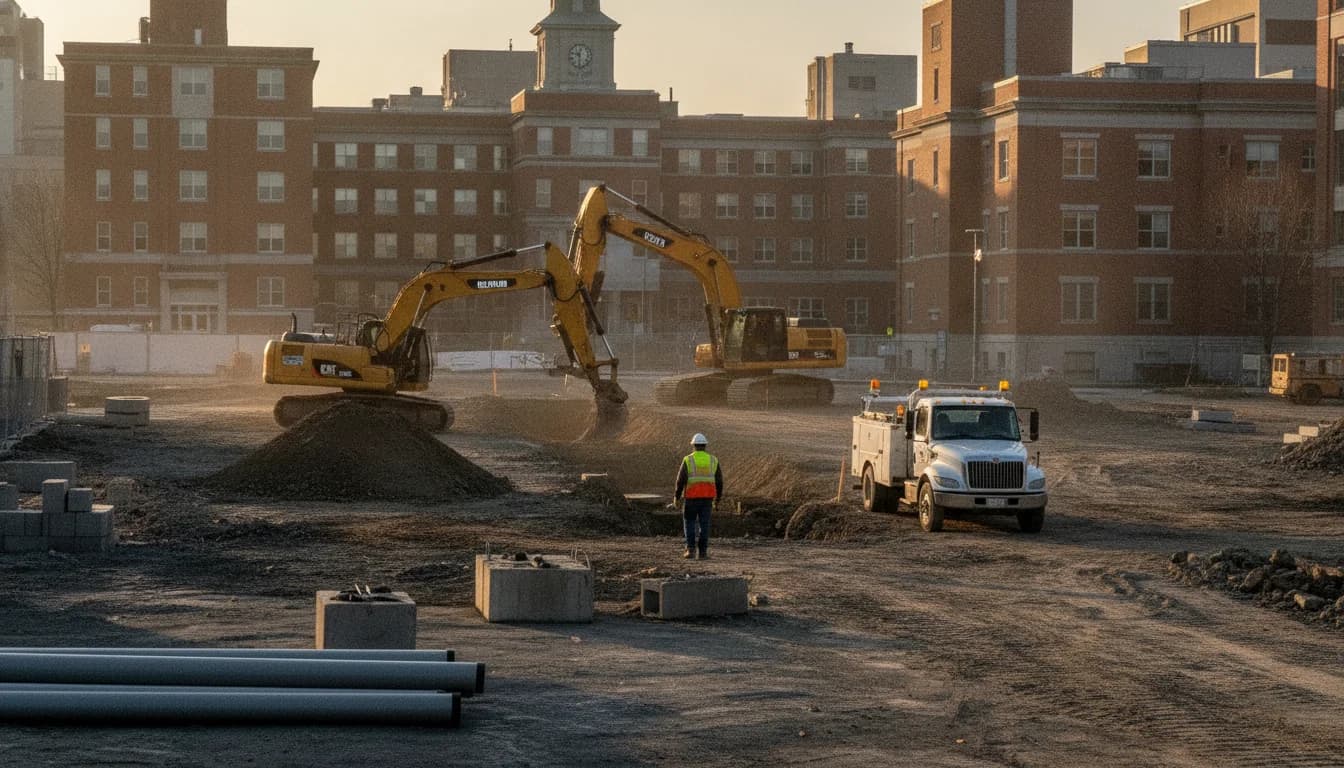
Maisonneuve-Rosemont Hospital modernization Advances
Montréal Times reports that on April 23, 2026, Santé Québec announced a major milestone in the Maisonneuve-Rosemont Hospital modernization project, detailing a multi-year funding plan, site preparations, and next steps to accelerate the expansion. This latest development follows the government’s earlier kickoff of the project, marked by a ground-breaking ceremony on September 4, 2025, which signaled the transition from planning to construction and infrastructure relocation. The April 2026 update confirms a budget framework and a clear schedule to move the project toward real-world construction phases, with a target to welcome the first patients in 2036. (Source: Santé Québec release, April 23, 2026; Government of Québec press release, September 4, 2025.) (ciusss-estmtl.gouv.qc.ca)
Original finding: The combined funding announced in April 2026 totals over 700 million dollars, with 400 million allocated to site preparation and infrastructure, and 300 million dedicated to completing plans and designs, implying roughly 57% of the package targets physical works and 43% supports planning, according to Santé Québec’s release. This breakdown helps readers gauge where the project is prioritizing early investments and how the funding cadence aligns with the larger construction timeline. (Derived from Santé Québec’s April 23, 2026 update.) (ciusss-estmtl.gouv.qc.ca)
The long-awaited modernization of Hôpital Maisonneuve-Rosemont, a flagship hospital on Montréal’s east side, has moved from talk to concrete steps, with government approvals and industry actions now visible in the project’s early-bid signals and site work. The government’s approach—combining land acquisitions, infrastructure relocations, and a major new parking facility with the hospital’s expansion—indicates a coordinated move to reconfigure a high-need care campus while preserving current services. This evolution matters not only to patients in Montréal's east end, but also to the broader Quebec health system as a test case for large-scale hospital modernization in a mature urban center. The following sections outline what happened, why it matters, and what to expect next, drawing on the two primary sources described above and corroborating public details about the project’s scope and timetable. (quebec.ca)
What Happened
Kickoff and Budget Sept. 4, 2025 marked a pivotal moment in the history of the Maisonneuve-Rosemont modernization project when the Government of Québec announced the start of travaux—to begin moving the campus toward a modern, expanded facility. The press release described a ground-breaking moment for the project, including the plan to relocate essential infrastructure and to advance construction activities that will unlock space for future patient care and research. The ceremony, attended by senior ministers and regional representatives, underscored the government’s commitment to delivering a modern hospital on a widely used regional site and reiterated that the expansion would serve patients from Montréal-Est and surrounding regions, as well as the broader province. The release also highlighted a forthcoming mix of supports, such as the creation of a new elevated parking structure and the reallocation of critical utility lines to enable the new pavilion. For context, the release explicitly linked the momentum to the September 2023 plan that outlined the modernization concept and the project’s major milestones. (Primary source: Gouvernement du Québec, September 4, 2025.) (quebec.ca)
Timeline and Scope By April 23, 2026, Santé Québec provided a more detailed milestone update, describing a new step in the project toward realizing the expanded and upgraded hospital complex. The government confirmed more than 700 million dollars in total funding for 2026, with about 400 million dedicated to land acquisition, parcel consolidation, and relocalization of essential infrastructure, and roughly 300 million earmarked to finish the project’s planning and design phases and to advance the first construction contracts. This release also noted that a first public call for bids would be issued in the coming weeks, signaling the transition from planning to competitive procurement and construction. The plan includes significant campus rehabilitation, with the aim of eventually delivering a 720-bed facility in specialized patient care areas, a larger set of operating suites, and enhanced imaging and laboratory capabilities. (Primary source: Santé Québec, April 23, 2026.) (ciusss-estmtl.gouv.qc.ca)
Key Stakeholders and Execution Structure The modernization effort is being managed by the larger project governance framework established by the Société québécoise des infrastructures (SQI), with day-to-day oversight by the CIUSSS de l’Est-de-l’Île-de-Montréal. The April 2026 release also underscores the ongoing role of the hospital’s research and teaching ecosystem, including the involvement of the CIUSSS and the broader provincial health system. A notable factor in the execution has been the engagement of private-sector expertise to support delivery, illustrated by the announcement that AtkinsRéalis won a major contract related to the project’s modernization, highlighting the blended public-private approach typical of large Québec infrastructure programs. Additional context is provided by the hospital foundation and other regional partners, which have been active in fundraising and public engagement around the modernization initiative. (Primary sources: Santé Québec, April 23, 2026; CNW press coverage of AtkinsRéalis contract, 2024–2025.) (ciusss-estmtl.gouv.qc.ca)
Why It Matters
Impact on Patient Care and Access The Maisonneuve-Rosemont modernization project is designed to significantly expand and modernize care delivery for residents of Montréal-Est and the wider region. The plan’s scope includes upgrading all patient care units, expanding intensive care capacity, and modernizing imaging, laboratories, and related support services, with a goal of delivering a more integrated, safer, and technology-enabled environment. The April 2026 update reinforces that the hospital will feature 720 beds in single-occupancy rooms and will incorporate a fresh suite of operating rooms, imaging modalities, and research facilities. This scale-up is expected to reduce wait times for high-demand specialties, strengthen high-complexity services, and improve the hospital’s ability to attract and retain top clinical talent. The project’s alignment with the broader Plan Santé and the Est-de-l’Île health network underscores its role as a keystone investment in Québec’s health system modernization. (Primary source: Santé Québec, April 23, 2026.) (ciusss-estmtl.gouv.qc.ca)
Regional Economic and Infrastructure Impacts Beyond direct patient care improvements, the modernization program signals substantial regional economic activity and infrastructure investments. The April 2026 briefing describes an integrated approach that includes land acquisitions, relocations of critical utilities, and the construction of a new elevated parking facility to support the enlarged campus. This combination is expected to create a sizeable, multi-year construction program with procurement opportunities for local vendors and potential spillovers into related sectors (engineering, architecture, and maintenance services). The project also serves as a case study for how Québec coordinates large-scale hospital modernization with urban planning considerations, traffic management, and sustainable mobility. The initial sequencing of site work and the anticipated first bids also help illuminate how the public sector leverages private-sector capabilities to accelerate delivery without compromising oversight or patient safety. (Primary source: Santé Québec, April 23, 2026; Government of Québec press materials, Sept. 4, 2025.) (ciusss-estmtl.gouv.qc.ca)
Public-Private Collaboration and Governance Québec’s modernization program for Maisonneuve-Rosemont exemplifies a public-private collaboration model common in major infrastructure projects. The AtkinsRéalis contract, announced in 2024, demonstrates the ongoing involvement of private sector expertise in project management, cost estimation, and delivery oversight. This collaboration is intended to complement public governance structures, ensuring rigorous cost controls, schedule adherence, and quality standards across the project’s multi-year timeline. The project’s governance also relies on SQI’s procurement processes and CIUSSS-EMTL’s oversight of health service delivery and clinical integration. Observers may watch how this co-management approach translates to risk allocation, schedule performance, and the pace at which clinical spaces become available to patients in the future. (Primary source: AtkinsRéalis press release via CNW, 2024; Santé Québec, April 23, 2026.) (newswire.ca)
What’s Next
Upcoming Milestones Looking ahead, the government’s plan calls for continued site development, infrastructure relocations, and the formalization of a procurement pipeline, with the first call for bids expected in the near term following the April 2026 update. This stage is critical for translating the high-level funding commitments into concrete construction contracts and staffing plans. The progression from planning and design to tangible contracts will be a closely watched indicator of project momentum and the effectiveness of Québec’s multi-stakeholder governance approach in delivering complex health infrastructure. (Primary source: Santé Québec, April 23, 2026.) (ciusss-estmtl.gouv.qc.ca)
Timeline Toward Patient Access A central question for readers is when first patients will begin to benefit from the modernization. Santé Québec’s April 2026 release notes that the project’s design work and construction planning are intended to support the goal of welcoming patients into the upgraded facility in 2036. While that date reflects a long horizon, it anchors expectations for a multi-phase transformation—from pre-construction site works to modular, patient-centered care spaces that can adapt to evolving clinical needs. Stakeholders at the provincial level emphasize that this timeline balances the urgency of updating aging infrastructure with the realities of large-scale hospital construction in a major urban area. (Primary source: Santé Québec, April 23, 2026.) (ciusss-estmtl.gouv.qc.ca)
What to Watch For Readers should monitor several markers in the coming months:
- The release of the first formal bid packages and the start of competitive procurement for major construction components. (Primary source: Santé Québec, April 23, 2026.) (ciusss-estmtl.gouv.qc.ca)
- Any updates from SQI or CIUSSS-EMTL regarding project governance, risk management, and schedule adjustments as contracts move from planning to execution. (Primary source: Santé Québec, April 23, 2026; Gouvernement du Québec, Sept. 4, 2025.) (ciusss-estmtl.gouv.qc.ca)
- The hospital foundation’s fundraising activities and partnership milestones that support the modernization’s research and care objectives. (Contextual reference: Fondation HMR communications; not a primary procurement document, but relevant to the broader financing ecosystem.) (fondationhmr.ca)
Closing
As Montréal’s east-end health ecosystem prepares for a major upgrade, the Maisonneuve-Rosemont modernization project stands as a landmark example of how health systems can modernize at scale while maintaining critical patient services. The April 2026 update confirms a substantial, multi-year funding framework and a clear path toward construction, signaling to clinicians, patients, and local communities that the hospital’s transformation is moving from ambition to execution. For readers and stakeholders seeking ongoing updates, official sources from Santé Québec and the Québec government remain the primary channels for the most current milestones, procurement notices, and design approvals. The project’s ultimate success will hinge on execution across governance, engineering, clinical planning, and patient-centered care design—areas where data-driven oversight and transparent public reporting will be essential in the years ahead. (ciusss-estmtl.gouv.qc.ca)
Readers who want to drill into the primary documents can review the Government of Québec’s release on the project’s start and the Santé Québec update detailing the latest funding and next steps. These sources provide the official frame for the hospital’s modernization timeline and the associated investments that will shape health care for the region for years to come. The road ahead remains long, but the path is now clearly mapped, with milestones that observers can track and compare as new procurement and construction notices are issued. (quebec.ca)