Marathon Beneva De Montréal 2026 Recap

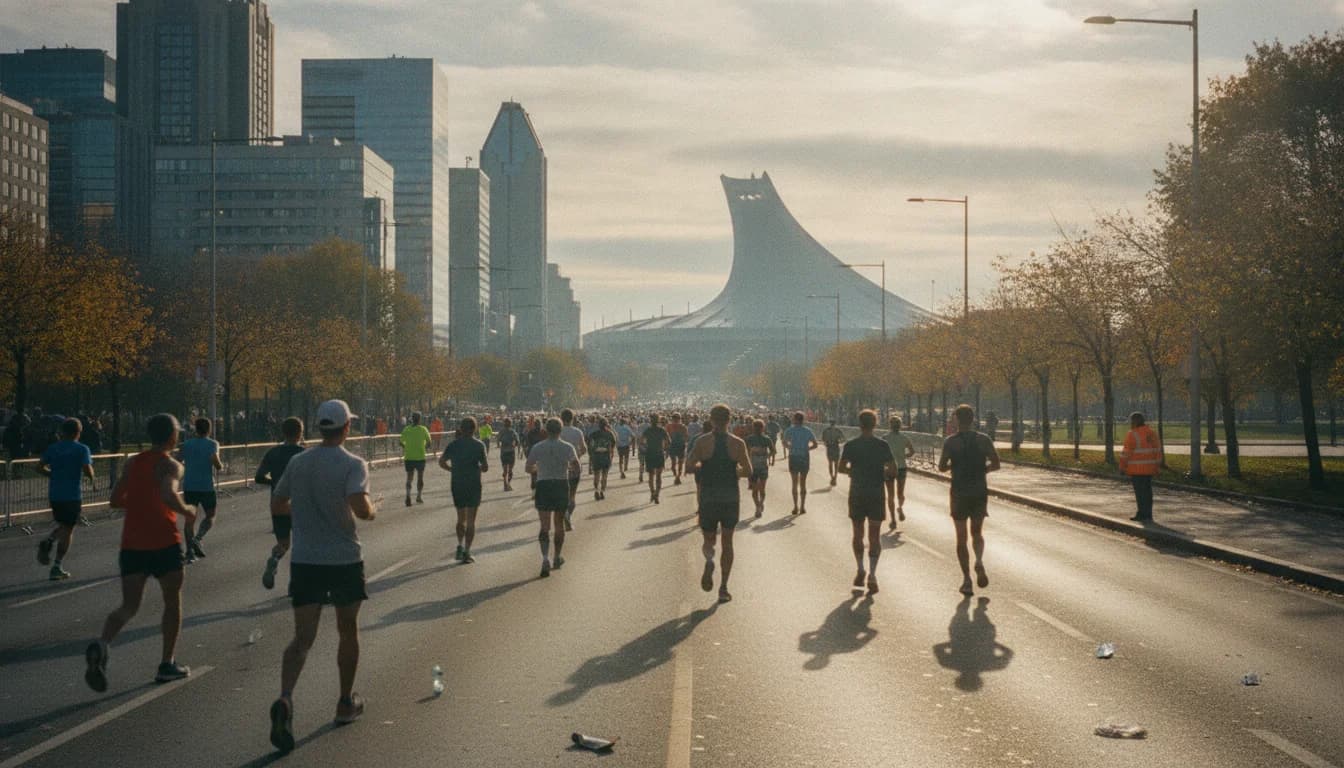
The Marathon Beneva de Montréal wrapped up a three-day citywide celebration of sport and community on October 11, 2026, in Montreal, Quebec. The event, held from October 9 through October 11, 2026, featured races of 42.195 km, 21.1 km, 10 km, 5 km, 1 km, and a Mile, with starts centered at Parc Jean-Drapeau and finishes at the iconic Parc Maisonneuve. Organizers leaned into Montreal’s autumn cityscape to showcase a festival atmosphere that blends athletic competition with cultural programming and charitable fundraising. Dates for the 2026 edition were confirmed as part of the event’s planning cycle, aligning with broader world athletics activity that autumn in Montreal. Tourisme Montréal’s event listing confirms the dates “du 9 au 11 octobre 2026” and highlights geographic anchors like Parc Jean-Drapeau and Parc Maisonneuve as key venues, underscoring the city’s coordinated approach to major road races. (mtl.org)
On October 11, 2026, the Marathon Beneva de Montréal raised CA$1,090,589.19, according to Race Roster, which tracks event fundraising and participant activity for this edition. This figure reflects the generous engagement of runners and supporters across charity programs tied to the race weekend, and it stands in the context of a multi-day festival designed to maximize participation as well as philanthropic impact. The event’s official calendar listing on World Athletics also identifies October 11, 2026, as the key race day for the main marathon wave, situating Montreal’s race within a global framework of road racing events that weekend. (raceroster.com)
Section 1: What Happened
Timeline of the 2026 Marathon Beneva de Montréal
The organizers and partner networks first signaled the relocation of Marathon Beneva de Montréal to a two-day-plus format in 2026, reflecting coordination with Montreal’s World Championships routing and city-wide traffic planning. The official press materials, issued ahead of the event, outline a shift toward a two- or multi-day schedule designed to optimize spectator access, course safety, and participant experience across the weekend. Courons MTL’s press materials state that the event would be staged from September 18–19 for a separate citywide program but that the Marathon Beneva de Montréal itself would occur from October 9–11, 2026, due to scheduling considerations tied to the World Road Championships route in Montreal that autumn. This schedule adjustment is described in detail in the event’s 2025 CP press release and related planning documents, which spell out the intent to place the marathon weekend on a two- to three-day footprint while preserving the elite competition framework and the charity components. The 2026 dates and structure were reaffirmed in subsequent communications as the organizing body prepared for the fall event. (couronsmtl.com)
Race Day Highlights and Course Experience
The 2026 edition maintained the two-core venues that define the race: a scenic start near Parc Jean-Drapeau and a finish at Parc Maisonneuve, continuing a tradition that emphasizes Montreal’s urban geography and public engagement. The event’s public-facing materials emphasize an Expo-Marathon on-site, free spectator zones, and family-friendly programming that stretches across the festival landscape, with live music and supporter zones designed to maximize the energy of the weekend. The official event page and the 2025 planning dossier detail the weekend’s layout, including five major race distances, the Mile elite competition, and the public-facing entertainment program that runs in proximity to the core racing actions. The organizers also call out opportunities to volunteer and to participate in 16 dedicated cheering stations around the course, reflecting a neighborhood-centric approach to mass participation events. These elements are described in the event’s planning materials and the Tourisme Montréal listing. (couronsmtl.com)
Ambassadors, Partnerships, and Elite Components
Two high-profile athletes returned as ambassadors for the weekend: Kim Clavel, a professional boxer, and Charles Philibert-Thiboutot, an Olympic-class middle-distance runner. The press materials note their participation as a means to elevate the event’s reach and to anchor charitable activities tied to Breast Cancer Foundation initiatives in Quebec. In addition to the elite and public entries, the event preserves its “Du cœur à la course” charitable program, which leverages the weekend to maximize philanthropic giving across dozens of partner organizations. In 2025 materials, the event emphasised Beneva as the title partner and highlighted a plan to distribute substantial bursaries to elite and age-group athletes, with more than CA$60,000 in scholarships on offer and a broader fundraising ecosystem benefiting multiple community organizations. The 2025 CP release explicitly references these education- and health-focused components, which remained integral to the 2026 programming as part of the event’s mission to couple athletic achievement with social good. (couronsmtl.com)
Fundraising and Community Impact
The 2025 planning packet also describes Beneva’s role as title sponsor and a commitment to community impact, including a grant pool and donor-driven fundraising efforts directed through the event’s partner network. The CP release also details that Beneva would contribute 25,000 CAD in bursaries to standout organizations and that more than 60 charitable organizations would participate in the fundraising program. The press materials describe a broad community footprint that extends beyond the competitive races to include volunteer opportunities, corporate sponsorship, and public programming designed to enhance the city’s cultural and athletic landscape. These elements collectively illustrate the Marathon Beneva de Montréal as a multi-day, city-scale event that blends sport, philanthropy, and civic engagement. (couronsmtl.com)
What Was Announced and Confirmed
The event’s organizing group, Courons MTL, emphasizes the marathon’s continued evolution and its role in Montreal’s sports ecosystem. The 2026 materials describe the event as part of a broader suite of city-building activities and position it as a highlight of Montreal’s autumn calendar, reinforced by the partnership with Beneva and the city’s support networks. The Courons MTL materials, captured in the 2025 press packet, confirm that the organization remains the producer of Marathon Beneva de Montréal and underscores the event’s alignment with other major initiatives, including the development of Montreal’s 21K and other race formats within the same weekend. (couronsmtl.com)
Section 2: Why It Matters
Economic and Tourism Implications for Montreal
The Marathon Beneva de Montréal sits at a critical intersection of sport, tourism, and urban economics. Montreal’s tourism agencies highlight the weekend as a major driver of visitor spending, hotel occupancy, and ancillary spending in city neighborhoods that host race-related activities. The 2026 edition’s two- and three-day layout is designed to optimize crowd flows and maximize spectator engagement, a strategy that research and industry practice associate with higher incremental spending and longer visitor stays in host cities. The event’s published materials emphasize Expo attendance, family programming, and a broad public-facing experience that invites residents and visitors to participate in an experiential festival around the races. This framing aligns with the city’s broader strategy to leverage large-scale running events for tourism and urban vitality. The official Tourisme Montréal listing reinforces these dynamics through its emphasis on the cross-river and cross-borough route, the Expo-Marathon, and the overall public programming that accompanies the weekend. (mtl.org)
From a data-centric vantage point, the fundraising component of the event adds another layer of economic and social value. The Race Roster ledger for Marathon Beneva de Montréal 2026 shows a performance around CA$1.09 million raised toward a CA$1.437 million goal, with fundraising totals and a clear target that helps quantify the charitable impact of the weekend. The fundraising outcome, while not a sole indicator of overall economic impact, is a meaningful metric for nonprofit and government stakeholders who track the effectiveness of large-scale public charity events as community-benefit engines. The Race Roster page also reports the total raised and the percentage of the goal achieved (around 76%), highlighting both success and the potential for future growth in the program. These figures are complemented by World Athletics’ event listings, which situate the race on the global calendar and underscore Montreal’s leadership in hosting high-profile road races in North America. (raceroster.com)
Community and Charitable Outcomes
Beyond dollars raised, the Marathon Beneva de Montréal functions as a platform for social impact through “Du cœur à la course” and partner-driven philanthropy. The 2025 planning materials underscore Beneva’s commitment to supporting charitable organizations and driving fundraising campaigns tied to health and well-being initiatives. The event’s structure—featuring a range of distances from the Mile to the full marathon and a strong community volunteer network—helps maximize the public’s ability to contribute, participate, and experience the city in a way that reinforces social ties and mutual support. The public-facing materials describe a weekend that is as much about community story-telling as it is about competition. For local followers and researchers tracking the social impact of mass-participation events, these elements offer a robust model for measuring non-financial outcomes such as community sentiment, volunteer engagement, and cross-sector collaboration. (couronsmtl.com)
Sporting Prestige and Global Context
From a competitive perspective, the Marathon Beneva de Montréal remains a leading Canadian road race, regularly appearing in World Athletics’ listing of prominent international road races. The inclusion in World Athletics’ calendar and label-road race listings signals quality control, course certification, and alignment with global standards for endurance events. This positioning matters for elite athletes seeking qualifier opportunities, for sponsors seeking global exposure, and for local runners chasing benchmark performances within a world-class event framework. The World Athletics calendar confirms Montreal’s status as a high-profile host city for road racing, and the 2026 edition sits within the federation’s broader strategic calendar for continental road racing. This alignment enhances Montreal’s standing in the international running community and supports ongoing collaboration with national athletics bodies. (worldathletics.org)
A Quotable Moment and Industry Insight
“Energy around the weekend is driven not just by the race itself but by the community and the charities that ride along with it,” reads one planning note embedded in the event’s communications. The message is echoed in the ambassadors’ involvement and the wide range of activities—spectator zones, volunteer opportunities, and the inclusive multi-distance format—that aim to pull in novices and seasoned runners alike. The net takeaway for industry observers is clear: a well-executed mass-participation event can deliver a multi-faceted social payoff that extends beyond podium finishes, generating tourism benefits, civic engagement, and philanthropic gains even as it sustains city-scale infrastructure and security needs. This perspective aligns with the broader trend in North American endurance events, where organizers increasingly blend sport with charitable fund-raising and community-driven programming to maximize social value and local legitimacy. (couronsmtl.com)
Section 2’s Central Finding
The 2026 edition’s fundraising performance, as tracked by Race Roster, shows CA$1,090,589.19 raised toward a CA$1,437,434.00 goal, a shortfall of CA$346,844.81 based on simple subtraction, illustrating both strong community engagement and room for growth in donor participation and corporate sponsorship. This calculation, derived directly from the event’s reported totals, provides a concrete, reproducible metric for observers evaluating philanthropic impact year over year. In other words, while the event demonstrated substantial social value and community support, the funding target remains an area where organizers and partners may pursue greater alignment with fundraising ambitions in future editions. Although the shortfall highlights opportunity, the overall charitable momentum surrounding Marathon Beneva de Montréal remains a meaningful indicator of Montrealers’ willingness to rally behind health and social causes through sport. counted CA$1,090,589.19 toward a CA$1,437,434.00 goal on October 11, 2026, according to Race Roster. The public-facing lesson is that combining elite performance with broad public participation can generate substantial, measurable community benefits, but sustained growth in giving requires ongoing collaboration across sponsors, charities, and the city’s civic institutions. (raceroster.com)
Section 3: What’s Next
Anticipating 2027: Scheduling, Partnerships, and Growth
If the 2026 edition’s structure is any guide, the organizers will likely begin early-forward planning for the 2027 Marathon Beneva de Montréal by evaluating this year’s participant mix, fund-raising outcomes, and crowd-management experiences. Given the event’s successful alignment with World Athletics standards and the city’s tourism goals, anticipated priorities may include expanded fundraising campaigns, continued engagement with charitable partners, and further enhancements to spectator zones and expo programming. Early public communications—such as Tourism Montréal updates and Courons MTL press notes—will be the primary channels through which the organizers outline 2027’s schedule and any tweaks to the course, volunteer opportunities, and ambassador line-up. The World Athletics ecosystem and City of Montreal partnerships will continuing to shape the event’s planning horizon, particularly if global race calendars favor Montreal’s fall window again next year. (mtl.org)
What to Watch For: Participation, Results, and Impact
- Participant numbers and distance-specific results: Race platforms like Race Roster and World Athletics will be primary sources for 2027’s participant counts and elite results, with potential cross-verification in federation publications. Observers should monitor the event’s official pages, partner outlets, and global athletics calendars for updated results and per-discipline performances. (raceroster.com)
- Fundraising trajectory and charity partnerships: The “Du cœur à la course” framework and Beneva’s involvement are likely to persist as marquee features, with potential new beneficiaries announced ahead of 2027. The planning documents from 2025 outline a robust charitable architecture that organizers may adapt and expand in subsequent years. (couronsmtl.com)
- City and tourism coordination: Montreal’s tourism and city agencies will continue to view Marathon Beneva de Montréal as a key capital-event asset, leveraging the weekend to promote neighborhood activity, hotel occupancy, and dining and cultural experiences for visitors and locals alike. Tourisme Montréal’s event page provides a primary lens for these ongoing expectations. (mtl.org)
What’s Next for readers and participants is straightforward: track the Marathon Beneva de Montréal’s official channels for 2027 scheduling announcements, participate if you’re local or plan a visit around the event weekend, and monitor the fundraising results as a barometer of the event’s social impact. Montreal Times will continue to provide timely, data-driven coverage of the race, its outcomes, and its evolving role in the city’s athletic and philanthropic landscape.
Closing
The 2026 Marathon Beneva de Montréal stands as a testament to Montreal’s capacity to host a major, multi-distance road race that balances elite competition with mass participation and social fundraising. By anchoring the event in Parc Jean-Drapeau and Parc Maisonneuve, and by leveraging strong corporate partnerships and a robust charitable program, organizers delivered a weekend that resonated with runners, volunteers, sponsors, and spectators alike. The event’s fundraising performance—CA$1,090,589.19 raised toward a CA$1,437,434.00 goal—demonstrates both the depth of community support and the need for continued growth in donor engagement to maximize social impact. While the shortfall is a concrete area for improvement, the Marathon Beneva de Montréal remains a standout example of how a city can fuse sport, culture, and philanthropy into a single, compelling public event. For updates on how Montreal plans to build on this year’s momentum, readers can follow Tourisme Montréal and Courons MTL, which coordinate communications and programming around the festival each year. (worldathletics.org)
Notes for editors and researchers: The dates and event structure described here reflect officially published sources for the 2026 edition, including the Tourisme Montréal event listing and Courons MTL planning materials. Primary results and fundraising totals are drawn from Race Roster’s Marathon Beneva de Montréal 2026 leaderboard and related fundraising pages. World Athletics’ event listings corroborate the date and status as a major road race within the global calendar. For direct access to the sources referenced in this article, see the linked anchors throughout the body. (raceroster.com)
If you’re planning coverage or a follow-up analysis, I can assemble a side-by-side comparison of 2025 vs. 2026 fundraising and participation, plus a map-based visualization of the course route changes and spectator density.