Montreal 2026 UCI Road World Championships routes explained

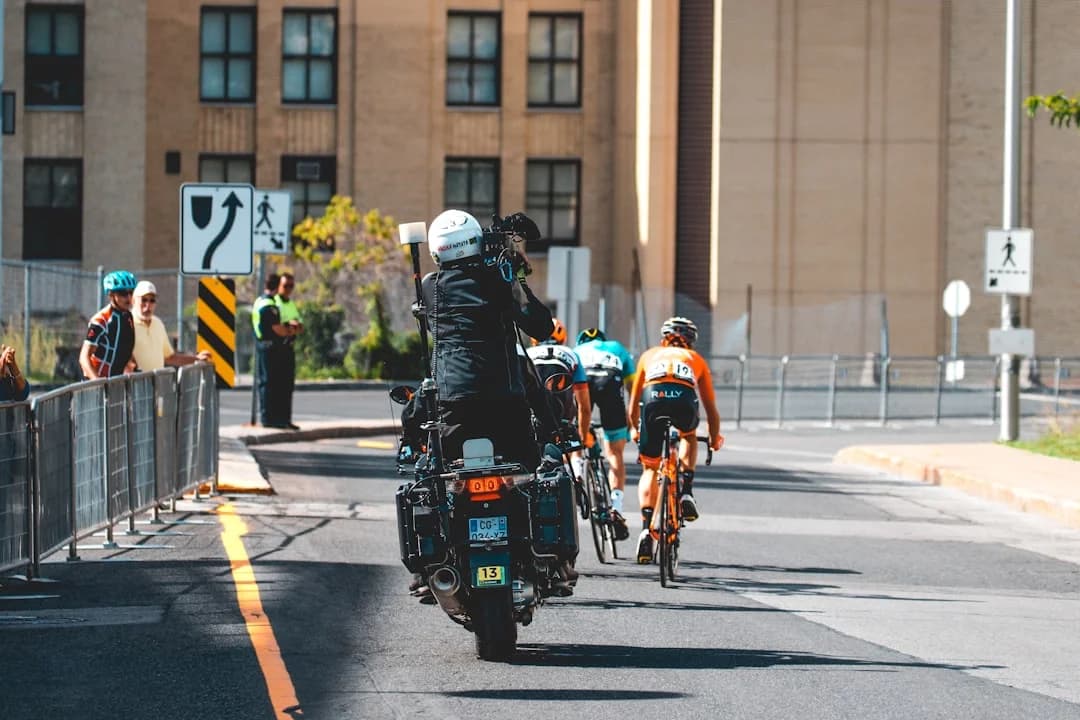
Photo by louis tricot on Unsplash
Montreal 2026 UCI Road World Championships routes explained. The organizing committee publicly unveiled the full routes for the UCI Road World Championships Montréal 2026 on September 26, 2025, in Kigali, marking a historic step as Canada prepares to host the event from September 20 to 27, 2026. The announcement confirms a bold, city-wide approach that blends Mont-Royal’s famed incline with urban races, a 39.9-kilometer shared time-trial loop, and a multi-municipality road race circuit that spans the Montérégie region and reaches well into Montréal proper. This reveal matters because the routes are not only critical for athletes and teams but also for mobility planning, public investment, tourism projections, and the event’s broader market footprint. As officials framed it, the parcours will juxtapose riverside scenery, historic neighborhoods, and a world-class climbing challenge to deliver a high-profile showcase with potential lasting economic and infrastructural benefits. (montreal2026.org)
The two Elite Road Races will begin in Montérégie, in Brossard, before threading through seven other municipalities in the region and finishing on the Mont-Royal circuit via the Samuel-De Champlain Bridge. The course emphasizes the Camillien-Houde climb (2.3 km at an average 6.2%), a steepPolytechnique climb with sections exceeding 11%, and a telling uphill stretch along Parc Avenue that will serve as part of the finish for all 13 events. Time trials for both men and women Elite share a 39.9-kilometer circuit around Montréal, passing Circuit Gilles-Villeneuve and Parc Jean-Drapeau before crossing the Concorde Bridge back toward the city center. The scale and design of the routes underscore Montréal’s ambition to stage a globally visible event while leveraging the city’s renowned cycling heritage. (montreal2026.org)
The official route reveal arrived alongside a broader context: the 2026 Worlds schedule spans eight days, with six time-trial events and five road races across junior, U23, and elite categories. Montreal’s organizers project roughly 1,000 participating athletes and approximately 800 international media representatives, aiming to attract a global audience in the hundreds of millions via worldwide television coverage. This is not only a sporting milestone but a signal of how a major city can align sport, technology, and commerce to drive a large-scale, multimedia event. The event’s reach, combined with a concerted mobility and legacy plan, makes the Montreal 2026 routes a focal point for market analysis, urban planning, and brand activation in the cycling ecosystem. (cyclingnews.com)
Opening a window into the practical details, the routes are designed to showcase Montréal’s urban core while connecting with neighboring towns via the Champlain Bridge and the Montérégie corridor. The Mont-Royal circuit is a centerpiece, delivering a dramatic finale that mirrors the long-standing GP Montréal route tradition. The Camillien-Houde ascent and the Polytechnique climb are poised to test climbers across multiple laps, with Parc Avenue acting as the uphill, shared finish line for every event. For spectators, this means a concentrated viewing experience in and around Parc du Mont-Royal while also enabling fans to track actions across a broader regional footprint. The full map set and official route descriptions are publicly accessible on the event site, reinforcing the transparency and planning rigor behind the rollout. (montreal2026.org)
Section 1: What Happened
Route unveiling and scope
-
The Montreal 2026 organizing committee formally unveiled the routes for the UCI Road World Championships Montréal 2026 on September 26, 2025, at the conclusion of the Kigali-hosted World Championships. The announcement confirms the eight-day festival of races will run from September 20–27, 2026, with a structure that emphasizes a 13.4-kilometer Mont-Royal circuit as the focal point for the road races. The two Elite Road Races (men and women) start in Brossard, Montérégie, travel through eight regional municipalities, and finish on the Mont-Royal circuit via the Samuel-De Champlain Bridge. The proposed routes integrate the Camillien-Houde climb and the Polytechnique climb, both expected to be decisive in the late stages of the races. In addition, the time trials will share a single 39.9-kilometer circuit that traverses Circuit Gilles-Villeneuve and Parc Jean-Drapeau before crossing the Concorde Bridge back into the heart of Montréal. (montreal2026.org)
-
The official maps and route specifics are accessible through the Montréal 2026 site, which outlines the 13-event program and details the route topology, including ascent gradients and the finishing approach. Canadian cycling media picked up these details, highlighting that Mont-Royal will anchor the circuit finish and that the event will weave through a cross-section of urban and suburban terrain to maximize spectator accessibility. The route reveal also aligns with Montréal’s historical identity in cycling, tracing back to the 1974 Worlds route around Mont-Royal that originally set the city’s reputation for route design within the discipline. (cyclingmagazine.ca)
Time trials and road races structure
- The elite-level time trials will share a common 39.9-kilometer loop, a design that emphasizes consistency and comparability across the men’s and women’s events. The loop takes riders along the St. Lawrence River corridor, includes a circuit around Gilles-Villeneuve, traverses Parc Jean-Drapeau, and finishes on the Avenue du Parc after crossing the Concorde Bridge. This shared ITT loop has been described in detail by Cycling News and Montreal’s organizing bodies, and it is projected to deliver a fast yet technical course that accentuates Montréal’s riverfront geography and urban boulevards. (cyclingnews.com)

-
For the road races, the elite women’s and men’s courses diverge in total distance but share the Mont-Royal circuit for the closing laps. The women’s elite road race is slated to cover approximately 180 kilometers, while the men’s elite road race will total around 273.2 kilometers, with a combination of initial big-loop sections in the Montérégie region and multiple laps of the Mount Royal circuit to crown the rainbow jerseys on the final day. The 2025–2026 reporting on route maps confirms the lap-based structure for the Mont-Royal finish, which is expected to deliver a dramatic, spectator-friendly finale across neighborhoods and vantage points around Parc Avenue and Mount Royal. (cyclingmagazine.ca)
-
The event’s schedule, as detailed in Canadian Cycling Magazine, shows a day-by-day progression that includes junior and U23 time trials and road races distributed across September 20–27, culminating in the elite women’s road race on September 26 and the elite men’s road race on September 27. This cadence mirrors the World Championships’ long-standing practice of layering events by category, while the Montreal route design emphasizes accessibility for fans and media across eight days of competition. (cyclingmagazine.ca)
-
In addition to the routes themselves, the official pages note that 13 events will be staged across nine municipalities, highlighting the scale and logistical breadth of the Worlds in Montréal. This multi-event, multi-venue approach is a hallmark of the UCI’s global championships, and Montréal’s plan aligns with that model while leveraging the city’s existing Grand Prix Cycliste de Montréal framework as a knowledge base for logistics, safety, and spectator experience. (montreal2026.org)
Start logistics, finish lines, and participant experience
-
The route design positions the start in Brossard (Montérégie) as a strategic gateway to Montréal, enabling a dramatic pre-urban loop that culminates in the Mont-Royal circuit. The Champlain Bridge serves as a symbolic and practical connector, linking the riverfront corridors with the historic core and Mount Royal finish. This configuration is intended to maximize broadcast angles and spectator access across the metro area, while also distributing event-related traffic and security considerations across a wider geographic footprint. (montreal2026.org)
-
The finishing stretch on Avenue du Parc—built into the Mont-Royal circuit—will be a shared finish for all 13 events, a design choice that emphasizes predictable prize-giving and media capture while allowing fans in the city to witness multiple disciplines in a single grand setting. The course’s finishing elements mirror the city’s cycling heritage, notably the GP Montréal route, and anchor a narrative around the Mont-Royal ascent as the race’s decisive crescendo. (cyclingmagazine.ca)
Section 2: Why It Matters
Economic and tourism impact
-
The Worlds’ budget is reported around CA$30 million, with sponsors and partnerships playing a central role in supporting operations, legacy projects, volunteer programs, and event delivery. Premier Tech’s rise as a main partner underscores the event’s market significance and the growing importance of corporate backing in Canadian cycling. The sponsor’s involvement includes leading the volunteer force which is projected to mobilize nearly 2,000 volunteers, and supporting the UCI Gala. The broader implication is that a successful Montréal 2026 could catalyze more cycling events in Québec and Canada and potentially spur longer-term sponsorship ecosystems in women’s cycling as well. (cyclingnews.com)
-
On the demand side, organizers anticipate substantial international media exposure and spectator turnout. The Tourisme Montréal and local partners project a tourism and media windfall, with the 250 million global TV audience figure referenced by the organizing teams and press materials. The event’s footprint extends beyond competition days, influencing hotel occupancy, transit usage, retail activity, and ancillary events linked to festival atmosphere and hospitality programs. The event thus sits at the crossroads of sports economics, urban tourism, and branding opportunity for Montréal and the wider region. (meet.mtl.org)
-
In addition, the 2026 Worlds are positioned as a high-profile signal for Montreal’s status as a “safe, accessible” cycling city with a track record of major events. The World Championships are expected to draw more than 250,000 spectators and tens of thousands of daily visitors to the event footprint, reinforcing Montréal’s credentials as a hub for sport and mobility innovation. These numbers, while aspirational in public-facing materials, inform market analyses about the event’s capacity to attract business-to-consumer engagement, sponsor visibility, and cross-border tourism. (meet.mtl.org)
Infrastructure and legacy
-
The Montreal 2026 project is framed as a catalyst for upgrading the metropolitan cycling network. The Grand Montréal Riverfront Promenade project, which includes a 13.4-kilometer upgrade, connects Delson, Candiac, La Prairie, and Brossard, and links to Montréal via the Samuel-De Champlain Bridge and Parc Jean-Drapeau. The upgrades aim to deliver safer, higher-quality cycling infrastructure for residents while enabling a robust event footprint that can be repurposed for everyday mobility after the Worlds. Officials emphasize that the event will serve as a lasting mobility and lifestyle legacy, aligning with the city’s broader active transportation goals. (montreal2026.org)
-
The legacy narrative emphasizes the potential for ongoing economic and social benefits, not just during race week but in the years that follow. The organizing committee has highlighted connections to a broader cycling ecosystem, including the REV network expansion and the continued promotion of cycling as a mobility solution. As the organizer notes, “the World Championships will leave a lasting legacy for the Greater Montréal community,” spanning infrastructure, tourism, and cycling culture. The funding and partnership mix, including government support and private sponsorship, will shape how that legacy unfolds. (montreal2026.org)
Sponsorship and funding dynamics
- The sponsor landscape for Montréal 2026 reflects a broader trend in global sport where corporate partnerships are critical to delivering large-scale events, especially when public funding caps constrain budgets. Premier Tech’s sponsorship was announced in February 2026 as part of a broader push to align private sector support with cycling’s growth ambitions in Canada. The press coverage notes Premier Tech as a Main Partner and the presenting sponsor for the volunteer force, underscoring the importance of private investment in ensuring operational success and community engagement. (cyclingnews.com)

- Carried alongside sponsorship is the practical reality of funding management. The Montreal 2026 project has a comprehensive plan that involves federal and provincial support, municipal coordination, and private sector sponsorship to fund the event’s operations, security, and legacy initiatives. A key takeaway from sponsor- and city-led communications is that the event’s operational budget is calibrated to maximize impact while maintaining financial discipline and accountability. The sponsor and government mix is also a signal of how Canadian cities approach mega-sport events in an era of heightened public scrutiny and multi-stakeholder governance. (cyclingnews.com)
Public accessibility and alignment with city events
- The route design and the free-admission nature of the World Championships are notable. The Montreal 2026 FAQ confirms that the event will be accessible to spectators without ticketing for many public-facing viewing points, a decision that broadens audience reach and enhances the fan experience. The alignment with the Grand Prix Cycliste de Montréal and the city’s cycling culture creates a coherent narrative around Montréal as a year-round cycling city, where elite competition and local participation reinforce each other. (montreal2026.org)
Section 3: What’s Next
Next steps for spectators and participants
- Volunteer recruitment and training are central to logistics planning. The organizers have signaled active volunteer recruitment and ongoing training in the lead-up to September 2026, with online sessions planned from March through August 2026 and in-person mission-specific training as the event draws closer. This pipeline is essential for event operations, safety, and spectator services, and it also provides a pathway for local residents to engage with the World Championships. (montreal2026.org)

- For athletes and teams, the next steps include drafting competitive strategies around the Mont-Royal circuit and the multi-lap finish, as well as the ITT route’s characteristics. Teams will study the Camillien-Houde ascent, the Polytechnique climb, and the Parc Avenue finish to optimize power profiles, gearing strategies, and on-bike tactics for eight days of competition. The route maps and event program published by the organizers will be the primary planning documents for coaches and riders as they finalize rosters and training blocks. (cyclingmagazine.ca)
Timeline and next milestones to watch
-
The route maps and event program continue to be refined as the September 2026 date approaches. The official Montreal 2026 site maintains a dedicated “Plan Your Trip” section, and the “News” feed is a primary channel for route clarifications, safety advisories, and logistics updates. Observers should monitor these sources for new details on road closures, spectator zones, and streaming options as race week nears. (montreal2026.org)
-
As the event draws nearer, additional sponsorship announcements, volunteer recruitment milestones, and safety protocols will likely be released. Partnerships such as Premier Tech and others will shape not only the race-week experience but also the broader messaging around cycling’s growth in Canada. The February 2026 sponsor coverage underscores the ongoing collaboration among corporate partners, city authorities, and the organizing committee to deliver a world-class event while supporting Canada’s cycling ecosystem’s long-term development. (cyclingnews.com)
Closing
The Montreal 2026 UCI Road World Championships routes represent more than a set of maps. They mark a coordinated integration of sport, urban planning, and market strategy designed to deliver world-class racing, connect communities across the Montérégie corridor and Montréal’s urban core, and leave a measurable legacy in mobility infrastructure, tourism, and branding for Canada’s cycling ecosystem. With a multi-venue route that both respects historical routes and introduces a modern, spectator-friendly layout, the event is positioned to appeal to athletes, sponsors, media, and fans alike. As the event approaches, the official route details, sponsor announcements, and mobility plans will continue to evolve, but the core structure—start in Brossard, traverse eight regional municipalities, and finish on the Mont-Royal circuit—already signals a championship weekend that Montréal and Québec can own on the global stage. For the latest route maps and program updates, readers should follow the Montreal 2026 official channels and Tourisme Montréal’s event pages, which regularly publish route specifics, spectator guidance, and logistics advisories. (montreal2026.org)
Stay tuned to Montréal 2026’s official communications and partner outlets for the most current route maps, schedule adjustments, and ticketing or viewing options as race week approaches. The city’s plan to merge a world-class course with robust public engagement and mobility upgrades suggests a model for future mega-sport events in North America. The Montreal 2026 routes are more than a race course; they’re a catalyst for urban mobility, economic activity, and a renewed cycling narrative in Canada.