Montreal Homeowners Face 9.8% Property Tax Increase

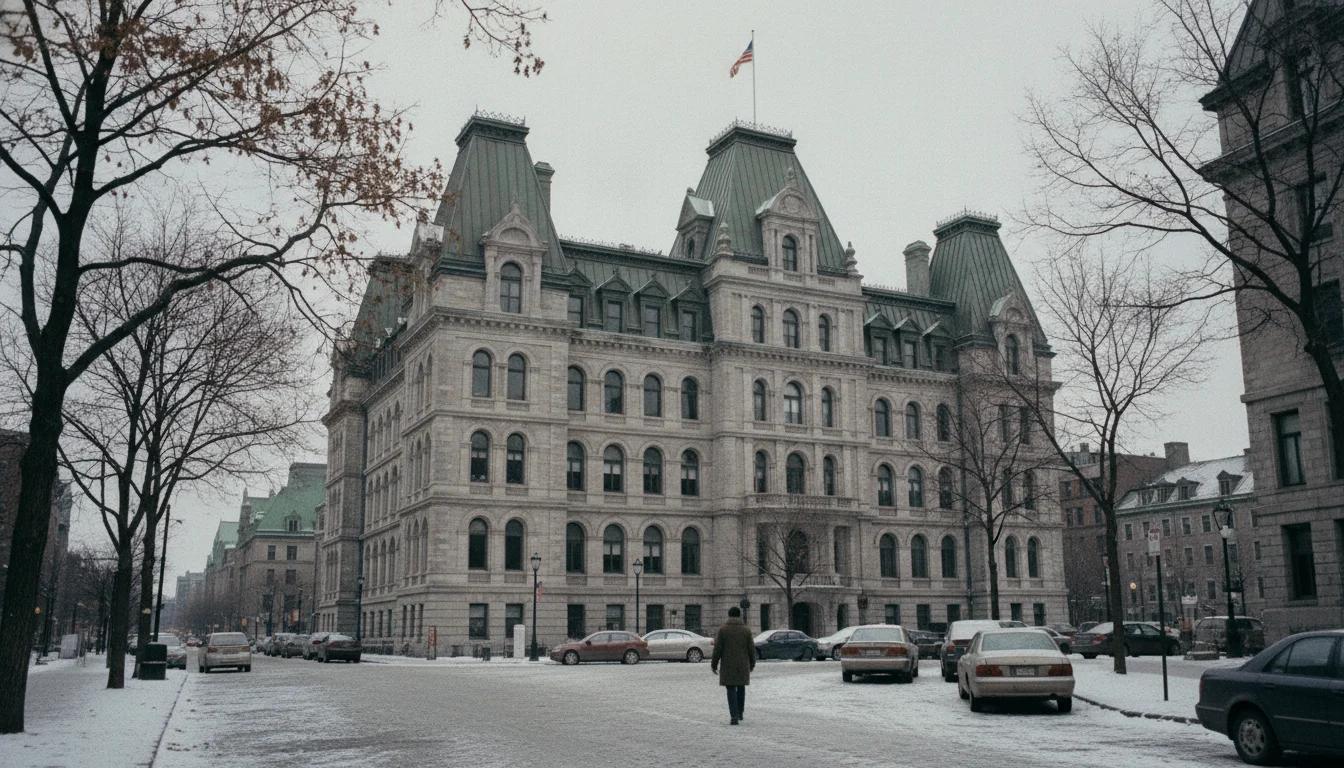
Montrealers woke up on November 24, 2026 to a developing story that could reshape how residents budget for home ownership and city services. The Gazette’s front page, dated Tuesday, November 24, 2026, reported that property taxes for homeowners are projected to rise by an average 9.8% in Montreal’s 2027 budget, a figure that would mark the steepest residential tax increase in more than two decades. The leak surfaced just as city officials prepared to present the 2027 budget, a document that would lay out the plan for funding aging infrastructure, water systems, and essential public services over the next year and beyond. The Global News coverage confirmed the same trajectory, highlighting that city documents circulating among reporters suggested an average 9.8% residential tax hike for 2027, underscoring the scale of the fiscal challenge facing Montreal as it seeks to balance service levels with affordability for residents. These developments come amid ongoing debates about how much of the tax burden should fall on property owners versus other revenue sources, and how much room Montreal has to maneuver without compromising core city services. The city’s own communications and the leaks paint a picture of a budget framed by infrastructure needs, expanding maintenance requirements, and a commitment to housing and homelessness priorities, even as residents brace for higher bills. For readers of the Montréal Times, this is a critical data point in a broader conversation about municipal finance, assessments, and the balance between investment and affordability in a major North American metropolis. The story is moving quickly, and officials have signaled that the 2027 budget will be tabled in the coming days, with public engagement expected to follow.
“Property taxes to go up 9.8% next year,” The Gazette reported on its front page, noting that “city documents show property taxes for homeowners will rise by an average of 9.8 per cent in Montreal’s 2027 budget, which will be presented Tuesday.” The paper also framed the increase as part of a broader package that includes a 2.6% general property tax increase and a 1.5% water tax hike, plus a new infrastructure maintenance tax of 5.1% that significantly contributes to the overall rise. This is the clearest, most specific accounting of the tax-change plan to date and provides a baseline for deeper analysis. (d2dr22b2lm4tvw.cloudfront.net)
Montreal’s budget process and property tax framework have long been shaped by a mix of city-run charges and borough-level adjustments. The city’s tax system is designed to fund municipal services, with tax rates determined annually based on the value of all properties and projected city expenditures. In practice, this means residents see year-to-year changes that reflect not only inflation but also targeted policy choices, capital projects, and maintenance needs. The City of Montreal explains that tax rates are recalibrated each year to support the delivery of city services, and that capital planning decisions feed into annual charges for property owners. For readers who want the big picture, the city’s explainer on how municipal taxes are calculated provides a framework for understanding why such large changes can occur in certain budget years. (montreal.ca)
Two primary sources anchor the concrete numbers in this developing story. The Gazette’s front-page report on November 24, 2026 provides the most immediate, publish-ready accounting of the 9.8% residential tax rise and its component drivers. A separate, city-released budget document published in November 2024 — which includes the detailed annual variation data across arrondissements and housing categories — helps readers place the current numbers in a longer-term context and shows how borough-level variations can add up to a citywide shift. To give readers direct access to these primary sources, the following links point to the exact documents that underpin the reporting:
- The Gazette front page (Nov. 24, 2026): Property taxes to go up 9.8% next year. [The Gazette front page, November 24, 2026] (https://d2dr22b2lm4tvw.cloudfront.net/can_mg/2026-11-24/front-page.pdf). This document confirms the headline figure and provides the breakdown that contributes to the average rise. (d2dr22b2lm4tvw.cloudfront.net)
- Budget variation data (2024–2025, residential): Variation moyenne des charges fiscales de 2024 à 2025, immeubles résidentiels par arrondissement. [Budget 2025 detailed data] (https://ville.montreal.qc.ca/pls/portal/docs/PAGE/COMMISSIONS_PERM_V2_FR/MEDIA/DOCUMENTS/BUDGET_BUDGET2025_20241120.PDF). This official document shows the borough-level variations that underlie the citywide numbers and provides context for how the 2027 figure might break down regionally. (ville.montreal.qc.ca)
- Global News coverage (Nov. 23, 2026): Montrealers could face nearly 10% property tax hike in 2027. This article corroborates the leaked numbers and places them in the broader budget-timing narrative. (globalnews.ca)
Section 1: What Happened
The leak and the numbers
The first wave of reporting arriving on November 24, 2026, centered on a startling figure: an average 9.8% rise in residential property taxes for 2027 in Montreal. The Gazette’s front-page piece released that morning summarized the core outcome of the city’s budget planning as disclosed by city documents — a plan that would push residential tax bills higher by nearly 10% on average. The article also highlighted that the increase sits atop a general property tax rise of 2.6% and a 1.5% water tax hike, with a new infrastructure maintenance tax of 5.1% contributing to the overall surge. Combined with borough-specific charges, the report suggested the aggregate effect would push the average residential bill to just under a 10% increase. In short, the city’s plan sketched a multi-pronged approach to funding infrastructure, water systems, and city services, while deferring some of the burden to property owners through a surge in residential tax charges. The Gazette’s coverage explicitly notes that the budget would be presented to the public on the same day. This is a crucial marker for the city’s budget timetable and for residents who rely on a careful breakdown of where tax dollars go. (d2dr22b2lm4tvw.cloudfront.net)
Global News corroborated the narrative, publishing that the 2027 budget was set to be officially tabled the following day and that city documents circulating among reporters pointed to the same 9.8% residential tax increase. The article framed the figure as the outcome of several interlocking policy decisions, with infrastructure maintenance needs playing a central role. The piece also highlighted that the mayor described the decision as “extremely difficult,” underscoring the political and practical pressures behind a steep tax rise. The Global News report helps to place The Gazette’s numbers in a broader media ecosystem and emphasizes the public-policy stakes embedded in the budget reveal. (globalnews.ca)
From the city’s standpoint, the budget’s architecture appears designed to address urgent maintenance backlogs and long-term infrastructure needs while preserving essential services. The Gazette’s account notes that a 5.1% share of the residential tax rise is tied to a new infrastructure maintenance tax, which signals a deliberate policy shift toward funding capital projects more aggressively through property charges. This framing aligns with ongoing municipal policy discussions about how to align funding with the cost of maintaining aging infrastructure in a dense, rapidly changing urban environment. The figures presented by The Gazette, corroborated by Global News, indicate that the 2027 plan would be among the most consequential tax measures Montreal has seen in recent decades. (d2dr22b2lm4tvw.cloudfront.net)
The drivers behind the hike
The published breakdown highlights several moving parts:
- A 2.6% general residential property tax increase, designed to cover core city services and the base operating budget.
- A 1.5% water tax rise, reflecting investments in water infrastructure and service delivery.
- A 5.1% infrastructure maintenance tax, representing a targeted approach to fund ongoing maintenance and capital investments in roadways, bridges, and public facilities.
- Borough-level charges that can modulate the total impact on a given property, resulting in a wide range of year-over-year changes across neighborhoods.
Taken together, these components explain how a single headline number—9.8%—emerges from a bundle of policy choices and financial pressures. The Gazette’s numbers give a transparent view of how much each component contributes to the total, while the city’s own tax framework explainer helps readers understand how these pieces fit into the broader tax system. This is a crucial distinction for readers who want to know not just the what, but the why and how of the numbers. The city’s official tax-calculation framework emphasizes that rates are revised annually to reflect property values, city revenues, and service commitments, which means the exact makeup of a year’s changes can shift with assessments and policy priorities. For readers seeking a deeper dive into this framework, the city’s explainer remains a reliable resource. (d2dr22b2lm4tvw.cloudfront.net)
Subsection: Timeline in brief
- November 23–24, 2026: City documents leak or are circulated to reporters indicating a 9.8% average residential tax rise for 2027, with a detailed breakdown forthcoming in the official budget.
- November 24, 2026: The Gazette publishes a front-page story confirming the 9.8% figure and describing the contributing components (2.6% general rise, 1.5% water tax, 5.1% infrastructure maintenance tax). The piece also notes the planned budget presentation date and the mayor’s remarks regarding the political difficulty of the decision. (d2dr22b2lm4tvw.cloudfront.net)
- November 23, 2026: Global News reports on the leaked budget documents and flags the 9.8% residential tax rise as the central narrative of the 2027 budget. This confirms the significance of the leak and situates it within the broader political conversation. (globalnews.ca)
Section 2: Why It Matters
Economic and financial implications for residents
A 9.8% average rise in residential property taxes is more than an abstract number for homeowners and renters who pay property taxes through their property owners in most cases. The immediate financial implication is straightforward: for a homeowner with a typical Montreal residence, the annual tax bill could rise by roughly 10%—before considering any borough-level adjustments or changes to assessment values on the next roll. The city’s own data show that tax bills are a function of a combination of baseline operating costs, capital investments, and maintenance needs, all of which are increasingly pressing as Montreal confronts aging infrastructure and evolving service expectations. The city’s tax framework and calculation approach, as described in its public materials, explain that modest year-over-year increases can be expected when inflation, capital needs, and service commitments align, but a near-double-digit jump reflects a step-change in policy emphasis and program funding. (montreal.ca)
A deeper look at the 2027 drivers reveals that much of the hike’s magnitude rests on the introduction of a dedicated infrastructure maintenance tax (5.1%), which is the largest single contributor to the residential increase. In practical terms, this means the city is explicitly prioritizing long-term asset preservation and risk management in its budgeting, even as recurring operating costs continue to rise. Critics argue that such a policy shift can push the affordability envelope for homeowners, particularly in neighborhoods with higher property values, while supporters contend that timely investment in infrastructure reduces long-run maintenance costs and preserves property values. The Gazette’s reporting—grounded in the actual budget documents—frames this policy choice as a deliberate, debt-absorption strategy aimed at avoiding larger, more disruptive capital failures in the future. (d2dr22b2lm4tvw.cloudfront.net)
In addition to the structural changes, the city’s budget again underscores the interplay between property taxes and utility charges. The documented 1.5% water tax rise is a reminder that city services rely on a mix of charges, and that volatility in one component (for example, water infrastructure needs) can propagate through to the overall tax bill. This is not unique to Montreal; many cities in North America use multi-part pricing schemes that bundle operating costs with capital renewal charges and user fees to address capital needs. The public-facing tax framework explains how these pieces fit together; readers can consult the city’s general explanation of how municipal taxes are calculated to understand the logic behind each component and its potential variances from year to year. (montreal.ca)
Summary of the potential impact by household type
- Primary homeowners in higher-value neighborhoods could see a larger absolute increase in their tax bill given the same percentage rise, particularly if borough-level charges compound with the base rate.
- In neighborhoods with historically higher assessments, the effective tax rate might be more sensitive to changes in the infrastructure maintenance tax and the water levy, depending on how the city applies borough-adjusted charges to the property base.
- Renters could feel indirect effects through rent adjustments designed to cover increased property taxes paid by landlords, though the extent of pass-through depends on lease structures and local rental market dynamics.
The borough-level piece of the story matters because municipal taxation in Montreal is structured to reflect local service levels, infrastructure needs, and neighborhood-specific policy decisions. The city’s official data show that small-to-moderate variations in individual arrondissements are possible, with some areas experiencing modest gains and others seeing larger changes, driven by the mix of residential categories (single-family, condo, multiplex, etc.) and local fiscal decisions. When you look at the 2024–2025 data, the variations illustrate the potential range of outcomes that could materialize in 2027, especially if the infrastructure maintenance tax is applied citywide but allocated differently across boroughs. This context helps readers move beyond a single percentage to understand how the tax bill could evolve on a street-by-street basis. (ville.montreal.qc.ca)
Section 3: What’s Next
Official steps and what to watch for
The 2027 budget’s presentation is a pivotal moment in Montreal’s fiscal year. Officials have indicated that the documents would be tabled publicly, followed by a period of discussion, debate, and public consultation. Given the size of the proposed increase and the explicit role of a new infrastructure maintenance tax, observers should expect questions about the city’s long-term capital plan, the sustainability of maintenance funding, and potential measures to mitigate the burden on lower- and middle-income households. The Gazette’s front-page coverage frames the budget presentation as a major policy moment, with the mayor emphasizing the trade-offs inherent in maintaining essential services while funding critical infrastructure. As with any major municipal budget, the next steps will include committee reviews, possible amendments, and public hearings designed to shed light on how the numbers translate into city services and neighborhood outcomes. (d2dr22b2lm4tvw.cloudfront.net)
What to watch for in the days ahead
- The official tabling of the 2027 budget and the accompanying council discussions across Montreal’s boroughs.
- Any adjustments to the 9.8% residential projection as the city refines its revenue projections, expenditure needs, and tax policy mix.
- Borough-specific clarifications about how the 9.8% average will translate to individual property owners, including whether some arrondissements adopt adjustments that reduce or amplify the citywide figure.
- Public consultations and community input that may influence final tax rates or targeted exemptions or credits.
Next steps for residents and observers
- Review the city’s official budget documents as they become publicly available, focusing on the breakdown of the 9.8% figure and the components driving the total rise.
- Compare the 2027 plan with the city’s 2024–2025 data to understand trends in borough-level variations and how they may shape 2027 outcomes.
- Attend or participate in public hearings to gain clarity on how the city intends to allocate infrastructure funding and manage long-term capital needs.
- For homeowners, consult your local borough tax notices and the taxation guide to estimate the potential impact on your annual bill and to understand any available relief measures or exemptions.
Closing
The Montreal 9.8% property tax hike story is still developing, with the November 24, 2026 front-page reporting representing a crucial anchor point for readers who want a clear view of what Montreal’s 2027 budget could mean for homeowners and city services. The numbers presented by The Gazette and corroborated by Global News indicate a policy pivot toward infrastructure funding, with a notable shift in how maintenance expenses are covered in the property tax mix. This is not merely a headline; it is a signal of how the city plans to balance aging infrastructure with the affordability needs of residents, a tension that will shape Montreal’s political and economic landscape in the near term. As the city moves from leak to formal presentation and through the budget cycle, readers should stay tuned to official documents and credible reporting to see how the final numbers take shape and what mitigations, if any, are introduced to address affordability concerns while preserving Montreal’s infrastructure and service levels. The coming weeks will reveal the concrete steps Montreal will take to implement the 2027 budget, and the public conversation will continue to test the city’s priorities against residents’ capacity to absorb higher taxes.
Notes for readers seeking the primary sources
- The Gazette’s Nov. 24, 2026 front page provides the headline and the initial breakdown of the components contributing to the 9.8% residential rise. See Property taxes to go up 9.8% next year. [The Gazette front page, November 24, 2026] (https://d2dr22b2lm4tvw.cloudfront.net/can_mg/2026-11-24/front-page.pdf). (d2dr22b2lm4tvw.cloudfront.net)
- The official 2025 budget document that contains the detailed variation data by arrondissement helps place the 2027 figures in a longer-term context. See Budget 2025 variations by arrondissement. [Budget 2025 detailed data] (https://ville.montreal.qc.ca/pls/portal/docs/PAGE/COMMISSIONS_PERM_V2_FR/MEDIA/DOCUMENTS/BUDGET_BUDGET2025_20241120.PDF). (ville.montreal.qc.ca)
- Global News coverage confirms the timing and the central figure as part of the broader budget narrative. See Montrealers could face nearly 10% property tax hike in 2027. [Global News coverage] (https://globalnews.ca/news/12163564/montreal-10-property-tax-hike/). (globalnews.ca)
In the weeks ahead, Montréal Times will continue to monitor the city’s official budget release, the debates in council, and the public consultations to deliver precise, sourced updates on how the 2027 property tax plan unfolds and what it will mean for households and local businesses.