Montreal Affordable Housing Policy Reform 2026


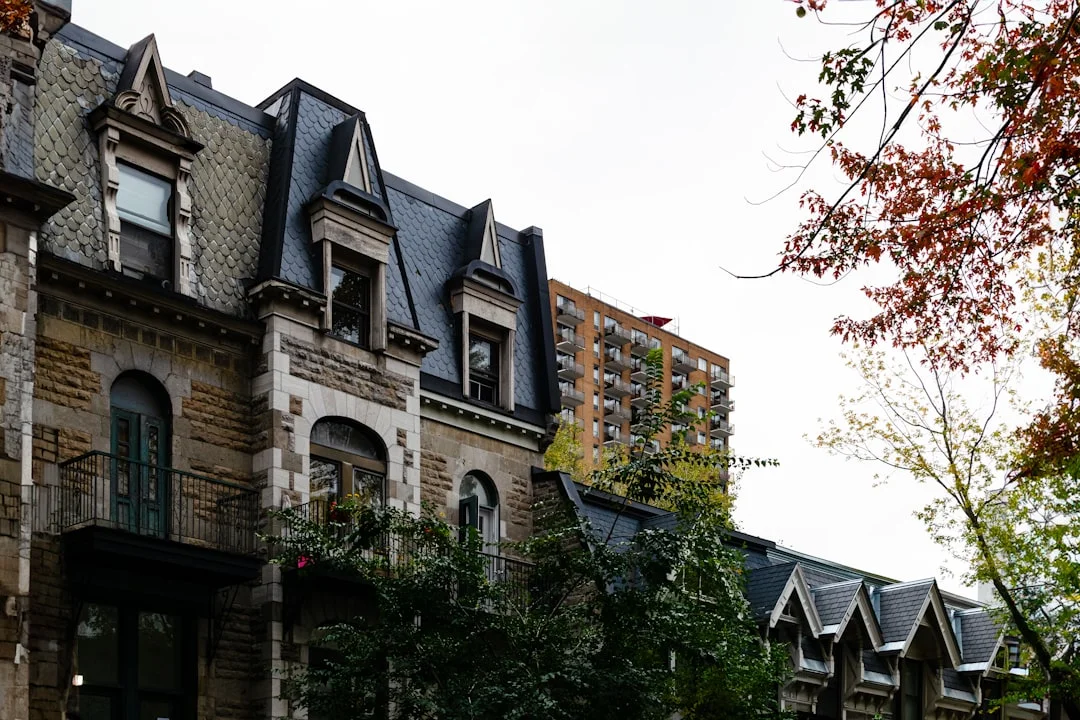
Photo by snap shoot on Unsplash
Montreal is moving to accelerate its affordable housing program in 2026, announcing a set of reforms to the city’s metropole housing rules designed to streamline development while expanding the city’s stock of social and affordable units. The changes—part of a broad regulatory update and anchored in the metropolitan housing strategy—arrive as Montreal and the greater Grand Montréal region face ongoing affordability pressures and a push to diversify housing options. The city has scheduled public consultations for early 2026 and has signaled a longer-term target to grow affordable and off-market housing as part of a wider PMAD framework that spans 2026–2046. This is Montreal affordable housing policy reform 2026 in action: a data-informed attempt to balance market realities with social outcomes, while keeping a close watch on timing, cost, and accountability.
The announcements come with a clear throughline: faster approvals, clearer rules, and new incentives to encourage both private and nonprofit developers to add housing that is affordable, non-market, or family-oriented. Local and regional authorities emphasize that the reforms are designed to reduce red tape where possible, while preserving the city’s social and housing diversity objectives. The immediate implications are tangible for developers, lenders, tenants, and community groups, as Montreal seeks to boost supply while maintaining safeguards for affordability over the long term. The 2026 reforms are not a one-off policy tweak; they are part of a broader, overlapping strategy that includes the metropolitan housing initiative and a multi-year capital program intended to expand the city’s affordable housing stock in a credible, measurable way. This article provides a data-driven, chronological account of what happened, why it matters, and what to expect next for Montreal affordable housing policy reform 2026.
What Happened
RMM 20-041 amendments and key reforms
On April 1, 2026, Montreal implemented substantive amendments to the By-law for a Diverse Metropolis (By-law 20-041-16), a reform that redefines when and how affordable housing obligations apply to private development. The City’s reform package consolidates and simplifies housing requirements, shifting the emphasis from separate social housing rules to a single target that combines social and off-market housing under a uniform 20 percent requirement. The change broadens the scope of projects subject to the by-law, sets a new threshold, and introduces transitional arrangements to ease the switch for ongoing projects. The measures were designed to facilitate residential development while preserving the city’s social housing and family housing objectives in a way that aligns with the PMAD framework. Key elements include:
- Threshold raised to 18,000 square meters for residential projects to trigger housing contributions, up from earlier lower thresholds. This expansion means that a larger share of new construction and conversions falls under mandatory participation in affordable housing supply. (montreal.ca)
- A consolidated obligation requiring 20 percent of residential floor space to be set aside for off-market housing, which includes both social housing and off-market affordable housing. This replaces the prior separate requirements for social housing and other affordability commitments, with the intent of simplifying compliance and accelerating delivery. (montreal.ca)
- An end to the distinct affordable housing obligations that previously sat on top of social housing requirements, allowing a single, unified standard to apply. The reduction in layering aims to streamline negotiations with developers and nonprofit groups. (montreal.ca)
- Transitional rules to manage projects at different stages and to address ongoing agreements entered under the old regime, including refund provisions for pre-amendment contributions and potential adjustments for projects at risk of being delayed. (blg.com)
Public-facing explanations of these changes emphasize a balance between encouraging private development and sustaining social outcomes. The City’s materials note that adjustments are designed to maintain social and family housing objectives while offering more flexibility for financing and partnerships between private developers and nonprofit organizations. The amendments also provide transitional periods to minimize disruption for ongoing work and encourage a smoother shift to the new framework. (montreal.ca)
Public consultation and timeline
The City of Montreal announced a public consultation on amending the diverse metropolis by-law as part of the LAU-driven process to retool incentives and compliance. The public meeting was scheduled for February 26, 2026, at 6:30 p.m. at Montréal’s Hôtel de Ville, with documents and transcripts accessible for review and comment. This stage was designed to explain the draft amendments, outline potential consequences of adoption, and invite questions from stakeholders, including developers, housing advocates, and residents. The city indicated that a second phase would follow to evaluate preferred solutions and potentially replace the by-law with a new incentive approach. (montreal.ca)
In addition to the public-session details, a parallel English-language briefing highlighted the same threshold changes, the consolidation of housing obligations, and the timetable for implementation, underscoring the City’s intent to create a more predictable environment for development while protecting social housing commitments. The February 2026 consultation was part of a broader engagement plan that also included online materials, project sheets, and calculation tools to help stakeholders model the impact of the revised rules. (montreal.ca)
Metropolitan housing framework and long-term targets
Montreal’s reform does not exist in a vacuum. It sits within the broader metropolitan housing strategy, which now features explicit objectives for off-market and social housing within the PMAD 2026–2046. The PMAD framework identifies an ambitious target: by 2046, 20 percent of the region’s rental housing stock should be designated as off-market housing (which includes social housing and off-market affordable housing). This target, central to the PMAD, provides a long-run horizon for policy makers, lenders, and developers as they align capital plans, zoning, and development pipelines with the region’s affordability goals. The CMM notes that the metropolitan program for off-market housing is designed to accelerate delivery across municipalities and to provide a principled funding and reimbursement model through the metropolitan housing fund. (cmm.qc.ca)
Public investments and project pipelines supporting the reform
Montreal’s 2026 budget and multi-year capital planning signal a sustained municipal and parasitic investment in affordable housing, with a notable emphasis on increasing supply and maintaining existing stock. The SHDM’s 2026 budget and its 2026–2028 PTI indicate that roughly 70 percent of the capital plan is dedicated to developing projects that increase affordable housing supply, including efforts to realize the target of 1,000 new units by 2027. This includes pre-development activities on strategic sites, pilot programs like Accès Condos, and substantial investments in portfolio maintenance. The plan explicitly links these investments to the policy reforms adopted in 2026, situating the regulatory changes within a broader execution agenda. (shdm.org)
Concrete housing projects illustrating the reform’s trajectory
March 2026 saw the official opening of a 100-unit affordable housing building for independent seniors in Montréal’s East end, part of a larger multilateral government and municipal effort to accelerate affordable housing delivery. The Mission Unitaînés project, which opened on March 27, 2026, involved the Government of Canada, the Government of Quebec, the City of Montréal, and the OMHM, with a total project cost of about $370.1 million across government agreements and municipal contributions. The building’s opening signals the tangible outcomes that the policy framework is designed to accelerate, particularly for vulnerable populations. The project’s press materials underscore partnerships and the government’s role in advancing non-profit and social housing stock in the city. Residents are expected to begin moving in on April 1, 2026. (cmhc-schl.gc.ca)
Why It Matters
Accelerated delivery through simplified rules
The 2026 reform package is purpose-built to accelerate housing delivery by reducing regulatory friction. By consolidating obligations into a single 20 percent off-market requirement and increasing the threshold for application, Montreal aims to unlock a greater volume of development that would otherwise be constrained by complex, layered requirements. In practice, developers can plan more predictably around a uniform set of obligations rather than navigate separate quotas for social housing and affordable housing commitments. The by-law’s simplification is designed to reduce negotiation frictions, shorten permitting timelines, and create a clearer path to project finance. This logic aligns with the city’s broader commitments to streamline approvals while maintaining social housing objectives. (montreal.ca)
A long-run affordability horizon within PMAD 2026–2046
The PMAD’s 2046 target—to reach 20 percent off-market housing in the region’s rental stock—anchors the reforms in a longer-term planning horizon. This target signals a regulatory and funding approach that seeks to align municipal, regional, and provincial efforts toward a measurable outcome. For developers and investors, the PMAD target offers a yardstick for project selection, site prioritization, and portfolio strategy, and it creates a national-model framework for metropolitan housing policy that Montreal’s neighbors may watch closely. The CMM’s description of the metropolitan program emphasizes that the initiative is designed to accelerate the delivery of off-market housing through the Fonds du logement social métropolitain and related funding instruments, creating a scalable model for regional collaboration. (cmm.qc.ca)
Implications for developers, nonprofits, and tenants
By consolidating housing obligations and adjusting thresholds, the city is signaling a willingness to partner with a broader set of actors—private developers, nonprofit housing organizations, and higher education institutions—to deliver housing units faster. The BLG summary of the amendments notes that changes to the BDM aim to encourage residential development and facilitate partnerships, with new flexibility in financing and optioned paths for securing units and subsidies. For developers, this can mean greater certainty about what must be delivered, how contributions are calculated, and when refunds are due for projects that proceed under revised terms. For nonprofits and housing advocates, the reforms create avenues to secure more development opportunities and leverages for buy-downs or land donations. For tenants, the long-run result is expected to be an expanded supply of affordable and off-market units, especially as major projects come on line. (blg.com)
The role of public engagement and transparency
The public consultation process in early 2026 demonstrates Montreal’s approach to governance: engage stakeholders, explain policy mechanics, and gather feedback before finalizing a new incentive framework. The city’s communications emphasize a collaborative, iterative path to reform, including online tools and a project form to help participants understand application requirements and potential outcomes. The by-law’s public process and the PMAD’s transparency around targets reflect a governance model that seeks accountability in measuring progress toward affordability objectives. Public engagement is essential to ensuring that policy reforms meet the needs of residents while keeping development on track. (montreal.ca)
A snapshot of current affordability indicators and market context
Early 2026 observations from housing market monitors indicate ongoing affordability pressures in Montreal, with affordability measures showing fluctuations in response to macroeconomic conditions and supply constraints. In parallel, official and semi-official indicators show that the city’s affordable housing investments are moving forward, with major projects, like Mission Unitaînés, illustrating the near-term social impact of these reforms. While the reforms aim to increase supply, observers should monitor how the actual delivery matches the long-term PMAD targets, and how policy tools—such as resale price controls for off-market housing—affect tenant mobility and market dynamics. The combination of policy reforms, funding programs, and real-world project openings creates a composite signal that Montreal intends to reshape its affordable housing landscape in a measurable, accountable way. (cmhc-schl.gc.ca)
Balancing safeguards with market realities
An important dimension of the policy reform is the inclusion of off-market housing with resale-price controls for at least 20 years, designed to preserve affordability beyond initial occupancy. This mechanism helps protect households from price spikes and preserves long-term affordability, but it also requires robust administration and ongoing oversight to ensure that resale restrictions remain enforceable and that the supply of off-market units aligns with demand across neighborhoods. The by-law’s definitions and transitional provisions acknowledge these complexities, offering transitional measures and clarifications to help manage the shift for projects already under way. The combination of regulatory clarity and targeted subsidies can improve the odds of delivering the intended social outcomes, but success will depend on continued close monitoring, timely funding, and responsive governance. (montreal.ca)
What’s Next
Short-term milestones and next steps
Looking ahead, the city’s immediate path includes finalizing the amending by-law and transitioning projects into the new regime. The public consultation process established a venue for stakeholder input, after which the City anticipated concluding the regulatory rewrite and replacing the diverse metropolis framework with an optimized incentive structure. In the near term, developers can expect clearer guidelines for calculating contributions, more predictable timelines for approvals, and a revised set of incentives to facilitate partnerships with nonprofit organizations. The PMAD’s 2026–2046 framework remains the overarching north star, with the 2026 reforms designed to accelerate progress toward the 2046 target while preserving essential social housing commitments. (montreal.ca)
Medium-term and long-term delivery plans
The metropolitan framework’s 20 percent off-market housing target by 2046 is not a one-year objective; it represents a multi-decade planning horizon that requires sustained funding, project pipelines, and regulatory predictability. The CMM highlights that its metropolitan housing program leverages a dedicated fund (the Fonds du logement social métropolitain) to support investments across multiple municipalities, providing a scalable mechanism for financing and reimbursement—and a basis for coordinating with provincial and federal partners. Montreal’s 2026 budget and SHDM capital plan reinforce this strategy by prioritizing affordable housing development and portfolio maintenance in a manner designed to create a durable pipeline of units to satisfy the PMAD targets. (cmm.qc.ca)
Upcoming actions and watchpoints
Key watchpoints for the next 12–24 months include:
- The implementation of the new 20 percent off-market requirement for projects above 18,000 square meters, including the detailed transitional rules and refund conditions for pre-amendment agreements. The city’s bylaws and calculation tools will be critical for developers and lenders to manage risk and plan financing. (montreal.ca)
- The progress of the PMAD’s off-market housing program and the metropolitan fund’s distribution across municipalities, including how the 2046 target translates into project selection, land assembly, and equity sharing. The CMM’s program outlines how these investments will be structured and deployed. (cmm.qc.ca)
- The pipeline of major housing projects and portfolio maintenance initiatives supported by SHDM; the 1,000 new units by 2027 target, the Accès Condos pilot, and other initiatives, will be important indicators of policy effectiveness. The SHDM’s budget materials emphasize how the PTI will support long-term supply expansion. (shdm.org)
- Public engagement outcomes and any adjustments to incentives based on stakeholder feedback, with a continued emphasis on transparency and accountability in meeting affordability goals. The public consultation materials and follow-up communications will illuminate how the city adjusts its approach over time. (montreal.ca)
Closing
For residents, developers, and policymakers in Montreal, the 2026 affordable housing policy reform marks a watershed moment in how the city plans, funds, and delivers affordable and off-market housing. By raising the regulatory threshold, consolidating housing obligations, and tying local action to a metropolitan 2046 target, Montreal seeks to create a more predictable, investment-friendly environment that still prioritizes social equity and family housing. The reforms align with a broader regional strategy that emphasizes predictable funding streams and public-private partnerships to build more homes people can actually afford.

As Montreal advances through 2026 and into the 2026–2046 PMAD horizon, readers should watch for the next rounds of policy refinements, the evolution of the metropolitan housing fund, and the ongoing construction of key projects that will shape the city’s housing stock for the decade ahead. Stay tuned to municipal channels, the SHDM’s updates, and regional housing data for the latest on how Montreal affordable housing policy reform 2026 translates into real-world housing access, neighborhood change, and long-term affordability.
The coming years will reveal how these reforms perform in practice: whether streamlined processes, new partnerships, and a region-wide target can translate into measurable growth in affordable and off-market housing across Montreal’s diverse neighborhoods. As always, the city will publish progress reports, host stakeholder discussions, and adjust direction as the market and the needs of residents evolve.