Montreal Autonomous Shuttle Pilot Mile End 2026: Update

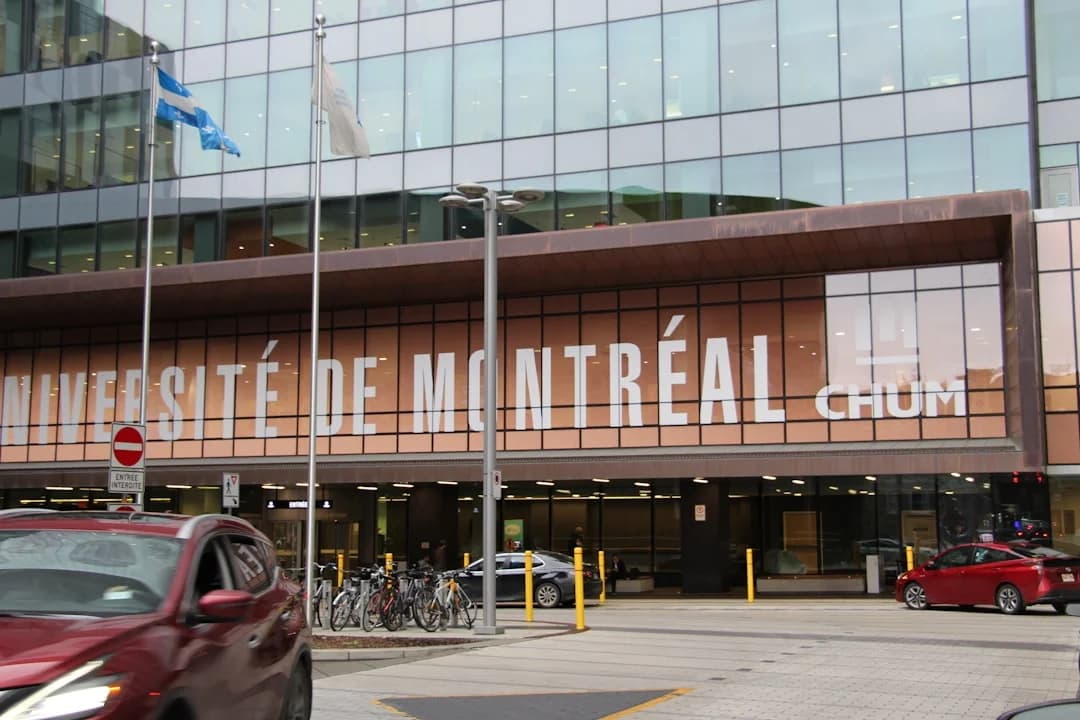
Photo by Alain Guillot on Unsplash
Montreal Times presents a data-driven look at the Montreal autonomous shuttle pilot Mile End 2026, a neighborhood-focused effort that aligns with a broader city plan to test new mobility technologies. Officials and local stakeholders have signaled that Mile End, a stretch of Avenue Parc and surrounding streets, will play a central role in a trio of neighborhood mobility pilots slated to begin in 2026. The move comes as Montreal and other Canadian cities continue to explore how autonomous shuttles can help address first- and last-mile connectivity, pedestrian safety, and urban space usage. The pilots are designed to be measured and transparent, with a strong emphasis on data collection to inform decisions about safety, efficiency, and scalability. This development matters not only to Mile End residents but to the broader unfolding story of how cities test, evaluate, and potentially integrate autonomous mobility into the regular transit mix. (ensemblemtl.org)
Beyond Mile End, the initiative sits within a wider 2026 plan for Plateau-Mont-Royal and surrounding districts to run neighborhood mobility pilots aimed at improving safety, accessibility, and multimodal coordination. The city borough and its political advocates have framed these pilots as a necessary step to reduce piecemeal interventions and to demonstrate how different mobility modes—pedestrian flows, microtransit shuttles, and traditional buses—can coexist in a more intentional, data-informed framework. With three pilots planned for 2026, Avenue du Parc in Mile End is one of the first concrete locations identified for testing. Local observers will be watching closely how this site-specific pilot can inform broader policy and infrastructure decisions in the months that follow. (ensemblemtl.org)
Opening with a focus on Mile End, this report also situates the current moment within Montreal’s long-running history with autonomous shuttle pilots. From early demonstrations at the Olympic Park to subsequent tests in Rosemont–La Petite-Patrie, Montreal has repeatedly used short, defined routes to evaluate how autonomous shuttles operate in real city environments, with operators onboard to ensure safety and to assist passengers as needed. The cumulative experience from these pilots provides a baseline against which the Mile End pilot can be measured, particularly as data collection and community engagement become more formalized elements of the process. (saaq.gouv.qc.ca)
What Happened
Timeline of the Mile End pilot plan
-
Mile End’s inclusion in a set of neighborhood mobility pilots was formally outlined in late 2025 as part of Ensemble Montréal’s mobility platform. The plan calls for three neighborhood pilots to begin in 2026, with Avenue du Parc in Mile End identified as a site for temporary safety measures near a rail overpass, along with data collection on speed, volumes, and incidents, plus a public consultation to gauge public response and refine the design before any permanent installations. This approach reflects a deliberate, data-driven testing mindset rather than a single, standalone event. (ensemblemtl.org)
-
The Mile End pilot is described as one component of a broader initiative to test mobility innovations in the Plateau-Mont-Royal area, focusing on pedestrian safety, mobility efficiency, and the integration of new technologies into the urban fabric. The plan emphasizes that results will be used to inform longer-term decisions about space allocation, traffic calming, and potential scaling of autonomous shuttle services. (ensemblemtl.org)
-
The plan’s framing suggests that the Mile End pilot will be evaluated through a structured data program, including a public consultation to gather resident feedback and to refine the safety measures and crossing configurations around pedestrian-heavy corridors. The involvement of residents in the data-gathering process is intended to build legitimacy for future, potentially larger-scale deployments. (ensemblemtl.org)
Historical context: Montreal’s earlier autonomous shuttle pilots
-
In 2019, Transdev, in partnership with the City of Montreal and EasyMile, deployed two autonomous shuttles on an open-road route connecting the Olympic Park area to the Maisonneuve Market. The circuit covered 2.8 km round-trip and ran under daytime hours, with 13 km/h as an average speed and trips taking about 10 minutes. The service was free to riders and operated from 10 a.m. to 6 p.m., seven days a week, before the project concluded on August 4, 2019. This was a landmark early demonstration of autonomous shuttle operations on public roads in a dense urban environment in Canada. (transdev.ca)
-
A separate, city-administered program in Montreal during 2021–2022 tested autonomous shuttles in Rosemont–La Petite-Patrie, using Navya minibuses (two vehicles) on a 2 km loop formed by Saint-Hubert, Saint-André, Jean-Talon Est, and Beaubien Est streets. The two-phase project ran from late October 2021 to December 2021 and then from July 2022 to September 2022, offering free shuttle service to the public on a Wednesday-to-Sunday schedule. The end date was September 1, 2022. These tests provided additional real-world operating data, particularly around bus–pedestrian interactions and the regulatory framework for autonomous vehicles on public streets. (saaq.gouv.qc.ca)
-
The broader regulatory backdrop for these pilots includes the Québec ministerial orders that authorized autonomous buses and minibuses to operate on select public roads as part of a formal pilot project launched in 2018. The regulatory framework requires demonstration of safe operation at higher driving automation levels (3–5) and ongoing monitoring by the MTMD and SAAQ to assess cohabitation with pedestrians and other road users, as well as the necessary regulatory amendments to scale these operations. Montreal’s earlier pilots—both Transdev/EasyMile and Navya/Keolis Canada Innovation—formed the operating and governance precedents that researchers and planners now use to design the Mile End pilot. (saaq.gouv.qc.ca)
-
A complementary industry perspective from Stantec highlights Montreal’s role as a pioneer for on-road autonomous shuttle pilots in Quebec. The firm notes that the first on-road autonomous shuttle circuit in Quebec occurred on a Montreal route between Maisonneuve Market and the Olympic Park, spanning 2.6 km in length (round-trip distance around 5.2 km) and illustrating the kinds of engineering, traffic management, and temporary signaling that accompany such demonstrations. The project demonstrated the city’s growing expertise in integrating autonomous mobility into public streets, even as regulatory and social acceptance considerations continued to evolve. (stantec.com)
-
Taken together, these past pilots provide a critical factual foundation for the Mile End effort. They show that Montreal has repeatedly used limited, predefined routes to study autonomous shuttle performance in real traffic and to gather passenger and non-passenger feedback. They also underscore the enduring importance of a clear regulatory framework and the need for robust data collection to inform decisions about safety, efficiency, and scalability. (saaq.gouv.qc.ca)
Regulatory backdrop and key players
-
Québec’s autonomous bus and minibus pilot program, established in 2018, was designed to test the operation of self-driving vehicles on public roads under controlled conditions. The program recognizes that vehicles operating at higher levels of automation (3–5) must interact safely with pedestrians, cyclists, and other road users, and it requires ongoing oversight by the MTMD and SAAQ. Montreal’s pilots have been nested within this broader regulatory framework, leveraging permitted test corridors and defined operating parameters. (saaq.gouv.qc.ca)
-
The earlier Montreal pilots involved major mobility operators and vehicle manufacturers, including Transdev with EasyMile and Navya with Keolis Canada Innovation. These collaborations illustrate how public agencies, private mobility providers, and equipment suppliers worked together to test operational concepts, safety protocols, and passenger experience in real urban contexts. The collective experience from these partnerships informs the Mile End pilot’s design, including the emphasis on operator presence, well-defined routes, and data-driven evaluation. (transdev.ca)
-
The regulatory and industry context is further echoed in a broader Canadian mobility literature that notes Montreal’s relatively early and sustained engagement with autonomous shuttle pilots. A 2024 CUTRIC briefing on non-traditional modes of transportation points to Montreal’s short-term autonomous shuttle testing as part of the city’s evolving mobility system. While these reports reflect a spectrum of pilots and scales, they collectively position Montreal as a living testbed for autonomous shuttle operations in urban Canada. (cutric-crituc.org)
“Each step of this deployment allows us to address technological challenges, as well as to test consumer acceptance of these new modes of transport.” — Transdev Canada, in the 2019 Montreal pilot press release. (transdev.ca)
“It’s time to equip the Plateau with a real planned and inclusive mobility plan after fifteen years of neglect and improvisation.” — Jean Beaudoin, Ensemble Montréal, reflecting the Mile End milestone within the 2025 mobilty plan context. (ensemblemtl.org)
Why It Matters
Neighborhood connectivity and equity

-
The Mile End pilot sits at the intersection of urban mobility, safety, and equity. By focusing on a pedestrian-centric corridor and by incorporating temporary safety measures around a rail overpass, the plan aims to test how autonomous shuttles can support residents who rely on walking, biking, or transit to reach work, services, and social activities. The data collection emphasis—speed, volumes, and incidents—points to a commitment to measuring real-world accessibility impacts, including how such a shuttle could affect travel times and reliability for community members with limited mobility options. The Mile End site thus serves as a litmus test for equity-oriented mobility interventions that avoid favoring car traffic at the expense of pedestrians and transit users. (ensemblemtl.org)
-
The historical Montreal pilots also show that autonomous shuttle programs have prioritized accessibility. The 2019 Transdev pilot provided an open-access service with on-board operators who assisted riders, offering a no-cost option for riders to sample autonomous mobility in a dense urban environment. The focus on an accessible experience—free service, straightforward routes, and predictable operating windows—has served as a baseline for evaluating passenger acceptance as new, higher-automation systems are tested. (transdev.ca)
Safety, design, and urban space
-
The safety design language of Mile End’s plan emphasizes pedestrian safety: temporary crossings, bollards, and buffer zones are intended to reduce vehicle speeds and minimize conflict points at pedestrian crossings. This approach aligns with earlier pilots in Montreal where safety and cohabitation with other road users were core areas of evaluation. The regulatory framework explicitly calls for testing how autonomous vehicles share public streets with people, cyclists, and conventional vehicles, a fundamental condition for any wider rollout. (ensemblemtl.org)
-
Urban-space impacts are another reason the Mile End pilot is notable. The Mile End corridor is a busy urban edge with mixed-use activity, so the pilot’s findings on space utilization, curb management, and passenger pickup/drop-off interactions will be relevant for other districts facing similar space constraints. The 2 km–plus loop experiences from earlier Montreal pilots show that even short routes require careful alignment with traffic signals, crosswalk design, and route demarcations, especially if a longer-term plan considers scaling to multiple neighborhood corridors. (saaq.gouv.qc.ca)
Market readiness and policy implications
-
The Mile End pilot is a concrete testbed for how cities can learn from smaller-scale autonomous shuttle deployments to inform policy, procurement, and service planning. Montreal’s prior pilots demonstrated that autonomous shuttles can operate in urban cores, but they also highlighted the importance of regulatory clarity, safety assurances, and robust data outputs before more ambitious expansion. Policymakers can use Mile End’s data to calibrate safety protocols, evaluate cost-effectiveness, and consider how to integrate autonomous shuttles with existing transit networks. The Mile End project sits within a 2026 framework designed to produce lessons that can be scaled to other neighborhoods if results are favorable. (saaq.gouv.qc.ca)
-
On the technology side, the historical Montreal pilots—ranging from EasyMile to Navya minibuses—illustrate the maturation path for autonomous shuttle hardware and software. The consistent pattern across pilots is a progression from tightly controlled demonstrations to more open-road testing, with operator oversight still present in many early deployments. The 2019 and 2021–2022 Montreal efforts show how manufacturers and operators adapt to urban complexities, from complex intersections to pedestrian-heavy zones. These learnings inform the Mile End pilot’s expectations around reliability, maintenance, and system integration with traffic management and transit information systems. (transdev.ca)
What’s Next
Next steps in the Mile End pilot
-
The Mile End pilot is planned as part of a three-neighborhood mobility initiative slated for 2026. The official framing indicates that Avenue du Parc will undergo a transitional safety design, with data collection (speed, volumes, incidents) and a public consultation to inform the next steps. This phased approach suggests that any substantive, permanent changes to the corridor will be preceded by a period of evaluation and community feedback, enabling the city to adjust the design before deciding whether to scale the concept to additional Mile End streets or other Plateau neighborhoods. (ensemblemtl.org)
-
In practical terms, observers should expect updates on metrics related to safety performance, pedestrian throughput near crossing points, and passenger demand patterns if the pilot adheres to similar reporting practices observed in prior trials. The SAAQ’s historical pilots emphasize that the regulatory environment requires ongoing monitoring and a willingness to modify routes or operational parameters in response to observed risks or opportunities. Montreal’s Mile End pilot will likely align with this framework, reporting back to the public and to authorities with a data-centered narrative about progress and challenges. (saaq.gouv.qc.ca)
What to watch for and how to interpret
-
Public engagement outcomes will be a critical signal. The Mile End pilot’s plan to hold consultations and collect data on safety and traffic effects reflects a governance model that values citizen input as part of the evaluation process. Observers should track whether consultation results lead to adjustments in crossing configurations, traffic calming measures, or even route geometry. The live data set generated by such pilots—speeds, volume counts, incident logs—will be essential for researchers and urban planners seeking to quantify the trade-offs between improved mobility access and potential increases in pedestrian or cyclist risk if mismanaged. (ensemblemtl.org)
-
The regulatory and procurement context will also shape the pilot’s trajectory. If the Mile End pilot yields favorable safety and mobility metrics, it could influence decisions about expanding autonomous shuttle services to other neighborhoods and integrating them with bus rapid transit (BRT) or metro feeder networks. Montreal’s historical pilots show the possible path from demonstration to policy-informed expansion, but each phase requires careful validation and community consent. The regulatory backbone—autonomous buses and minibuses pilot projects under Quebec’s framework—will continue to provide the guardrails for such expansion, ensuring that projects stay within defined safety parameters while enabling iterative learning. (saaq.gouv.qc.ca)
-
Market dynamics and cost considerations will be part of the broader context. While earlier pilots offered free service to riders, the Mile End pilot will likely be evaluated not only on safety and accessibility but also on economic feasibility and long-term funding strategies. Montreal’s mobility pilots have involved partnerships with private operators and equipment suppliers, illustrating how a public–private collaboration model can enable staged experimentation while building knowledge that can inform future procurement and service design. (transdev.ca)
What if the pilot succeeds? Potential outcomes
-
If the Mile End pilot demonstrates positive safety, accessibility, and community acceptance results, the city could consider refining the design for broader adoption. A successful pilot might yield a blueprint for scaling to other Mile End corridors or neighboring neighborhoods, with a more formalized process for route selection, speed limits, curb management, and integration with fixed-route transit. The cumulative Montreal experience—spanning multiple routes, manufacturers, and regulatory stages—provides a practical template for how such scaling could be approached. (saaq.gouv.qc.ca)
-
Conversely, if challenges emerge—whether around safety incidents, public concerns, or regulatory constraints—the Mile End pilot could still produce valuable lessons about risk management, stakeholder engagement, and data governance. Even in less favorable scenarios, the experience contributes to a growing body of knowledge about how autonomous shuttles can operate in urban environments, what data are most informative for policy decisions, and how communities want to see new mobility technologies deployed alongside traditional transit options. (saaq.gouv.qc.ca)
Closing
In summary, the Montreal autonomous shuttle pilot Mile End 2026 represents a thoughtful next step in a decade-long arc of autonomous shuttle activity in Montreal. The Mile End site, identified as part of a broader 2026 plan for three neighborhood mobility pilots, signals a commitment to data-driven testing, safety considerations, and resident engagement as Montreal experiments with how autonomous shuttles can complement or augment existing transit networks. The city’s prior pilots—2019’s Olympic Park–Maisonneuve Market route and the 2021–2022 Rosemont–La Petite-Patrie test—provide a detailed performance history against which the Mile End initiative can be measured. As planners, policymakers, and residents watch the Mile End corridor, the conversation will span safety design, accessibility, urban space, and the broader implications for mobility in a changing city. The evolving narrative of autonomous mobility in Montreal continues to unfold, with Mile End positioned as a focal point for data-informed decision-making that could shape the future of neighborhood mobility across the city. (ensemblemtl.org)

For readers seeking ongoing updates, Montreal Times will monitor official announcements from the borough and the city, as well as performance metrics shared by pilot partners and the regulatory authorities. Regular briefings, public consultations, and transparent reporting will be essential to building trust and understanding around where autonomous shuttle technology can add value in Montreal’s neighborhoods, including Mile End. (ensemblemtl.org)