Montreal Canadiens vs Philadelphia Flyers - December 17, 2025

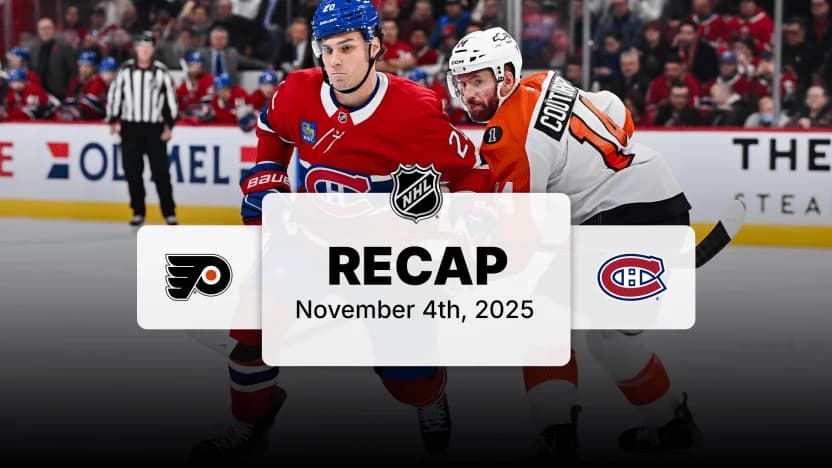
The Philadelphia Flyers defeated the Montreal Canadiens 4-1 at the Bell Centre on Tuesday, December 17, 2025, in a game that underscored not only on-ice results but also broader shifts in how teams leverage technology to drive performance, fan engagement, and market strategy. For fans and analysts watching closely, the result reinforced a familiar storyline: the Flyers’ depth and timely scoring—especially in the late stages—outpaced Montreal’s efforts, even as the Canadiens pushed to claw back into the game. Travis Konecny supplied a goal and an assist to spearhead Philadelphia’s win, while Alexandre Texier scored Montreal’s lone marker in a contest that featured strong goaltending, physical play, and a clear signal about the evolving tech-enabled landscape surrounding modern hockey. The game, broadcast from Bell Centre, also served as a useful lens into how teams increasingly blend traditional scouting with data-driven insights and how broadcast and streaming arrangements shape accessibility for fans around the world. The result matters not just for standings but for the broader conversation about technology, analytics, and market strategy driving NHL teams in 2025. As one observer noted after similar games this season, “We’re seeing a rapid integration of analytics into in-game decision-making, player development, and fan-facing experiences,” a trend that this December encounter helps illuminate. (nhl.com)
Travis Konecny’s night stood out as the centerpiece of Philadelphia’s multi-faceted approach. He notched a goal and an assist, and his contribution helped push the Flyers past a Canadiens squad that had briefly shown signs of resistance in the opening frame. Konecny’s 2025-26 campaign has featured strong two-way play and clutch moments, and this performance against Montreal added another layer to a season defined by balanced scoring and timely finishes. The Flyers’ scoring came in waves, with Carl Grundstrom and Bobby Brink providing important insurance in the second period, and an empty-net tally by Konecny sealing the result late in the third. The Canadiens’ lone goal, scored by Texier, came late in the opening period as Montreal seized the first-period initiative before Philadelphia surged ahead. Dan Vladar stopped 21 of 22 shots for Philadelphia, while Jacob Fowler faced 20 shots and stopped 17 of them in a competitive Bell Centre atmosphere. The public-facing postgame recap echoed the same storyline: “Travis Konecny had a goal and an assist, and Carl Grundstrom and Bobby Brink also scored for Philadelphia,” a succinct summary of a game that reflected both teams’ tactical approaches. (reuters.com)
Opening with the numbers, the game’s sequencing showcased Philadelphia’s ability to convert late opportunities and control the pace for much of the middle frame, while Montreal’s resilient first-period push found a brief footing before the visitors’ depth took over. The Flyers struck first in a tense first period when Texier opened the scoring for Montreal’s opponent, and the visitors answered back with Grundstrom tying it late in the opening frame. In the second period, Zegras—in his 300th NHL game—put Philadelphia ahead, and the Flyers extended their lead with Brink keeping Montreal at bay late in the period. The Flyers’ special teams and discipline contested the third period, but a late push by the Flyers sealed the game with Konecny adding an empty-net marker. The precise goaltending numbers—Vladar 21 saves on 22 shots for Philadelphia, Fowler 17 saves on 20 shots for Montreal—confirmed a game that featured solid goaltending on both sides and a series of shifts that underscored the importance of timely goals in a tight matchup. These elements point to a broader pattern in the 2025-26 season: teams that optimize shot quality, pace, and goaltending margin tend to translate those advantages into wins over the course of 60 minutes. (nhl.com)
What Happened
First Period Highlights and Early Momentum
- The puck dropped with both teams looking to establish tempo, and Montreal started with three of the game’s first five shots, signaling a willingness to press early. Philadelphia answered with a balanced attack, and the visiting squad earned the game’s first power play at 9:04 when Ivan Demidov was called for cross-checking Rasmus Ristolainen. The Canadiens and Flyers traded chances, and Montreal’s Texier found the net at 19:00 off a feed from Jake Evans, giving the home team a brief 1-0 lead. The assist attribution to Evans and defenseman Anderson reflected a standard setup for Montreal—a high-tempo cycle with quick passes to the slot. Texier’s 3rd goal of the season underscored his recent production, and Montreal’s early success suggested an opening narrative for a game that would soon tilt toward the visitors. Yet Philadelphia’s response came swiftly, with Grundstrom tying the game at 19:38 after a turnover in the Canadiens’ zone led to a counterattack. “Tipp teed it up perfectly,” the broadcast caption noted, underscoring the subtle but critical execution elements that characterize a high-stakes NHL game. The period ended with a 1-1 score, and Philadelphia held a slight territorial edge as the closer sequence of the frame set the stage for a pivotal middle period. (nhl.com)
Second Period Momentum Shift and Key Goals
- The middle period proved decisive as Philadelphia established control and conversion. Trevor Zegras, playing in his 300th NHL game, delivered a goal at 6:26 to give the Flyers a 2-1 lead and set a tone for the second half of the game. The assist went to Konecny, who continued to drive Philadelphia’s offense with smart plays and strong puck distribution. Zegras’ contribution was a milestone moment in a season that has seen him escalate his production, and the goal stood as a turning point in this particular matchup. Shortly after, Philadelphia extended its lead on a late second-period tally by Bobby Brink at 19:10, staking the Flyers to a 3-1 lead heading into the third. The Flyers’ ability to generate high-danger scoring chances and convert in the middle frame reflected a broader trend in this era of hockey: teams rely on line-matching, pressure, and quick transitions to create and capitalize on opportunities against opponent structures that evolve game by game. The period ended with a 3-1 advantage for Philadelphia, a margin that would be cemented by a late empty-net goal. The official postgame recap confirmed Konecny’s role in the late-game insurance play, and Vladar’s goaltending performance held Montreal at bay for the majority of the night. (nhl.com)
Late Third Period and Finalizing the Result
- The game’s final minutes featured Montreal pressing in a push to trim the margin, but Dan Vladar’s steady net presence and Philadelphia’s disciplined defense limited the Canadiens’ scoring chances. The Flyers added an empty-net goal at 18:25 by Konecny to seal the 4-1 victory. In addition to Konecny’s contributions, the Flyers benefited from goals by Grundstrom and Brink in the middle frame, which provided the balance needed to distance themselves from a Montreal squad that had entered the night with aspirations of a stronger performance at home. The Canadiens’ Texier offered Montreal’s lone response early, but the night largely belonged to the visiting team’s ability to execute in critical moments and to manage the game’s tempo during the middle period. The box score and postgame notes capture a game where Philadelphia’s depth and timely scoring played the decisive role. (nhl.com)
Lineups, Special Teams, and Context
- Flyers starting lineup featured a forward group anchored by Zegras, Couturier, and Konecny, with Michkov and Brink adding speed and scoring touch and a defense corps anchored by Sanheim and Drysdale. Montreal countered with Texier supported by a line featuring Evans and Anderson, while Fowler handled the crease for the Canadiens. Philadelphia’s power play and penalty kill performed as expected in a balanced, physical game, and the night’s special-teams battle was a factor in the outcome, with the Flyers going 0-for-3 on the power play and Montreal restricted in key moments. The game’s tactical underpinnings highlighted how teams balance structure with explosive forward lines to create an edge in a tightly contested season. The recap from the Canadiens’ site confirms the goal sequence and player contributions, as well as the goaltending narrative that defined the evening. (nhl.com)
Why It Matters
Broadcasting and Streaming Realities Reshape Fan Access
- The Canadiens-Flyers showdown on December 17, 2025, is a case study in how modern hockey games sit at the intersection of live competition and evolving media rights. NHL national television and streaming coverage for the 2025-26 season features a broad distribution across ESPN networks, TNT, and related streaming platforms, with plans for exclusive national broadcasts and extensive streaming through ESPN+ and other services. This media ecosystem is designed to maximize reach, provide on-demand and live viewing, and tailor the fan experience through data-driven personalization and multi-platform access. Recent NHL coverage confirms that 100 exclusive national games will be distributed across ABC, ESPN, ESPN+, and Hulu, with additional streams available via NHL Power Play and other digital options. The 2025-26 schedule also signals a continued shift toward streaming-first distribution in many markets, a trend that directly impacts how fans experience single-game events like Montreal vs Philadelphia. This real-time game is a data point within a broader shift toward a multi-platform, analytics-informed broadcasting model. (nhl.com)
International and Domestic Streaming Expansions
- The NHL’s global footprint expanded in 2025-26 through partnerships with DAZN to deliver NHL.TV in nearly 200 countries, excluding the U.S., Canada, and the Nordics. That move, announced in July 2025, positions NHL games—including marquee matchups that feature teams like the Canadiens and Flyers—within a larger digital distribution strategy that aims to increase international fan engagement and grow sponsorship and wagering opportunities globally. In parallel, a U.S.-centric growth strategy involving ESPN and Turner surfaces—reflecting a hybrid model of linear and digital distribution—helps ensure that fans can access game content across multiple channels while teams leverage data-driven marketing tools to target audiences. The Flyers-Canadiens game serves as a testing ground for how well fans in different regions access and engage with the product under this evolving rights landscape. (nhl.com)
Analytics, AI, and the Hockey Data Ecosystem
- The hockey analytics revolution continues to accelerate, with Sportlogiq expanding its iCE Elite platform and partnerships to bring NHL-caliber analytics to more leagues worldwide, including youth and amateur ecosystems. Such developments indicate a growing convergence of on-ice performance data with scouting and development pipelines, a trend that has real implications for teams, leagues, and broadcasters seeking richer, faster, and more actionable insights during games. The Sportlogiq announcements in 2025 highlight a push toward integrating AI-driven data collection, video analysis, and hundreds of metrics to illuminate player performance, zone entries/exits, shot quality, and more. The December 17, 2025 game, like many others this season, demonstrates how these analytics can inform coaching decisions, player development, and talent evaluation in real time. These trends align with broader industry reporting on AI, wearables, and sensor-based data enabling more precise performance modeling across sports. (sportlogiq.com)
Market Implications for Sponsorship, Engagement, and Revenue
- The NHL’s evolving media and analytics ecosystem has meaningful implications for sponsorship and marketing. As leagues monetize data streams and fan engagement opportunities through broadcasting innovations, sponsorships—particularly in the premium TV and streaming spaces—stand to benefit from increased viewer time and richer in-game sponsorship integrations. The expanding fan engagement toolkit includes interactive overlays, data-driven replays, and personalized content that can be tailored to individual preferences. Articles discussing the broader sports-tech landscape in 2025 point to the growing importance of real-time data, augmented broadcast experiences, and secure data ecosystems that support betting and fan interaction in legitimate, traceable ways. The December 17, 2025 game, as a high-visibility matchup between two storied franchises, offers a live canvas for these innovations to test their effectiveness and impact on audience growth. (wired.com)
Workforce and Operational Impacts: It’s Not Just the Ice
- Beyond on-ice performance, the Montreal Canadiens vs Philadelphia Flyers game underscores the broader implications of technology in team operations. Sport analytics firms are partnering with leagues and clubs to translate video and stat data into actionable insights for player development, health monitoring, and tactical planning. For instance, Sportlogiq’s expanded partnerships and the launch of iCE Elite indicate a shift toward integrated data pipelines that serve scouts, coaches, and executives alike. This not only influences how teams prepare for games like Flyers vs Canadiens but also informs long-term drafting, player acquisition, and development strategies that can alter market value and competitive balance. The business case for analytics teams and data-driven decision frameworks continues to grow, with evidence at both the pro and amateur levels. (sportlogiq.com)
What’s Next
Immediate Steps for the Canadiens and Flyers
- In the wake of a 4-1 Flyers win, both teams will quickly pivot toward their next opponents and tactical refinements. The Canadiens host the Chicago Blackhawks, a game highlighted in postgame materials as the next assignment after a tough divisional opponent. The Flyers, aiming to maintain momentum, will look to build on Konecny’s production and Zegras’ ongoing contributions, while continuing to integrate new linemates and adjusting line combinations to maximize chemistry. The specific dates and opponent schedules are part of the NHL’s broader calendar for December 2025, with teams often balancing scouting and travel with practice and video sessions to prepare for back-to-back games or road trips. The Canadiens’ recap and the NHL’s game notes provide a useful reference point for those next steps, including the importance of marching forward with a disciplined defensive game and continued development of offensive depth. (nhl.com)
Longer-Term Outlook: Tech, Market, and Fan Experience
- Looking beyond this single game, the NHL is moving toward deeper integration of technology across every facet of the sport—from in-game analytics and broadcast innovations to global streaming strategies and fan engagement platforms. The league’s national television schedule and streaming strategy for 2025-26 reflect a broader push to distribute more live content via digital channels while preserving traditional broadcast windows for reach and visibility. DAZN’s NHL.TV rollout outside the U.S. and Canada demonstrates how the league is expanding its digital footprint and offering fans new access points to games. In parallel, Disney/ESPN’s multi-year rights deal reinforces a multi-channel strategy that leverages streaming, linear TV, and on-demand content to maximize audience engagement. For teams, this means continued investment in analytics, data platforms, and fan-facing technologies that can be integrated into marketing, sponsorships, and digital experiences—an evolution that will shape how fans experience moments like Flyers at Canadiens in the years ahead. (nhl.com)
Closing: What This Means for Fans and Stakeholders
- The December 17, 2025 Flyers–Canadiens game at the Bell Centre delivered a clear on-ice message: Philadelphia leveraged depth and timely scoring to secure a 4-1 win, while Montreal battled through a tough evening against a more cohesive opponent. But beyond the scoreline, this matchup serves as a microcosm of a league that is increasingly defined by its tech-forward approach—analytics that inform decisions, streaming and broadcast innovations that expand access, and market strategies that capitalize on a data-driven fan experience. For Canadiens and Flyers fans alike, the game offered a sobering reminder that success in today’s NHL depends on more than speed and shot placement; it requires a holistic ecosystem that blends coaching, analytics, media strategy, and fan engagement into a single, data-informed narrative. As the season progresses, Montréal Times will continue tracking not only the on-ice outcomes but also how the league’s evolving tech and market dynamics influence teams, players, and the fan experience.
Next updates will cover postgame reactions from coaches and players, the evolving use of analytics in daily practice, and how streaming rights and broadcast innovations continue to shape the accessibility and enjoyment of games like Montreal Canadiens vs Philadelphia Flyers - December 17, 2025 for a growing global audience. Stay tuned for deeper dives into the metrics behind the box scores, plus expert commentary on how technology is changing hockey culture, fan engagement, and the business of the sport.