Montreal Circular Economy Startups 2026: Data-Driven Update

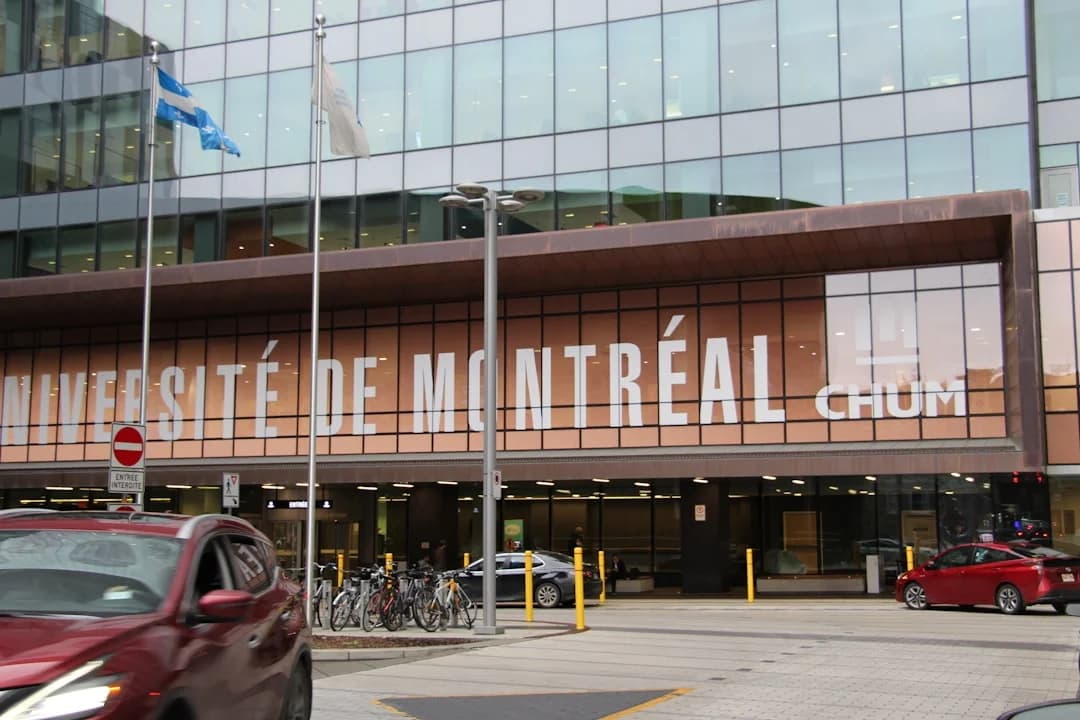
Photo by Alain Guillot on Unsplash
Montreal circular economy startups 2026 is shaping up as a pivotal-year narrative for the city’s tech economy, blending advanced recycling processes, new business models, and ecosystem-wide policy support. In early 2026, several high-profile developments underscored Montreal’s emergence as a tested ground for circular innovations—from commercial-scale recycling breakthroughs to accelerator-backed startup formations and municipal programs designed to mobilize local actors around circularity. The momentum matters not only for the viability of specific ventures but for how Montreal positions itself as a global hub where research, capital, and policy align to accelerate the circular economy. These advances come at a moment when investors, researchers, and policy makers are seeking scalable models that reduce waste while creating value in nearby supply chains and exportable capabilities. This report synthesizes the most consequential signals in 2026 and situates them within a broader market and policy context.
The dramatic push toward circularity in Montreal is also a signal about the city’s resilience strategy. As global supply chains face ongoing disruptions, local loops—recycling, refurbishing, remanufacturing, and on-demand manufacturing—are increasingly viewed as strategic resources. In practical terms, this means more pilot projects, more private-sector commitments, and more municipal tools designed to help firms rethink products, materials, and end-of-life scenarios. For readers of Montréal Times and other outlets covering technology and market trends, the year’s early outcomes point to a shift from pilot programs to scalable operations with measurable impact. The convergence of these activities—industrial-scale recycling, startup acceleration, and supportive policy—offers a blueprint for how a mid-sized city can materialize a robust circular economy innovation cluster. This evolving landscape is why Montreal circular economy startups 2026 have become a focal point for investment confidence, policy experiments, and enterprise-level transformation, with concrete milestones already on the calendar. (upsolv.ca)
What Happened
Commercialization milestones and funding
In early February 2026, Montreal-based UpSolv announced the commercial-scale launch of a high-quality, price-competitive recycled polystyrene (rPS), signaling a major step toward cost parity with virgin plastics while enabling local supply chains to reduce dependence on imported materials. The company, which has been active in reformulating and purifying polystyrene through dissolution and purification processes, framed the move as a proof point that circular materials can meet the performance and price needs of multiple industries. The announcement underscored a growing willingness among local cleantech players to move from pilot lines to full-scale production, a transition that typically attracts downstream manufacturers seeking sustainable inputs and regulatory-compliant supply chains. This milestone appears to accelerate the circular plastics segment within Montreal’s broader cleantech portfolio and aligns with ongoing municipal and provincial efforts to de-risk and de-risk circular materials investments. The news was shared by UpSolv with a February 9, 2026, date, placing Montreal on a faster track for industrial-scale circular plastics production. (upsolv.ca)
Beyond the polystyrene example, the Montreal ecosystem has been actively signaling that circular materials and products are moving toward commercial traction. The push includes new funding mechanisms, demonstrated by public and quasi-public actors who have started to tie grants, tax incentives, and procurement opportunities to circular economy outcomes. While not every program is specific to plastics, the implication for 2026 is clear: more rounds of targeted financing and broader access to incentives are likely to accelerate scale-up for firms focused on recycling, remanufacturing, and business-model renewal. Municipal programs and regional incentives publicly discussed in 2026 emphasize supporting circular assessments, business-model transformations, and collaborative projects that connect companies with researchers and service providers, strengthening the city’s pipeline of investable ventures. (montreal.ca)
Accelerator-led startup formation and local capacity
On June 9, 2026, Cycle Momentum’s Lab-à-Startup program marked a notable milestone by announcing the creation and financing of its first two startups from the cohort: Boréa Aquatech and BeNat. The announcement highlighted a structure designed to develop a pipeline of clean-technology companies with a focus on circularity and sustainability. The two new ventures, formed within the Lab-à-Startup framework, illustrate how the Montreal ecosystem is moving from episodic demonstrations to a repeating, funded model that translates research and concept into investable ventures. The timing—two years after the program’s initial collaboration announcement—demonstrates steady maturation of the city’s support infrastructure for circular economy startups, including alignment with public funding partners and strategic actors in the sector. This milestone serves as a practical example of how accelerator programs can de-risk early-stage circular tech ventures while providing the governance and capital required to scale. (cyclemomentum.com)
In parallel, Montreal’s innovation community has continued to emphasize collaboration among universities, research institutes, and industry. This collaboration ecosystem supports a steady stream of new ventures that address circular economy challenges—from water technology and bio-based materials to supply-chain traceability and recovery systems. Programs like Lab-à-Startup are framed as cornerstone elements of a broader strategy to turn research outputs into company-building opportunities, particularly for technologies with high potential to reduce waste, lower emissions, and create resilient local supply chains. While Boréa Aquatech and BeNat are early beneficiaries, the model is designed to scale, with potential for additional cohorts and spin-outs as the program evolves. (cyclemomentum.com)
Montreal policy push and ecosystem momentum
Montreal’s municipal leadership has consistently signaled a strong policy appetite for circular economy transformation. In January 2026, the City of Montreal published a comprehensive circular economy plan emphasizing cross-department collaboration, financial supports for circular assessments, and the pursuit of awards to recognize leadership in circular projects. The plan is designed to mobilize dozens of local actors—businesses, support organizations, and research institutions—around a shared agenda to extend product lifecycles and reimagine material flows in the metropolitan area. Its emphasis on building an ecosystem that can scale circular innovations aligns with broader regional and national initiatives that seek to embed circularity into procurement, infrastructure, and industrial policy. The city also introduced initiatives like the Montréal circulaire award to spotlight a company in the metropolitan area that demonstrates leadership in circular economy practices, signaling a public commitment to visibility and benchmarking. (montreal.ca)
The ecosystem’s momentum is reinforced by sector-focused events and forums designed to catalyze knowledge-sharing, partnerships, and investment. In early 2026, the ClimateTech Innovation Forum—co-organized by Cycle Capital and BloombergNEF—brought Montreal leaders together to discuss venture capital dynamics, technology breakthroughs, and policy frameworks, including circular economy topics. The forum underscored Montreal’s positioning as a place where climate tech and circular economy converge, attracting participants from venture capital, industry, government, and academia. The event served both as a signal of confidence in Montreal as a climate-tech hub and as a platform for networking that can translate into new deals, pilots, and collaborations. (cyclecapital.com)
Other ecosystem signals include continued engagement by Montreal International, which highlights clean technologies as a core, high-potential sector for the region. The organization’s materials emphasize the city’s competitive operating environment, talent pool, and strategic incentives designed to support early-stage and scaling clean-tech firms. While the organization’s materials cover a broad range of cleantech disciplines, the consistent thread is that Montreal’s clean-technology community—of which circular economy startups form a significant strand—has the conditions necessary to attract investment and accelerate commercialization. This broader framing complements the municipal agenda and the accelerator-driven startup formation described above. (montrealinternational.com)
Why it matters for Montreal’s broader market context
The confluence of a commercialization milestone, a scalable startup-formation program, and a strong policy and ecosystem push matters beyond the immediate circular economy sector. For investors, the emergence of an identifiable pipeline of circular economy ventures reduces locate-and-scale risk in a market historically dominated by research and pilot projects. For manufacturers and first- and second-tier suppliers, proximity to recycled input streams, refurbished components, and localized micro-factories can lower logistics costs, reduce carbon footprints, and shorten time-to-market. For researchers and universities, the translation of lab breakthroughs into market-ready products ensures a steady stream of opportunities for collaboration, funding, and talent development. Finally, for Montreal residents, increased access to green jobs, sustainable products, and services can contribute to a more resilient local economy with improved environmental outcomes. Collectively, these dynamics contribute to a growing perception of Montreal as a cradle for circular economy startups in 2026 and beyond. (upsolv.ca)
Why It Matters
Economic and investment implications

The early-2026 signals—most notably UpSolv’s commercial-scale rPS launch and Boréa Aquatech and BeNat’s formation within Lab-à-Startup—provide tangible indicators of a maturing market for circular economy technologies in Montreal. When a city sees multiple accelerators move from pilot programs to funded ventures, the likelihood of private capital following is higher. This pattern aligns with broader economic analyses suggesting that venture capital flows into cleantech and circular economy startups have become more systematic, with investors seeking not just one-off pilot projects but scalable business models and recurring revenue streams tied to waste reduction, resource recovery, and supply chain resilience. The combination of private-sector milestones and public policy incentives can also reduce the cost of capital for early-stage circular economy ventures and encourage corporations to pilot new circular business models with local partners. For Montreal, the synergy between UpSolv’s doorstep-ready input material, targeted accelerator outputs, and city-backed incentives points to a more robust pipeline of investable deals in 2026. (upsolv.ca)
Montreal’s active engagement with circular economy initiatives dovetails with international trends that emphasize resource efficiency and regional self-reliance. The city’s approach—combining private sector entrepreneurship with municipal supports—offers a potential blueprint for other mid-sized urban economies seeking to build circular economy clusters without the scale of larger global hubs. The year 2026, therefore, could serve as a test case for how municipal policy, accelerator ecosystems, and private investment converge to unlock the value of circular materials, from plastics to packaging, and from water tech to sustainable agriculture. While every project has its own set of technical and market risks, the presence of demonstrable scalable outputs—like rPS at commercial scale—provides a crucial proof point and can reassure investors and partners about the trajectory of the sector in Montreal. (upsolv.ca)
Talent, research, and collaboration
The Montreal ecosystem has long benefited from a dense network of universities and research institutions, which feed a steady stream of researchers, engineers, and policy experts into the city’s startups. The Lab-à-Startup model is illustrative of how this talent pool translates into company creation and early funding. Boréa Aquatech and BeNat’s emergence demonstrates not only the technical feasibility of new circular economy applications but also the ability to assemble multidisciplinary teams—chemists, process engineers, data scientists, and supply-chain specialists—capable of turning complex circular challenges into market-ready offerings. As these kinds of ventures mature, they also create opportunities for collaboration with established corporations seeking to accelerate their own circular transitions. Montéal’s policy and funding environment, which encourages circular assessments and ecosystem partnerships, further tilts the balance toward sustained talent development and industry-research alignment. (cyclemomentum.com)
Municipal and provincial tools also play an essential role in shaping a favorable talent environment. Programs designed to support circular economy assessments and business-model transformations help firms unlock the internal changes needed to compete in a circular economy. They also generate demand for specialized services—such as waste auditing, material tracing, and lifecycle assessment expertise—that local consultancies, universities, and private training providers can supply. The result is a more robust talent ecosystem around circular economy startups, with spillovers into education, professional development, and continuing-education offerings for local workers. (montreal.ca)
Public policy and market incentives
Montreal’s emphasis on circular economy policy aligns with a broader trend toward “circular procurement” and incentive programs that push public and private actors to prioritize circularity in purchasing decisions. The municipal plan and the Montréal circulaire award are designed to publicly recognize leadership and set benchmarks for performance. Such signals can help de-risk early-stage circular economy ventures by signaling political and administrative support for their business models, while also encouraging potential customers to adopt circular solutions. The policy framework also complements international and national trends toward greater accountability for material flows, extended producer responsibility, and the harmonization of metrics for measuring circularity. In short, policy tools are increasingly used not just to fund pilots but to accelerate market adoption and scale for circular economy startups in 2026 and beyond. (montreal.ca)
Public-and-private collaboration signals
The resilience and growth of Montreal’s circular economy sector rely on ongoing collaboration among universities, accelerators, municipal entities, and corporate partners. Initiatives like the ClimateTech Innovation Forum provide a platform for dialogue among venture capitalists, industry players, and policy leaders, helping to align expectations, timelines, and investment strategies. The forum’s focus on wind energy, water technologies, and circular economy topics demonstrates an integrated view of how diverse climate and resource challenges intersect with circular economy opportunities. For readers tracking Montreal’s trajectory, these events matter because they create the informal channels through which deals, pilots, and research collaborations are born. (cyclecapital.com)
What’s Next
Near-term milestones to watch
Looking ahead through 2026 and into 2027, several near-term milestones are worth tracking for Montreal circular economy startups. First, the maturation of UpSolv’s rPS supply chain offers a straightforward metric: the ability to supply a growing base of manufacturers with recycled polystyrene at competitive prices and consistent quality. If the rPS product line expands into additional markets or product categories, it will signal a scalable, exportable model for circular plastics within North America and beyond. Second, the Lab-à-Startup program’s ongoing cohorts will be critical to watch. If Boréa Aquatech, BeNat, and any subsequent spin-offs move from concept-stage funding to VC-backed rounds or strategic partnerships, Montreal’s circular-economy startup pipeline will have crossed a meaningful threshold from pilot-to-scale. Third, municipal and provincial policy actions—such as expanded circular economy assessments and new “Montréal circulaire” awards—will likely yield more case studies and public reporting on measurable outcomes, including job creation, waste diversion rates, and lifecycle-advantage metrics across firms and supply chains. These signals would collectively indicate that Montreal is transitioning from a hub of activity to a bona fide, scaled ecosystem. (upsolv.ca)
The ongoing engagement by organizations such as Cycle Momentum and the broader climate-tech community also points toward a multi-year horizon of activity. Their published materials and programs suggest a rolling calendar of acceleration opportunities, showcases, and partnerships that can help circular economy startups attract later-stage financing, enter new markets, and form strategic alliances with industrial partners seeking to advance sustainability commitments. Observers should expect further announcements of new cohorts, pilot deployments, and joint ventures that highlight the cross-pollination between circular economy, clean technology, and industrial automation in Montreal. (cyclemomentum.com)
Watchlist: sectors and collaboration targets
Within the broader circular economy, several subsectors in Montreal look especially promising for 2026-2027. Recycled plastics—where UpSolv’s commercial-scale rPS is a leading indicator—will likely extend into other polymer streams and composite materials, as manufacturers seek inputs that meet performance standards while reducing carbon footprints. Aquaculture and water technology, as signaled by Boréa Aquatech, are also compelling because they offer opportunities to apply circular principles to food production, water reuse, and ecosystem stewardship. The combination of domain expertise, regulatory clarity, and access to capital can accelerate the development of end-to-end circular value chains that engage local suppliers, research partners, and customers in a tightly coupled ecosystem. Finally, the broader smart manufacturing and digital-traceability space—where advances in automation, AI, and data-sharing enable more effective product take-back and refurbishment—will likely attract interest from firms seeking to monetize circular operations through services and recurring revenue. (cyclemomentum.com)
Global positioning and opportunities for 2026 and beyond
Montreal’s growing circular-economy portfolio is increasingly being positioned as a model for other medium-sized cities looking to balance innovation with sustainability and local employment. The city’s strategic emphasis on cluster development, talent development, and cross-sector collaboration helps it stand out in the global circular-economy landscape. The early-2026 milestones—when combined with ongoing policy initiatives and international climate-tech engagement—provide a basis for projecting that Montreal could become a magnet for circular-economy ventures seeking regional scale, proximity to research resources, and access to a diversified funding network. While the market remains dynamic and contingent on global supply-chain shifts, Montreal’s approach demonstrates how municipal leadership, accelerators, and private capital can collectively advance a circular economy agenda that delivers measurable environmental and economic benefits. (montreal.ca)
What’s Next (Continued)
Timeline of upcoming events and indicators

- Q2 2026: Additional Lab-à-Startup cohort announcements and potential follow-on funding rounds for Boréa Aquatech and BeNat, signaling ongoing program success and investment interest. (Based on 2026 program cadence and the June 9 milestone.) (cyclemomentum.com)
- Q3-Q4 2026: Expanded procurement pilots under the Montréal circulaire framework, with milestone reporting on waste diversion and lifecycle improvements across participating firms. Municipal and provincial reports are expected to lay out quantifiable outcomes and case studies. (montreal.ca)
- 2026-2027: Additional roundtables and industry forums, including climate-tech and circular-economy tracks, designed to connect entrepreneurs with investors and potential strategic partners. These events are expected to yield new partnerships, co-development agreements, and pilot deployments in sectors such as plastics, water tech, and sustainable agriculture. (cyclecapital.com)
What to watch for in the near term also includes international partnerships that Montreal institutions and startups may cultivate to scale their circular economy models beyond Canada. Montreal International’s ongoing promotion of clean technologies indicates a willingness to facilitate cross-border collaboration, export opportunities, and knowledge transfer, all of which are critical for turning local innovations into globally adopted solutions. In the context of the 2026 landscape, the city’s capacity to convert local success stories into exportable capabilities will be a telling indicator of its long-term competitive position in the circular economy arena. (montrealinternational.com)
Strategic implications for readers and local stakeholders
For business leaders, the Montreal circular economy startups 2026 developments underscore the importance of building ecosystems that combine policy support, capital access, and accelerator networks. Firms that engage early with municipal programs and leverage accelerator resources to test and scale circular models will likely build stronger competitive positions as the market evolves. For policymakers, these milestones demonstrate the value of targeted supports that reduce friction for circular ventures while promoting public recognition of leadership in sustainability. For researchers and academics, the expanding pipeline of spin-outs and industry collaborations offers a rich set of opportunities to study real-world circular economy dynamics, measure impact, and refine frameworks for lifecycle assessment, material tracing, and circular business models. And for residents and communities, the growth of circular economy activities can translate into cleaner local environments, more resilient supply chains, and job opportunities in innovative sectors. (montreal.ca)
Closing
The Montreal circular economy startups 2026 storyline is still unfolding, but the early signals suggest a city that is moving from talk to traction. With UpSolv’s commercial-scale recycled polystyrene, Boréa Aquatech and BeNat launching through Lab-à-Startup, and a municipal framework that actively promotes circularity, Montreal is building a diversified, data-driven platform for circular innovation. The combination of corporate pilots, accelerator-backed company formation, and policy instruments creates a multi-layered ecosystem that can sustain growth while delivering measurable environmental and economic benefits. As the year progresses, readers should expect further announcements about new partnerships, more scalable circular products, and additional funding rounds that together will help define Montreal’s role in the ongoing global transition toward a more circular economy. (upsolv.ca)
Montreal’s path toward becoming a recognized hub for circular economy startups 2026 rests on the continued alignment of private ingenuity, academic rigor, and municipal policy. The coming quarters will reveal whether the city can translate milestone announcements into enduring, scalable impact that resonates with investors, partners, and the communities it aims to serve. As Montreal Times continues to monitor these developments, the trend lines suggest that the city’s circular economy agenda is moving from a policy-first strategy into a market-driven growth engine—an evolution that could redefine how a mid-sized metropolis competes on the world stage for circular innovation. (cyclecapital.com)