Montreal Citywide AI Services Pilot Launches

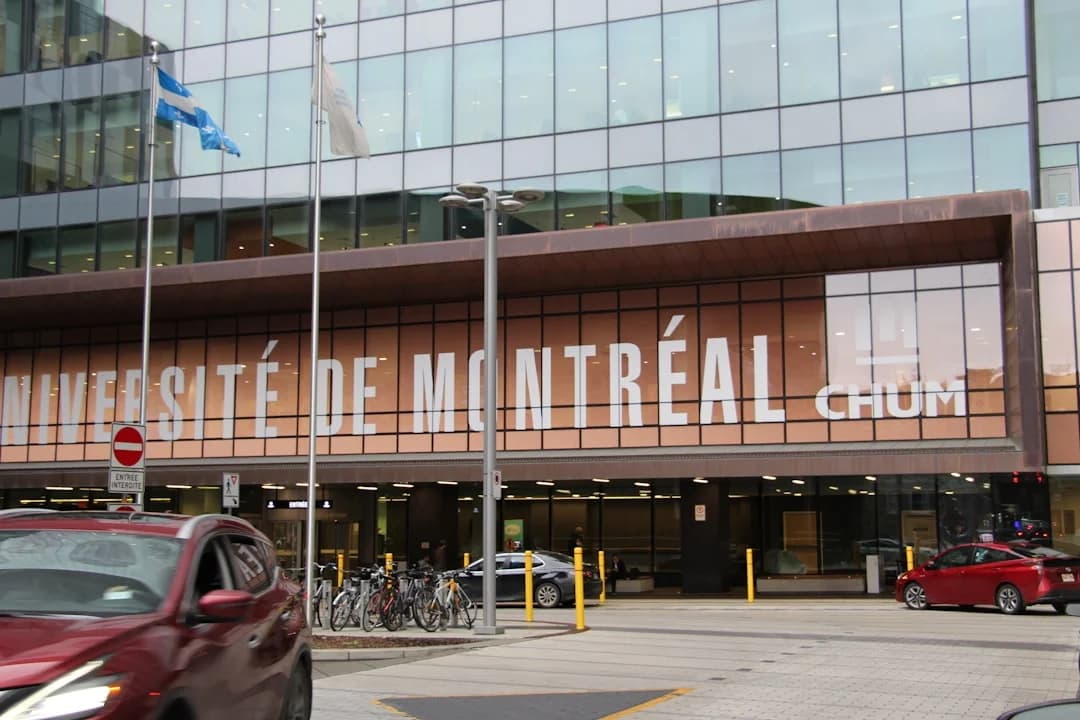
Photo by Alain Guillot on Unsplash
Montreal is moving to test a citywide approach to artificial intelligence in municipal services. On February 12, 2026, the City of Montréal announced the creation of the Laboratoire centre-ville, a downtown innovation hub designed to pilot AI-enabled solutions focused on mobility, construction-site management, and the urban experience in the city’s core. The announcement marks a tangible step toward a broader Montreal citywide AI services pilot, with the downtown hub intended as a first-phase testbed that could inform expansion to other districts if successful. This development arrives amid a wider push in Quebec and Montreal to modernize public services with AI while managing risks around governance, data, and ethics. The news is timely for residents, businesses, and policymakers who are watching for concrete improvements in daily city life, from smoother traffic flow to shorter project timelines for streetworks. The city’s public statements emphasize balancing innovation with citizen welfare, a theme that will shape how the pilot unfolds over the coming months. > The Downtown Laboratory is described as a real urban “laboratory” where prototypes will be developed and tested, with the potential to inform citywide deployment if results prove durable and scalable. (newswire.ca)
What Montreal announced on February 12, 2026 also built on an ongoing policy framework that already positioned AI as a core tool for municipal governance. In 2024, the City of Montréal unveiled its first AI integration strategy and updated data charter, signaling public-sector leadership in responsible AI use and data governance. The strategy and charter describe the city’s intent to place ethics, transparency, and the common good at the heart of AI adoption, setting a foundation for new pilots like the Laboratoire centre-ville to operate within a formal governance framework. This broader policy context matters as Montreal tests AI across services and infrastructure, with the downtown lab serving as a primer for potential citywide rollout. (newswire.ca)
Section 1: What Happened
Announcement and scope
- The Laboratoire centre-ville is positioned as a downtown innovation hub within the Ville-Marie district, bounded by Boulevard Saint-Laurent, Rue Sherbrooke, Rue Guy, and Rue de la Commune. The city describes the lab as an initiative to experiment with AI-driven solutions that address mobility, construction-site management, and the broader urban experience in Montréal’s hypercenter. The scope explicitly centers on the central district as a proving ground, with the potential to inform broader citywide applications as the pilot progresses. This perimeter and purpose were confirmed by the City of Montréal and covered in both French and English communications. (montreal.ca)
Pilot timeline and phases
- The city’s plan calls for a clear, time-bound sequence. An official call for solutions ran from April 14 to May 1, 2026, inviting Montreal-based companies, startups, and partners to propose AI-based approaches to the four priority themes. The city notes that “retained initiatives will be tested between June and September” 2026, marking a concrete test window for initial prototypes. This phased approach—proposals, selection, and rapid prototyping in a defined window—reflects a discipline often used in urban AI pilots to manage risk and measure impact. (montreal.ca)
Priorities and governance
-
The Laboratoire centre-ville centers on four priority themes identified by the city:
- Integrated planning and scenario simulations for chantiers
- Improved mobility, safety, and accessibility around worksites
- Real-time monitoring and adaptive management of worksites on the ground
- Site branding and the urban experience around construction zones These priorities foreground digital twins, real-time data, and simulation as core tools for decision-making. The city also notes it will lean on an advisory AI committee composed of technology leaders, researchers, and public policy experts to guide the pilot, evaluate best practices, and monitor governance and data-sovereignty risks. (newswire.ca)
-
The four themes and governance structure are reiterated in the City’s official communications and in a coordinated press plan issued by Ville de Montréal, emphasizing a responsible, outcomes-focused approach rather than technology for its own sake. The advisory committee’s role is to help ensure that AI deployments respect governance, ethics, and data protections while maximizing public benefit. (montreal.ca)
Next steps in the pilot
- The initiative makes explicit that it will “collect proposals” and test selected solutions directly within the Laboratoire centre-ville zone. The city’s communications outline a path from ideation to prototyping to on-street evaluation, with the downtown lab serving as a controlled environment for experimentation before any broader rollout. The press materials also highlight the potential to leverage digital twins to improve planning, coordination, and urban outcomes. (newswire.ca)
Timeline milestones in public record
- February 12, 2026: Official announcement of the Laboratoire centre-ville and its status as a citywide urban innovation lab, with mobility and construction-site efficiency as core objectives. This is the event that started the public-facing timeline for the pilot. (montreal.citynews.ca)
- April 14–May 1, 2026: Open call for proposals from Montréal-based firms and startups to contribute innovative AI solutions for the lab’s four priorities. This step signals the transition from concept to concrete projects. (montreal.ca)
- June–September 2026: Retained proposals are to be tested in the Laboratoire centre-ville, marking the first real-world evaluation of AI-driven approaches in this context. The city frames this as the initial testing window for proof-of-concept deployments. (montreal.ca)
Stakeholders and governance
- The City indicates it will rely on an AI advisory committee to guide the initiative, drawing on leaders from tech, research, and public policy. The committee’s mandate includes advising on strategic AI choices, evaluating international best practices, and ensuring governance, ethics, and digital sovereignty considerations are addressed as part of the lab’s work. This governance mechanism is a deliberate effort to balance innovation with accountability and public trust. (newswire.ca)
Section 2: Why It Matters
Impact on mobility and construction management

- The Laboratoire centre-ville pilot is framed as a direct attempt to reduce the negative impacts of construction work on residents, businesses, and motorists, while improving mobility safety and the overall city experience in Montréal’s center. In practice, this could translate into better-synchronization of cone patterns and detours, more accurate construction timelines, and smarter routing recommendations powered by AI-driven data integration and simulations. City communications emphasize that the hub will explore integrated planning, scenario simulations, real-time monitoring, and user-experience improvements as core levers. In other words, the pilot is designed to turn AI into a practical tool for daily urban life, not just a research exercise. (montreal.citynews.ca)
Citizen experience and service delivery
- By testing digital twins and real-time data in the downtown core, Montréal aims to translate AI insights into smoother traffic patterns, reduced project delays, and enhanced information for residents and visitors. The pilot’s success would be judged, in part, by improvements to the urban experience—fewer unexpected street closures, better public communication about ongoing works, and more predictable transit and pedestrian flows. The city’s framing positions these outcomes as essential to maintaining a welcoming downtown while expanding the city’s capacity to manage complex urban systems. (newswire.ca)
Governance, ethics, and data
- Montreal’s AI strategy and updated data charter, adopted in 2024, establish a framework to ensure responsible AI use, data governance, transparency, and rights protection. The Laboratoire centre-ville operates within this framework, with the advisory committee and the four-priority design reflecting a careful balance of experimentation and public accountability. The emphasis on responsible AI aligns with global best practices that stress governance, risk assessment, and privacy protections when deploying AI in public settings. (newswire.ca)
Economic and innovation ecosystem implications
- The lab’s existence and its citywide intent fit into Montreal’s broader ambition to be a premier AI ecosystem—an environment where public sector pilots co-evolve with private sector innovation, academic research, and entrepreneurship. Montreal’s AI strategy, the city’s engagement with the ecosystem, and public events around AI (such as ALL IN and related conferences) demonstrate a regional context in which city-led pilots can spur startup activity, pilot deployments, and cross-sector collaboration. The city’s ongoing policy work in AI signals a framework within which pilots like Laboratoire centre-ville can contribute to an evidence base for expansion and investment. (newswire.ca)
Public sector acceleration and regional context
- Quebec and Montreal have a broad portfolio of AI initiatives across public organizations, research institutes, and industry partnerships. The City of Montréal’s AI strategy exists alongside provincial programs and private-sector activity, creating a landscape in which a citywide AI services pilot could scale through partnerships, procurement, and shared data standards. As part of this ecosystem, the Laboratoire centre-ville may serve as a model for other cities looking to test AI in a controlled, governance-forward manner. (montreal.citynews.ca)
What this could mean for residents and businesses
- If the pilot demonstrates concrete gains in predictability of construction timelines, mobility improvements, and enhanced citizen information channels, it could set a precedent for how the city coordinates multiple stakeholders around AI-enabled projects. For businesses, the call for proposals represents an opportunity to partner with the city on practical AI solutions, potentially accelerating commercialization of municipal-ready AI applications. For residents, the focus on reducing disruption and improving safety around worksites addresses a long-standing concern in central Montréal. While the lab is downtown-focused at launch, the city’s stated interest in a citywide AI services pilot signals that successful pilots could influence planning decisions in other districts. (montreal.ca)
Section 3: What’s Next
Next steps for proposals and testing
- After the April 14 to May 1, 2026 call, the city will review proposals and select initiatives to move into the June–September 2026 testing window. The process will likely involve collaboration with a broad network of municipal and economic partners, given the Laboratoire centre-ville’s emphasis on cross-sector partnerships and the involvement of an AI advisory committee. Expect a public briefing or release detailing the selected projects, performance metrics, and governance updates as the pilot progresses. (montreal.ca)
Potential expansion toward a Montreal citywide AI services pilot
- While the Laboratoire centre-ville focuses on the central business district, the city’s communications frame the lab as a stepping stone to broader citywide AI service pilots. If initial results show measurable improvements in mobility, safety, and citizen experience, the city is positioned to evaluate scale-up options across other neighborhoods and service lines. Observers will want to track whether the city publishes a road map or data-sharing framework that could enable cross-district AI pilots, along with any procurement or governance changes needed to support expansion. The broader policy context—Montreal’s AI strategy and data charter—will likely shape any citywide expansion. (newswire.ca)
What to watch for in the coming months
- Milestones to monitor include: (1) the selection of pilot projects from the April–May 2026 call, (2) the June–September 2026 on-street testing results, (3) any formal governance updates or risk-assessment reports from the AI advisory committee, and (4) communications from the city regarding next steps for scaling the pilot beyond the central district. Journalists and readers should expect official briefings, technical white papers, and data-informed discussions about privacy, sovereignty, and transparency as the pilot progresses. (montreal.ca)
Participation and how readers can stay updated
- For Montreal-based businesses and startups interested in contributing AI solutions to municipal challenges, the city’s call for proposals provides a concrete entry point. Local tech communities and business associations may also disseminate information about the Laboratoire centre-ville, given its potential to catalyze public-private collaboration. Citizens can stay informed through the City of Montréal’s official channels, which are monitoring the pilot, outlining milestones, and providing updates on governance and outcomes. (montreal.ca)
Closing
Montreal’s citywide AI services pilot represents a deliberate, data-driven attempt to translate AI research into practical urban benefits. By starting in the downtown core with the Laboratoire centre-ville and a tightly choreographed timeline, the city aims to demonstrate how AI can help coordinate complex, time-sensitive urban operations while maintaining a strong emphasis on governance, ethics, and public trust. The pilot’s success—or its challenges—will largely hinge on transparent reporting, rigorous outcome measurement, and the ability to translate prototypes into durable, scalable solutions for Montrealers across the city. As Montréal tracks progress in the coming months, residents and stakeholders should look for clear milestones, published data, and ongoing public dialogue about how AI is being used to improve daily city life.

In the weeks ahead, Montréal Times will continue to report on developments related to the Montreal citywide AI services pilot, including proposal selections, testing results, and any announcements about scale-up plans. Readers are encouraged to monitor official city communications, press briefings, and independent analyses that help translate pilot findings into actionable insights for policy, business, and daily life. The city’s AI journey is ongoing, and its ability to deliver tangible benefits will ultimately depend on rigorous evaluation, thoughtful governance, and sustained collaboration across government, industry, and communities.