Montreal CMA Sees 18% Drop in October Home Sales

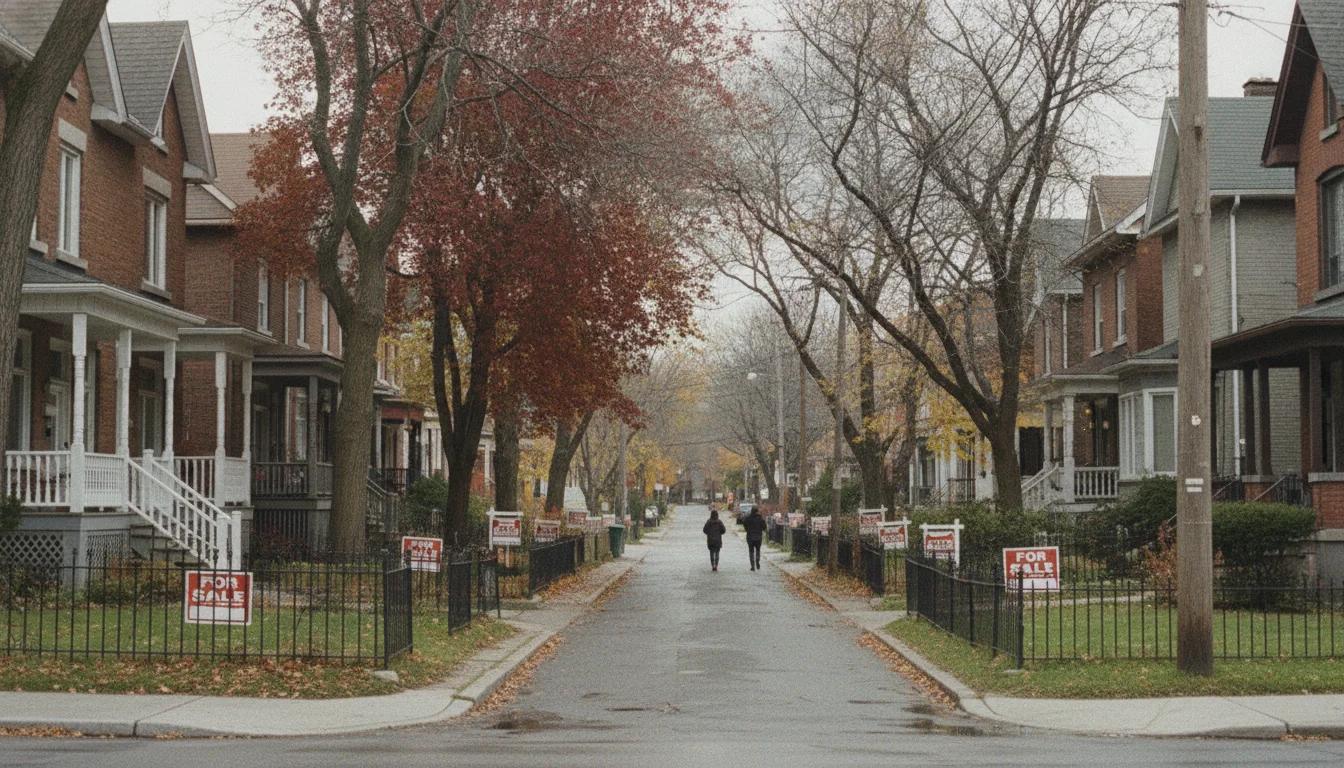
Montreal CMA October 2026 home sales slump
Montreal CMA residential transactions totaled 3,252 in October 2026, down 18% from October 2025 and about 13% below the ten-year October average, according to APCIQ Centris statistics released November 6, 2026. This opening data point marks a continuation of a year of slower activity that observers say reflects shifting affordability dynamics and a broader tilt toward more deliberate buying decisions as mortgage costs fluctuate. APCIQ Centris statistics, October 2026 (apciqca-152af.kxcdn.com)
The broader context for Montreal’s October numbers includes a growing supply of listings and a mixed picture across property types. As the market eases from its 2024-2025 pace, buyers have more options to choose from, while sellers face a more balanced negotiation environment in many neighborhoods. The APCIQ release notes that the month saw continued inventory expansion and market conditions that, while still skewed toward sellers overall, showed pockets of relative balance in certain segments. This combination of rising supply and moderating demand is shaping price dynamics and time on market in ways buyers and sellers will be watching closely through the coming months. The data were released on November 6, 2026 and are based on Centris data supplied by QPAREB. (apciq.ca)
What Happened
October 2026 Activity
The October 2026 data from APCIQ’s Centris-based calculations show a total of 3,252 residential transactions in the Montreal CMA. This result marks an 18% decline from October 2025 and sits about 13% below the region’s ten-year average for October. The same release highlights a continued build in supply, with monthly active listings reaching 21,817—a year-over-year increase of roughly 20%. Among property types, plexes (+25%), single-family homes (+22%), and condominiums (+14%) all contributed to the broader trend of rising inventory across the metropolitan area. These figures reflect a market that is cooling from prior peaks but remains active in a variety of submarkets. The October 2026 highlights are taken directly from APCIQ’s press release and the accompanying statistics package. (apciq.ca)
In addition to the headline numeric changes, the distribution of inventory across geographies within the CMA shows significant shifts. Saint-Jean-sur-Richelieu posted the largest year-over-year inventory gain (+34%), followed by the North Shore (+30%) and the South Shore (+30%). This geographic diversification of supply points to a more complex market dynamic where buyers are weighing affordability and commute times in choosing where to purchase. The Centris-based data provide the granular geographic breakdown that market watchers use to identify which corridors may see changing demand profiles in the near term. (apciq.ca)
Price trends during October 2026 also reflect the broader pace deceleration. Across the CMA, the median price for a single-family home rose about 2% year over year, while median prices for condominiums and plexes remained relatively stable. This pattern suggests that while overall values have not collapsed, the trajectory of price growth has moderated in the face of softer transaction volumes. Selling times remained relatively short compared with historical norms, underscoring a still-active market even as activity cools. For context, the release notes an average selling period of about 36 days for single-family homes, 46 days for plexes, and 56 days for condominiums. (apciqca-152af.kxcdn.com)
A central takeaway from the October data is the breadth of inventory pressure across the CMA. The data show a market gradually shifting toward more time and more options for buyers, even as sellers still benefit in many segments where demand remains relatively robust. This is particularly evident in the Island of Montreal’s condominium segment, where some submarkets continue to experience a supply overhang, even as other segments recover a more balanced posture. The APCIQ report emphasizes that while conditions are easing overall, seller-favorable dynamics persist in several parts of the CMA. (apciq.ca)
Original finding: By dividing the October 2026 total of 3,252 transactions by the implied factor that the month is about 13% below the ten-year average, the approximate ten-year October average is 3,738 transactions (3,252 ÷ 0.87). This calculation helps readers gauge how far October 2026 stood from historic norms, and its result signals a sustained gap between current activity and a longer-term baseline. In plain terms, October 2026’s activity was roughly 5.6% below the implied level required to meet a prior-ten-year October average, highlighting a market that remains below historical norms despite pockets of resilience. “The sharp decline in sales in October is part of a downward trend that began early in the year and is impacting all market segments across the entire metropolitan region,” notes Hélène Bégin, APCIQ Economist. “Changes in financing costs and housing affordability will continue to shape buyer behavior in coming months.” (apciqca-152af.kxcdn.com)
Quote: “The sharp decline in sales in October is part of a downward trend that began early in the year and is impacting all market segments across the entire metropolitan region.” This assessment from APCIQ’s economist underscores a consolidation phase in which the market is recalibrating to new financing conditions and a broader affordability environment. (apciq.ca)
Price and Time on Market
The October results show a mixed bag on pricing. While the nationwide narrative about cooling demand is widely discussed, Montreal’s October 2026 data indicate a 2% year-over-year uptick in the median price for single-family homes, with condominiums and plexes holding relatively steady. This suggests that while sales activity has waned, the most affordable segments remain competitive, and sellers who price with a realistic lens are still achieving timely closings. The time on market remains relatively short in many districts, reinforcing the idea that a subset of buyers is moving decisively when properties are competitively positioned. The data for days on market—36 days for singles, 46 days for plexes, and 56 days for condos—provide a practical picture of the current pace of sale. (apciqca-152af.kxcdn.com)
A more nuanced narrative emerges when looking at the supply side. The total active listings grew to 21,817 at month-end, signaling that buyers have more choices than in the previous year. This shift toward a less inventory-constrained market is consistent with a broader, more balanced market sentiment that has been developing across Montreal in 2026. The quantity of listings combined with higher days on market in some segments points to a more deliberate buyer decision process, where price sensitivity and financing constraints are playing a larger role in the outcome of each transaction. (apciq.ca)
Geographic Variation
The CMA’s geography matters for understanding where the slowdowns are most pronounced and where activity remains relatively healthier. Beyond the island of Montreal, sizable gains in supply on the North Shore and South Shore indicate a more accessible entry point for buyers in those areas. Saint-Jean-sur-Richelieu’s 34% inventory increase highlights how buyers are dispersing beyond core urban neighborhoods in search of value, while higher listings in surrounding regions could dampen demand for previously hot Island markets if price discipline does not reemerge. These geographic patterns are important for buyers weighing commute trade-offs and for sellers deciding where to price and stage properties. (apciq.ca)
Why It Matters
Market Conditions and Buyer Behavior
The October 2026 data set reveals a market that is transitioning from a seller-leaning tilt to a more balanced dynamic in many segments, albeit with continuing seller advantages in several Island Montréal submarkets. For buyers, the mix of rising inventory and longer time on market in certain categories could improve negotiating leverage, particularly for those who secure financing in a timely manner and price strategically. For sellers, the data emphasize the importance of accurate pricing, as well as patience in markets that are becoming more selective. The APCIQ release frames these shifts within an environment of higher fixed-rate mortgage costs and Bank of Canada policy considerations that can influence monthly payments and buyer affordability. (apciq.ca)
Impacts on Housing Affordability and Inventory
A recurring theme in the October 2026 statistics is the tension between affordability and supply. With prices showing selective strength in some segments and overall sales activity retreating, affordability remains a concern for many buyers. The report’s commentary highlights the role of mortgage rates and policy decisions on market momentum, stressing that policy, macroeconomic conditions, and regional price dynamics will continue to shape activity going into early 2027. For Montreal, this means continued monitoring of Centris-based data and local economic indicators to anticipate further shifts in demand and pricing. (apciqca-152af.kxcdn.com)
The Broader Context in Quebec and Canada
While this piece focuses on the Montreal CMA, APCIQ notes that the Quebec real estate market shows similar transitional patterns across other CMA regions. The October 2026 data are part of a wider provincial narrative that includes rising inventory, moderated price growth, and buyer caution as financing costs evolve. The Montreal CMA’s experience aligns with the broader trend toward a more balanced market across major Canadian markets, even as local conditions remain highly dependent on neighborhood-level supply, affordability, and access to credit. Readers interested in cross-market comparisons can consult APCIQ’s monthly statistics for other CMAs within Quebec and beyond. (apciq.ca)
What's Next
Short-Term Outlook
The October 2026 data imply a continued transition into a more balanced market, with inventory levels likely to influence price trajectories and time-on-market metrics through early 2027. Analysts will be watching the interplay between fixed mortgage rates, Bank of Canada policy signals, and regional price momentum. In Montreal, expect further attention to the Island’s condo markets where inventory is more concentrated and price dynamics can diverge from the broader CMA trend. The APCIQ commentary suggests that policy shifts and financing costs will continue to influence buyer behavior in the near term, potentially sustaining slower sales volumes while keeping prices relatively resilient in certain segments. (apciq.ca)
Key Watchpoints
- Inventory trajectory: With listings up year over year across the CMA, will the uptick in supply compress prices further in some neighborhoods or simply stabilize them?
- Segment bifurcation: Will the Island of Montreal condo markets converge toward a more balanced state, or will high-demand districts maintain competition?
- Financing costs: How will fixed mortgage rate movements and BoC policy updates in late 2026 and early 2027 affect monthly payments and buyer demand?
- Geographic shifts: Which suburbs or peripheral markets gain traction as buyers search for affordability, and how does that affect core Montreal pricing?
APCIQ’s ongoing monthly releases, including the detailed and cumulative monthly statistics for the province and regions, will be essential reads for investors, policymakers, and homebuyers who want to understand the evolving market features in Montreal and its surrounding communities. The next data release will provide fresh numbers on listing counts, days-on-market trends, and price movements that will shape the narrative in late 2026 and into 2027. For readers who want to dig deeper, the APCIQ portal hosts the full Centris dataset and related market analyses, including a detailed breakdown by parish and street—and the CMAs across Quebec. Access to the primary documents and the full dataset can be found in the linked resources below. (apciq.ca)
What to watch for in the immediate future
Analysts expect that the Montreal market will continue to exhibit regional heterogeneity through the first half of 2027. A careful eye will be kept on:
- The pace of new listings entering the market, which directly impacts days-on-market and price competition.
- The evolution of mortgage rates and credit conditions, which strongly influence buyers’ willingness and ability to close deals.
- The dynamics of multi-family and condo markets on the Island of Montreal, where demand and supply patterns have shown distinctive traits in recent months.
These topics will be central to market coverage in Montréal Times and will be informed by ongoing APCIQ Centris data and QPAREB analyses. Readers are encouraged to follow APCIQ’s official releases and Centris monthly statistics for the most up-to-date, primary-source information. (apciq.ca)
Closing
As Montreal continues to navigate an environment of higher financing costs and evolving inventory levels, readers benefit from a data-driven view of how October 2026’s activity fits into a longer arc. The latest Centris statistics for the Montreal CMA show a market leaning toward more measured transactions amid growing supply, with price dynamics that vary by segment and neighborhood. Staying informed through APCIQ’s monthly releases and detailed Centris data will help buyers, sellers, and market participants anticipate the next phase of Montreal’s housing cycle.
For ongoing updates, consult the APCIQ press releases and the October 2026 Centris statistics PDFs, linked below:
- APCIQ English press release: Montreal CMA: Sales Slowdown Persists
- PDF: 2026-11-06_communique_apciq_montreal_en.pdf
- Centris monthly statistics for October 2026 (Montreal CMA)