Montreal Eco-tourism and Neighborhood Micro-destinations

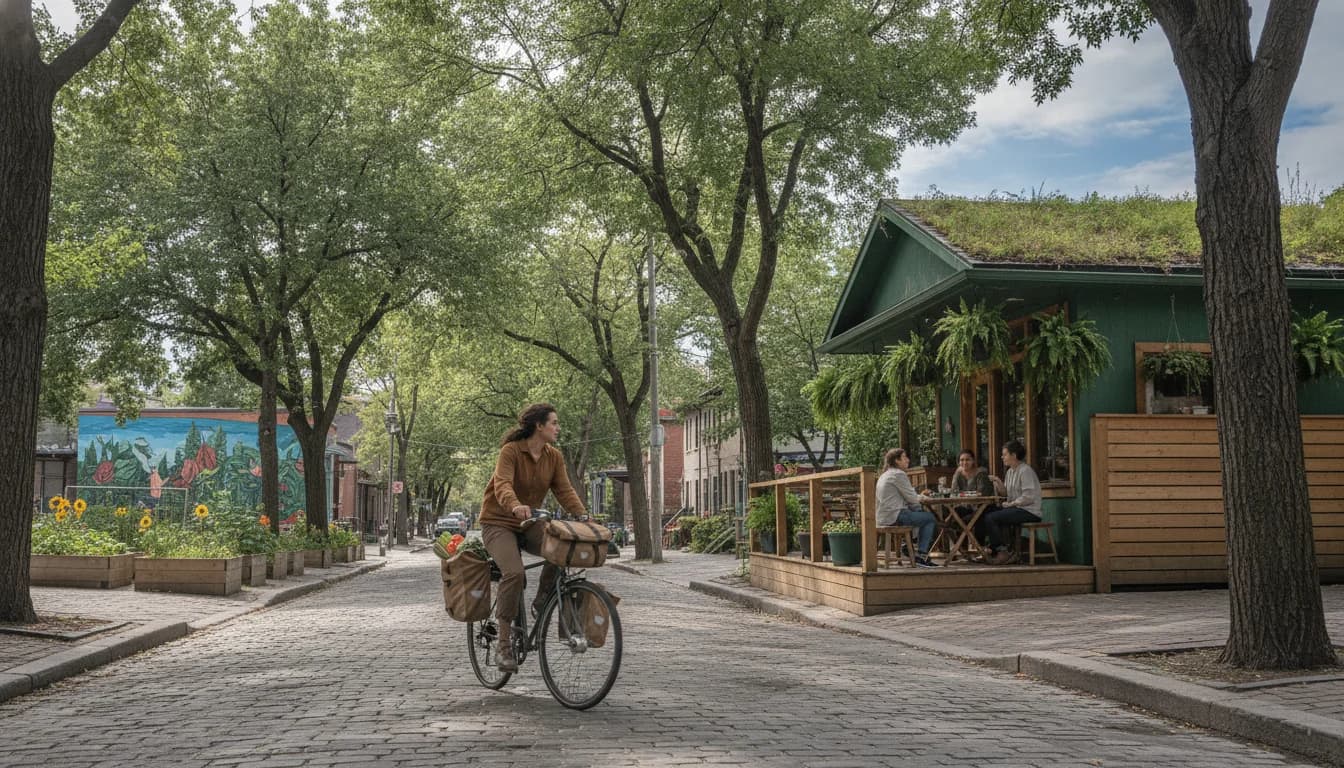
Montreal has quietly accelerated a citywide strategy to elevate eco-friendly travel and the idea of neighborhood micro-destinations, signaling a shift in how visitors and locals discover the city. The latest moves come as municipal agencies, tourism agencies, and local business associations increasingly frame individual districts—such as Mile End, the Plateau-Mont-Royal area, and Old Montreal's Bonsecours district—as distinct, sustainable experiences rather than generic urban zones. This evolution aligns with broader trends in urban tourism that favor walkable, eco-conscious itineraries embedded in the fabric of everyday city life. For readers of Montréal Times, the emphasis on Montreal eco-tourism and neighborhood micro-destinations reflects a data-driven, market-oriented approach to balancing visitor demand with neighborhood character.
Officials and industry observers say the push is designed to address several overlapping priorities: reducing environmental impact, supporting local commerce, and providing scalable, repeatable visitor experiences across multiple neighborhoods. Tourisme Montréal’s ongoing work with city neighborhoods and tourism partners emphasizes these districts as accessible, authentic entry points for travelers who want to explore beyond traditional tourist corridors. In Mile End and the Plateau Mont-Royal, for example, neighborhood guides highlight independent shops, bakeries, and cafés as focal points for sustainable travel that also sustains small businesses. This approach is reinforced by municipal programs like the Éco-quartier initiative, which aims to promote eco-civism and improve residents’ living environments while linking to broader city branding around sustainable mobility and urban vitality. (mtl.org)
The momentum also includes concrete municipal actions and public-private collaborations that position eco-tourism as a legitimate economic driver. City and tourism officials have publicly discussed the idea of transforming certain neighborhoods into year-round, curated experiences—leveraging a mix of public spaces, cultural programming, and digital content to extend the city’s appeal beyond peak tourist seasons. The City of Montreal’s eco-quartier program serves as a formal backbone for these ambitions, aiming to improve ecological and social outcomes in neighborhoods while supporting community-led initiatives. At the same time, neighborhood campaigns and detour-based experiences—such as curated walks and micro-destinations tours—are being marketed through official guides and local media partnerships to reach and inform visitors who want authentic, low-impact experiences within city limits. This multi-pronged approach mirrors broader tourism industry shifts toward localized, sustainable travel that can be scaled without eroding the character of individual districts. (montreal.ca)
Opening the door to specific examples helps illustrate how this strategy translates on the ground. In Old Montreal, the SDC Vieux-Montréal has actively promoted neighborhood campaigns designed to boost foot traffic and highlight local businesses during the summer season, including campaigns like Bonsecours par amour that focus on storefronts and cultural programming to attract visitors while preserving the district’s heritage and environmental footprint. The campaign is part of a broader ecosystem of public-private efforts to sustain downtown-area vitality through targeted, place-based marketing. In parallel, new district-level detour guides and micro-tourist experiences are being developed to surface “micro-destinations” within Plateau-Mont-Royal and Mile End, signaling a deliberate shift from broad city tours to neighborhood-by-neighborhood discovery. Experts point to these micro-destinations as a practical model for distributing tourism pressure and enabling data-driven evaluation of what people actually value in a city like Montreal. (sdcvieuxmontreal.com)
Saint-Michel’s transformation concept, discussed in July 2026 coverage, spotlights a trend toward weaving culture, tourism, and community life into one cohesive urban strategy. The City of Montreal foregrounded a mission to develop Saint-Michel as a cultural and tourist hub, which would combine housing, public spaces, and community initiatives to create a more complete living environment. This example illustrates how the city is thinking about the spatial and social dimensions of eco-tourism and micro-destinations, not as isolated attractions but as integral components of neighborhoods that invite longer, more deliberate stays. The news coverage notes this initiative as a signal of the broader directional change in municipal planning around tourism and urban livability. (montreal.citynews.ca)
The practical implications of these policies are already rippling through visitor planning and local commerce. Downtown tourism infrastructure improvements funded by provincial and municipal partnerships—such as a new multi-service hub announced in early 2026—signal an effort to streamline the visitor experience while underscoring the city’s commitment to sustainable, neighborhood-focused travel. With a concerted push to present Montreal as a city of interconnected micro-destinations, tourism marketers are leaning on neighborhood characteristics, seasonal events, and culturally significant sites to craft compelling, low-impact itineraries. This approach aligns with the broader goal of spreading economic benefits across districts and reducing the congestion typically seen around a single flagship site. (montreal.citynews.ca)
Against this backdrop, several neighborhood-level indicators help gauge the scope of activity and the potential pacing of change. Mile End and Plateau-Mont-Royal are highlighted on official tourism platforms as core neighborhoods offering rich, walkable experiences—characterized by independent shops, street-level culture, and a heavy emphasis on local food and drink scenes. Tourisme Montréal’s neighborhood pages emphasize these districts as authentic entry points for visitors seeking a distinct Montreal experience beyond conventional landmarks. Meanwhile, the eco-quartier program provides a formal policy frame for residents and developers pursuing sustainable urban living, linking environmental stewardship with social and economic vitality. Taken together, these elements portray a city that is serious about integrating eco-tourism with neighborhood identity and local entrepreneurship. (mtl.org)
What Happened
Municipal and tourism bodies outline a multi-pronged push to elevate Montreal’s eco-tourism and neighborhood micro-destinations, anchored by concrete programs and public campaigns.
Announcement details
- City of Montreal’s Eco-quartier program continues to expand its reach across districts, reinforcing eco-civism and livability as core city-building objectives. This program is described as part of the city’s strategy to improve living environments in parallel with tourism development. The program’s framing emphasizes ecological performance, social well-being, and community involvement as critical levers for sustainable urban growth. (montreal.ca)
- Tourisme Montréal publicly frames neighborhoods as bespoke experiences, not merely as city zones. Official materials underscore Mile End and Plateau-Mont-Royal as anchors of authentic, walkable experiences with a heavy emphasis on local culture, food, and small businesses. The approach is designed to align with modern traveler preferences for immersive, neighborhood-level discovery. (mtl.org)
- District Central’s micro-destination concept illustrates how alleys and small-scale urban features can function as sustainable, climate-resilient public spaces that connect residents and visitors with local commerce. The project demonstrates a practical model for embedding eco-tourism within the city’s existing fabric. (district-central.ca)
Timeline and key facts
- Early 2026: Provincial and municipal steps signaling investment in downtown Barcelona-like scale improvements translated to Montreal’s context, including a planned downtown tourist hub funded through government partnerships. This development is part of a broader push to modernize visitor infrastructure while keeping sustainability at the forefront. (montreal.citynews.ca)
- July 9, 2026: City of Montreal coverage notes a formal mission to transform Saint-Michel into a cultural and tourist hub, illustrating how the city envisions neighborhood-centered growth as a driver of economic and environmental benefits. The article frames the effort as part of a larger, data-informed urban development strategy. >Quote from city officials emphasizes the importance of integrating housing, culture, and public spaces for long-term vitality.(montreal.citynews.ca)
- 2025–2026: Ongoing neighborhood campaigns and detour initiatives are intensifying, with marketing advances meant to surface micro-destinations within Mile End and Plateau-Mont-Royal. These efforts are supported by local organizations and media partners, and they aim to distribute tourism activity more evenly across districts while signaling the city’s commitment to sustainable, community-led growth. (mtldetours.ca)
- Late August (contextual anchor): The Bonsecours market and World Press Photo Montreal exhibitions are among events that illustrate the kind of culture-forward programming that complements eco-tourism and neighborhood micro-destinations, highlighting how temporary events can drive longer-term neighborhood exposure. (sdcvieuxmontreal.com)
Key players and stakeholders
- City of Montreal and Éco-quartier programs, which provide policy and funding scaffolds for neighborhood sustainability and livability.
- Tourisme Montréal, which channels neighborhood experiences to visitors and curates city-wide marketing that emphasizes micro-destinations.
- Local SDCs and neighborhood associations (e.g., Vieux-Montréal) that run campaigns and campaigns designed to amplify pedestrian traffic and surface local assets.
- District Central and similar bodies that showcase the practical value of “green alleys” and micro-landscapes as sustainable access points to the city’s urban fabric. (montreal.ca)
Why it matters
The push toward Montreal eco-tourism and neighborhood micro-destinations matters for several reasons, all of which map onto broader market and technology-driven trends in tourism.
- Economic resilience through diversified demand. By promoting multiple neighborhoods as destinations, Montreal diversifies where visitors spend money, reducing reliance on a handful of iconic sites. The Old Montreal eco-campaigns and the 2,400+ businesses within Vieux-Montreal, for instance, illustrate the scale at which district-focused tourism can ripple through local economies. Such diversification helps small merchants weather seasonal fluctuations and market shifts, a point reinforced by local business associations and media coverage of neighborhood campaigns. (sdcvieuxmontreal.com)
- Environmental stewardship embedded in growth. The Éco-quartier program anchors a formal framework for sustainable urban living, explicitly linking environmental performance with social well-being and livability. This alignment ensures that tourism growth does not come at the expense of neighborhoods’ ecological health, a critical concern for planners and residents alike. (montreal.ca)
- Authentic experiences that scale. Tourisme Montréal’s emphasis on neighborhoods aligns with traveler demand for authentic, place-based experiences that can be explored on foot or via low-impact transit. In Mile End and Plateau, visitors can engage with local culture, food, and commerce in ways that smaller, curated micro-destinations make feasible. The neighborhood-focused storytelling also supports a more equitable distribution of tourism benefits within the city. (mtl.org)
- Technology as an enabler, not a substitute. The detour guides and micro-destination campaigns exemplify how technology supports real-world experiences—through digital content, guided routes, and integrated marketing—without replacing the value of physical spaces or human-scaled commerce. District Central’s work on green alleys demonstrates how urban design choices translate into tangible experiences for visitors and residents alike. (mtldetours.ca)
Who is affected
- Local businesses and neighborhoods, which stand to gain from increased foot traffic and more predictable visitor flows during shoulder seasons.
- Residents, who benefit from improved public spaces, reduced environmental impact, and stronger community identity.
- Visitors, who gain access to more varied, sustainable experiences that reflect Montreal’s urban character, rather than a single snapshot of the city.
- City agencies and tourism bodies, which must balance growth objectives with equity, infrastructure readiness, and environmental safeguards. (sdcvieuxmontreal.com)
Broader context
Montreal’s approach sits within a global shift toward sustainable, localized tourism that relies on data-driven decision making and place-based storytelling. The city’s initiatives parallel broader municipal strategies around eco-districts and neighborhood-based economic development observed in other major cities, while leveraging Montreal’s unique architectural, cultural, and geographic assets. In this context, the emphasis on micro-destinations is less about reinventing the wheel and more about re-centering the traveler experience around neighborhoods that can be accessed responsibly, enjoyed deeply, and revisited across multiple visits. (mtl.org)
What’s Next
Timeline and next steps for Montreal eco-tourism and neighborhood micro-destinations are still taking shape, but several clear lines of activity are emerging.
Short-term milestones
- Expanded neighborhood campaigns and guided experiences. District-level programs will likely roll out more detour-based tours and alley-focused experiences, leveraging existing assets such as Mile End’s shops and Plateau’s alleys as micro-destinations. The detour guides prepared for Plateau Mont-Royal and Mile End indicate a structured approach to surface neighborhood-based experiences for visitors. (mtldetours.ca)
- Downtown hub development and visitor services. The provincial and city-level investment in a new downtown tourist hub signals a shift toward improved visitor services, wayfinding, and integrated experiences that connect guests with neighborhood assets while maintaining sustainable visitor levels. The official statements and press coverage provide a timeline for when these facilities and services are expected to come online. (montreal.citynews.ca)
- Cultural programming as a texture for travel. The Saint-Michel hub concept and other cultural initiatives suggest ongoing programming that complements eco-tourism and micro-destinations, using culture as a magnet for extended visits and repeat engagement. City officials have framed this as part of a broader urban development strategy, with cultural events and exhibitions acting as anchors. (montreal.citynews.ca)
Medium- to long-term outlook
- Integration with climate resilience and urban design. The green-alleys narrative demonstrates a longer-term plan to re-naturalize and repurpose urban spaces in ways that support climate resilience, livability, and tourism. If scaled citywide, this could translate into more walkable routes connecting neighborhoods, parks, and cultural sites, with environmental metrics guiding investment decisions. District Central and related projects provide early case studies for how such spaces can function in daily life and during peak visitor periods. (district-central.ca)
- Data-driven monitoring and iteration. As these initiatives mature, expect increased emphasis on data collection—visitor flows, environmental indicators, and economic impact metrics—to guide ongoing investments in eco-tourism and neighborhood micro-destinations. The integration of digital guides, content platforms, and physically connected experiences will be central to measuring effectiveness and adjusting marketing emphasis. Tourisme Montréal and municipal programs are positioned to publish regular updates as this data matures. (mtl.org)
Next steps for readers
- Explore Mile End and Plateau through official guides and detour programs to discover micro-destinations close to home. Tourisme Montréal’s neighborhood resources provide curated starting points for self-guided experiences that emphasize sustainability and local character. (mtl.org)
- Attend or follow local cultural programming tied to eco-tourism and neighborhood experiences. The Bonsecours and World Press Photo Montreal programming illustrate how cultural events can draw attention to neighborhood assets and extend the tourism season. (sdcvieuxmontreal.com)
- Stay informed about new visitor services in downtown Montreal as the city expands its tourism infrastructure. Proposed hubs and enhanced visitor services are part of a coordinated strategy to manage growth and maintain neighborhood balance. (montreal.citynews.ca)
Closing
Montreal’s evolving strategy around eco-tourism and neighborhood micro-destinations reflects a deliberate, data-informed effort to balance growth with livability. By elevating the value of Mile End, Plateau-Mont-Royal, Old Montreal, and other districts as distinct, sustainable travel experiences, the city is positioning itself to attract visitors who seek authentic, low-impact ways to explore urban life. Municipal programs like Éco-quartier, combined with neighborhood-oriented tourism marketing, are laying the groundwork for longer, more meaningful visits that support local businesses and preserve the environmental integrity of the city’s diverse neighborhoods. As the Saint-Michel cultural hub concept, the downtown tourist hub initiative, and ongoing detour-based guides move forward, Montréalers and visitors alike will have clearer signals about where to find the next micro-destination—not as isolated attractions, but as integral threads in the city’s fabric.
Readers can stay updated through Tourisme Montréal’s neighborhood pages and the City of Montreal’s eco-quartier program, which together provide ongoing, data-driven insights into how Montreal eco-tourism and neighborhood micro-destinations are taking shape in real time. Local media coverage and district campaigns will continue to document milestones, events, and expanding partnerships that collectively define the city’s approach to sustainable, neighborhood-centered travel. (mtl.org)