Montreal Emerging Micro-Districts Redefine Tech Markets

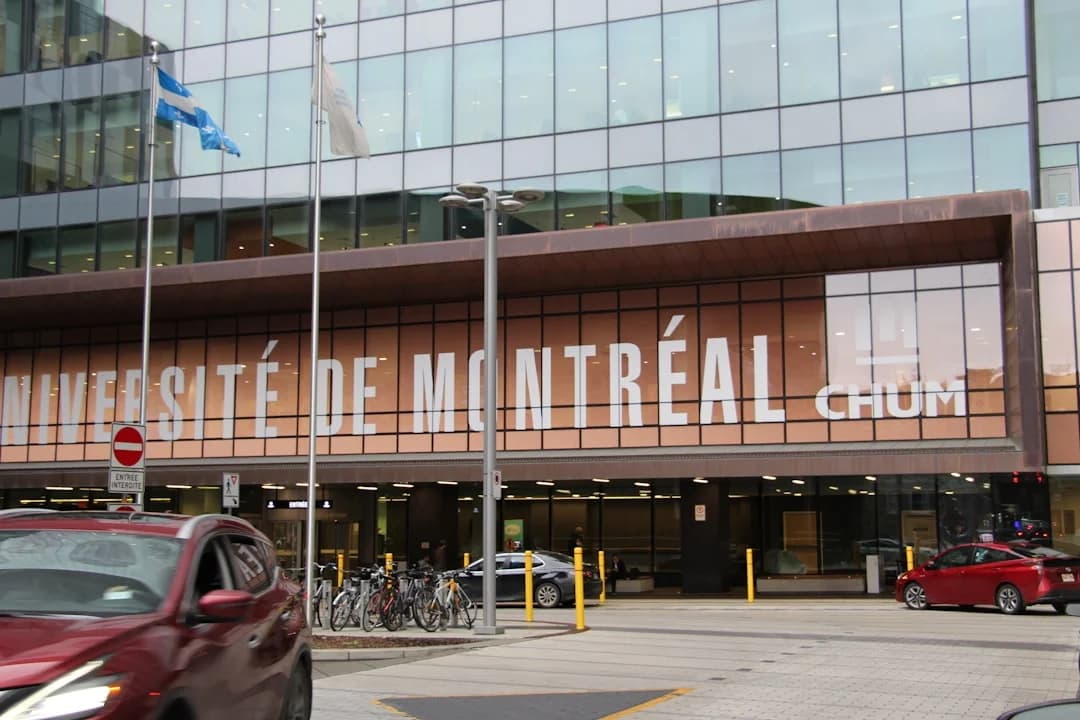
Photo by Alain Guillot on Unsplash
Montreal emerging micro-districts are quietly reshaping how the city approaches technology ecosystems, economic development, and urban life. In recent months, municipal planners in Montréal and adjacent jurisdictions have rolled out a pair of district-level visions designed to turn industrial sites into vibrant, transit-focused neighborhoods that integrate housing, commerce, and research. This data-driven coverage from Montréal Times synthesizes what happened, why it matters for tech and market trends, and what readers should watch next as these Montreal emerging micro-districts take shape across SIPI (Pointe-de-l’Île industrial district) and Technoparc Montréal, among others. The announcements come at a moment when cities worldwide are recalibrating industrial zones for the coming decade, making Montréal a notable case study in how to align infrastructure, policy, and private investment toward sustainable urban innovation.
The city’s approach to urban transformation aligns with a broader push to attract high-value industries, including life sciences, clean technologies, and information technologies, by offering strategic land parcels and clearly defined development priorities. In February 2026, the City of Montréal highlighted land for sale in two key districts—Pointe-de-l’Île industrial district (SIPI) and Technoparc Montréal—as part of a coordinated strategy to accelerate the ecological transition while fostering a diversified, resilient economy. The emphasis on adaptive reuse, sustainable mobility, and proximity to research hubs signals a deliberate move to cultivate what could be described as Montreal emerging micro-districts where work, living, and innovation converge. (montreal.ca)
On May 12, 2026, a related municipal momentum unfolded in Saint-Laurent, where two master plans were unveiled to guide the south-of-city transformation for the coming decades: the Portes d’entrée aménagement plan and the Hodge-Lebeau TOD (transit-oriented development) industrial plan. This dual initiative, described by local leaders as a comprehensive framework to reconfigure arterial corridors, reimagine industrial sites, and accelerate the city’s transition toward a green, connected urban fabric, is a central piece of the Montréal emerging micro-districts narrative. The Saint-Laurent plans envision major shifts in land use, mobility, and public realm enhancements that are intended to attract new residents and businesses while improving the quality of life for existing communities. The plans also provide a model for how Montréal-area municipalities are coordinating with provincial and federal partners to unlock strategic assets for growth. (montreal.ca)
What this means in practical terms for technology and market trends is that the city is prioritizing place-based, scalable opportunities where tech-enabled firms can cluster alongside research institutions, advanced manufacturing, and service ecosystems. In the SIPI zone, acknowledging its status as a site with access to ports, highways, and a robust labour pipeline, the city has underscored strong potential for advanced materials, biofood, clean technologies, and life sciences. The same spirit guides Technoparc Montréal, widely recognized as Canada’s largest scientific park, which hosts internationally known companies in aerospace, IT, and life sciences. The emphasis on proximity to the REM (Réseau express métropolitain) network—exemplified by the Côte-de-Liesse intermodal hub that opened in 2025 and a REM station in 2027—signals a concerted effort to knit these districts into a high-frequency, city-scale mobility backbone. These elements are central to the Montreal emerging micro-districts story as planners seek to fuse industrial clusters, start-up culture, and civic life into coherent, future-ready districts. (montreal.ca)
Section 1: What Happened
Master plans reveal a two-pronged strategy for district-level transformation
In a joint articulation of urban policy and economic strategy, Montréal Times notes that two major plans were publicly positioned to direct district-scale development. The Portes d’entrée plan focuses on creating a gateway experience for southern districts by weaving together housing, employment, and community amenities along a transit-forward spine. This approach is designed to enable a gradual yet deliberate requalification of industrial and commercial sites into mixed-use neighborhoods connected by enhanced streets, pedestrian networks, and green spaces. The Hodge-Lebeau plan, by contrast, emphasizes the industrial core’s modernization and mobility, with a particular emphasis on a future intermodal hub and the integration of an innovation ecosystem within an industrial fabric. The combined thrust is to produce “districts that are more livable, more connected, and more capable of attracting high-skilled jobs and research activities.” The two plans were publicly presented with examples of expected outcomes, including new housing and commercial space, a rebalanced street network, expanded public spaces, and initiatives to accelerate the ecological transition. The public release and subsequent city communications laid out the overarching logic and the measurable ambitions associated with these district-scale efforts. (montreal.ca)
SIPI and Technoparc Montréal emerge as focal points for land sales and renewal
A core element of the Montreal emerging micro-districts playbook is the targeted revitalization of priority districts through land disposition and programmatic guidance. SIPI, the Pointe-de-l’Île industrial district, has been singled out for its strategic logistics position and its breadth of traditional industrial activity. The land-sale program identifies Plot 12 on Henri-Bourassa Est, Plot 13 on Henri-Bourassa Est Boulevard, and other parcels within SIPI as candidates for direct sale to enable adaptive reuse and new investment aligned with municipal priorities, including sustainable mobility and environmental stewardship. The emphasis on SIPI’s potential for ecological transition, along with the district’s access to highway networks and a diversified local labor force, underscores the targeted approach to leverage existing strengths while inviting new, greener industries to scale in this quadrant. In parallel, Technoparc Montréal—Canada’s largest scientific park—stands as the classic example of Montreal emerging micro-districts becoming a locus for R&D, innovation, and knowledge-based manufacturing, anchored by proximity to higher education, research institutions, and a broad ecosystem of technology companies. The combination of SIPI’s expansion potential and Technoparc Montréal’s established R&D base provides a powerful narrative for how Montreal’s emergent micro-districts could anchor long-term competitiveness in technology and related markets. (montreal.ca)
Mobility upgrades and intermodal integration accelerate district readiness
A key enabler of the Montreal emerging micro-districts initiative is transit-oriented development that links industrial zones to rapid transit and other mobility options. The Côte-de-Liesse REM station, opened in late 2025, serves as a tangible signal of how mobility investments can unlock new densification and activity around industrial districts. The plan explicitly frames the area around this rail node as a hub for innovation and mobility, including a public square and pedestrian bridges designed to knit business activity with daily life. In Saint-Laurent, the Hodge-Lebeau plan calls for an intermodal hub and upgrades that would connect the sector to REM and other transit services, further aligning industrial activity with a city-wide mobility network. The practical result is that Montreal emerging micro-districts become more attractive to tech firms and startups seeking efficient commutes, access to talent, and proximity to research ecosystems. (montreal.ca)
Section 2: Why It Matters
Economic growth, resilience, and a clearer path to high-value jobs
The two-pronged master plan approach in Saint-Laurent, combined with targeted SIPI and Technoparc Montréal initiatives, frames a clear pathway for Montreal emerging micro-districts to contribute to job creation and economic resilience. The Saint-Laurent plan outlines ambitious metrics intended to anchor a new economy around the district: a combination of new residents, economic floorspace, and community infrastructure. Specifically, the plans anticipate housing and commercial development that would support a more integrated community life, with a view toward fostering cross-pollination between residents and the knowledge-based workforce attracted to these micro-districts. The explicit aim to host 10,000 new residents, create up to 200,000 square meters of economic space, and designate 25,000 square meters for local commerce and services, alongside 10,000 square meters of collective and community spaces, signals a robust investment in a more diversified local economy. These numbers reflect the scale of ambition associated with this Montreal emerging micro-districts push and highlight the city’s willingness to centralize growth around district-level ecologies rather than relying solely on piecemeal development. (montreal.ca)
From a technology and market perspective, the emphasis on large, mixed-use districts adjacent to high-quality mobility corridors is consistent with a global trend toward clustering of innovation assets. SIPI’s focus on advanced materials, biofood, clean technologies, life sciences, and sustainable mobility aligns Montreal with the growing demand for districts that can host R&D facilities, pilot plants, product development, and startup accelerators in proximity to a skilled labor pool. Technoparc Montréal, described as a scientific park hosting international companies in fields such as aeronautics, information technologies, and life sciences, reinforces the idea that these Montreal emerging micro-districts can function as durable anchors for technology ecosystems. This ecosystem coherence—where policy, land use, mobility, and research are interwoven—could help Montreal attract ongoing investments and create a more predictable environment for long-horizon tech initiatives. (montreal.ca)
Urban resilience, sustainability, and the environmental dimension
Another dimension of why the Montreal emerging micro-districts approach matters is its explicit attention to resilience and sustainability. The SIPI and Technoparc Montréal programs emphasize ecological transitions, reduced environmental footprints, and enhanced climate resilience as core district priorities. For SIPI, the district’s economic revitalization is intentionally coupled with ecological considerations, with a focus on sustainable mobility, greener land use, and the integration of ecological corridors. The master plans also call for district-scale environmental stewardship, with a design ethos that aims to reduce heat island effects and manage stormwater more effectively. The emphasis on environmental responsibility is not only about compliance; it is intended to become a marketable advantage for tenants and investors seeking green credentials and long-term viability in an intensifying climate policy landscape. (montreal.ca)
In parallel, the Technoparc Montréal site highlights a broader national and regional context for Montreal emerging micro-districts. As Canada’s largest scientific park, it embodies a proven model of knowledge-based economic activity anchored by research collaborations, industry partnerships, and a physical environment designed to accelerate innovation cycles. By combining Technoparc Montréal’s existing strengths with SIPI’s potential for upgrade and renewal, Montreal could create a powerful, multi-district innovation corridor, amplifying the city’s role in technology and market development across sectors such as aerospace, IT, life sciences, and clean technology. This multi-district strategy aligns with Montreal’s broader economic ambitions, and it situates the city as a center for both research excellence and scalable tech deployment. (montreal.ca)
Who benefits and who might be watching
The development framework underpinning Montreal emerging micro-districts is designed to deliver broad-based benefits, but the impact will unfold differently across actors. Local residents stand to gain from improved housing choices, better streetscapes, expanded public spaces, and enhanced access to amenities through well-planned district development. Businesses—particularly startups and scale-ups in technology, manufacturing, and research—stand to benefit from proximity to a dense, interactive ecosystem, easier access to a skilled workforce, and a mobility network that supports just-in-time talent flows. Universities and research institutions gain from a physical environment that fosters collaboration, shared facilities, and industry partnerships. Government partners, including provincial and federal bodies, may view these Montreal emerging micro-districts as a tested model for regional economic growth, urban revitalization, and climate-conscious planning. The approach also raises questions about affordability, inclusivity, and long-term governance—areas that city planners and civic groups are likely to monitor closely as the districts crystallize. (montreal.ca)
Section 3: What’s Next
Next steps and timeline for the Montreal emerging micro-districts approach
Looking ahead, the Montreal emerging micro-districts strategy will hinge on the successful execution of master plans and the timely activation of district-level projects. In Saint-Laurent, the Hodge-Lebeau plan foresees a phased implementation that hinges on the integration of the Côte-de-Liesse REM station and the associated mobility improvements, which are designed to unlock additional density and activity in the area. The REM station, opened in November 2025, is a concrete milestone showing how transport investments can catalyze district growth and signal a commitment to interconnected, transit-oriented development. The Côte-de-Liesse intermodal hub, with its urban plaza and pedestrian connections, is expected to become a magnet for both workers and residents, reinforcing the case for Montreal emerging micro-districts as long-term growth engines. In parallel, SIPI and Technoparc Montréal will benefit from a land sale and reuse framework that aims to attract projects aligned with the districts’ targeted sectors, with an emphasis on environmental performance, architectural quality, and a regulated, predictable development process. The early 2026 land-sale publication date confirms an ongoing, structured approach to asset allocation in these districts, reinforcing the idea that Montreal’s emergent micro-districts are not ad hoc but part of a deliberate, data-driven urban strategy. (montreal.ca)
What to watch for: indicators of momentum and risk
As with any large-scale urban initiative, several indicators will determine whether the Montreal emerging micro-districts deliver on projected benefits. First, the pace and scale of land disposition in SIPI and Technoparc Montréal will be a direct signal of investor confidence and municipal readiness to facilitate private-sector-led growth. The SIPI emphasis on sectors like advanced materials and sustainable mobility suggests that tenants with long planning horizons—R&D labs, pilot facilities, and specialized manufacturing—will be the early movers, followed by more conventional office and mixed-use occupancies as densities rise. Second, the integration of mass transit with district infrastructure will be a critical determinant of success, influencing both commuting patterns and the willingness of knowledge workers to live within district boundaries. The REM and related mobility investments thus function as the backbone for the districts’ long-term viability as tech-forward micro-hubs. Finally, governance arrangements, including public participation and alignment with environmental, social, and governance (ESG) criteria, will shape the districts’ attractiveness to international partners and investors who prioritize sustainable, transparent, and accountable urban development. These are not merely abstract considerations; they are the practical levers that will determine Montreal emerging micro-districts’ ability to deliver durable competitiveness in technology and market-aligned growth. (montreal.ca)
What to watch for in the near term includes updated project briefs, design refinements for district public spaces, and new announcements about partnerships with research institutions and private developers. City communications around Portes d’entrée and Hodge-Lebeau will likely provide additional detail on timelines, zoning allowances, and infrastructure milestones. The Saint-Laurent plans’ projected outcomes—an additional 10,000 residents and hundreds of thousands of square meters of economic space—will be important reference points as planners and developers assess progress against targets and adjust allocations to ensure a balanced mix of housing, jobs, and amenities. In short, the Montreal emerging micro-districts strategy will continue to evolve, with the next wave of announcements likely to offer concrete project-level information on parcels, partnerships, and timelines. (montreal.ca)
Closing
The Montreal emerging micro-districts effort represents a deliberate, data-informed attempt to fuse urban form, mobility, and technology-driven growth into an integrated set of districts. By directing land sales toward SIPI and Technoparc Montréal and by aligning district-scale plans with transit upgrades and environmental goals, the city aims to create sustainable pockets of innovation that can attract the kinds of firms, researchers, and workers who fuel modern technology markets. For readers tracking technology trends and market dynamics, these district-level decisions provide a tangible signal of where investment may concentrate over the next decade and beyond. As Montréal Times continues its coverage, we will monitor new project briefs, infrastructure milestones, and partnership announcements to offer ongoing, evidence-based updates on how Montreal emerging micro-districts are influencing the city’s technology economy and overall quality of life.
Readers who want to stay in the loop about district-level developments can watch for public notices from Montréal’s urban planning and development offices, attend community information sessions when offered, and review ongoing updates about the SIPI and Technoparc Montréal parcels. The results of these coordinated efforts will shape not only the local economy but also the broader narrative of how Montreal positions itself within the global technology ecosystem. This is a moment for neutral, data-driven analysis to guide understanding of how Montreal emerging micro-districts may alter the landscape of city-building, investment, and innovation in the years ahead. (montreal.ca)