Montreal Green Roofs Expansion 2026: Growth and Impacts

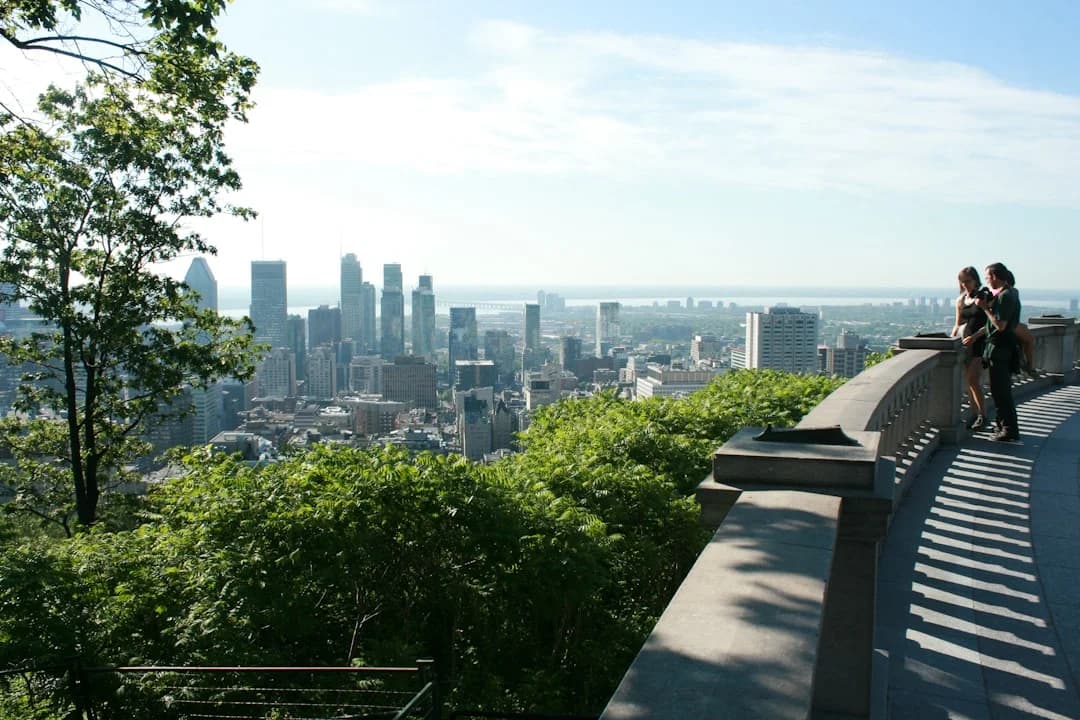
Photo by Marion Lhn on Unsplash
Montreal is tightening its green infrastructure ambitions in 2026 with a concerted push to expand the city’s green roofs and related ecological spaces. The centerpiece to date is a large-scale East Montreal initiative, described by organizers as a “Green Revolution” for the eastern boroughs. Launched to run from September 2025 through December 2026, the project aims to deliver measurable environmental and social benefits by creating thousands of square meters of planted space and expanding urban biodiversity. This Montreal green roofs expansion 2026 effort is part of a broader city strategy to hardwire greening into development and retrofits, reinforcing the city’s resilience to extreme heat, heavy rainfall, and shifting climate patterns. The initiative is backed by regional and provincial partners, with leadership that frames it as a model for future urban greening across the island. (ccemontreal.ca)
Beyond the East Montreal project, Montreal’s climate and urban planning framework has positioned green roofs and green infrastructure as a core lever for urban adaptation. City commitments published during the Climate Plan 2020-2030 outline a series of greening actions, including transforming parking lots into open spaces and amending building by-laws to require greening wherever feasible. These policy moves set the stage for a more systematic incorporation of green roofs into new construction and renovations, aligning public investments with long-term sustainability goals. The expansion in 2026 thus sits within a wider policy environment designed to scale up ecological building practices and to improve heat resilience citywide. (montreal.ca)
Montreal’s Master Plan further anchors the conversation around building green roofs as a mechanism to improve energy efficiency, ecological performance, and urban livability. The plan’s implementation measures explicitly call for incentives to encourage the integration of energy-efficient methods and environmentally sensitive innovations like green roofs in both new construction and renovation projects. As the city evolves, these measures are intended to provide a regulatory and financial signal that green roofs are a legitimate, scalable component of Montreal’s built environment. The historical and ongoing emphasis on green roofs in the Master Plan underscores why the 2026 expansion is being watched closely by planners, developers, and researchers alike. (ville.montreal.qc.ca)
Opening
Montreal’s urban greening effort is entering a more ambitious phase in 2026, with a clear emphasis on significant expansion of green roofs and related ecological spaces. The East Montreal initiative—described publicly as a green infrastructure push—counts a defined timeline, measurable space, and a concrete planting target as part of its core milestones. The project is designed to curb heat-island effects, improve local air quality, and support biodiversity in areas where industrial and institutional land uses intersect with residential neighborhoods. In the broader context, the city’s climate commitments and planning policies are aligning to encourage more green roofs as a standard feature of responsible development. This alignment is particularly relevant for property owners and developers navigating greening requirements and incentives embedded in Montreal’s policy framework. Montreal’s 2026 activity thus represents not just a single project, but a signal of how greening will be amplified across the city in the coming years. (ccemontreal.ca)
Section 1: What Happened
Project scope and timeline
Montreal’s East Montreal Green Revolution project is deployed from September 2025 to December 2026, with the aim of creating more than 2,600 square meters of ecological spaces and planting in excess of 4,200 trees and shrubs across participating sites in industrial, institutional, and residential-adjacent areas. Organizers say the effort is designed to transform underutilized or low-value spaces into accessible green areas that deliver multiple environmental services, including improved air quality, reduced heat stress, and increased habitat opportunities. The scope and schedule reflect a deliberate, time-bound push to demonstrate the viability and benefits of large-scale green-space conversion in dense urban settings. (ccemontreal.ca)

Key facilities, sites, and components
The project teams identify a targeted mix of spaces and approaches, drawing on partnerships with municipal and institutional actors. In particular, the East Montreal initiative involves collaboration among the Arrondissement de Mercier–Hochelaga-Maisonneuve, the Parc Olympique de Montréal, and major corporate and community partners such as SAQ, Hydro-Québec, Amrize, Valero, CGC, Corporation Mainbourg, École Alphonse-Desjardins, École Sainte-Louise-de-Marillac, and Institut Pinel. The plan calls for the creation of more than 2,600 square meters of ecological improvements and the planting of thousands of trees and shrubs across multiple sites—an approach intended to deliver cumulative environmental and social benefits over a tightly defined period. These specifics are laid out by the organizing partners and aligned with the project’s documented timeline to December 2026. (ccemontreal.ca)
Context within Montreal’s climate strategy
The East Montreal initiative sits within a broader municipal climate adaptation and greening strategy. City statements emphasize that greening the urban fabric is central to reducing the urban heat island effect, managing rainwater, and promoting biodiversity. The climate and planning context frames green roofs and green spaces as essential elements of resilience, with ongoing commitments to increase greening across the city and to adapt infrastructure to a warmer, more variable climate. The project’s timing and scale reflect a deliberate effort to translate climate policy into tangible, on-the-ground greening actions in a defined corridor of the city. (montreal.ca)
Section 2: Why It Matters
Environmental and public health benefits
Green roofs, walls, and other forms of urban greening are repeatedly cited as critical tools for mitigating heat, absorbing rainfall, and supporting urban biodiversity. In Montreal’s own communications, trees and green spaces are highlighted as a means to curb heat island effects during heat waves, while also absorbing rainwater, reducing wind impact, and supporting a healthier urban microclimate. The East Montreal project explicitly aims to realize these benefits at scale, with the expectation that the added green space will contribute to lower peak temperatures and improved air quality in surrounding neighborhoods. The broader climate plan emphasizes greening as a core strategy for resilience, reinforcing the rationale for the 2026 expansion as a measured, policy-aligned response to climate risks. (montreal.ca)

Biodiversity and ecological connectivity
Beyond thermal comfort and air quality, the initiative is positioned as a biodiversity-boosting intervention. The project’s stated objective includes creating habitat opportunities and enhancing ecological networks within a dense urban matrix. While the precise species mix will depend on site conditions and planting plans, the overarching goal is to support a broader urban ecosystem by introducing diverse vegetation and creating green corridors that link larger city green spaces. The policy emphasis on biodiversity in the surrounding climate frameworks underscores why a 2,600-square-meter increment in ecological space can be meaningful when multiplied across multiple sites or future expansions. (ccemontreal.ca)
Urban resilience and planning implications
Green roofs and expansive greening efforts have implications for infrastructure planning, building performance, and long-term cost planning. Montreal’s Master Plan explicitly identifies green roofs as one of several innovations that can improve energy efficiency and environmental performance, while City climate commitments encourage greening as a standard practice in both new construction and retrofits. The East Montreal pilot thus contributes to a broader policy objective: to normalize green infrastructure within the urban development lifecycle, reducing heat stress, moderating stormwater flows, and enriching the urban experience for residents and workers. As both a demonstration and a potential blueprint, the project provides data points for policymakers, developers, and researchers evaluating the cost-benefit mix of green roofs at city scale. (ville.montreal.qc.ca)
Economic and social dimensions
From a market perspective, the Montreal green roofs expansion 2026 context intersects with incentives, permitting pathways, and redevelopment strategies that tilt toward greener buildings and landscapes. The City’s greening commitments suggest a regulatory and policy environment that values ecological enhancements as part of the development process. While the East Montreal project foregrounds environmental outcomes, it also has social dimensions—creating greener public spaces, improving neighborhood aesthetics, and contributing to a more livable urban environment, all of which can influence property values, neighborhood appeal, and local business vitality over time. The policy framework that supports such green improvements is a signal to stakeholders that ecological upgrades are increasingly integrated into municipal planning and economic development considerations. (montreal.ca)
Public policy alignment and long-term vision
Montreal’s climate policy framework emphasizes not only short-term projects but also a longer-term transition toward greener urban infrastructure. The Climate Plan 2020-2030 explicitly calls for actions that transform underutilized spaces—such as parking lots—into open, vegetated areas, and for the greening of building stock through updated by-laws and construction practices. The 2026 expansion thus reflects a policy trajectory from high-level commitments to tangible greening deployments, reinforcing the city’s commitment to climate resilience, biodiversity, and equitable access to green space. This alignment is important for businesses, residents, and public-interest groups seeking consistent, data-driven progress on urban greening and adaptation. (montreal.ca)
Section 3: What’s Next
Timeline and anticipated milestones
With the East Montreal Green Revolution project scheduled through December 2026, the immediate milestones include the completion of more than 2,600 square meters of new ecological spaces and the planting of over 4,200 trees and shrubs across participating sites. As a 2026 milestone, these outcomes will function as a benchmark for evaluating the feasibility, maintenance needs, and ecological performance of green roof and green space interventions in Montreal’s dense urban core. Stakeholders will be watching for site-by-site progress updates, as well as any early indicators of environmental or social benefits that can be attributed to the expansion. The project’s explicit timeline provides a clear frame for journalists, researchers, and the public to monitor. (ccemontreal.ca)
Next steps for monitoring and learning
Following the December 2026 target date, practical steps will likely include a period of data collection and reporting to assess the ecological performance, temperature reductions, vegetation health, and community experience associated with the new green spaces. While the East Montreal rollout is a defined pilot, its outcomes could influence future greening decisions and investment patterns within other boroughs or land-use categories. Public-facing updates from partner organizations and the City will be critical for understanding whether the expansion informs broader policy levers, such as expanded by-law requirements, incentives for developers, or scaled green-roof mandates in retrofit projects. The broader policy context—anchored in the Master Plan’s green-roof incentives and the Climate Plan’s transformation of paved surfaces into green space—will continue to shape these next steps. (ville.montreal.qc.ca)
What Montreal Times readers should watch for
- Completed green space area and planting outcomes: The achievement of more than 2,600 square meters of ecological space and more than 4,200 trees and shrubs by December 2026 should become a focal point of city communications and independent evaluations. (ccemontreal.ca)
- Policy signaling and regulatory updates: As greening becomes more central to Montreal’s development framework, watch for any by-law refinements or incentive programs that explicitly reference green roofs or green space integration in both new construction and renovations. The policy backbone for these changes is already in place through the Climate Plan 2020-2030 and the Master Plan’s green-roof incentives. (montreal.ca)
- Broader expansion beyond the East: While the East Montreal project has defined geographic scope, the city’s greening strategy signals potential replication or adaptation in other districts, subject to funding, partnerships, and demonstrated outcomes. As Montreal’s climate and planning policy evolves, more projects and public-private collaborations may emerge to advance similar objectives. (montreal.ca)
Closing
Montreal’s 2026 green roofs expansion, anchored in the East Montreal Green Revolution and supported by a broader climate and planning framework, marks a significant step in turning policy into practice. The initiative’s explicit targets—2,600 square meters of ecological space and more than 4,200 trees and shrubs—provide a concrete gauge for the impact of urban greening on heat resilience, biodiversity, and city life. By connecting this local effort to the City’s Climate Plan and Master Plan, Montreal is illustrating how data-driven, collaboration-focused approaches can translate into measurable environmental and social benefits for residents, workers, and visitors. The city’s ongoing greening work invites attention from policymakers, researchers, and the public as Montreal tests scalable models for green roofs and green spaces in urban settings. As developments unfold through December 2026 and beyond, Montréal Times will continue to report on progress, outcomes, and lessons learned for urban centers facing similar climate challenges. (ccemontreal.ca)