Montreal Holocaust Museum Names Baier Permanent Art

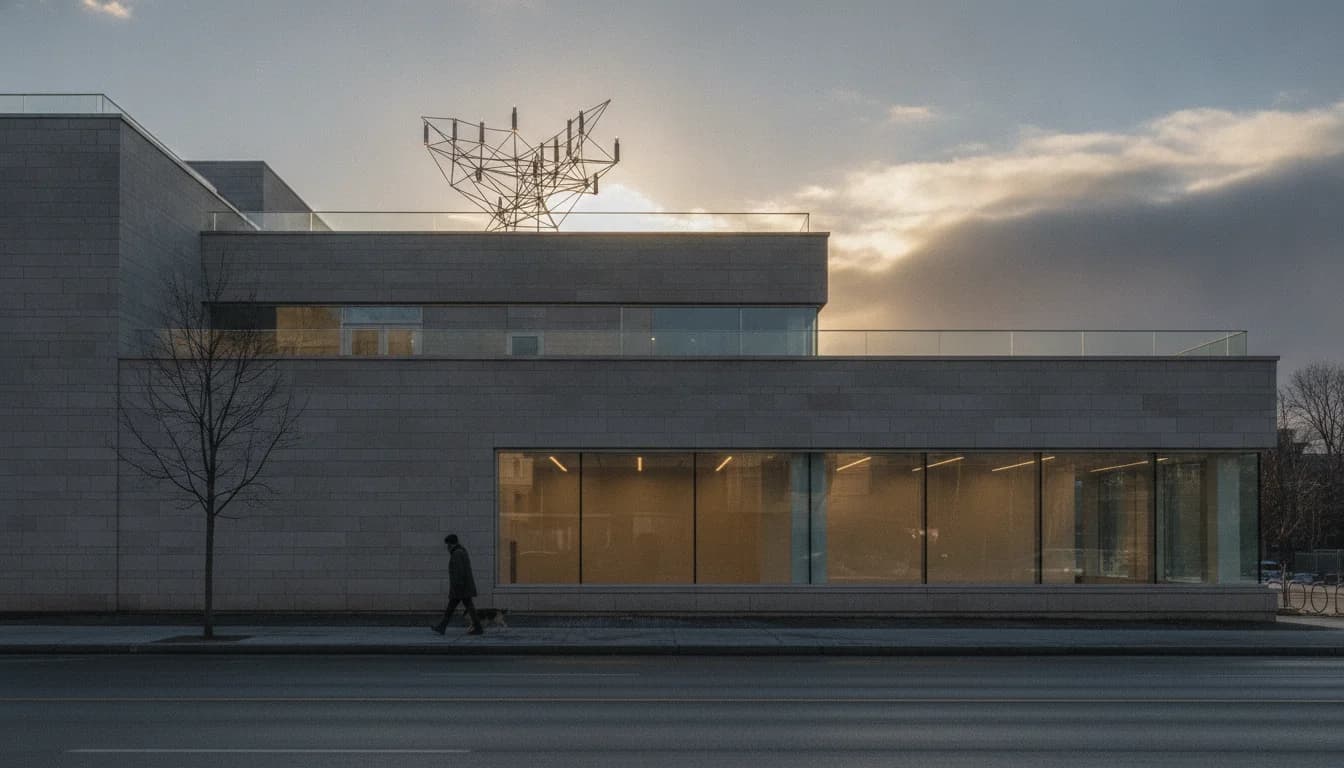
The Montreal Holocaust Museum has moved to secure a signature piece of public art for its forthcoming downtown campus, naming Nicolas Baier as the artist behind the Baier permanent art installation. On March 24, 2026, the museum announced that Baier’s work, a rooftop sculpture titled Candelabra, will anchor the project’s rooftop terraces as part of the new museum opening planned for 2027. This decision marks a pivotal moment for Montreal’s public art program and for Holocaust remembrance in the city, signaling a blend of memory, design, and urban space that aims to engage visitors beyond the galleries. The announcement, issued by the Montreal Holocaust Museum, confirms Baier’s role in a broader mission to tie memory to contemporary public art discourse, with the rooftop installation expected to glow above downtown Montreal and become a visible symbol of resilience amid rising antisemitism concerns. The news matters for cultural policy, fundraising campaigns, and how museums leverage architecture as a conduit for memory and dialogue. For readers of the Montréal Times, the development offers a data-driven lens into how public art allocations align with civic priorities and how memory institutions translate architectural transformations into educational experiences. In short, the Montreal Holocaust Museum Baier permanent art project is not just a sculpture on a roof; it’s a case study in memory-making through design, funded as part of Quebec’s architectural art integration framework and executed by a contemporary Montreal artist. On March 24, 2026, the museum confirmed the project’s trajectory and Baier’s selection, a milestone widely covered by local outlets and the institution’s own communications channels. (museeholocauste.ca)
CITABILITY: On March 24, 2026, according to the Montreal Holocaust Museum press release, Nicolas Baier was named winner of the public art competition for the new museum, with the rooftop sculpture Candelabra slated for installation on the rooftop terraces in 2027. The central fact is drawn directly from the museum’s official release and corroborated by its press-room postings. (museeholocauste.ca)
Section What Happened
Baier Named Winner Of Public Art Competition
The March 24, 2026 press release from the Montreal Holocaust Museum confirms Nicolas Baier, a Montreal-based artist, as the winner of the institution’s public art competition for its new downtown campus. The winning proposal, described in the release, positions the artwork as a contemporary counterpoint to memory work, with Baier’s Candelabra intended for installation on the museum’s rooftop terraces. The museum emphasizes that the rooftop work responds to survivor testimonies and the human impulse to connect stars into meaningful patterns, a motif Baier translates into a luminous, constellational network of polished stainless-steel lines and points of light. The official language underscores that the sculpture “will be installed on the Museum’s rooftop terraces” and that it is designed to evoke resilience and connection in the face of adversity. This development follows a robust international competition process and aligns with public art policies that seek meaningful architectural integration. The release also notes that the selection comes after a formal jury process, with a committee including museum staff, architects, art curators, and representatives from government and the cultural sector. The March 24 release is the primary record of the event, and it situates Baier’s win within the broader project timeline for the new museum, scheduled to open in 2027. For more on the official announcement, see the museum’s release. Montreal Holocaust Museum Baier public art press release (PDF). (museeholocauste.ca)
Timeline Of The Announcement
The museum’s press materials show a tightly scripted sequence spanning more than three years of planning and public engagement. The Baier announcement on March 24, 2026 sits within a broader communications window that includes earlier milestones such as the July 18, 2022 international architectural competition announcement, which identified the architectural winners and framed the new museum’s urban integration strategy. The timing reflects deliberate coordination between architecture, sculpture, and public outreach to ensure a cohesive experience for visitors once the new facility opens. Readers seeking the full timeline can review the two foundational documents: the 2022 architectural competition release and the 2026 Baier press release. The 2022 competition release is publicly accessible as a primary source. International Architectural Competition for the New Montreal Holocaust Museum — Announcement of the winner (PDF). (museeholocauste.ca)
Sculpture Details And Installation
Baier’s sculpture, titled Candelabra, is described as a “luminous, constellation-like network of polished stainless-steel lines and points of light set against the Montreal sky.” The piece is conceptually tied to survivor stories of confinement and the longing for light and connection under darkness, which the artist interprets through a geospatial lattice that viewers experience from specific vantage points on the roof. The release frames the work as a visual metaphor for bonds built across generations and communities, echoing the museum’s mission to document, remember, and educate. The installation will occupy the rooftop terraces of the new museum, a setting chosen to accentuate the sculpture’s night-time illumination and to invite continual public observation from surrounding districts. The description in the release is explicit about the work’s social and historical resonances, aligning Baier’s modern aesthetic with the memory-forward aims of the institution. For the official project description, see the press release text. Montreal Holocaust Museum Baier public art press release (PDF). (museeholocauste.ca)
Timeline And Budget Context
The public art decision sits within a structured policy environment that governs the allocation of funds for art in public buildings. The release notes that the selection was made in accordance with Quebec’s policy on integrating arts into architecture and public projects, which mandates dedicating approximately one percent of the construction budget to commissioning a work of art. This framework helps explain the scale and ambition of the Montreal Holocaust Museum Baier permanent art project, and it situates Baier’s rooftop installation within a predictable budgetary philosophy used for major civic construction. The policy citation is embedded in the March 24, 2026 release, reinforcing how the project aligns financial planning with cultural goals. For the policy reference in the official materials, see the same Baier release. (museeholocauste.ca)
Section Why It Matters
Cultural Significance For Montreal And Survivor Memory
The Montreal Holocaust Museum Baier permanent art project sits at the intersection of memory, city-building, and contemporary sculpture. The museum’s leadership emphasizes that Candelabra is more than decorative adornment; it is a symbol designed to carry the emotional weight of survivor narratives into a public, urban context. The project’s rooftop placement amplifies visibility in a city where cultural memory competes for attention among many landmarks. The museum’s statements in the Baier release frame the work as a bridge between historical memory and living urban life, inviting both locals and visitors to engage with the history in a new, kinetic way. The public-facing nature of outdoor sculpture aligns with a broader trend in memory institutions to use architecture and landscape to extend educational reach. The Baier project thus matters for Montreal’s cultural economy, as it may attract visitors, foster dialogues on antisemitism and human rights, and serve as a reference point for future public-art collaborations in memory-centered institutions. The public art goal is consistent with the museum’s long-standing mission to inspire remembrance and dialogue through accessible, culturally resonant works. See the primary source for Baier’s installation description and the artist’s stated intent. Montreal Holocaust Museum Baier public art press release (PDF). (museeholocauste.ca)
Public Art Policy And Community Engagement
Beyond its symbolic significance, the Baier permanent art project exemplifies how public art policy informs museum-building decisions. The Quebec policy requiring approximately one percent of construction budgets for public buildings to fund art directly ties civic investment to cultural expression. This policy context matters for policymakers, donors, and residents who want to understand how large-scale cultural projects are financed and how public money translates into accessible art experiences. The Baier installation thus serves as a concrete case study of how memory institutions leverage public funding structures to realize ambitious art commissions, while also ensuring that such works remain legible to a broad audience. The Baier release explicitly links the project to this policy, providing a transparent view of how art budgets are mobilized in the construction of the new Montreal Holocaust Museum. (museeholocauste.ca)
Impact On Education And Outreach
As a memory institution, the Montreal Holocaust Museum emphasizes education as a core function alongside remembrance. The existence of a striking rooftop work offers new avenues for educational programs, including rooftop-viewings, guided tours that incorporate Baier’s sculpture into survivor testimony narratives, and outdoor programming that connects urban geography with historical memory. The museum’s communications materials frame the art piece as a touchpoint for discussions about resilience, connection, and the role of art in processing collective trauma. This broader educational strategy aligns with the museum’s ongoing efforts to reach diverse audiences, including school groups, researchers, and the general public, by integrating the sculpture into tours, talks, and digital storytelling that accompany the new building and its permanent collections. The primary Baier release provides the installation concept and the educational framing that supports these outreach goals. (museeholocauste.ca)
Implications For Montreal’s Public Art And Cultural Landscape
The Baier permanent art assignment adds a high-profile, contemporary work to Montreal’s public-art landscape, reinforcing the city’s status as a hub for modern sculpture and memory-driven art. The rooftop installation has potential implications for how other institutions approach public art on new buildings, particularly those with heavy historical memorial content. The decision to place a luminous sculpture on a rooftop terrace invites discussions about night visibility, urban skyline interaction, and accessibility—how a public artwork can be experienced from a distance and up close. Local art-market observers may watch how Baier’s piece performs in terms of public reception, tourism impact, and media coverage, as well as how its presence influences later commissioning decisions for other memory institutions. The Baier release’s emphasis on light and connectivity provides a lens to assess whether the sculpture achieves the intended symbolic resonance with the memory culture it represents. For context on Baier’s larger practice and collaborations, readers can explore Baier’s prior public commissions in Montreal and elsewhere, which are referenced in the museum’s archival materials and external art databases. (museeholocauste.ca)
Section What’s Next
Next Steps In Installation
With the Baier permanent art decision now publicly disclosed, the Montreal Holocaust Museum’s next steps involve finalizing the engineering, fabrication, and rooftop installation processes for Candelabra. The public art work must be fabricated to withstand Montreal’s climate while delivering the intended luminous effect after nightfall. The museum’s communications materials indicate that the sculpture will be visible from a distance, contributing to the city’s nocturnal urban fabric and offering a new, recognizable landmark associated with the new museum. As the project transitions from concept to fabrication, stakeholders will monitor milestones such as material testing, installation timelines, and visual renderings that demonstrate how Candelabra will appear in situ. Given the policy framework that requires art spending as part of the construction budget, the timing of production will likely align with construction milestones, ensuring that the sculpture is ready for public unveiling and, eventually, public access as the museum approaches its 2027 opening date. The primary source provides the focal details of the installation plan. Montreal Holocaust Museum Baier public art press release (PDF). (museeholocauste.ca)
Public Outreach And Donor Engagement
Funding for the new Montreal Holocaust Museum and its public art program is heavily reliant on donor engagement, philanthropy, and fundraising campaigns. The press release notes that the museum’s Give Voice fundraising campaign supports the new museum and its art initiatives, underscoring the role of private donations in advancing both the building project and its artistic components. Donor recognition and engagement activities are thus expected to coincide with key project milestones, including announcements, renderings, and events tied to the rooftop installation. Stakeholders—donors, community partners, and memory-education organizations—will be watching for updates on fundraising goals, donor recognition opportunities linked to Candelabra, and opportunities to participate in tours or talks that connect Baier’s sculpture with survivor narratives. The official release frames Give Voice as a central funding mechanism for the project, reinforcing the intertwining of memory work, public art, and civic philanthropy. (museeholocauste.ca)
Public Access And Education Programs Launch
As with many museum modernization efforts, the arrival of Baier’s Candelabra on the roof of the new Montreal Holocaust Museum is expected to be accompanied by a wave of public programs designed to maximize accessibility and learning. Expect a calendar of events, including artist talks, guided rooftop tours (seasonally appropriate), and collaborations with schools and universities to integrate the sculpture into curricula about memory, human rights, and social resilience. The museum’s communications strategy emphasizes education as a core objective, and the Baier installation will likely serve as a living classroom element in the broader pedagogical framework of the new facility. The public-facing nature of the rooftop work should help drive attendance, media interest, and community conversations, aligning with Montreal’s broader commitments to memory institutions and cultural accessibility. For context on the artist’s installation plan and project scope, consult the March 24, 2026 release. Montreal Holocaust Museum Baier public art press release (PDF). (museeholocauste.ca)
Closing
Montreal’s memory culture is undergoing a visible transformation as the Montreal Holocaust Museum Baier permanent art project comes into focus. The Baier rooftop sculpture, Candelabra, signals a deliberate fusion of memory and contemporary design, intended to engage residents and visitors in a shared dialogue about resilience, history, and human connection. With a 2027 opening target for the new campus, the project positions Montreal at the intersection of art, memory, and urban life, inviting ongoing conversation about how cities commemorate the past while shaping future generations’ understanding of history. As the installation progresses, the museum is expected to provide ongoing updates about fabrication milestones, installation schedules, and public programming surrounding the Baier permanent art work, ensuring that this centerpiece remains accessible, inviting, and relevant to a broad audience.
The Montreal Times will continue to monitor these developments, report on milestones as they arise, and contextualize the sculpture within the broader evolution of the city’s cultural landscape. Readers can stay informed by following the museum’s official channels and the city’s cultural news outlets that cover public art, memory institutions, and the ways in which Montreal’s built environment becomes a living archive of memory and education.