Montreal homelessness winter plan 2026: Key Updates

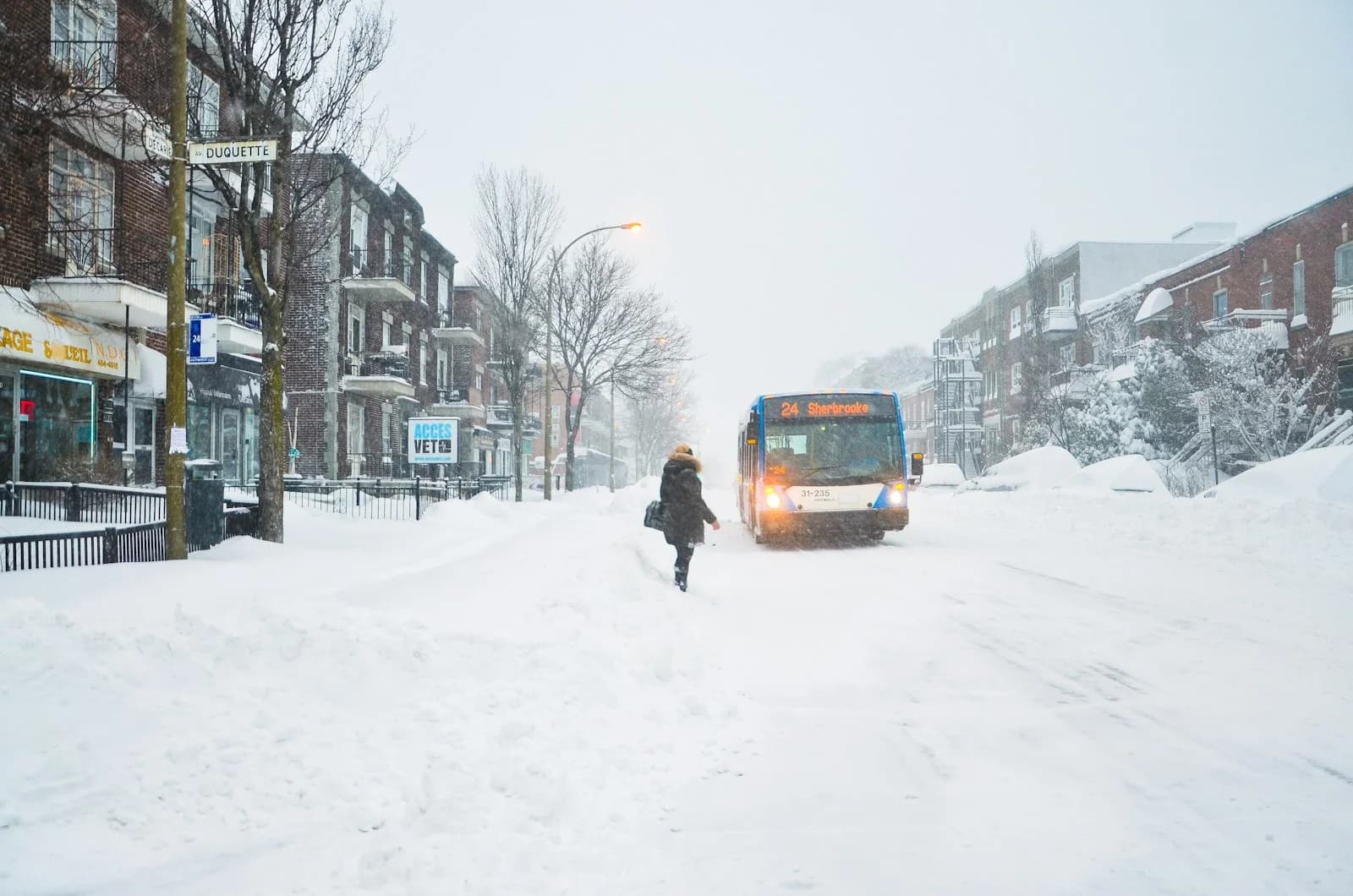
As Montreal enters 2026, the city is rolling out a data-driven approach to address homelessness during the harsh winter months. The Montreal homelessness winter plan 2026 centers on expanding warming spaces, coordinating a crisis response unit, and integrating health and social service partners to reach vulnerable people where they are. Officials say the aim is simple but urgent: reduce exposure to extreme cold, connect individuals to longer-term housing and support, and minimize winter-related fatalities. The plan arrives at a moment when city leaders are balancing immediate life-saving measures with longer-term housing priorities, all while maintaining neighborhood safety and public-health considerations. The tangible actions—new warming shelters, expanded capacity, and a coordinated crisis unit—signal a shift toward a more scalable, citywide response that can adapt to cold-weather spikes and evolving needs.
In practical terms, the warming-centre network for the 2025-2026 season has been laid out with specific dates, locations, and capacities. The City of Montreal’s official warming-centres page notes that spaces will remain open through March 31, 2026, and that several new sites have been activated in anticipation of peak winter demand. The approach includes nightly hours, outreach to mobile teams, and structured coordination with health authorities and community organizations. The policy emphasis is clear: maintain a warm, safe place for the night, while providing snacks, hot drinks, basic health referrals, and connections to social supports. This is not just about keeping people warm for a night; it’s about linking individuals to resources that can address the root causes of homelessness and reduce repeat crises during the cold season. (montreal.ca)
Section 1: What Happened
Warming centres network expands for winter 2025-2026
Montreal’s winter plan for homelessness hinges on a robust, citywide network of warming centres operated in partnership with community organizations. The city’s current page highlights several sites, including:
- Hôtel-Dieu de Montréal (Plateau-Mont-Royal): Warming centre operated by Ville de Montréal with 50 spaces; opening hours 7 p.m. to 8 a.m.; opening period notated as ongoing through the season. This site is part of a broader strategy to create smaller, neighborhood-focused spaces that can relieve pressure on larger shelters. (montreal.ca)
- Lucien-Saulnier Building (Édifice Lucien-Saulnier) in the Ville-Marie borough: Operated by L’Itinéraire with an 85-person capacity; opening period November 17, 2025 to March 31, 2026; hours 7 p.m. to 7 a.m. This site embodies the city’s emphasis on mediate-and-support approaches at key civic locations near city hall. (montreal.ca)
- YMCA Centre-Ville (Ville-Marie) warming centre: 135-capacity site, opening period through January 18, 2026, with hours from 7 p.m. to 8 a.m. The centre is part of a rapid-response approach to add capacity quickly in central neighborhoods where demand spikes. (montreal.ca)
- STM Building (Saint-Laurent borough): Run by the Canadian Red Cross, offering 50 places from November 17, 2025 to March 31, 2026, with overnight hours of 8 p.m. to 7 a.m. This center demonstrates the cross-organization collaboration included in the winter plan. (montreal.ca)
- Ste-Bibiane Church (Rosemont–Petite-Patrie): A centre with capacity for 20 women at a time, opening December 15, 2025 to March 31, 2026; hours 7 p.m. to 9 a.m. The inclusion of women-focused spaces reflects targeted protections and needs. (montreal.ca)
- Couvent Ste-Émélie (Mercier–Hochelaga-Mlaisonneuve): 60-person capacity; opening December 19, 2025 to March 31, 2026; initial hours 4 p.m. to 8 a.m., expanding to 24/7 access later in the season. This site illustrates phased opening aligned with weather conditions and demand patterns. (montreal.ca)
Beyond these named facilities, the city’s warming-centres page notes ongoing coordination to maximize occupancy across districts, including a daily shuttle program to move individuals to the resources they need. The operational focus on mobility highlights the city’s recognition that fixed sites alone cannot address all immediate needs, especially in areas with high encampment activity. The plan also includes explicit safety and security measures, with collaboration between the Montreal Police and partner organizations to maintain order and protect vulnerable residents. (montreal.ca)
Crisis unit and rapid-response planning
The Montreal homelessness winter plan 2026 is complemented by a crisis-unit framework designed to coordinate across boroughs, health networks, and community partners. In December 2025, city officials outlined a rapid-response structure intended to address urgent needs—such as distributing sleeping bags, warmer tents, and other essentials—through a weekly cadence of decision-making and resource allocation. The aim is to consolidate authority and speed up deployments when cold snaps intensify, ensuring that the right sites are open at the right times and that capacity scales with demand. This approach is consistent with a growing trend in Canadian municipalities toward formal, cross-agency crisis cells for homelessness during winter. (montreal.citynews.ca)
Funding and broader housing context
Funding to support emergency and transitional housing projects in Montreal has been a key enabler of the winter plan. A Canada-wide funding announcement in June 2024 earmarked $57.5 million per year for the 2024-2025 and 2025-2026 periods, intended to renew and expand emergency and transitional housing in Montreal. The funding is expected to add hundreds of new spaces, with the Montreal region aiming to reach about 3,000 spaces by winter 2026. This funding context helps explain both the scale of the current winter plan and the optimism around creating a more durable, city-wide response to homelessness during extreme weather. (canada.ca)
A milestone update from the December 2025 period shows the city surpassing its initial target for new warming spaces. A CityNews report notes that the administration announced more than 500 additional warming spaces—bringing the total to over 3,000 spaces across the network. The update also highlighted plans for two additional trailer solutions near encampments and ongoing coordination with health and social-service networks to address encampments and displacement questions. The mayor framed these developments as a necessary step to save lives during winter while continuing to work toward longer-term housing solutions. (montreal.citynews.ca)
Operational context: street-level realities and access
The warming-centres program is supplemented by a broader set of winter services, including nighttime safety checks, health interventions, and the use of mobile mediation teams. Public-safety outreach and partnerships with organizations like Welcome Hall Mission, Old Brewery Mission, and EMMIS are part of the daily frame that supports shelter access, triage, and referrals. Reports from City News and local outlets emphasize that, even with expanded spaces, the demand remains high, and some nights still see rapid filling of spaces or, in periods of milder weather, temporary adjustments to operations. The evolving nature of the winter plan—balancing fixed-site capacity with mobile and outreach components—reflects a data-informed approach to a dynamic, seasonal problem. (montreal.citynews.ca)
Section 2: Why It Matters
Public health and safety implications
Winter homelessness carries serious health risks, from hypothermia to exposure-related illnesses and injuries. By expanding warming-centre capacity and maintaining open spaces through March 31, 2026, Montreal aims to reduce preventable hospital admissions and deaths linked to extreme cold. The city’s approach is framed around not just providing a place to sleep, but also delivering food, warmth, basic health checks, and referrals to longer-term supports. The addition of dedicated spaces near encampments and in central districts is designed to reach people who may not otherwise access traditional emergency shelters. Public-health officials and city leaders have repeatedly stressed that the winter plan is a life-saving measure as weather conditions intensify, particularly in January and February when nighttime temperatures regularly drop below freezing. (montreal.ca)
Equity, inclusion, and targeted supports
The plan includes women-focused spaces and targeted services to address the needs of vulnerable groups, including women at higher risk of violence and exploitation during winter. The Ste-Bibiane Church site with dedicated women’s capacity is an example of this targeted approach. Health and social-service partnerships are emphasized to connect individuals with long-term housing and supports, reflecting a shift from purely emergency sheltering to a more integrated approach that addresses root causes and barriers to stable housing. This aligns with Canada-wide funding streams that encourage the expansion of emergency and transitional housing to support people experiencing homelessness in a more durable way. (montreal.ca)
Community and neighborhood considerations
City officials acknowledge neighborhood-level impacts and have implemented measures to minimize disruption while maximizing safety and warmth for the city’s unhoused residents. The warming-centres page outlines “cohabitation” strategies to balance the needs of residents with the realities of a dense urban environment, including security coordination with police and community groups. The city’s communications emphasize a collaborative approach to siting and operating centres so that shelters are accessible without causing undue disturbances, a challenge that many large municipalities face during winter weather. The addition of multiple sites across boroughs—plus outreach and daily shuttles—reflects a deliberate attempt to distribute services geographically and avoid over-concentration in a single neighborhood. (montreal.ca)
Budgeting and long-term implications
The winter plan is nested within broader housing and social-policy budgets. The 2024-2026 funding framework for Montreal’s homelessness response—bolstered by federal and provincial partners—supports the expansion of emergency and transitional spaces, while municipal budgets prioritize ongoing operations, staffing, and outreach. The multi-year funding cycle signals intention to sustain and grow the system beyond a single winter, enabling more predictable planning and performance measurement. While the immediate focus is crisis response, the broader context remains: reducing chronic homelessness and increasing access to stable housing. This reflects a multi-jurisdictional approach where municipal actions complement provincial and federal programs. (canada.ca)
Operational metrics and accountability
A key feature of the Montreal homelessness winter plan 2026 is the drive toward measurable results. City officials and partner organizations are expected to report on occupancy, throughput, and service interactions at warming centres. The December 2025 updates providing numbers such as 532 new spaces and total capacity exceeding 3,000 indicate an emphasis on transparent reporting and accountability. As with any large-scale social program, there are questions about the sustainability of funding, the durability of partnerships, and the metrics that best reflect impact (e.g., throughput, length of stay, referrals to housing). The ongoing collaboration with CIUSSS (Centre-Sud) and other health networks will be essential to tracking progress and adjusting capacity to actual demand patterns. (montreal.citynews.ca)
Section 3: What’s Next
Near-term milestones for winter 2026
The immediate next steps in the Montreal homelessness winter plan 2026 include continuing to operate and evaluate warming-centre performance through March 31, 2026, with potential for partial extension if weather conditions demand. City officials and partners will monitor occupancy at each site, adjust staffing and security measures as needed, and coordinate with health networks to ensure timely referrals. The plan’s explicit dates—such as the YMCA Centre-Ville site expecting to operate until January 18, 2026, and Hôtel-Dieu and Lucien-Saulnier continuing through March 2026—provide concrete checkpoints for this winter’s operation. The ongoing presence of a crisis unit is designed to enable rapid decision-making if a new encampment arises or if there is an urgent need to repurpose spaces. (montreal.ca)
Longer-term planning and policy integration
Looking beyond the current season, Montreal’s approach to homelessness appears to be transitioning toward a more integrated housing-and-health strategy. The scale of the 3,000-space target, while substantial for a major metropolitan area, is framed as a step toward broader system capacity that includes emergency housing, transitional spaces, and longer-term housing subsidies. Federal funding streams, provincial programs, and regional housing initiatives are expected to converge with municipal planning to reduce chronic homelessness over time. Observers will be watching how the winter plan informs year-round strategies, such as outreach, prevention, rapid rehousing, and the alignment of encampment management with humanitarian objectives. (canada.ca)
How readers can stay informed
For residents and stakeholders, staying informed means following city communications, 211 social-service lines, and 311 inquiries. The warming-centres page provides a living directory of sites, hours, and capacity, with regular updates as weather and demand shift. In addition, the City of Montreal’s media center and partner organizations often publish updates on new sites, openings or closures, and changes to operating hours. Local reports from CityNews and other outlets also offer real-time coverage of shifts in occupancy and service delivery, including on-the-ground interviews with organizers, volunteers, and residents who use these spaces. Given that the winter plan is dynamic, readers should consult official city sources for the most current information as conditions evolve. (montreal.ca)
Closing
The Montreal homelessness winter plan 2026 represents a decisive, data-informed expansion of warming-centre capacity and a newly formalized crisis-response structure designed to confront winter risk among the city’s most vulnerable residents. By widening access through multiple sites, coordinating with health networks, and maintaining a visible, accountable plan through March 2026, the city aims to save lives while advancing longer-term housing objectives. As winter deepens and temperatures drop, the public-facing results of these efforts—occupancy rates, service referrals, and health outcomes—will shape the narrative about how Montreal protects its most vulnerable residents during severe cold.
Stay tuned to official city channels and trusted local outlets for ongoing updates on the Montreal homelessness winter plan 2026, and continue to watch for new site announcements, capacity adjustments, and milestones in the city’s broader commitment to housing stability and humane responses to homelessness.