Montreal icy conditions travel delays December 29-30 2025

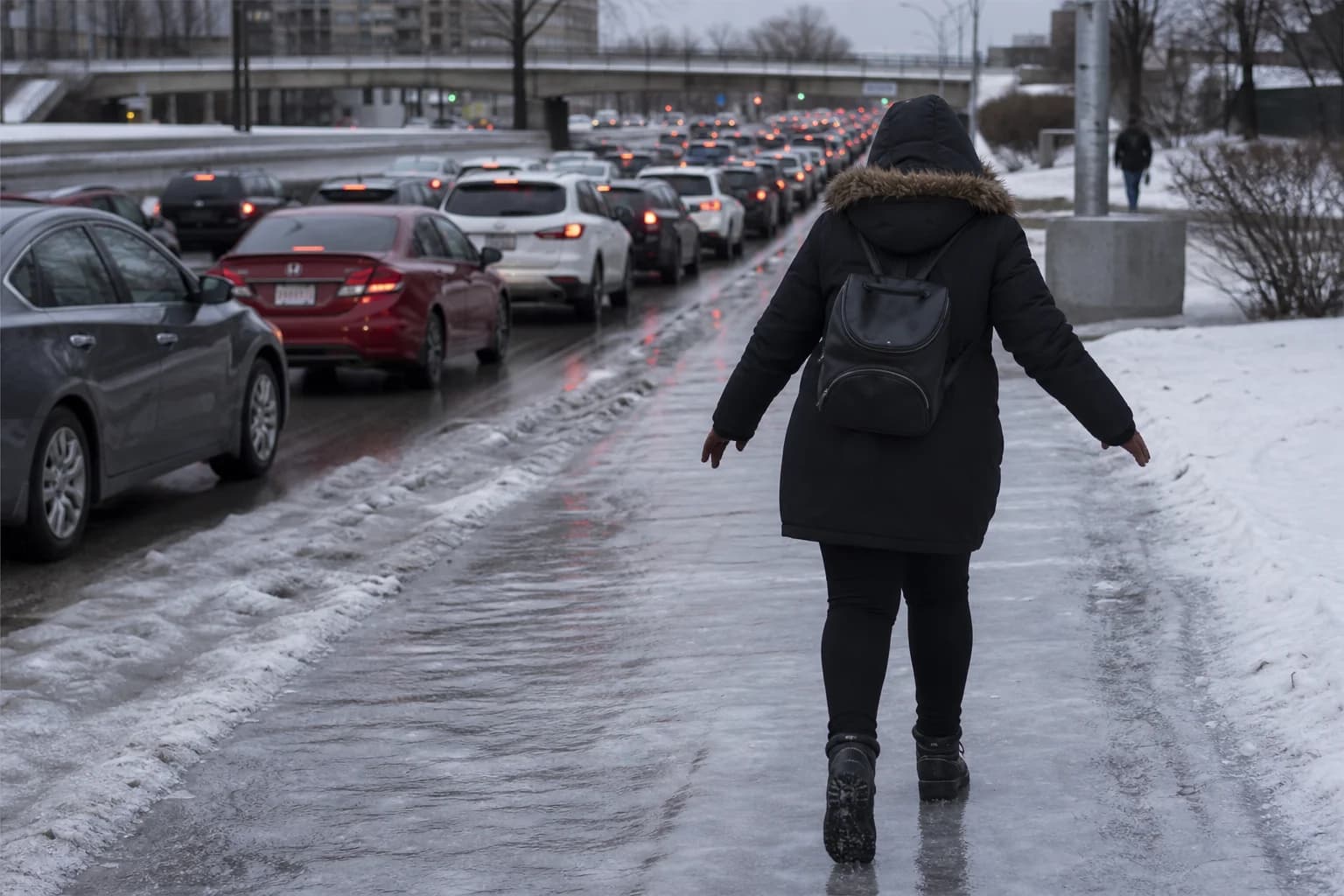
Montreal is grappling with a sharp winter event that has transformed travel on December 29-30, 2025. Montreal icy conditions travel delays December 29-30 2025 are unfolding as freezing rain coats roads, rail lines, and power infrastructure, prompting immediate advisories from Environment Canada and forcing disruptions across the region’s transport network. The developing situation matters not only to daily commuters but also to local businesses that depend on reliable movement of people and goods. Early reports indicate a multi-pronged impact: significant flight schedule delays at Montréal–Trudeau International Airport, interruptions on the REM light-rail network, and widespread power outages in parts of the greater Montreal area. This briefing outlines what happened, why it matters, and what comes next as officials and carriers monitor evolving conditions. (montreal.citynews.ca)
For readers navigating the city on December 29-30, 2025, the latest data point to a highly weather-dependent travel environment. Freezing rain and ice pellets have been forecast to persist through the day, with ice accretion anticipated between 5 and 15 millimetres in the Montreal region, intensifying the risk of slick surfaces and power interruptions. The combined effect of ice buildup, gusty winds, and subfreezing temperatures has created hazardous conditions that require travelers to plan extra time, verify schedules, and consider alternate routes where possible. Community safety officials have urged caution and postponement of nonessential trips as the weather system continues to influence road, rail, and air travel. (montreal.citynews.ca)
What Happened
Weather conditions and official advisories
A potent winter weather event moved into southern Quebec overnight and into Monday, December 29, 2025, bringing freezing rain, ice pellets, and gusty winds to the Montreal area. Environment Canada issued warnings highlighting a prolonged period of freezing rain that could produce 5–15 millimetres of ice accumulation, with ice patches on surfaces increasing the risk of slips and falls. The weather system was expected to transition later in the day from freezing rain to mixed precipitation, complicating travel further as surfaces froze and temperatures hovered around the freezing mark. Readings throughout the morning indicated that wind gusts would intensify, exacerbating road hazards and creating challenging commuting conditions. (montreal.citynews.ca)
The Weather Network and other local outlets reinforced these warnings, forecasting a day of treacherous driving conditions and the potential for extended outages as ice coated roadways, power lines, and public transit equipment. Forecasts indicated that conditions could ease only gradually as precipitation shifted, but lingering ice would keep surfaces slick for hours after the initial rainfall. For residents and travelers, this translated into a clear message: prepare for delays and exercise caution when moving around the city. (theweathernetwork.com)
Transit disruptions and airport status
The travel disruptions were immediately apparent at major transit hubs and on regional rail networks. At Montréal–Trudeau International Airport (YUL), early-morning data showed a notable backlog of flights, with dozens of delays and several cancellations attributed to weather conditions. In the REM light-rail network, service between the Deux-Montagnes and Bois-Franc stations experienced interruptions due to ice accumulation on overhead lines, interrupting a critical link for commuters in the western suburbs. These disruptions prompted advisories for travelers to check with airlines and transit operators before leaving home and to allow extra time for journeys. (montreal.citynews.ca)
Power infrastructure faced its own challenges. Hydro-Québec reported outages across the province as freezing rain and high winds affected distribution networks, with a noticeable concentration of outages in the Montreal region and surrounding areas. While many outages were being addressed rapidly, the combination of ice buildup and cold conditions meant that some neighborhoods experienced extended interruptions, complicating travel plans and daily routines for residents. (ca.news.yahoo.com)
Power outages and infrastructure impacts
Across the region, thousands of Hydro-Québec customers were affected as freezing rain coated lines and caused ice accretion on infrastructure. Local outlets tracked outages by neighborhood, noting that while some outages were anticipated maintenance events, others reflected weather-driven impacts. The density of outages varied, but the overall signal was clear: a weather-driven strain on the power grid was compounding travel delays and public-safety concerns. The confluence of transportation disruption and power loss elevated the importance of contingency planning for businesses and services that rely on steady infrastructure. (ca.news.yahoo.com)
Why It Matters
Economic impact on commuters and local businesses
Montreal icy conditions travel delays December 29-30 2025 have immediate implications for daily workers, retail traffic, and service industries. When flights are delayed or canceled, air travelers face missed connections, lost business opportunities, and added costs for last-minute rebooking. In the airport ecosystem, even moderate delays ripple through supply chains, affecting vendors, hospitality partners, and downtown commerce that rely on predictable foot traffic. Local businesses near transit hubs report softer early-week activity as workers adjust schedules and customers postpone discretionary trips to off-peak hours. The weather-driven slowdown, coupled with power outages, also complicates shift planning, inventory management, and customer-facing operations in sectors ranging from hospitality to logistics. While the exact economic impact will depend on duration and severity, early indicators point to a multi-day effect on revenue streams connected to travel and urban mobility. (montreal.citynews.ca)
A CP-backed update highlighted the broader public-safety dimension of the event, noting that emergency services saw increased demand as a result of ice-related accidents and injuries. In Montreal-area dispatch data shared by Urgences-santé, the organization reported a surge in calls during peak travel hours as slippery conditions led to falls and related injuries. The situation underscores the link between weather events, human safety, and the demand placed on public services during extreme winter conditions. > “We’ve had more than 90 calls an hour, which is very unusual for this period,” Urgences-santé operations chief said, reflecting the strain on first responders during freezing rain events. (lethbridgeherald.com)
Public safety and emergency services response
Public safety agencies stressed that travel should be minimized when freezing rain coats roads and sidewalks. Authorities urged drivers to slow down, leave extra space, and wear appropriate winter gear, while transit operators implemented speed restrictions or service adjustments to reduce risk on iced tracks and roadways. The intersection of weather, infrastructure stress, and high-demand transport options creates a complex risk environment for residents who rely on the city’s mobility networks to access work, healthcare, and essential services. Quotes from emergency services and local agencies emphasized caution and flexibility in planning. (montreal.citynews.ca)
Broader context: climate and infrastructure resilience
This event sits within a broader pattern of winter storms that test urban resilience in cold-weather centers like Montreal. The convergence of freezing rain, wind, and snow not only disrupts transportation but also stresses the power grid, communications networks, and public infrastructure. Analysts note that repeated freeze-thaw cycles and ice buildup increase the importance of weather-ready infrastructure, diversified energy resilience, and robust contingency planning for transit operators and municipal services. The Montreal incident offers a real-time case study in how cities respond to multi-faceted winter hazards and what steps may be needed to mitigate future disruptions. (theweathernetwork.com)
What’s Next
Forecast and expected timeline for improvement
Industry observers and weather forecasters expect conditions to gradually improve into the following day as precipitation shifts away and temperatures moderate. However, residual ice on road surfaces and in the power network can persist into Tuesday, delaying the return to full normalcy for transit schedules and airport operations. Travelers should monitor official sources for the latest advisories, as gusty winds and localized outages could reappear in the afternoon or evening hours. In practical terms, this means continuing to plan for delays, checking with airlines and transit operators, and allowing extra time for trips into the downtown core and surrounding boroughs. (theweathernetwork.com)
Next steps for readers and travelers
- Check with Montréal–Trudeau Airport and your airline for real-time flight status updates before heading to the terminal; contingency plans may be in place for weather-related disruptions. (montreal.citynews.ca)
- If you rely on REM or other public transit, verify service levels and potential detours on operator channels, as ice accumulation can prompt temporary suspensions or route changes. (ca.news.yahoo.com)
- Stay informed about power outages in your area via Hydro-Québec outage maps and official communications, and have emergency supplies ready in case of extended outages. (ca.news.yahoo.com)
Public-safety agencies and meteorologists will continue to provide updates through official channels through the next 24–48 hours. Given the evolving nature of this event, readers should treat the situation as dynamic, with travel decisions grounded in the latest advisories from Environment Canada, Hydro-Québec, and transit operators. The city’s approach to risk management in the wake of Montreal icy conditions travel delays December 29-30 2025 will likely hinge on timely alerts, coordinated responses across transit and energy providers, and clear, accessible information for residents and visitors alike. (montreal.citynews.ca)
What Happens Next for Montreal's Tech and Market Landscape
The convergence of severe winter weather and transportation disruptions often accelerates shifts in local technology adoption and market behavior. In Montreal, the short-term disruption to mobility can influence demand for real-time travel information platforms, cloud-based logistics solutions, and resilient energy management technologies. Businesses that rely on just-in-time inventory, curbside pickup, or urban delivery services may accelerate investments in route optimization, contingency planning, and remote-work enablement to weather weather-related shocks. Analysts watching the city’s technology ecosystem note that infrastructure resilience and data-driven decision-making become more valuable during weather events, potentially shaping investment flows toward weather-intelligence services, predictive maintenance for critical infrastructure, and transit-tech partnerships. (theweathernetwork.com)
Closing
As Montreal confronts the icy conditions travel delays December 29-30 2025, the immediate priority for residents is safety and prudent travel planning. The combination of freezing rain, ice accumulation, wind, and power outages has created a day where transportation choices must be tempered with caution, and staying informed is essential. Readers are encouraged to rely on official updates from Environment Canada, Hydro-Québec, and the city’s transit operators to navigate the ongoing disruption effectively. By combining real-time data with clear safety guidelines, public agencies and private partners are working to minimize risk while providing the information necessary to make informed decisions during this weather event. (montreal.citynews.ca)