Montreal Metro Blue Line Extension Funding: Latest Updates

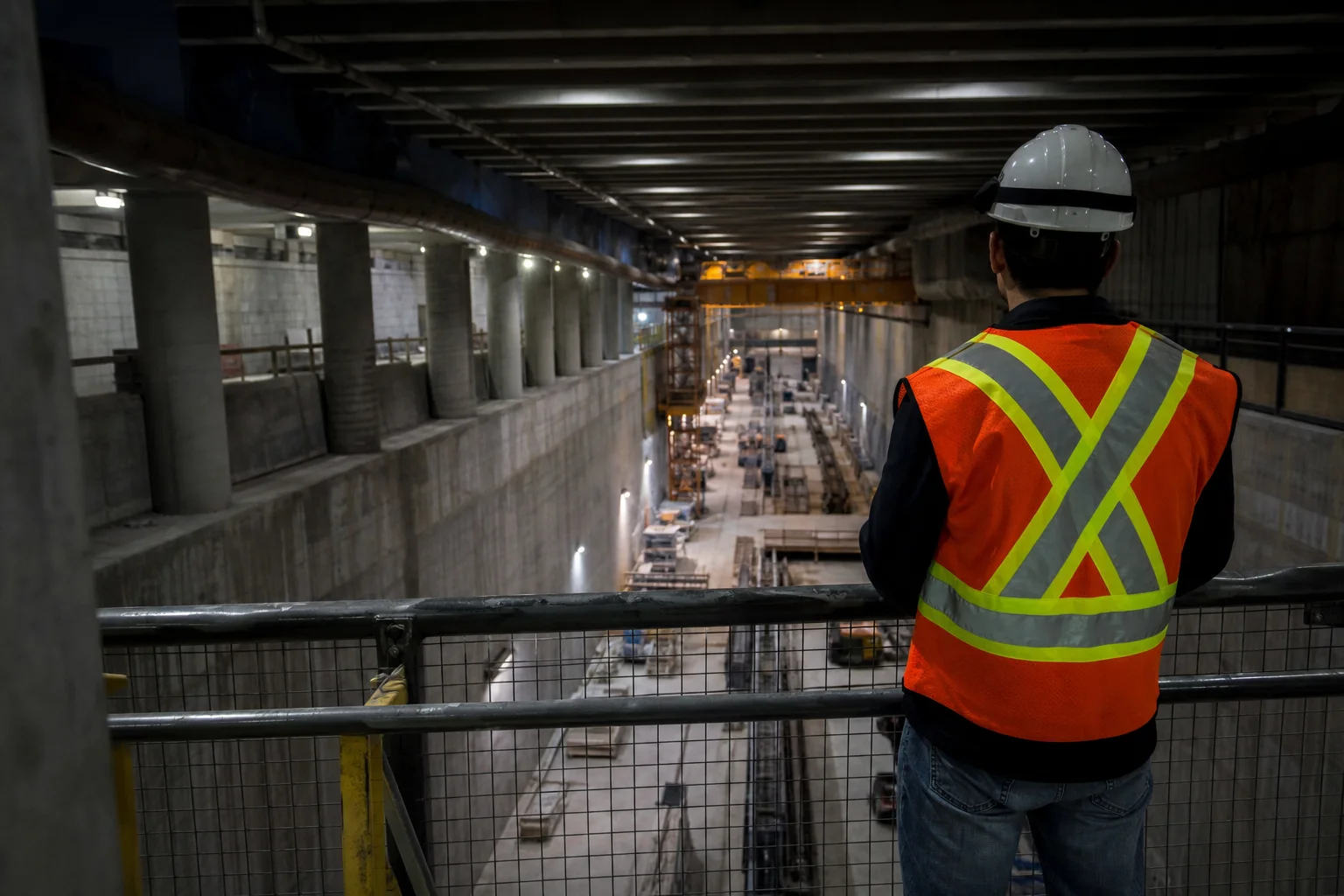
Photo by Alain Guillot on Unsplash
The federal government’s latest Montreal Metro Blue Line extension funding update marks a significant milestone for public transit in Quebec. On March 22, 2025, Ottawa announced an additional federal contribution aimed at advancing two major transit projects in Quebec: the Quebec City tramway and the Montréal Metro Blue Line extension. This move sits within a broader push to modernize urban mobility, reduce greenhouse gas emissions, and stimulate economic development in Montreal’s eastern neighborhoods and beyond. For readers tracking technology-driven market trends in transport, this development underscorses how federal infrastructure funding is aligning with ambitious metro expansion plans and the rollout of advanced rail control technologies. The news matters not only for planners and policymakers but also for commuters who stand to gain from improved reliability, shorter travel times, and better multimodal connections. The Montreal Metro Blue Line extension funding target reflects a continuing evolution in how Canada prioritizes large-scale transit modernization, electrification, and CBTC-based operations across major urban centers. This update is part of the broader Investing in Canada Infrastructure Program (ICIP) framework, which channels funds through federal, provincial, and municipal partnerships.
Montreal Metro Blue Line extension funding, as described in the March 2025 release, centers on a multi-year contribution strategy designed to accelerate commissioning of the Blue Line’s eastward expansion while modernizing its train-control framework. The government notes that Montreal’s Blue Line extension will add five stations along a roughly six-kilometer tunnel from Saint-Michel toward Anjou, accompanied by two bus terminals, an underground pedestrian tunnel, and a mezzanine pedestrian link. The project’s stations are slated to be commissioned in 2031, signaling a near-term focus on construction milestones and system integration ahead of full operational service. The federal update places the Blue Line extension alongside other priority transit investments in Quebec, underscoring a coordinated national effort to bolster public transit, reduce travel times, and cut emissions. These points are drawn directly from the government’s March 22, 2025 news release. (canada.ca)
Section 1: What Happened
Federal funding boost
The central news is the federal government’s expanded commitment to Montreal Metro Blue Line extension funding as part of a pair of major Quebec transit investments. The government’s March 22, 2025, news release states that Ottawa is providing an additional federal contribution of more than $1.1 billion to support both the Quebec City tramway (TramCité) and the Montréal Metro Blue line extension projects. The release emphasizes that this funding comes from the Investing in Canada Infrastructure Program (ICIP) and compounds an earlier federal commitment for these initiatives. In the Montreal Blue Line extension portion, the update notes a substantial increase to federal support, reflecting ongoing alignment with provincial and municipal partners to deliver the project on a credible timeline. The press material specifies that the federal government is increasing its contribution for the Blue Line extension by more than $650 million, bringing the federal share to just over $1.9 billion. This update follows an initial federal commitment of more than $1.3 billion announced previously and confirms a staged funding approach to reflect changing project needs and market conditions. The release also highlights a new $202.8 million investment in the train control system to modernize the CBTC (communications-based train control) system across the Montreal Metro Blue Line and its extension. These details are captured in the government’s official release and subsequent briefing materials. In short, the Montreal Metro Blue Line extension funding now sits at a total federal contribution of just over $1.9 billion, with commissioning targeted for 2031. The release also reiterates that the investments are intended to reduce congestion, cut pollution, create jobs, and support urban development. For readers tracking funding trends in North American transit, this marks a notable uptick in federal involvement in a marquee Canadian metro expansion. (canada.ca)
Project scope and milestones
The March 2025 update describes a concrete project scope for the Blue Line extension. The Montréal Metro Blue line extension entails five new metro stations in a tunnel spanning approximately six kilometers, adding a critical eastward connection from Saint-Michel toward Anjou. The plan includes related infrastructure elements such as two bus terminals, an underground pedestrian tunnel, and a mezzanine pedestrian link, all designed to improve multimodal integration with the metro network. The project is not merely about new stations; it encompasses modernizing the line’s train-control framework to CBTC standards, enabling higher reliability and more frequent service. The federal release notes that the commissioning of these new stations is scheduled for 2031, aligning with federal and provincial public plans to deliver a fully operational extension in the early 2030s. Public communications from STM and industry outlets corroborate the scope and the sequence of milestones, including the CBTC upgrade and the tunnel construction components. (canada.ca)
Timeline and commissioning
The timeline for the Blue Line extension has evolved over the past several years, reflecting the scale of tunneling, station construction, and system integration. The 2023 and 2024 STM communications highlighted a major milestone in the project’s execution: a two-stage tender process for tunnel construction and related works, followed by the awarding of contracts for the tunnel-building phase and the CBTC system. By late 2023, STM and project partners communicated that the updated project schedule would not have the line put into revenue service before 2030, acknowledging the complexity and market realities of large-scale urban tunneling. In early 2024, STM reported that the project was entering execution phases, with the final call for tenders and procurement activities advancing, and the project moving toward site preparation and tunneling work. By March 2025, the federal update established commissioning of the five new stations as scheduled for 2031, signaling a continued public investment trajectory toward opening in the early 2030s. The contrast between the 2030 target stated in 2023–2024 communications and the 2031 commissioning target in the 2025 federal update reflects typical scheduling adjustments in megaprojects of this scale. For a precise chronology, the 2030 non-operational forecast was explicitly stated in STM communications in September 2023, while the federal government’s 2031 commissioning target appears in the 2025 release. These timestamps illustrate how the project’s timeline has shifted as planning, procurement, and construction progressed. (stm.info)
Construction progress and procurement
Construction activity on the Blue Line extension has moved beyond planning phases into execution. In February 2024, STM announced a major milestone: the contract for the line’s train-control system (CBTC) had been awarded, marking an essential milestone in the modernization of the line’s operation and the extension’s integration with new rolling stock and signaling. The CBTC contract, valued at roughly $217 million, covers installation, maintenance, and options to upgrade the CBTC system across the Blue Line extension. The procurement narrative around the tunnel and stations has also progressed, with STM communications in 2023 indicating the final phase of tenders for tunnel construction and limited station works. By late 2024 and into 2025, construction activity was evident on-site, with the TBM (tunnel boring machine) and related works moving toward the future stations as part of the project’s execution phase. These milestones are corroborated by STM press materials and trade reporting on the project’s progress. For industry watchers, the combination of CBTC procurement and tunnel construction contracts signals a sustained push toward achieving the Blue Line extension’s core engineering milestones, even as the project remains sensitive to market conditions and funding schedules. The federal funding update also notes progress toward commissioning in 2031, reflecting ongoing integration of the new stations with the upgraded signaling system. (stm.info)
Section 2: Why It Matters
Economic impact and employment
The federal investment in the Montreal Metro Blue Line extension funding carries broad economic implications beyond transit operations. The government’s March 2025 release explicitly ties investments in public transit to reduced congestion, lower emissions, economic development, and job creation. The ministers’ statements emphasize that the projects will stimulate manufacturing, construction, and related sectors, underscoring a macroeconomic rationale for large-scale transit modernization. The rollout of the CBTC system, the tunnel construct, and the station works collectively create thousands of direct and indirect jobs during the peak phases of construction and a longer-term uplift in operational efficiency and labor productivity. The release frames the investments as part of a broader national and regional strategy to build resilient infrastructure, support middle-class Canadians, and stimulate private sector activity through improved mobility. For readers tracking market implications, this funding expansion signals continued public-sector demand for advanced signaling technologies, specialized construction services, and long-lived transit assets, which can influence suppliers, procurement strategies, and regional economic planning. (canada.ca)
Transit access, connectivity, and equity
A central rationale for the Blue Line extension is to improve mobility for Montreal’s eastern neighborhoods by connecting them more directly to the central metro network and to the growing REM ecosystem. The five new stations along a six-kilometer segment are designed to shorten travel times, reduce dependence on automobile traffic, and facilitate multimodal travel with enhanced bus connections and a pedestrian link. The STM’s communications surrounding CBTC modernization emphasize reliability, frequency, and service quality improvements that will benefit a broad cross-section of riders. The project’s scale—adding roughly 15,000 housing units to the area and expanding access to a modern metro network—highlights the equity dimension of transit investments, ensuring that population growth in fringe neighborhoods translates into tangible, door-to-door mobility gains. The federal release includes a quote from leadership highlighting the broader social benefits of the investment, including reduced congestion and environmental gains. Experts and planners often cite these kinds of projects as catalysts for inclusive urban growth, enabling residents to access education, healthcare, and employment more readily. The Montreal Blue Line extension funding thus sits at the intersection of infrastructure modernization and equitable access to urban mobility. (stm.info)
Budgetary responsibility and funding mix
A key analytic takeaway is how funding for major transit megaprojects is assembled from multiple public sources and subject to revision as project phases unfold. The March 2025 federal release explicitly situates the Blue Line extension within the ICIP funding envelope and notes that Ottawa’s contributions have grown from earlier commitments (including a July 2019 federal contribution and subsequent increases) to a total federal commitment approaching $1.9 billion. The document also documents a separate $202.8 million investment for the CBTC train control system. This kind of funding architecture—federal contributions complemented by provincial and municipal support—illustrates how large-scale urban transit expansions balance debt capacity, long-term asset maintenance costs, and public accountability. STM’s own 2024–2025 budgeting materials reinforce that capital expenditure for major metro projects remains a significant line item (with a notable allocation for the Blue Line extension), underscoring the importance of stable funding streams for long-duration megaprojects. For readers focused on market dynamics, the funding mix signals a continuing demand for public-private collaboration models, long-term financial planning, and careful cost management as projects scale up. (canada.ca)
Section 3: What’s Next
Next milestones to watch
With the federal government’s updated funding picture and the project’s continuing construction, several near-term milestones will be the focus for observers, contractors, and residents. First, the ongoing CBTC system integration represents a critical milestone: the CBTC works will be rolled out across the Blue Line extension to enable higher train frequency and improved reliability, a cornerstone of the system’s modernization. The federal update also confirms the $202.8 million investment in train control, underscoring the signaling upgrade as a standalone, pivotal activity alongside tunnel and station construction. Second, tendering and supplier selection for major tunnel contracts and station works were already completed or near completion by 2024–2025, with announcements about successful bids and project kickoffs. The STM’s public communications indicate a continued emphasis on on-site construction activity, with reports that a tunnel boring machine is arriving on site and that excavation of future stations and auxiliary structures is progressing. Third, with the 2031 commissioning target in place, the project team will likely emphasize schedule control, risk management, and procurement optimization to align with the commissioning timetable. The federal government’s 2031 commissioning target appears consistently in the official release, reinforcing the expectation of opening in the early 2030s. For industry watchers and local residents, these near-term milestones include tender outcomes, CBTC installations, TBM progress, and station fit-out milestones. (stm.info)
What to watch for next in project updates
As construction advances, a handful of indicators will be essential to monitor. First, procurement and on-site progress updates from the Blue Line extension Project Office will provide the clearest signal of whether the project remains on track for a 2031 commissioning. STM press materials and industry reporting indicate that major excavation work was planned to start in 2024, with subsequent phases targeting station construction and systems integration; the cadence of these milestones will be a strong barometer of project health. Second, system-readiness milestones—such as the CBTC rollout across the existing Blue Line and the extension—will be critical to ensure compatibility with rolling stock, safety certifications, and passenger communications. Third, the overarching cost envelope will continue to be monitored as tender results are finalized and as construction progresses; STM’s own budgetary documents show a multi-billion-dollar commitment to the Blue Line extension, reflecting both the capital costs of tunneling and the downstream maintenance obligations. For readers tracking market trends and policy implications, these milestones will help gauge how Canada’s multi-source funding model translates into tangible infrastructure upgrades and urban mobility improvements. (stm.info)
Closing
The Montreal Metro Blue Line extension funding development represents a tangible instance of federal, provincial, and municipal collaboration targeting a major urban rail expansion. The March 2025 update from the Government of Canada places a specific, quantified focus on the Blue Line extension by confirming a substantial enhancement to federal support (to just over $1.9 billion) and a commissioning target of 2031 for the five-station, six-kilometer eastward extension. The project’s scope combines deep tunneling and modern CBTC signaling, underscoring a modernization effort intended to deliver safer, more reliable, and more frequent service to a growing eastern Montreal corridor. With construction moving forward and tender work completed, the public transit backbone of Montreal is undergoing a metamorphosis that could reshape daily commuting patterns, economic activity in the east end, and the city’s broader mobility ecosystem, including connections with the REM and bus networks. Readers seeking to stay updated should monitor the Government of Canada releases, STM press updates, and project-posting portals from the project office for the latest milestones, especially as the 2031 commissioning window approaches.
As infrastructure investments continue to drive technology and market trends in urban transit, the Montreal Metro Blue Line extension funding is a notable case study in how megaprojects are financed, planned, and executed in a way that seeks to minimize risks while maximizing long-term public benefits. The project’s progress illustrates how modern signaling systems, large-scale tunneling, and strategic funding can align to deliver durable improvements in urban mobility, environmental outcomes, and regional economic vitality.