Montreal Micro-housing Plateau 2026

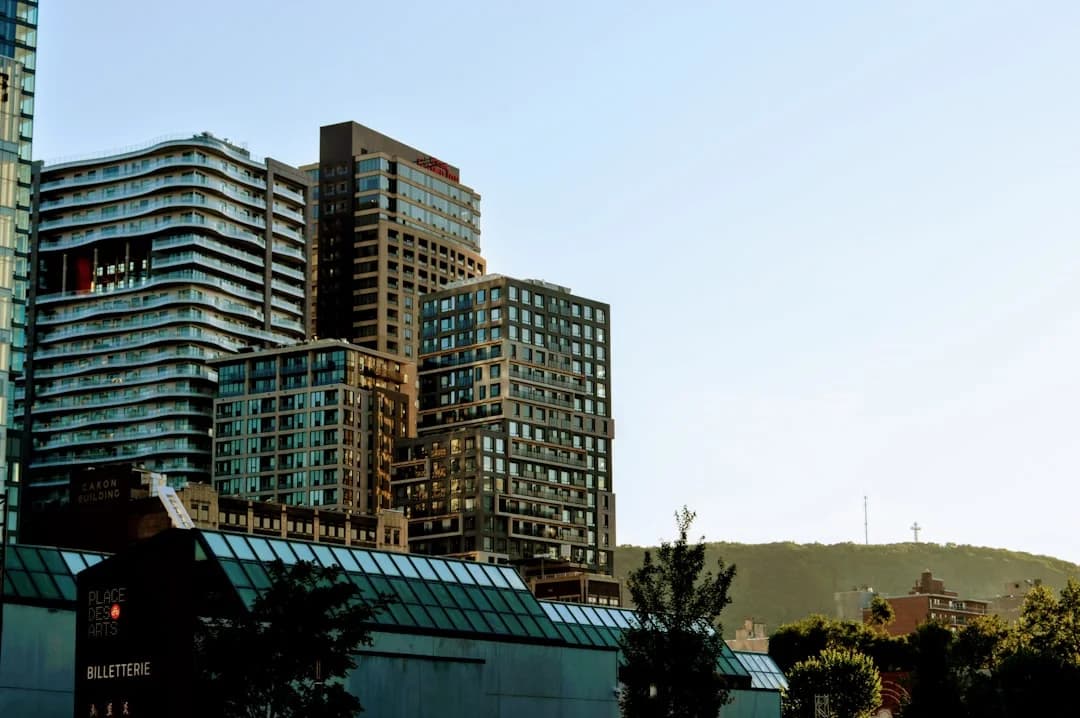
Photo by Robert Macleod on Unsplash
Montreal micro-housing Plateau 2026 is shaping up as a defining data point in the city’s ongoing densification debate. In 2026, the Plateau-Mont-Royal borough is at the center of a larger push to add housing stock more rapidly, balancing social housing needs with market demand in one of Montreal’s most iconic neighborhoods. The centerpiece is a high-profile, two-tower development on the former Institut des Sourdes-Muettes site on Saint-Denis Street, paired with a broader citywide modular housing strategy that includes a planned push into the Plateau’s policy framework. The news arrives as the city accelerates housing production amid a sustained affordability squeeze, with officials signaling a willingness to experiment with density, height, and mixed-use approaches to unlock new units in transit-rich corridors. This coverage provides a data-driven lens on who benefits, what’s changing, and what comes next for residents, investors, and local businesses. Montreal micro-housing Plateau 2026 is part of a wider pattern unfolding across Montreal as housing policy meets urban form in real time. (journaldemontreal.com)
The announcements come amid a broader Montreal-wide context in which the city and boroughs are recalibrating zoning rules, permitting processes, and targeted investments to accelerate the delivery of affordable and mixed-income housing. In early 2026, the City of Montreal rolled out measures intended to streamline approvals for social housing projects, reduce friction for non-profit housing providers, and promote broader densification along key corridors. The Plateau-Mont-Royal has been a focal point of these efforts, with the city emphasizing preservation of existing affordable units while facilitating new construction. This ecosystem of policy shifts and project-level announcements underscores a deliberate tilt toward higher density areas—particularly those with robust transportation access—while attempting to preserve the Plateau’s distinctive character. (montreal.ca)
Section 1: What Happened
Announcement Details
- Two-tower project on Saint-Denis: In June 2025, Le Journal de Montréal reported that a major development on the site of the former Institut des Sourdes-Muettes would include two residential towers, one of 17 stories and another of 25 stories, with at least 20% of the units designated as social housing. The project is being pursued after a competitive bidding process that awarded the site to the developer Residia, with Blouin Beauchamp Architectes designing the scheme. The provincial and municipal governments conditioned the project to ensure social housing and non-market components as part of the development package. Construction was anticipated to begin in summer 2026, though the total project cost had not yet been disclosed at the time of reporting. This plan places a new, dense, mixed-use element directly in the Plateau’s core. The article also highlighted the ongoing policy emphasis on increasing social housing while sustaining the neighborhood’s cultural and economic vitality. (journaldemontreal.com)
Modular Housing as a Complementary Strategy
- Montreal’s modular housing program expands into the Plateau context via the MIL Montréal sector project: In June 2025, Projet Montréal announced that MIL Montréal would host a modular housing project intended to provide temporary, supported housing for vulnerable residents while they transition to permanent accommodations. The city flagged that work on the MIL site could begin by the end of 2025, with first occupants expected to move in during 2026. The modular approach is described as offering psychosocial support, on-site services, and rapid deployment to address urgent housing needs. This site—along with planned deployments at other Montreal locations—illustrates how modular housing is being deployed citywide as a bridge to longer-term solutions. (projetmontreal.org)
Timeline and Key Facts
- Specifics from the Saint-Denis project (Residia/Blouin Beauchamp Architects): Construction expected to begin in summer 2026; the plan includes two towers (17 and 25 stories) and a minimum 20% social-housing quota; the total project cost and the full unit mix beyond the social share were not disclosed publicly in mid-2025 reports. The planning and procurement context involved provincial and city-level commitments to affordable housing and a mix of on- and off-market units. The scope and timing place this project at the heart of Plateau densification efforts in 2026. (journaldemontreal.com)
- MIL Montréal modular housing project: The MIL site is described as a third modular-housing location for Montreal’s rapid deployment of supported modular housing. First occupants are anticipated in 2026, with work beginning by the end of 2025, and services including food, psychosocial support, and housing assistance designed to help residents transition to permanent housing. This initiative underscores Montreal’s broader strategy to use modular units as a tool to address immediate housing needs while longer-term housing is developed. (projetmontreal.org)
Timeline visual (selected milestones)
- February 2025–June 2025: City and provincial authorities publicly outline social housing requirements tied to major Plateau development sites; the Saint-Denis project enters a bid phase with social housing conditions. (journaldemontreal.com)
- March 2026: Plateau-focused news coverage notes ongoing policy measures affecting housing, including adjustments to density allowances and enforcement approaches in service of housing delivery and neighborhood stability. (montreal.citynews.ca)
- 2026: MIL Montréal modular housing occupants begin to move into modular units in other parts of the city, while the Plateau’s Saint-Denis project proceeds toward construction, signaling a year of intensified densification activity. (projetmontreal.org)
Why It Matters
Impact on the Plateau and Beyond
- Housing supply and affordability in Montreal’s densifying core: The Plateau is widely recognized for its iconic status, cultural vibrancy, and high demand, but affordability pressures persist. Quick-moving market indicators show the Plateau remains a premium destination with strong buyer interest and fast sales despite high entry costs. A 2026 market portrait for Plateau-Mont-Royal cites a municipal assessment around 580,000 CAD, a market multiple (facteur de marche) near 1.35x, and around 783,000 CAD estimated market value, reflecting continued premium demand in the Plateau while underscoring supply constraints. The numbers point to a tight market that benefits from new, denser housing supply that includes social and affordable components. (infoquartier.ca)
Policy and Regulatory Context
- Acceleration measures and regulatory adjustments: The Plateau’s housing measures, updated January 2026, emphasize tightening protections for existing rental stock, enabling social and affordable housing development, and reducing barriers for OBNLs and housing cooperatives. The measures also highlight the City’s intent to streamline approvals and to use tools like the Exemption for study fees and other incentives to lower the cost of bringing housing online. This regulatory backdrop is essential to understanding how major Plateau projects—like the Saint-Denis tower pair—progress from plan to construction. (montreal.ca)
- Noise regulation and neighborhood balance: In April 2026, CityNews reported that the Plateau-Mont-Royal is revising its noise bylaw to better balance nightlife with residents’ quality of life, including a pilot program to deploy “Veilleurs” to monitor complaints in real time during peak hours. While focused on cultural venues and nightlife, the policy shift is relevant to how residents perceive the pace and character of densification, as higher-density developments can interact with noise, traffic, and public realm dynamics. A more predictable, well-managed urban environment can influence the acceptance and success of new housing stock. (montreal.citynews.ca)
Market and Neighborhood Dynamics
- The Plateau’s evolving market profile: A 2026 market portrait published by InfoQuartier notes the Plateau-Mont-Royal’s continuing premium positioning, with a 2026 municipal evaluation around 580K CAD, a market factor of 1.35x, and an average price per square foot near 480 CAD. The piece describes the Plateau as an iconic, high-cost neighborhood where demand remains robust, and it frames the 2026 housing context as a mix of traditional triplex, duplex, and condo investments and new densified forms. This market backdrop is essential for evaluating how Montreal micro-housing Plateau 2026 initiatives will be received and how quickly they will translate into new housing options for residents. (infoquartier.ca)
Broader Citywide Context
- City programs and investments: The City of Montreal’s 2026 budget and housing initiatives emphasize social housing, affordable housing preservation, and the acceleration of housing development. The budget materials indicate a sustained focus on habitat and urban redevelopment, with planned investments that support social housing, regulatory reform, and metropolitan housing policies. These citywide commitments help explain why the Plateau’s densification efforts, including the Saint-Denis tower project, are proceeding in a climate of explicit support for housing supply growth, particularly in transit-served areas. (ville.montreal.qc.ca)
Section 2: Why It Matters
Impact analysis and who it affects

- Residents and neighborhood groups: High-density redevelopment can bring new residents and renewal to aging urban cores, improving local commerce and street vitality but also intensifying concerns about affordability, displacement risk for existing tenants, and the preservation of neighborhood character. The Plateau’s history of dense, vibrant streetscapes makes this a particularly sensitive balance. The Saint-Denis project’s social-housing commitment, combined with the Plateau’s regulatory measures, aims to address affordability while protecting community assets. (journaldemontreal.com)
- Social housing advocates and non-profit actors: The modular-housing push, including the MIL Montréal site and other modular deployments, represents a practical tool for bridging immediate shelter needs with longer-term housing placement. City and provincial officials have framed modular housing as a scalable, humane approach to homelessness and housing insecurity, with the MIL project serving as a touchpoint for how such deployments can occur in the Plateau’s broader housing ecosystem. (projetmontreal.org)
- Developers and investors: The Saint-Denis project demonstrates that large-scale, high-density developments can be paired with social obligations to deliver affordable units, potentially creating a blueprint for future Plateau projects. The combination of market-rate towers, social housing quotas, and regulatory support will influence investment decisions and project timelines across the borough. Market signals in 2026 continue to show strong demand for Plateau-area properties, even as entry prices remain elevated. (journaldemontreal.com)
- City and transit stakeholders: Densification near transit corridors carries potential benefits for transit ridership, street-level vitality, and municipal tax bases while also raising concerns about traffic, parking, and public-space usage. The 2026 regulatory environment, including enhanced measures for social housing and the Plateau’s noise bylaw revision, signals a coordinated approach to managing these tradeoffs as densification accelerates. (montreal.citynews.ca)
Broader context and trends
- National and regional housing context: Montreal’s housing market in 2026 continues to reflect a two-speed dynamic in many submarkets, with strong demand in densifying center neighborhoods and greater affordability challenges outside the core. The CMHC and RBC-related housing material around early 2026 highlight ongoing pressure on rental and for-sale markets, even as production and inventory trends show incremental improvement. This backdrop helps explain why municipal leaders emphasize social housing and modular solutions as essential components of a broader strategy. (montreal.citynews.ca)
- Cultural and economic implications: Plateau’s identity as a cultural hub and its high-density, pedestrian-first environment make it a focal point for densification conversations. The interplay of new towers, modular housing, and policy measures will shape not only the skyline but also the daily lived experience of residents, visitors, and local businesses. The market portrait and local news coverage suggest that the Plateau’s transformation will be gradual, with high-visibility projects coexisting alongside ongoing preservation and street-life initiatives. (infoquartier.ca)
Section 3: What’s Next
Timeline and next steps
- Saint-Denis two-tower project: With construction due to commence in summer 2026, stakeholders will move through permitting, community consultation, and contractor mobilization in the months ahead. Public communications around the project emphasize a social housing component and an updated building program that aligns with provincial and municipal housing strategies. The timeline remains contingent on financing disclosures and permitting outcomes, but the project’s stated start window is summer 2026. (journaldemontreal.com)
- MIL Montréal modular-housing deployment: The MIL Montréal site is forecast to begin construction by the end of 2025, with the first occupants arriving in 2026. The plan includes reusing existing structures previously used for Hydro-Québec construction and incorporating supportive services to assist residents in their transition to permanent housing. The city frames this as a scalable model for addressing urgent housing needs while integrating with other modular deployments around the city. (projetmontreal.org)
- Regulatory and policy updates: January 2026 updates to Plano urban measures and “Règlement pour une Métropole mixte” policies signal ongoing movement toward denser, mixed-use development with a focus on social housing. In the Plateau, these measures translate into a more predictable framework for developers and community groups, even as neighborhoods navigate concerns about noise, traffic, and preserving character. Expect further regulatory refinements in 2026 as the city weighs outcomes from 2025–2026 housing initiatives. (montreal.ca)
What to watch for
- Unit mix and affordability metrics: As Saint-Denis’s towers move from concept to construction, watchers should monitor the actual social housing share, rent levels for non-social units, and the mix of rental vs. ownership housing. The JDM article notes a social-housing floor of at least 20% but leaves total-cost and unit counts open. Nearby modular housing deployments will serve as case studies for how social supports are financed and operated, including on-site services and tenant transitions. (journaldemontreal.com)
- Community response and neighborhood impact: The Plateau’s residents and business communities will assess the densification’s short- and medium-term effects on traffic, street life, and local affordability. The noise-bylaw overhaul and upcoming pilot program testing thresholds reflect an effort to balance these influences, with the potential to shape how future projects are received and integrated into the neighborhood. (montreal.citynews.ca)
- Market signals and investment pace: InfoQuartier’s 2026 Plateau market portrait and other market analyses suggest that despite high entry prices, demand remains robust and that the density and quality of new projects will influence pricing, rental yields, and investor attention. Market signals in early 2026 indicate buoyant demand in central neighborhoods but also a need to deliver genuinely affordable units to sustain long-term housing resilience. (infoquartier.ca)
Closing: What this means for Montreal and the Plateau
- The Montreal micro-housing Plateau 2026 moment embodies a broader strategic bet: densify responsibly in a way that preserves the city’s cultural pulse, while expanding the housing ladder to include meaningful social and modular components. The Saint-Denis tower plan, the MIL Montreal modular-housing deployment, and the city’s housing measures together illustrate a disciplined approach to accelerating housing supply without sacrificing quality of life. For residents of the Plateau, the changes will unfold gradually, but the pace is unmistakably quickening as 2026 progresses. The district’s skyline may begin to reflect a more varied mix of housing types in the coming years, with social housing and modular units acting as anchors to ensure affordability remains a central concern in the densification journey. As Montreal continues to refine its urban policy toolkit, observers will look to these Plateau initiatives as a bellwether for how the city can balance growth, culture, and housing justice in one of North America’s most storied urban neighborhoods. (journaldemontreal.com)
Comeback and updates
- For ongoing developments and real-time data on Plateau housing, readers can monitor updates from the City of Montreal, Projet Montréal, and local information sources that track market conditions and permit activity. The evolving policy environment—tied to social housing targets, modular-housing deployments, and density rules—will shape the trajectory of Montreal micro-housing Plateau 2026 and beyond. (projetmontreal.org)