Montreal Modular Housing Trend: Data-Driven Update

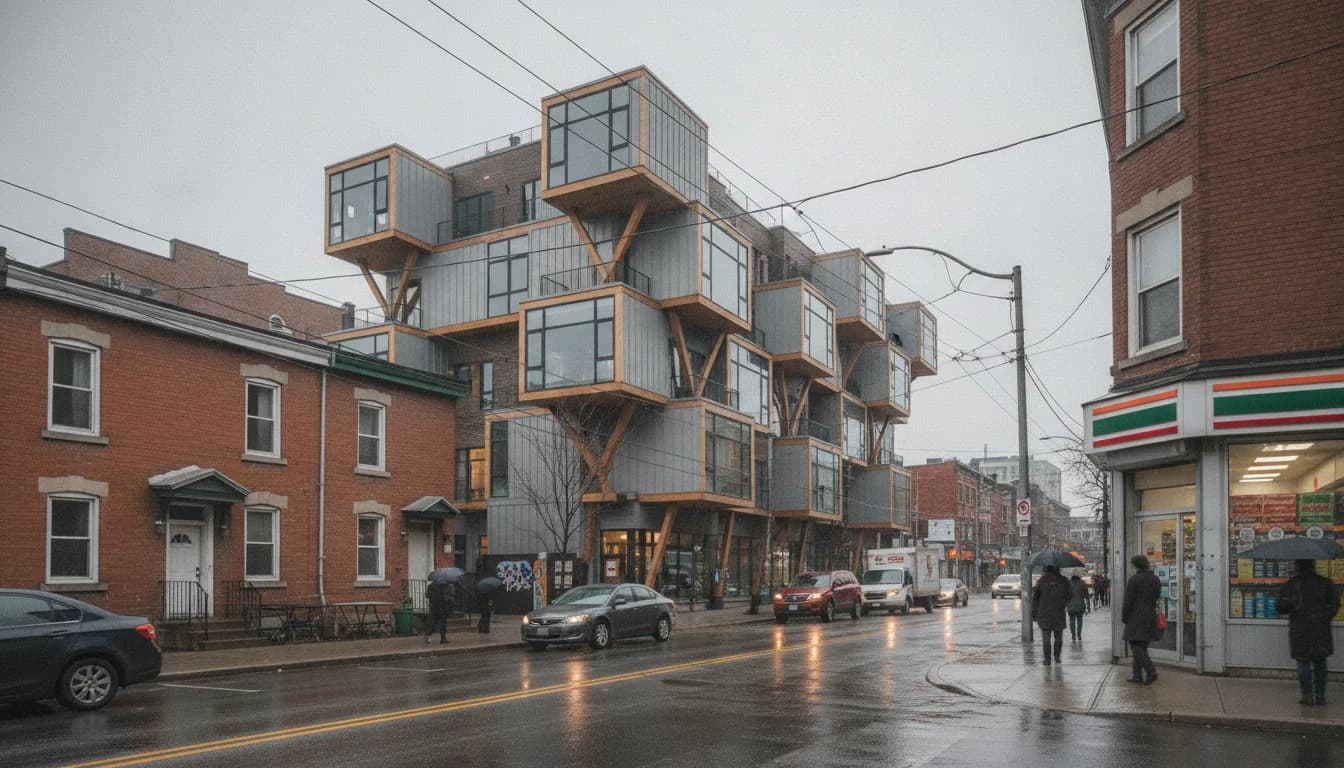
Montreal is increasingly leaning on modular housing as a tool to address urgent housing needs, from transitional shelters for people experiencing homelessness to faster, more cost-efficient delivery of affordable units. As part of the Montreal modular housing trend, city officials, the federal government, and private partners are coordinating on multiple fronts to scale modular solutions across the island. This evolving approach has yielded both notable milestones and significant challenges, underscoring a broader shift in how Montreal and the wider region think about housing production, timelines, and community integration. The latest developments reflect a data-driven push to accelerate housing delivery while maintaining safety, environmental considerations, and neighborhood fit.
In the past year, Montreal has opened its first modular transitional housing project at the Hippodrome site, marking a concrete step in using modular units to address homelessness while waiting for longer-term social housing. The project’s opening was framed as a practical experiment in rapid deployment that could inform future expansions if successful. At the same time, a planned modular housing project in Outremont was cancelled amid contamination concerns and cost pressures, highlighting the essential risk management and regulatory challenges that accompany rapid deployment of prefabricated housing. Taken together, these events illustrate a broader Montreal modular housing trend characterized by ambitious targets, public accountability, and ongoing refinement of strategy as the city learns what works best in different neighborhoods and for different populations. For policymakers, developers, and residents, the balance of speed, safety, and affordability remains the central question guiding the next wave of modular initiatives. This article surveys what happened, why it matters, and what Montrealers can expect next as the trend continues to unfold across the city.
What Happened
Modular housing opens at the Hippodrome site, signaling a new phase
Montreal’s modular housing initiative reached a tangible milestone with the opening of its first modular transitional housing project at the former Hippodrome site. The project is designed to provide temporary housing for individuals who have experienced homelessness and are awaiting placement in longer-term social housing or supportive services. Mayor Valérie Plante framed the effort as a practical, outside-the-box response to a pressing public need, emphasizing speed, safety, and integration with supports. The opening date and the involvement of multiple levels of government and community partners mark a notable moment in the city’s housing strategy. The event underscored the potential for modular units to shorten timelines for providing safe, stable housing while social housing stock is expanded. According to the reporting surrounding the project, the modular units are designed to be adaptable to changing needs on site, with a focus on service delivery that can evolve alongside residents’ journeys toward stability. The Hippodrome project is also viewed as a stress test for processes around site readiness, unit customization, and the coordination required to connect residents with social and health services. The project’s formal rollout, including public communications and partner coordination, offers a reference point for similar deployments in other neighborhoods. This milestone aligns with broader federal and provincial commitments to accelerate housing delivery through modular approaches, drawing on funding mechanisms established through national housing programs and provincial housing plans.
Blockquote content and context from contemporaneous reporting emphasize the practical focus of the Hippodrome project, including the emphasis on safeguarding vulnerable residents and ensuring access to support networks. “Thinking outside of the box,” as quoted by the mayor during the announcement, captured the spirit of Montreal’s willingness to experiment with modular solutions as part of a larger housing agenda. The project’s early performance data—such as occupancy, service connections, and resident feedback—were flagged by officials as key indicators to watch in the months after opening. While the Hippodrome project does not alone solve the city’s housing affordability challenge, it is widely viewed as a critical learning lab that could inform future modular deployments in other parts of the city. (montreal.citynews.ca)
Outremont project canceled amid contamination concerns
Not all modular initiatives have progressed as planned. A modular housing project proposed for Outremont was cancelled due to soil contamination and escalating costs, a decision that drew criticism from housing advocates and opposition politicians. The cancellation underscores a central tension in the Montreal modular housing trend: while modular delivery can accelerate construction timelines, it also introduces new environmental and regulatory hurdles that can derail projects if not adequately managed. The decision to cease the Outremont proposal serves as a cautionary tale about the importance of robust site assessments, remediation planning, and transparent cost forecasting when modular units are deployed on city-owned or sensitive sites. The impact is nontrivial: such cancellations affect timelines for what would have been a 30-unit modular housing project and influence community expectations about the scale and pace of future modular deployments. The case also highlights the need for clear procedural pathways to evaluate contaminated sites before commitments are made, and it spotlights the role of local governance in safeguarding neighborhoods while pursuing innovative housing solutions. (globalnews.ca)
Federal and municipal collaboration accelerates modular housing rollout
Beyond individual projects, Montreal’s modular housing trend has gained momentum from a broader collaboration among municipal authorities, the provincial government, and the federal government. The City of Montreal has taken steps to support the rapid delivery of affordable housing through modular means, including partnerships and funding structures tied to provincial and federal programs designed to speed construction while maintaining quality. Notably, federal involvement in modular housing initiatives has included funding streams associated with the broader housing acceleration framework, paired with provincial administration and local project execution. The city’s approach to supporting modular housing includes facilitating sites, coordinating with housing organizations (non-profits and municipal housing offices), and ensuring that modular projects align with transit and neighborhood planning goals. These collaborations are central to the Montreal modular housing trend, shaping both the scale of deployments and the pace at which new units come online. (cmhc-schl.gc.ca)
Prefabrication and speed: units and sites across the island
A parallel thread in the Montreal modular housing narrative involves prefabrication as a method to reduce on-site construction time and potential disruption to neighborhoods. The city’s preference for modular and prefabricated components, where appropriate, is reflected in planning documents and procurement streams, including examples from other municipalities within the province that emphasize speed and reuse of modular units to address acute housing needs. In the Dorval area and other parts of the province, planners have noted the use of prefabricated modules to accelerate delivery, with regulatory approvals and site preparation being the principal remaining steps to completion. While these are not exclusive to Montreal, they form part of a broader provincial and regional shift toward modular and prefabricated housing as a strategy for expanding supply quickly. The municipal, provincial, and federal components of these programs are designed to complement one another, with modular units acting as a bridging solution while longer-term affordable housing stock is expanded. (omhm.qc.ca)
A look at the bigger picture: housing supply and market context
In parallel with modular housing projects, provincial and federal data increasingly situate modular solutions within a wider housing supply discussion. Market analyses and housing supply reports from CMHC emphasize the continuing demand for affordable and market-rate units, with modular approaches positioned as one of several tools to speed up production and improve affordability metrics. The fall 2025 Housing Market Report provides a snapshot of conditions that contextualize modular projects within the overall supply landscape, including trends in multifamily construction, rental markets, and policy responses designed to facilitate faster delivery of new homes. These macro-level signals matter to Montreal’s modular housing trend because they help explain why modular solutions are gaining traction as part of a multi-pronged strategy to address housing shortfalls in a timely manner. (assets.cmhc-schl.gc.ca)
The role of non-profit and city partnerships in modular delivery
Partnerships with non-profit housing organizations and municipal housing offices have been central to executing modular housing projects in Montreal. The Office municipal d’habitation de Montréal (OMHM) and its partners have highlighted ways in which modular units and prefabricated components can be deployed to create new housing opportunities, including for students or other targeted groups. Initiatives in Dorval and other municipalities illustrate how prefabricated modules can be integrated into broader housing strategies, with funding and regulatory support helping to accelerate delivery while maintaining quality and safety standards. These collaborations are a core element of the Montreal modular housing trend, illustrating how public institutions are leveraging modular construction within a broader housing policy framework. (omhm.qc.ca)
Why It Matters
Impact on homelessness and transitional housing
The immediate social impact of Montreal’s modular housing trend lies in the expansion of transitional and temporary housing options for people experiencing homelessness. The Hippodrome modular transitional housing project directly addresses urgent shelter needs and facilitates quicker access to social services and supports. While the long-term effectiveness of modular transitional housing depends on subsequent placement into stable social housing, the initiative demonstrates a pragmatic, data-informed approach to reducing time spent in precarious living conditions. Analysts and advocates emphasize that modular units can close gaps in shelter capacity, particularly during periods of high demand or housing market volatility. The experience at Hippodrome informs ongoing discussions about how to design services and supports within modular settings, ensuring residents have pathways to stable housing and integrated supports. (montreal.citynews.ca)
Market implications for developers, investors, and neighborhoods
The Montreal modular housing trend intersects with broader market dynamics, including demand for rental units, investment in affordable housing, and shifts in development timelines. Market analysts tracking Montreal’s investment climate note that modular projects can help de-risk some affordable housing initiatives by shortening construction windows and reducing labor intensity, albeit with careful attention to site viability, regulatory approvals, and ongoing operating costs. Public policy signals—such as targeted subsidies for affordable housing renovations and the use of modular units to accelerate supply—complement market incentives and may influence investment decisions in the near term. The combination of public funding, private partnerships, and non-profit involvement is shaping a more modular-oriented development environment that could affect pricing, absorption rates, and the pace of new housing completions in Montreal. (montreal.ca)
Regulatory and public-safety considerations
A central theme in the Montreal modular housing trend is the careful balancing of speed with safety, environmental health, and community impact. The Outremont cancellation sharply reminds stakeholders that environmental remediation and long-term durability are non-negotiables in modular deployments. City and provincial authorities are increasingly documenting guidelines for site selection, contamination assessment, remediation plans, and cost forecasting to minimize disruptions and protect residents. Public health and environmental standards are integral to the permitting process for modular housing, and ongoing oversight from municipal and provincial authorities helps ensure that modular developments meet long-term quality and safety expectations. The lessons from the cancellation and the Hippodrome opening collectively illustrate how policy design, risk management, and community engagement must evolve in tandem with the expansion of modular housing. (globalnews.ca)
Policy alignment with housing supply goals and affordability targets
Montreal’s modular housing trend sits within a broader policy framework aimed at expanding affordable housing stock, leveraging public subsidies, and aligning with social priorities for vulnerable populations. Policy documents and official programming pages outline how subsidies, renovations, and non-market housing initiatives can be used in concert with modular approaches to deliver housing more quickly and reduce affordability pressures. The municipal focus on affordable housing renovations and targeted subsidies demonstrates a commitment to a multi-pronged strategy, where modular delivery is one of several levers designed to increase the housing supply relative to demand. This alignment matters for residents and investors alike, signaling a stable policy environment in which modular projects can be planned with predictable support and oversight. (montreal.ca)
What’s Next
Upcoming modular housing projects and timelines
The Montreal modular housing trend is far from static. Building on early wins and lessons from the Outremont setback, officials and partners are likely to pursue new modular deployments in the near term, with timelines shaped by funding cycles, site readiness, and regulatory clearances. The federal government’s involvement in housing acceleration programs, coupled with provincial funding and municipal execution, suggests a pipeline of potential modular projects across the island. Observers expect continued emphasis on transitional and affordable housing modules, integrated with support services to maximize positive resident outcomes. The 2025–2026 reporting period includes references to new modular initiatives tied to the Canada–Québec housing framework and provincial plans that prioritize rapid delivery of units, while maintaining high standards for habitability, energy performance, and resident well-being. As new projects are announced, city planners will increasingly publish site-by-site progress updates, including milestones such as site preparation, module manufacture, on-site assembly, utility connections, and occupancy. (cmhc-schl.gc.ca)
Next steps for residents, communities, and investors
For residents and neighborhood associations, the modular housing trend offers both opportunities and concerns. On the one hand, modular units can deliver much-needed housing more rapidly and with potentially lower construction costs, which can translate into more affordable rents or faster relocation for those in precarious housing conditions. On the other hand, communities will seek assurances about site suitability, traffic and noise considerations during construction, long-term neighborhood integration, and ongoing maintenance and safety standards. Investors and developers will be watching for policy signals, funding continuity, and market absorption rates as indicators of risk and potential returns. Public communications, transparent performance metrics, and accessible resident services will be essential to maintaining community trust and ensuring the long-term success of modular deployments. (montreal.ca)
Policy refinements and lessons learned from 2025–2026
The sector’s near-term evolution will likely include refinements to procurement processes, site-screening protocols, and environmental remediation requirements. The cancellation of an Outremont project and the opening of Hippodrome’s modular housing underscore the need for robust due diligence and clear contingency planning. As the city scales its modular housing program, it will be essential to codify learnings from both successes and setbacks into improvements in policy design, project governance, and intergovernmental coordination. The broader policy ecosystem—encompassing the municipal housing office, provincial authorities, and federal program guidelines—will play a pivotal role in shaping the pace and structure of future modular deployments, including the balance between quick wins and durable, scalable solutions for long-term housing affordability. (globalnews.ca)
What to watch in the coming quarters
Several indicators will help readers gauge the direction of the Montreal modular housing trend. First, new modular projects entering the pipeline, including transitional and affordable housing units, will signal continued ambition and scaling. Second, government funding announcements and updates to housing programs will shape the financial feasibility and speed of deployment. Third, site-specific developments—especially milestones like module installation, utility hookups, occupancy, and evaluation of resident outcomes—will provide concrete data about how modular housing performs in practice. Fourth, any additional environmental or contamination-related challenges will influence risk management approaches and community engagement strategies. Finally, market analytics and housing supply reports will help place modular projects within the broader context of Montreal’s ongoing housing affordability efforts, enabling more informed decisions by policymakers, developers, and residents. (cmhc-schl.gc.ca)
Closing
Montreal’s modular housing trend represents a bold, data-informed experimentation with a tool that has the potential to reshape how the city responds to housing shortages. While recent milestones—such as the Hippodrome modular housing opening—signal progress, the Outremont cancellation also reminds stakeholders that modular initiatives must be anchored in rigorous site assessment, environmental safeguards, and transparent cost management. As the city continues to pursue rapid housing delivery in tandem with social supports, residents, neighborhoods, and investors will be watching closely: how soon can new units come online, how well will supports be integrated for residents, and what lessons from early deployments will inform the next wave of modular housing projects? With federal funding, provincial backing, and municipal leadership aligning around clear pathways for modular deployment, the Montreal modular housing trend is likely to persist as a defining feature of the city’s housing strategy in the coming years. Stay tuned for ongoing updates as the city advances its modular housing program, shares performance metrics, and expands opportunities for affordable living across Montréal.