Montreal Street Art Renaissance 2026: New Murals and Tours

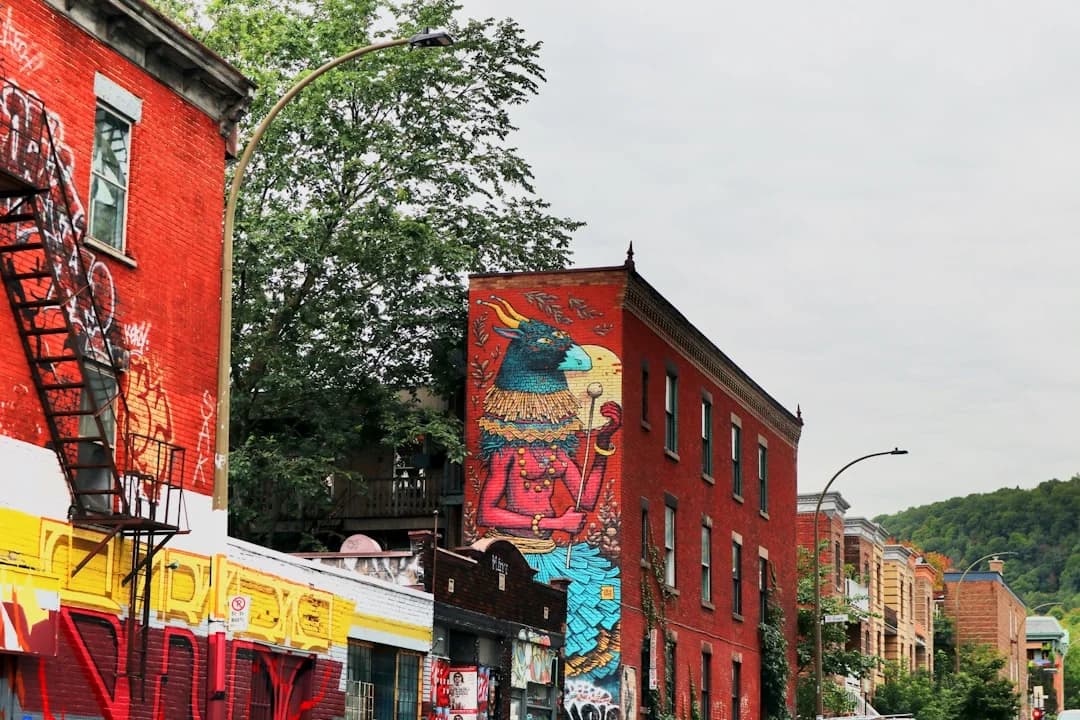
Photo by Anil Wasif on Unsplash
Montreal is entering a new chapter for public art in 2026, branded by a city-backed mural program and the continuing vitality of the MURAL Festival. As the city leans into a broader “Montreal street art renaissance 2026” narrative, officials say the year will bring expanded funding, clearer timelines for mural projects, and new public-art initiatives designed to boost accessibility, inclusivity, and local engagement. For readers of the Montréal Times focused on technology and market trends, the convergence of urban art, placemaking, and tourism economics offers a compelling case study in how cultural infrastructure can drive foot traffic, real estate dynamics, and community vitality in a major North American city. The news lands as Montreal’s street-art ecosystem evolves from a festival-centric model toward a year-round, citywide program designed to support artists, neighborhoods, and private partners alike. The result could be a measurable shift in how residents and visitors experience public spaces, with mural projects acting as anchors for commerce and cultural exchange. This signals a clear moment in the Montreal street art renaissance 2026, where policy, practice, and private investment align to create enduring urban value.
The MURAL Festival remains a central artery of the scene, transforming Saint-Laurent Boulevard and surrounding districts into open-air galleries and programming hubs every June. Since its inception in 2012, Festival MURAL has aimed to democratize urban art and has grown into a globally recognized platform that draws visitors from across the world to Montreal’s Plateau-Mont-Royal corridor. In 2026, the festival is scheduled from June 4 to June 14, continuing to anchor Montreal’s urban-art calendar and attracting a mix of muralists, musicians, and cultural participants. The festival’s public-facing model—live painting, guided tours, and venue partnerships—exemplifies how street art can function as a major tourism and placemaking asset for the city. (lerefrain.com)
What follows is a data-driven, timetable-focused update on the 2026 artistic and policy developments shaping Montreal’s street-art renaissance. This coverage provides the essential facts for professionals tracking urban culture, municipal budgeting for the arts, and local firms whose strategies depend on cultural activity and foot traffic. As this is a fast-evolving space, the article highlights official sources and key industry analyses that illuminate the practical implications of the 2026 program.
What Happened
Volets 1 et 2: Murals the city aims to fund and place
Montreal’s 2026 mural program operates on two funding “volets” that structure project selection and funding. The city describes Volet 1 as supporting murals with very high public visibility, while Volet 2 targets neighborhood-scale murales, lower in scale but high in local impact. The program emphasizes artistic quality and public reach as core evaluation criteria. This structured funding approach is designed to ensure both landmark works and neighborhood murals contribute to the city’s cultural landscape and accessibility goals. (ville.montreal.qc.ca)
- Volet 1: Murales de grande visibilité. The city outlines that this volet targets murals that achieve broad visibility across public space, with a framework aimed at maximizing public encounter with the art. The call for projects details expectations around wall visibility, audience reach, and integration with surrounding architecture. (ville.montreal.qc.ca)
- Volet 2: Murales de quartier. This volet focuses on murals that strengthen neighborhood identity and accessibility to culture, including cultural mediation and community mobilization components. The program specifies criteria for community engagement, partnerships, and long-term impact on the quartier. (ville.montreal.qc.ca)
The city’s formal guidance for 2026 also includes the required application process, with deadlines and submission mechanics embedded in the same 2026 call for proposals. The document makes clear that projects must be submitted for Volets 1 or 2 (or both, depending on the project’s scale and aims) and that the jury will assess proposals against the program’s stated objectives and budgets. The call also spells out the expectations for cultural mediation, community involvement, and long-term maintenance of murals. (ville.montreal.qc.ca)
Key dates and milestones to watch in 2026
The 2026 calendar for the municipal mural program lays out a precise sequence of deadlines and milestones, which is essential for any organization hoping to secure support for a mural project. The information session for prospective applicants occurred virtually on December 16, 2025, with follow-up information and guidance offered by the City of Montreal’s cultural service. Applicants were invited to attend to understand eligibility criteria, the application process, and how to align projects with the city’s mural objectives. This virtual session was part of a broader set of informational and advisory activities designed to assist applicants in navigating the process. (ville.montreal.qc.ca)
- Volet 2 deadline: February 17, 2026, at noon. This deadline marks the closing date for proposals seeking support under the neighborhood-scale murales program. (ville.montreal.qc.ca)
- Volet 1 deadline: March 10, 2026, at noon. This later deadline corresponds to proposals seeking high-visibility murals that will become city-facing landmarks. The separation of deadlines reflects the different evaluation timelines and budgetary planning required for large-scale versus neighborhood murals. (ville.montreal.qc.ca)
- Jury and selection: March–April 2026. After the deadlines, the city conducts selection committees to evaluate proposals and determine recommendations for funding. (ville.montreal.qc.ca)
- Announcement of recommended projects: April–May 2026. The city communicates which projects are recommended for funding and moves them toward final approval and contract negotiation. (ville.montreal.qc.ca)
- Maquette submission deadlines: Volet 1 — July 6, 2026; Volet 2 — August 10, 2026 (for projects starting before August 15). These dates mark the point at which approved projects must submit maquettes for validation before production begins. (ville.montreal.qc.ca)
- Realization window: Spring–Fall 2026 (and beyond). After maquettes are validated, mural realization proceeds through the warmer months, with inauguration and public unveilings planned later in the year. (ville.montreal.qc.ca)
In addition to the formal mural program, Montreal’s broader street-art ecosystem continued to evolve in 2026, with major events like Festival MURAL continuing to anchor the scene. The festival is scheduled for June 4–14, 2026, in Montreal, with the Saint-Laurent Boulevard corridor serving as a focal point for murals, live painting, and related programming. The festival’s mission to democratize urban art remains central to the city’s art-ecosystem strategy, underscoring how the festival and municipal program can intersect to amplify public art across neighborhoods. (lerefrain.com)
Timeline and immediate context
The MURAL Festival’s 2026 edition continues to be a marquee event for Montreal’s street art scene, with a calendar that includes a slate of live-painting sessions, guided tours, and concerts along Saint-Laurent Boulevard. The official programming page shows a pattern of daily programming and performances, echoing the wider market interest in street art as both culture and experience. The festival’s 2026 edition follows a decade of growth and has become a staple for both local artists and international participants seeking visibility in Montreal. (muralfestival.com)
Separately, the city’s mural program has a parallel impact on policy and practice. The 2026 call for mural projects underscores a systemic approach to funding, with a strong emphasis on maintenance and long-term preservation, including provisions for wall-surface preparation, anti-graffiti measures, and annual upkeep for at least five years after project completion. This demonstrates a serious commitment to sustaining public artworks beyond their initial unveiling and aligns with the city’s broader cultural infrastructure goals. (ville.montreal.qc.ca)
A notable industry development: LNDMRK’s MURAL Festival under new ownership
A key industry development in 2026 has been the acquisition of LNDMRK, the agency behind Montreal’s MURAL Festival, by Multicolore—the organization behind events like Igloofest and Piknic Électronik. The acquisition, announced in mid-April 2026, preserves the MURAL Festival’s 14th edition and positions the festival within a broader ecosystem of Montreal cultural events that attract tens of thousands of attendees and international attention. The Journal de Montréal reported that the acquisition will help stabilize the festival’s operations and integrate it more deeply into Montreal’s cultural economy, a signal of how market consolidation can influence the scale and sustainability of major street-art events. The festival will continue to run on the Saint-Laurent Boulevard corridor, maintaining its role as a cultural beacon for the city. (journaldemontreal.com)
Why It Matters
Cultural and urban placemaking implications

Montreal’s 2026 street-art renaissance is anchored in a strategy that links public art with urban placemaking, culture-led economic development, and community engagement. Festival MURAL’s mission to democratize urban art reflects a broader understanding that murals can transform public space into accessible cultural venues, inviting residents and visitors to experience the city through a new lens. The festival’s ongoing presence indicates a sustained appetite for large-scale, internationally oriented street-art programming, which helps position Montreal as a leading global hub for mural art and related experiences. (lerefrain.com)
- The festival’s open-air format and the presence of a dedicated gallery ecosystem (such as Station 16 and related spaces) contribute to a year-round tourism and arts economy. Station 16, a central hub for Montreal’s mural scene, has evolved from a silk-screen shop into a prominent gallery and cultural landmark, reinforcing the idea that street art is a viable, sustained cultural industry in the city. This ecosystem supports artists, curators, and businesses while offering visitors a tangible, walkable street-art circuit. (themain.com)
- Arts organizations and journals emphasize that public art can drive foot traffic, neighborhood renewal, and creative economy growth. Major outlets and industry observers describe Montreal’s mural culture as a dynamic engine for placemaking and cultural tourism, underscoring the potential economic and social benefits of a robust mural program. For example, mainstream media coverage highlights the festival’s role in attracting international audiences and contributing to Montreal’s cultural appeal, which has broad implications for hospitality, retail, and local services. (cntraveler.com)
The 2026 program’s emphasis on maintenance and community outreach also highlights a shift from one-off art events to sustained public-art strategies. By requiring long-term upkeep and community engagement activities, Montreal’s mural program acknowledges that murals can be anchors for ongoing neighborhood vitality, local identity, and social cohesion. This shift matters for planners, developers, and local businesses seeking stable, culturally enrichened neighborhoods that attract talent, investment, and visitors. (ville.montreal.qc.ca)
Economic and market implications for the arts sector
The Montreal street art renaissance 2026 sits at the crossroads of culture, tourism, and real estate markets. The MURAL Festival’s prominence, combined with the city’s formal mural program, creates a multi-layered ecosystem in which funding, programming, and private sector collaboration co-evolve. This has several concrete implications:
- Public investment and private sponsorship intersect. The 2026 acquisition news indicates a broader trend toward consolidation in the events sector, where private groups with mixed portfolios—such as Multicolore—are central to sustaining large cultural events. Analysts and industry observers note that this can stabilize event calendars, improve cross-promotional opportunities, and diversify revenue streams, all of which can influence the scale and ambition of mural projects. (journaldemontreal.com)
- Tourism and local commerce are linked to immersive art experiences. Coverage from travel and culture outlets highlights that the MURAL Festival’s programming—murals, live painting, and music—creates an immersive experience that extends beyond art lovers to general tourists. The result is a potential uplift in nearby restaurants, hotels, and retail, as visitors plan longer stays or multi-day itineraries anchored by the festival and related mural-tour activity. This aligns with broader patterns observed in Montreal’s festival economy, where cultural events contribute to city-brand strength and visitor spend. (cntraveler.com)
- Neighborhood-level mural programs contribute to place-based economic development. The Volet 2 focus on neighborhood murals implies a strategy to distribute cultural investment across multiple districts. This can spur localized economic activity, support artists with new funding channels, and foster partnerships with local businesses. The city’s call for projects explicitly links mural visibility with neighborhood vitality and accessibility to culture, signaling a deliberate equity- and inclusion-oriented approach to urban art funding. (ville.montreal.qc.ca)
Industry observers also point to the broader strategic context: Montreal’s street art ecosystem sits within a city that has historically leveraged festivals and cultural events to showcase talent and attract international audiences. The MURAL Festival’s long track record—paired with the municipal mural program—illustrates a model where cultural production is integrated into the city’s growth narrative, with murals acting as durable cultural assets rather than transient curiosities. This aligns with global conversations about art-driven urban development, placemaking, and community engagement as a competitive advantage for cities. (cntraveler.com)
Public access, equity, and community engagement
Montreal’s mural program explicitly foregrounds accessibility and community involvement as part of its mission. By balancing high-visibility murals with neighborhood murals, the city aims to broaden the public’s access to public art and engage diverse communities in the creative process. The program emphasizes that murals should be a shared cultural resource, not merely a destination for visitors but a catalyst for neighborhood pride and inclusion. This approach has implications for how artists collaborate with communities, how murals are sited and mediated, and how public art contributes to place-based identity. The program’s guidelines stress mediation and community mobilization as core components, highlighting a deliberate equity-focused approach to urban art funding. (ville.montreal.qc.ca)
What's Next
Timeline, next steps, and what to watch for
As the 2026 Montreal mural programs move through the year, several milestones are worth watching for industry observers and local stakeholders:
- Finalization of recommended projects and contract signings. The spring–early summer period of 2026 will see the city finalize which mural projects advance to funding and implementation, followed by formal signing of agreements. This stage determines which neighborhoods and walls will feature new or renovated murals, and which art collectives will be commissioned under Volets 1 and 2. (ville.montreal.qc.ca)
- Maquette validation and production ramp-up. With maquette submission deadlines in early July (Volet 1) and August (Volet 2), the art production cycle will accelerate in midsummer. Expect heightened activity from muralists, contractors, and property owners as maquettes transition to full-scale murals, with the goal of installation commencing in Spring–Summer 2026 and continuing through the year. (ville.montreal.qc.ca)
- The MURAL Festival’s 2026 edition and related tours. The 2026 MURAL Festival, scheduled for June 4–14, will again anchor the city’s art-tour season, attracting visitors and media attention to Plateau-Mont-Royal and Saint-Laurent Boulevard. The programming includes a mix of murals and live programming, reinforcing the city’s status as a street-art capital during the festival period. Observers should watch for headlining artists, new mural announcements, and guided-tour experiences tied to this edition. (lerefrain.com)
- Industry consolidation and ongoing ecosystem development. With Multicolore’s acquisition of LNDMRK to secure the MURAL Festival’s future, 2026 is shaping a broader pattern of consolidation within the Montreal arts and events sector. This development could influence sponsorship opportunities, cross-brand collaborations, and the scale of future mural-related programming, potentially broadening the audience for street art while raising questions about governance and creative control. (journaldemontreal.com)
- Public programs and neighborhood partnerships. The city’s mural program continues to emphasize community engagement and neighborhood impact. In 2026, operators and arrondissements are expected to deepen partnerships with local organizations, business associations, and cultural partners to co-create murals that reflect local histories and contemporary concerns. The program’s guidelines and calendar emphasize the importance of public mediation, partner alignment, and accountable outcomes, with a multi-year horizon for maintenance and impact measurement. (ville.montreal.qc.ca)
For readers watching the tech- and data-driven angle, these developments are particularly relevant. The integration of mural programs with data collection on audience reach, mediation activities, and long-term wall maintenance can yield a richer set of metrics for evaluating the public-art program’s effectiveness. The city’s explicit framework around measurement—such as anticipated audience reach, the number of community activities, and maintenance obligations—provides a model for other cities seeking to scale street art as a public-good asset. In the broader Montreal context, the street-art renaissance 2026 aligns with a growing recognition that art and culture contribute to digital-age urban competitiveness, tourism, and quality of life.
Next steps for artists, sponsors, and local businesses
- Artists and collectives should review the 2026 call for murals (Volets 1 and 2) and attend the information sessions to understand eligibility, budgeting, and timelines. The city’s guidance emphasizes that all documents should be submitted in PDF format, with all required attachments, including artist bios and portfolios. Early preparation can improve the chances of success in the 2026 cycle. (ville.montreal.qc.ca)
- Local businesses and property owners along key corridors such as Saint-Laurent Boulevard and Plateau-Mont-Royal can position themselves as mural-partner hosts, supporting the city’s efforts to expand public art and visitor-friendly experiences. Partnerships with artists, mediation activities, or in-kind contributions can help murals achieve broader reach and sustained maintenance. For context, the festival’s ongoing footprint on the Plateau corridor demonstrates how mural initiatives can become integral to a district’s brand and visitor appeal. (lerefrain.com)
- Cultural institutions, galleries, and art-organization networks should monitor the evolving ecosystem, including the MURAL Festival’s programming and the municipal mural program’s funding calls. The presence of established gallery spaces such as Station 16 and related venues can help bridge street art with formal art-world channels, creating pathways for artists to reach new audiences while maintaining the public-nature of the murals themselves. (themain.com)
Closing
As Montreal advances its 2026 street art agenda, the city is actively calibrating how murals function as public infrastructure—sites for engagement, education, and economic activity. The dual track of municipal mural funding and the high-visibility MURAL Festival establishes a concrete framework for sustaining a street-art renaissance that touches neighborhoods as much as it does international visitors. Observers and participants alike should watch for how the 2026 volets translate into new murals, how community mediation efforts unfold across districts, and how the broader cultural economy responds to the festival’s expanded footprint and the sector’s ongoing consolidation. In this moment, Montreal’s street art renaissance 2026 embodies a practical intersection of policy, placemaking, cultural production, and market dynamics—an urban experiment with potential lessons for cities around the world.

The city’s plan underscores a simple but powerful idea: public art is not a one-off spectacle but a long-term investment in place, identity, and economic vitality. As Montreal charts this path through 2026 and beyond, residents and visitors can look forward to a transformed cityscape—block by block, wall by wall—where murals tell stories, bring people together, and help shape the market for culture in Montreal for years to come. The ongoing collaboration between artists, communities, and city agencies will determine the effectiveness of the Montreal street art renaissance 2026 and how it resonates with future generations of urban art and urban economies.