Montreal Street Art Renewal Plateau Mile End
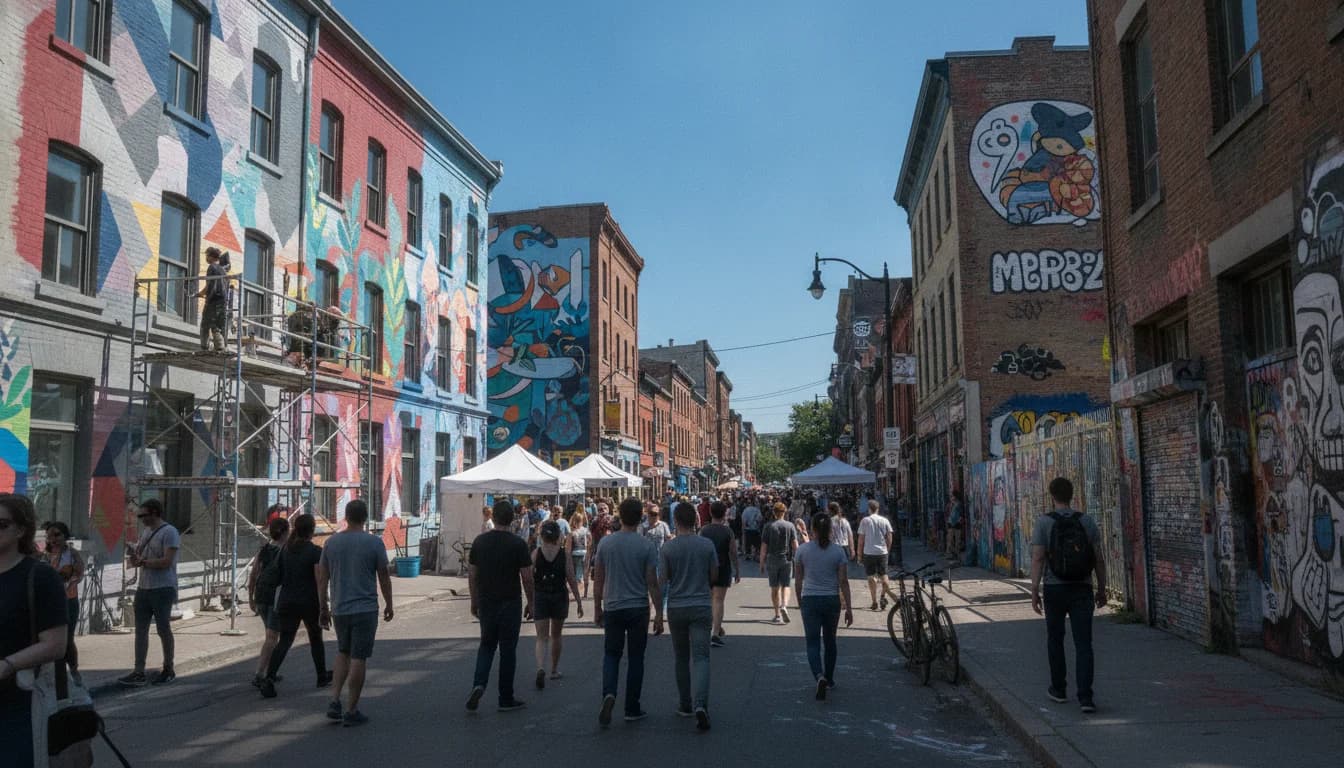
Montreal Times has learned of a structured refresh to the city’s street art program, with explicit attention on Plateau-Mont-Royal’s Plateau and the adjacent Mile End neighborhood. The initiative centers on public murals and related arts programming as a tool for urban renewal, cultural engagement, and neighborhood vitality. The city’s official pages show that a dedicated program, the Programme Muralité du Plateau, was updated in early February 2026 and outlines clear timelines for mural proposals, maintenance, and completion. This marks a formal, data-driven approach to street art as an instrument of urban renewal in two of Montreal’s most dynamic neighborhoods. The program’s updates and deadlines provide a concrete timeline for artists, community organizations, and property owners, signaling a longer-term commitment to visible, contextually grounded public art in Plateau-Mont-Royal and Mile End. (montreal.ca)
In parallel, the broader municipal framework for mural art—the citywide Programme d’art mural (PAM)—lays out three distinct pillars: large-visibility murals, neighborhood murals, and a municipal collection piece. Since the PAM’s evolution in Montreal began years ago, the current 2026 cadence includes explicit calls for proposals with staggered deadlines, continuing under a regime designed to engage local communities alongside professional artists. Montreal’s official PAM page notes a three-volet structure and indicates that the deadlines and submission windows for 2026 are now in effect, with dates including a March 10, 2026 deadline for Volet 1 and a February 17, 2026 deadline for Volet 2, among others. This framework helps align street art with neighborhood needs, artist opportunities, and municipal cultural objectives. (ville.montreal.qc.ca)
Additionally, Montreal’s major annual street art event, MURAL Festival, remains a central driver of visibility and foot traffic in Plateau-Mont-Royal and Mile End. The 2026 edition is scheduled for June 4–14 on Boulevard Saint-Laurent, signaling a broader ecosystem in which permanent murals, temporary installations, and community programming intersect with urban planning, tourism, and local economies. The festival’s timing and scale are relevant to the Plateau-Mile End renewal narrative, illustrating how city-led programming and large-scale public art events can amplify neighborhood transformation. (mtl.org)
Opening paragraph: Montreal street art renewal Plateau Mile End represents a coordinated effort to couple public art with urban renewal goals, drawing on municipal mural programs and marquee events to shape the neighborhood’s future. The initiatives emphasize engaging local communities, supporting artists, ensuring maintenance and longevity of murals, and coordinating with broader transportation and cultural plans in Plateau-Mont-Royal and Mile End. This alignment between policy, community engagement, and cultural production is intended to produce measurable outcomes for residents, businesses, and visitors alike. (montreal.ca)
What Happened
City launches Muralité du Plateau and sets 2026 completion targets
The Plateau-Mont-Royal arrondissement has publicized the Programme Muralité du Plateau, a targeted effort to fund and realize murals on Plateau-Mont-Royal walls. The program opened with an explicit update dated February 3, 2026 and includes a completion target for murals funded through the program by December 31, 2026. Eligible projects require written owner consent, prohibit commercial messages on murals, and include long-term stewardship for a minimum of five years. The program positions murals as a form of cultural mediation between artists and residents, while aligning with broader municipal norms on urban design and heritage. These specifics are important for applicants and for residents who want to understand how street art projects will be integrated into the neighborhood's fabric. (montreal.ca)
Montreal’s mural ecosystem: three-volet framework and 2026 calls for proposals
Montreal’s citywide Programme d’art mural (PAM) operates on three principal pillars: Murales de grande visibilité (Volet 1), Murales de quartier (Volet 2), and Murale de la collection d’œuvres d’art public (Volet 3). The PAM page details the relationships among these streams, including the goal of delivering publicly visible murals, engaging local communities, and curating a municipal art collection. For 2026, the PAM program has published deadlines for proposals: Volet 1 calls with a March 10, 2026 noon deadline, Volet 2 with a February 17, 2026 noon deadline, and continued oversight for Volet 3 and related maintenance programs. Applicants must submit through the city’s platform, with required documentation and eligibility criteria spelled out in the call packages. This structure signals an ongoing, data-informed expansion of public art across boroughs, with Plateau-Mont-Royal and Mile End noted among participating areas. (ville.montreal.qc.ca)
The Mile End and Plateau connection: historical and contemporary mural activity
The Mile End and Plateau neighborhoods have long served as canvases, studios, and communities for muralists and street artists. Notable examples include a mural at 100 Avenue Laurier O created in 2024 by Ankhone and Nicole Boyce as part of urban art programs tied to the Mile-End arts ecosystem. The City of Montreal’s mural registry confirms the work’s location in the Plateau-Mont-Royal area and ties it to the relevant mural programs. This ongoing history underscores how renewal efforts build on established community engagement and prior street art investments. (ville.montreal.qc.ca)
Historical and ongoing community-facing murals illustrate a broader pattern: since the late 2010s, the city has enabled and funded mural projects through dedicated programs, including the long-running Ruche d’art-like community spaces and partnerships with local organizations. For instance, the Mile End’s Ruche d’art concept—opened through the Mile End library network and tied to community programming—demonstrates how art initiatives can anchor neighborhood life and catalyze local participation. While older in origin, these programs help illuminate the trajectory of today’s renewal efforts in Plateau-Mile End. (umq.qc.ca)
In parallel, major events like MURAL Festival have repeatedly connected Plateau and Mile End to a citywide, festival-driven public art strategy. The festival’s focus on the Saint-Laurent Boulevard corridor has repeatedly drawn visitors to the Plateau-Mont-Royal and Mile End neighborhoods, reinforcing the economic and cultural value of street art as a driver of neighborhood identity and tourism. The festival’s 2026 edition is scheduled for early June, with programming that expands beyond murals to a broader cultural experience. (mtl.org)
Key timelines, deadlines, and milestones in 2026
- February 3, 2026 at 12:00 p.m. (noon): Final submission deadline for projects under the Muralité du Plateau program. Projects funded under this initiative must be completed by December 31, 2026. This provides a tight but concrete window for execution and accountability. (montreal.ca)
- March 10, 2026 at noon: Deadline for Volet 1 proposals under the citywide PAM program, which emphasizes large-visibility murals. This is a major milestone for artists and organizations seeking high-impact placements. (ville.montreal.qc.ca)
- February 17, 2026 at noon: Deadline for Volet 2 proposals under PAM, focusing on neighborhood murals that engage community stakeholders. This supports more localized, participatory projects within the Plateau-Mont-Royal area and neighboring Mile End. (ville.montreal.qc.ca)
- September 29, 2025 (existing call date referenced in older materials) and May 18, 2026 (date listed for later project components): These dates appear in program literature as historical or transitional deadlines associated with different PAM components and maintenance or expansion streams. They provide historical context for the current 2026 call windows. (ville.montreal.qc.ca)
- June 4–14, 2026: The MURAL Festival returns to the Saint-Laurent Boulevard corridor, reinforcing Plateau-Mont-Royal and Mile End as a city-wide public-art hub during a high-visibility festival window. (mtl.org)
Section 1 underscores a coordinated, policy-backed approach to street art renewal in Plateau-Mont-Royal and Mile End, anchored by municipal programs and aligned with the city’s broader cultural objectives. The combination of targeted neighborhood funding (Muralité du Plateau) and citywide PAM calls for proposals creates a structured framework for artists, organizers, and property owners to participate in a multi-year renewal cycle centered on public art. The dates and program design reflect a data-driven, accountability-focused approach intended to deliver tangible outcomes—prominent murals, enduring installations, and community engagement—within a defined time horizon. (montreal.ca)
Why It Matters
Cultural vitality and community engagement in urban renewal
At the core of the renewal effort is a commitment to cultural vitality and community involvement. The PAM framework emphasizes that murals can mobilize local communities, facilitate dialogue among residents and businesses, and reduce vandalism by turning walls into valued civic assets. The program’s evaluation criteria explicitly weigh the concept, artistic quality, community impact, and sustainability. This is more than art for art’s sake—it’s a governance approach that treats murals as a catalyst for neighborhood pride, social cohesion, and long-term maintenance of public spaces. In Plateau-Mont-Royal, where the Mile End influence is strong, the emphasis on neighborhood murals (Volet 2) aligns with a history of community-led art spaces and participatory programming. (ville.montreal.qc.ca)
Economic and urban renewal implications
Public art initiatives, especially those formalized through city programs, can have economic effects beyond aesthetics. By coordinating with property owners, local organizations, and cultural groups, the renewal effort aims to create a more attractive environment for residents, workers, and visitors. The Palais of murals and the MURAL Festival contribute to foot traffic, tourism, and local business activity during peak periods. While the primary intention of the Muralité du Plateau program is cultural enrichment, its measurable outcomes—sustained mural longevity, community engagement, and reduced vandalism—have downstream economic implications that researchers and city planners monitor as part of urban renewal assessments. The city’s approach highlights how public art can function as a strategic asset within a broader urban development plan. (montreal.ca)
The Mile End and Plateau as a connected art ecosystem
The Mile End and Plateau neighborhoods have long been linked by street-art activity, with murals and art spaces functioning as a shared cultural language across the two districts. The 2024 mural at 100 Laurier O in the Plateau, created by Ankhone and Nicole Boyce, illustrates how works can connect local history, artist networks, and neighborhood identity. The mural registry confirms its Plateau-Mont-Royal location, underscoring how renewal programs are built on existing urban art assets. This continuity is significant because it demonstrates that renewal efforts are not starting from scratch; they leverage a preexisting artistic ecosystem and enhance it through formalized funding, maintenance commitments, and cross-neighborhood collaboration. (ville.montreal.qc.ca)
Public art as a driver of urban transparency and data-driven decision-making
Montreal’s mural program literature emphasizes the importance of documentation, project dossiers, and explicit criteria for evaluation and sustainability. The focus on five-year mural lifespans, maintenance plans, and governance structures indicates a move toward a more transparent, data-driven process for selecting and supporting street art projects. For practitioners, this creates a reproducible framework for evaluating success metrics and for communities to anticipate maintenance and programming efforts. In practice, this means residents can expect a predictable cadence of murals, public programming around art, and ongoing engagement—an outcome that is consistent with the city’s performance in urban culture and innovation domains. (montreal.ca)
Real-world alignment with festival-driven urban art
The MURAL Festival’s ongoing presence in Plateau-Mont-Royal and Mile End demonstrates how festival-driven urban art complements municipal programs. The festival catalyzes public interaction with art, supports local artists, and showcases the neighborhood to a global audience. In 2026, with a scheduled June edition, the festival strengthens the Plateau-Mile End renewal narrative by providing a high-visibility platform that intersects with municipal mural programs and neighborhood planning. This alignment of city policy, festival programming, and local art production can accelerate cultural and economic benefits across the two neighborhoods. (mtl.org)
What’s Next
Upcoming deadlines and program milestones
- Volet 2 proposals for the PAM program are due by February 17, 2026 at noon. This stream targets murals that engage neighborhoods and local communities, offering a pathway for grassroots projects to become city-backed installations. (ville.montreal.qc.ca)
- Volet 1 proposals for the PAM program are due by March 10, 2026 at noon. This track emphasizes murals with high public visibility and requires involvement from nonprofit partners, professional artists, and a viable, long-term maintenance plan. (ville.montreal.qc.ca)
- For Plateau-Mont-Royal’s Muralité du Plateau, the deadline for project submissions via the arrondissement is February 3, 2026 at 12:00 p.m., with final mural completion expected by December 31, 2026. This provides a focused window for Plateau-based projects to move from concept to execution under municipal oversight. (montreal.ca)
The Mile End–Plateau renewal path: what to watch for
- Expanded collaboration with Mile End-based cultural groups and libraries: The Mile End and Plateau have a deep history of community-facing art programs, such as the Ruche d’art and library-driven art spaces, which could feed into new mural projects under PAM Volet 2 or in the Muralité Plateau pathway. Observers should watch for partnerships that combine murals with workshops, artist talks, and family-friendly programming to maximize social impact. (umq.qc.ca)
- Maintenance and longevity commitments: The PAM and Muralité documents place an emphasis on mural durability and post-completion maintenance. Communities should expect formal maintenance plans and potential funding for touch-ups, ensuring that murals remain integral parts of the urban landscape for years. The official guidelines spell out expectations for a mural’s lifespan and ownership considerations, which can influence project viability and community trust. (montreal.ca)
- The ongoing festival cycle as a renewal accelerant: The MURAL Festival in June 2026 remains a key accelerator for neighborhood visibility and tourism. Its alignment with the municipal mural program suggests a synchronized approach to public art that can help neighborhoods attract new residents, investors, and visitors while supporting local artists and small businesses. (mtl.org)
Practical implications for residents, artists, and businesses
- Residents can expect more publicly accessible art in the Plateau-Mont-Royal–Mile End corridor, with murals integrated into urban spaces in ways that emphasize heritage, local storytelling, and civic engagement. The objective is not only aesthetic improvement but also increased pedestrian engagement and neighborhood pride, supported by formal program guidelines. (ville.montreal.qc.ca)
- Artists and collectives should prepare to engage in both citywide and neighborhood-specific processes, including documentation, collaboration with property owners, adherence to urban regulations, and alignment with maintenance expectations. The PAM’s three-volet structure and Muralité’s Plateau-specific funding provide multiple entry points for artists at different stages of their careers. (ville.montreal.qc.ca)
- Local businesses may see increased foot traffic and longer dwell times as murals attract visitors and residents alike. The festival framework and ongoing mural programs create opportunities for partnerships with merchants, small-business associations, and cultural organizations, reinforcing the economic rationale for public art as a neighborly investment. (mtl.org)
What to watch for in the months ahead includes new mural announcements, completion of funded projects, maintenance activities, and the continued integration of public art into broader urban planning processes in Plateau-Mont-Royal and Mile End. As Montreal Times reports on these developments, the city’s data-driven approach to art funding and public programming will continue to shape how the neighborhoods evolve, balancing preservation of historic character with contemporary artistic expression. (montreal.ca)
Closing
The Montreal street art renewal effort in Plateau Mile End signals a careful fusion of cultural ambition, civic governance, and community participation. By codifying mural funding, setting explicit timelines, and coordinating with large-scale events like MURAL Festival, the city is positioning street art as a durable pillar of neighborhood renewal rather than a temporary spectacle. For residents and stakeholders, the coming months will reveal which murals surface first, how communities engage with these artworks, and how the broader urban renewal agenda translates into everyday experiences along the Plateau-Mont-Royal corridor and into Mile End.
To stay updated, readers can monitor official City of Montreal pages on the Muralité du Plateau program and the broader Programme d’art mural, as well as coverage of MURAL Festival and related Mile End initiatives. The evolving timetable for 2026–2027 will continue to shape opportunities for artists, community organizations, and local businesses seeking to participate in this citywide renewal effort. (montreal.ca)