Montreal Summer Construction 2026: Mobility Update

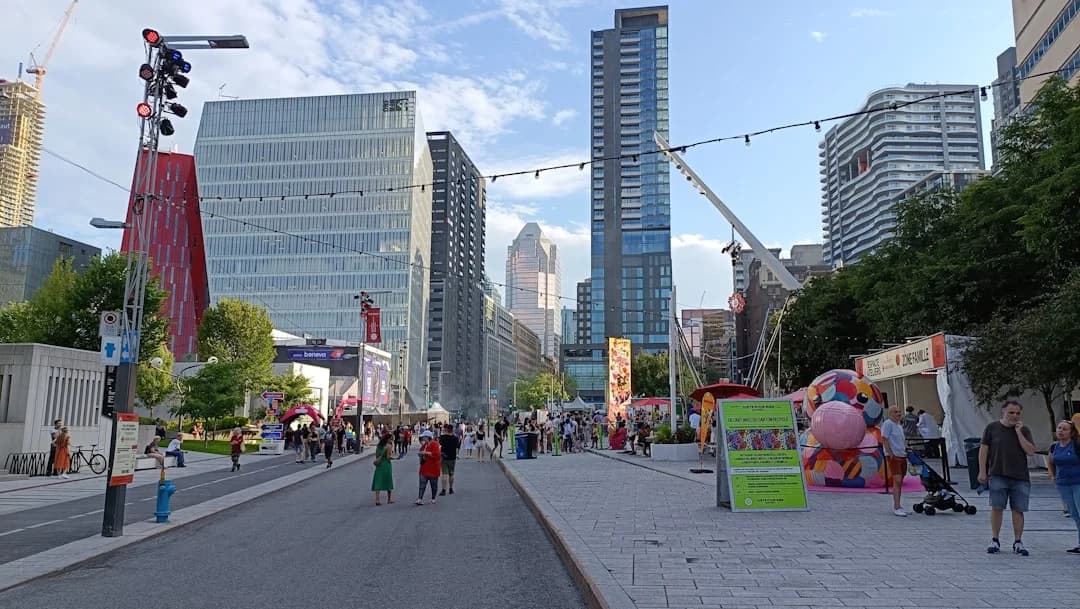
Photo by Dmitri M on Unsplash
Montreal is entering a busy summer for construction, with Mobility Montréal outlining a sweeping program of roadwork and related infrastructure across the metropolitan region for spring and summer 2026. The announcement, issued on May 15, 2026, highlights 52 major projects, including 23 that are new, and warns that nine crossings between the island and its northern and southern shores will see work at various points in the season. The scale of the program signals a pronounced shift in how residents and visitors move around the city, and it arrives at a moment when major transit and road projects are already reshaping Montreal’s urban landscape. For readers of Montréal Times, this development matters because it directly affects daily commutes, business operations, and the city’s broader economic and technology ecosystems during the summer months. Mobility Montréal’s coordination aims to stagger work to minimize gridlock, but the overall impact remains substantial as the city leans into a new era of mobility improvements. (newswire.ca)
Downtown Montreal, in particular, is expected to be a focal point of disruption. The downtown core will host roughly 15 simultaneous projects within a zone bounded by Highways 15, 25, 40, and 20, including major work on Sainte-Catherine Street West, Saint-Jacques Street, and around the Berri-UQAM metro station. Officials emphasize that many interventions will occur during evenings and weekends to limit daytime congestion, but motorists are urged to plan ahead and consider public transit or cycling as alternatives. The Center City’s congestion outlook underscores how this summer’s construction season is more than a transient scheduling issue; it is a long-term reconfiguration of the city’s mobility fabric. (montreal.citynews.ca)
In parallel with these roadworks, Montreal’s long-planned Blue Line extension continues to move forward, signaling a parallel evolution in the city’s public transit backbone. CityNews coverage from February 2026 reports that excavation is set to begin in earnest with a tunnel-boring machine expected to carve a 4.6-kilometre tunnel from Vertières to Anjou, a phase that officials describe as a “game changer for the east of Montreal.” The project, with a total price tag of about $7.6 billion, is anticipated to deliver five new stations and is targeted for completion in 2031. This transit expansion, coupled with the surface mobility improvements planned for Henri-Bourassa and other corridors, is shaping a multi-year mobility narrative for the city. (montreal.citynews.ca)
The summer 2026 construction wave also aligns with a broader urban mobility initiative in the Henri-Bourassa corridor. The City of Montreal notes that the Boulevard Henri-Bourassa sustainable mobility corridor, launched in stages beginning in 2024 and continuing through 2026, adds 2.2 kilometres of new roads and expands express bus and cycling infrastructure. Construction began in May 2025 and is slated to end in spring 2027, with electrical and water-sewer work, bus lanes, bike paths, and upgraded pedestrian provisions designed to improve safety and reliability for active and public transportation users. This corridor-building effort illustrates how Montreal is pairing shorter-term road work with longer-term structural improvements to create a more resilient, multimodal city. (montreal.ca)
What Happened 52 Major Projects: A Nationwide-Scale Coordination Effort
- Montreal’s spring-summer 2026 season will feature 52 major roadwork and infrastructure projects in the metropolitan region, including 23 entirely new work sites and nine crossings linking the island to its northern and southern shores. These figures come from Mobility Montréal’s spring-summer 2026 outlook, released via a joint press release in mid-May 2026. The scale and distribution of projects reflect a concerted effort to repair aging infrastructure while enabling new transit and mobility capacity. The public communications further note that coordination among municipalities, transport agencies, and government partners is designed to prevent a single bottleneck from consuming the entire system. (newswire.ca)
Downtown Montreal as the Epicenter: Key Crossings and Corridors
- The center of Montreal will bear a disproportionate share of the season’s work. The downtown quadrant, defined by Highway 15, Highway 40, Highway 25, and Highway 20, will host about 15 concurrent projects. These include repairs inside the Ville-Marie and Viger tunnels, Sainte-Catherine Street West redevelopments, Saint-Jacques Street upgrades, and work around the Berri-UQAM station. TV news coverage reinforces this central focus, listing similarly concentrated activity in the heart of the city and emphasizing that the downtown core will be “particularly charged” with closures and detours. This downtown emphasis aligns with a broader strategy of prioritizing critical corridors while attempting to manage disruptions through nighttime and weekend scheduling. (montreal.citynews.ca)
Transit and Portfolios: Public Transport Projects on the Horizon
- A significant portion of the season’s activity intersects with major public transit projects. The ongoing Blue Line extension, which will add five new stations and extend the metro service toward the east, remains a major centerpiece of the city’s long-range mobility strategy. The February 2026 CityNews report details the tunnel boring machine’s arrival and its expected daily excavation rate, pointing to a completion window that stretches into 2031. The combination of surface roadwork and deep-tunnel transit expansion illustrates Montreal’s aggressive approach to expanding mobility options while dealing with the practical constraints of an aging transportation network. (montreal.citynews.ca)
Sustained Coordination and Public Engagement
- Mobility Montréal’s approach emphasizes planning that staggers disruptions to the extent possible and informs the public about definitive detours via its network. The CNW-mediated press release highlights that a coordinated planning effort, including a technical information session on May 6, 2026, and ongoing public-facing updates, aims to minimize the risk of overlapping closures on critical corridors. The goal is to maintain a functional transportation ecosystem even as a large number of projects proceed in parallel. The public communications also note the restart of river shuttle services on May 22, 2026, as part of the region’s broader transportation mix. (newswire.ca)
A Look at Notable Corridors and Projects
- The scope of projects includes major highway work, bridge and tunnel repairs, and street reconstructions throughout Montreal and its surroundings. The TVA Montréal report provides a street-level view of the 52 projects and highlights notable items such as closures and repairs on major arteries and around central transit hubs. The list of corridors includes the Sainte-Catherine Street corridor, the Saint-Jacques corridor, the Bonaventure and Jacques-Cartier bridges, and the Ville-Marie tunnel complex, among others. These works collectively represent a substantial mobilization of public and private resources to maintain safety and improve long-term mobility. (tvanouvelles.ca)
Why It Matters Mobility and Commute Realities for a City in Transition
- The summer 2026 construction wave arrives at a moment when Montreal’s transportation landscape is undergoing a major transformation. For daily commuters, this means navigating longer travel times, potential detours, and shifting transit schedules. Mobility Montréal’s outlook emphasizes that the work is essential to maintain and modernize critical infrastructure, but it will inevitably affect travel patterns. The practical implication for residents, workers, and visitors is a heightened need for trip planning, alternative routes, and reliance on public transit, cycling, and walking where feasible. The public communications underscore that coordinated planning seeks to reduce the cumulative impact, but the reality of multiple, overlapping work zones remains a meaningful change to how people move through the city. (newswire.ca)
Economic and Market Implications: Businesses, Services, and Urban Life
- A large-scale construction program of this kind affects commercial activity, retail foot traffic, and service delivery in affected zones. Downtown businesses, in particular, will experience both disruption and opportunities: disruptions due to closures and detours, and opportunities as enhanced transit and street redesigns can eventually improve customer access and street vitality. Media coverage of the downtown concentration emphasizes the need for businesses to adapt operations and for city services to coordinate with stakeholders to minimize negative effects. While the immediate impact is higher short-term friction, the longer-term payoff is a more robust mobility network that supports a growing tech and innovation ecosystem by improving access to dense urban clusters. The TVA report underscores that the center will be the heart of the summer’s activity, signaling a need for businesses to communicate openly with customers about access and timing. (tvanouvelles.ca)
Public Transit as a Strategic Complement
- The Blue Line extension continues to be a critical strategic component of the city’s mobility portfolio. The expansion’s pace and scope suggest that Montreal is pursuing a bimodal upgrade: surface road improvements to ease current congestion and a major metro expansion to reduce pressure on overburdened corridors in the long term. CityNews describes the project as a “game changer” for the east, with a timeline that pushes completion to the early 2030s. This combination of near-term roadworks and longer-term transit investments is central to the city’s strategy to sustain growth in a dense, increasingly tech-focused economy. (montreal.citynews.ca)
The Wider Urban Context: Pedestrianization and Car-Reduced Zones
- While the immediate focus is on roadworks and transit extensions, Montreal’s broader urban policy also emphasizes pedestrianization and a transition toward car-free or low-car zones in certain districts. Media reporting in 2026 highlighted pilot pedestrian streets and car-free zones that run through various neighborhoods this summer, reflecting a broader shift toward a more walkable, bike-friendly urban core. These trends interact with construction activity to shape a multi-layered urban experience, where temporary disruptions may be offset by longer-term improvements in safety, air quality, and street-level commerce. (cultmtl.com)
What It Means for Policy and Planning
- The scale of the 2026 season underscores the importance of strategic project sequencing and inter-agency coordination. The government and municipal partners emphasize that the summer program is designed to protect critical infrastructure while enabling essential improvements that will yield better transit reliability and safer, more connected neighborhoods. The public messaging also stresses the role of transit ridership and active transportation as viable, often preferable, options during peak construction periods. This alignment between policy goals and practical implementation is a core element of how Montreal manages a complex urban system during a period of rapid change. (newswire.ca)
A Deeper Dive into Specific Corridors and Neighborhood Impacts
-
Henri-Bourassa Corridor: The Boulevard Henri-Bourassa sustainable mobility corridor represents a multi-year effort to add songlines of safe cycling and bus priority, with construction running through 2027. In 2026, electrical access improvements and other works are scheduled, with a broader extension planned to 18 kilometres. The project’s current phase demonstrates how city planners are integrating multiple mobility modalities along a single corridor to maximize long-term benefit. This project highlights how public infrastructure investments can yield durable changes in travel behavior if accompanied by robust communications and stakeholder engagement. (montreal.ca)
-
Blue Line Extension: The Blue Line extension’s underground phase is a keystone of the city’s long-term accessibility strategy. The presence of a tunnel boring machine, the scale of the route, and the prospect of reduced travel times to the east are central to Montreal’s future urban form. The project’s timeline spans years, with a completion window in the early 2030s, illustrating how the summer 2026 construction season fits into a broader, multi-year transformation of the city’s public transit backbone. (montreal.citynews.ca)
-
Downtown Infrastructure and Water/Sewer Work: Several projects involve critical utility and street modernization in the downtown core. Repaired and replaced water mains, sewer lines, and road surfaces are foundational to safe, reliable mobility, even as traffic patterns shift to accommodate other works. The downtown focus of the season raises considerations for businesses, institutions, and residents, who may see temporary closures, adjusted business hours, and new pedestrian environments as part of the city’s broader strategy to improve the urban experience over the long term. (tvanouvelles.ca)
What’s Next Near-Term Milestones and Coordination Efforts
-
The summer 2026 window will feature a variety of milestones, including sunset-shifted work plans: many projects are scheduled to run evenings or weekends, and some will involve short-term full closures that are carefully publicized in advance. Transit agencies are adjusting service patterns in coordination with roadwork, and several major corridors will see lane reconfigurations and temporary traffic management measures. The public communications emphasize that close coordination exists to avoid overlapping closures on strategic corridors, but that the cumulative effect of many projects will still demand careful planning from all travelers. The relationship between surface works and transit expansions is central to anticipating how mobility will evolve this summer. (newswire.ca)
-
A key near-term event in the transport calendar is the start of the summer schedules for ferry services and river shuttles, which complement road and rail options during construction peaks. The press materials note the seasonal reactivation of boat links as part of the broader mobility mix. This integration of multiple modes—road, rail, bus, bike, and water—reflects Montreal’s multi-modal approach to maintaining access and mobility in the face of substantial surface disruptions. (newswire.ca)
Longer-Term Mobility Transformation and Public Value
- The city’s broader mobility strategy, including the Blue Line extension and the Henri-Bourassa corridor, points to a longer arc of transformation that extends well beyond the 2026 season. While 2026 represents a peak in surface infrastructure activity, the underlying intent is to create a more resilient, connected, and sustainable transportation system that will support Montreal’s tech-driven economy and its growth in the coming decades. For Montrealers and businesses that rely on efficient movement, the next several years will require sustained adaptation, continuous communications from the city and partner agencies, and ongoing monitoring of how disruptions translate into operational and economic outcomes. (montreal.citynews.ca)
What’s Next: Timeline, Next Steps, and Watchpoints
- The immediate next steps involve the continuation of the spring-summer 2026 plan, with ongoing monitoring of traffic patterns, detour effectiveness, and public acceptance of new mobility configurations. The Mobility Montréal framework emphasizes data-driven adjustments, updates to traffic notices, and ongoing public engagement to ensure that businesses and residents can adjust their routines with as much certainty as possible. For readers who want to prepare, the city and provincial communications encourage using public transit, cycling, and walking when feasible, and to consult official portals for up-to-date detour maps and project notices. The public discourse around the season thus centers on practical planning, through which Montreal can sustain both its daily life and its ambitions for a more advanced, multimodal city. (newswire.ca)
Closing
As Montreal faces a summer of extensive construction aimed at modernizing its transportation backbone, the immediate impact on daily life will be noticeable but manageable for many with advance planning and flexible scheduling. The 52 major projects announced for spring and summer 2026 illustrate a deliberate strategy to modernize aging infrastructure while pursuing long-term improvements in transit reliability and street safety. The city’s emphasis on coordination, public communication, and mode-shift toward public transit and active transportation reflects a broader policy goal of sustaining growth in a tech-forward urban economy. For residents and visitors, staying informed through Mobility Montréal updates, STM and city notices, and credible local coverage will be essential to navigate the season’s disruptions and to take advantage of safer, more efficient mobility in the years to come. (newswire.ca)