Montreal's 2026 Sustainable Cafe Trend: Green Cafés

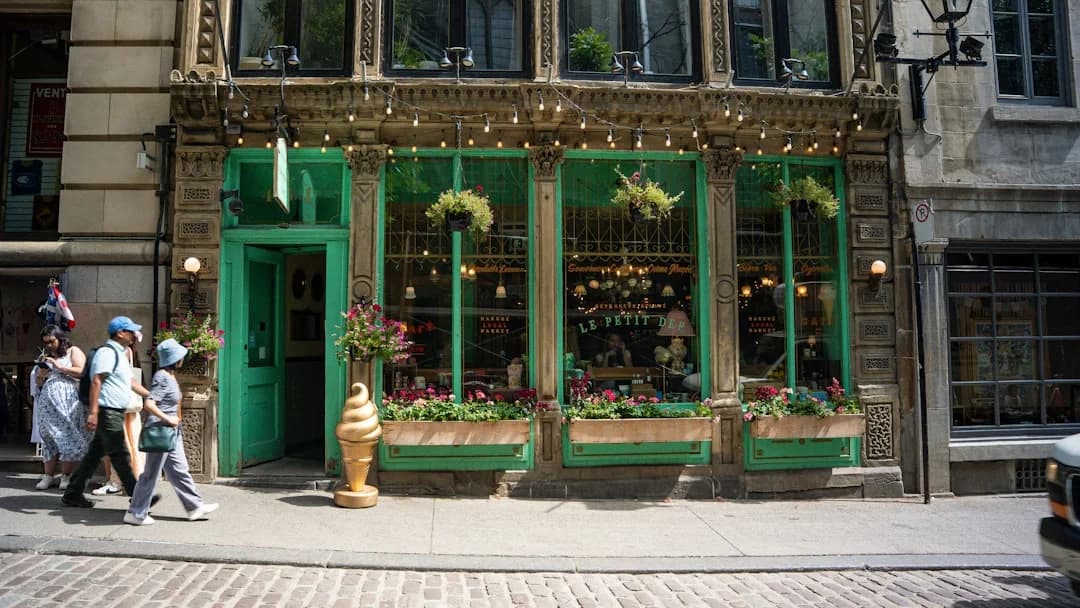
Photo by Harrison Mitchell on Unsplash
Montreal’s cafe scene is entering a new phase in 2026, where sustainability is no longer a niche selling point but a core operating principle. Across neighborhoods from the Plateau to Old Montréal, café operators are adopting zero-waste practices, partnering with local roasters, and rethinking interiors for energy efficiency. This is more than a moral stance; it’s a data-driven shift that impacts supply chains, consumer behavior, and city policy. The Montreal sustainable cafe trend 2026 is shaping how people drink coffee, what they expect from a visit, and how cafés measure their environmental footprint.
Public tourism and city-facing resources are reflecting the shift. On February 18, 2026, Tourisme Montréal highlighted a growing roster of zero-waste cafés and related practices, underscoring a citywide push toward waste minimization and responsible sourcing. The feature spotlights spaces like Le Café des Habitudes and La Cale, and emphasizes the broader movement across the hospitality landscape in Montreal. This coverage signals to readers that the zero-waste movement is moving from “experimental” to “mainstream” in the local café economy. (mtl.org)
Additionally, a major industry event anchors the trend for 2026: Café Collectif returns to Montreal from May 1–3, 2026, at the Society for Arts and Technology (SAT). The festival profiles more than 30 Quebec roasters, hosts tastings, conferences, and workshops, and positions Montreal as a hub for sustainable, specialty coffee culture. The timing and scale of Café Collectif 2026 illustrate how the city is embracing a more intentional, community-driven approach to coffee innovation—an ecosystem that rewards sustainability-minded operators and engaged customers alike. (cafecollectif.com)
Section 1: What Happened
Montreal’s zero-waste café wave gains official visibility
Montreal’s shift toward zero-waste café models has gained visible traction in 2026, aided by city-led and city-adjacent initiatives. Tourisme Montréal’s February 2026 roundup highlights a spectrum of cafés embracing reusable-service systems, bulk ingredients, and on-site waste minimization. The featured cafés illustrate a continuum from design to packaging: Le Café des Habitudes leans into second-hand furnishings and bulk milks, while La Cale focuses on on-site production and eliminating single-use items. The narrative around these cafés captures a broader city trend: eateries are moving from “green gimmick” to “operational backbone,” integrating waste reduction into daily practice. This alignment between consumer expectations and operator practices is a defining feature of the Montreal sustainable cafe trend 2026. (mtl.org)

A closer look at specific spaces helps ground the trend in concrete, local actions. Le Café des Habitudes, located in La Petite-Patrie, is described as a family-friendly café whose interior heavily features second-hand furniture, with a 95% reuse mindset reflected in its décor. Customers are encouraged to use reusable La Vague mugs, and the café uses low-waste, bulk, non-dairy milks. The emphasis on retrofitted interiors and bulk beverage options is representative of a design and operations ethos that prioritizes circularity and reduces single-use consumption. In the same piece, La Cale in Plaza St-Hubert is highlighted for its on-site production, minimal waste footprint, and rejection of single-use packaging. These examples illustrate how zero-waste practices are being embedded into both the supply chain and the day-to-day guest experience. (mtl.org)
Local cafés accelerate sustainability through partnerships and design
Montreal’s zero-waste movement isn’t limited to a few standout cafés; it’s spreading through partnerships, supplier networks, and innovative formats. Cass Café—located in Montreal’s Plateau and positioned as a premier zero-waste, vegan concept—has become a focal point in 2026 for evidence of scalable sustainable practice. The café emphasizes partnerships with local, eco-conscious suppliers (for example, Café Binocle and DAM) and features packaging that minimizes waste, along with a zero-waste ethos embedded in daily operations. Cass Café’s own materials describe local sourcing and community impact as core components of its business model, reinforcing the idea that sustainable café trends can align with strong local economies. The café’s public-facing content also highlights a commitment to hosting sustainability workshops and community events, turning the café space into a learning hub as well as a consumption venue. This blend of sustainability and community engagement is a hallmark of the Montreal sustainable cafe trend 2026. (cafecass.ca)
In addition to Cass Café’s profile, other high-visibility players in Montreal’s zero-waste ecosystem have emerged, including Café Terminus in Old Montréal. Terminus Café describes itself as a cafe-grocery hybrid that actively pursues a zero-waste approach, repurposing unsold products and offering reusable, deposit-based containers for takeout and groceries. This model expands the conception of “café” to include a broader circular economy footprint, reflecting how operators are experimenting with multi-use spaces to maximize resource efficiency. (sdcvieuxmontreal.com)
Campus and city resolutions reinforce the trend
Institutional players are also echoing and accelerating the Montreal sustainable cafe trend 2026. Although not a café in the traditional sense, Polytechnique Montréal’s decision to remove beef from its campus cafeterias as part of a broader emissions-reduction strategy demonstrates the university sector’s influence on sustainability in food service. Campus-level procurement choices, menu adjustments, and energy considerations ripple through student life and local demand for sustainable dining options, contributing to a citywide narrative where higher education institutions act as catalysts for change in the café ecosystem. (montreal.citynews.ca)
Beyond individual spaces, a city-wide policy and planning framework reinforces the momentum. Montreal’s municipal initiatives toward zero waste and more circular economic practices create a supportive backdrop for cafés pursuing waste reduction, reuse, and local sourcing. The city’s zero-waste planning material emphasizes collaboration with businesses to implement reusable packaging, composting, and other waste-reduction measures, which align closely with café operators’ transitions toward sustainable models. While the policy environment remains a work in progress, it provides a framework and incentive structure that can accelerate the Montreal sustainable cafe trend 2026. (ville.montreal.qc.ca)
Innovation in café concepts and experiences
The Montreal sustainable cafe trend 2026 is also fueling experimental formats and experiences that blend coffee with sustainability education and community engagement. Cass Café’s platform for events and workshops illustrates how a café can function as a hub for environmental learning and activism, not merely as a place to purchase a beverage. The café’s emphasis on local sourcing, reused materials, and a vegan menu demonstrates how sustainability can inform both menu design and interior aesthetics. Meanwhile, Café Collectif’s festival programming—the hands-on tastings, conferences, and exhibitions—signals a robust venue for knowledge sharing, supplier connections, and co-learning about sustainable coffee practices in Quebec. The festival’s programming and the fact that it returns in 2026 confirm that Montreal is building an ecosystem in which sustainability is not a one-off initiative but a sustained, community-driven movement. (cafecass.ca)
Section 2: Why It Matters
Environmental and public-health implications of zero-waste cafés

Zero-waste cafés have the potential to meaningfully reduce waste streams associated with the hospitality sector. In Montreal, the public discourse around waste management explicitly recognizes cafés and restaurants as key generating and mitigating actors. The city’s zero-waste planning and action plans emphasize reducing disposable packaging, increasing composting, and promoting reusable containers in food-service settings. The practical implication for customers is a reduced environmental footprint per coffee cup and a more sustainable, circular approach to daily cafe visits. The Tourisme Montréal feature illustrates a growing set of cafés adopting these principles, while municipal planning documents suggest ongoing policy attention to the waste-handling pathways that cafés depend on. Collectively, these signals indicate that zero-waste cafés are becoming a standard expectation rather than a niche feature. (mtl.org)
Cass Café’s internal policies also demonstrate the environmental benefits of a well-executed zero-waste approach. The café reports a deliberate focus on local sourcing, packaging choices, and reusable container programs, which can reduce both waste generation and upstream emissions associated with single-use packaging. The café’s emphasis on a vegan menu aligns with broader environmental and health considerations by reducing animal-product demand in a fashion that still supports a thriving local economy through partnerships with Quebec suppliers. This model shows how sustainability can be integrated across supply chain decisions, menu development, and guest experience, yielding tangible environmental dividends while supporting regional producers. (cafecass.ca)
Economic and competitive dynamics in Montreal’s cafe market
The Montreal sustainable cafe trend 2026 is reshaping what it means to compete in a crowded market. Operators that implement zero-waste, reuse-focused packaging, and local sourcing create a differentiator in a competitive landscape, attracting environmentally conscious consumers who are willing to pay for responsible practices. The Cass Café case demonstrates how such a model can coexist with a differentiated product—100% vegan menus, locally sourced ingredients, and a store design that emphasizes durability and circularity. The café’s public materials also reveal a broader strategy of engaging the community through workshops and events, which can deepen customer loyalty and expand the customer base beyond regular passersby. The result is a café ecosystem where sustainability-driven differentiation complements high-quality coffee and food offerings. (cafecass.ca)
The zero-waste approach is also opening doors to new business formats, such as café-grocery hybrids (as seen with Terminus Café) and mobile coffee carts that emphasize reuse and recycling. These formats expand the market for sustainable coffee beyond traditional storefronts, enabling operators to reach customers in transit hubs, markets, and pop-up venues while maintaining a tight, waste-conscious operating model. This diversification of format increases resilience for operators and enhances consumer access to sustainable coffee experiences. (sdcvieuxmontreal.com)
Customer experience and technology interface
The Montreal sustainable cafe trend 2026 is driven not only by operations but also by technology-enabled efficiencies in areas such as packaging, loyalty programs, and waste tracking. While the public outlets emphasize sustainability outcomes, operators are increasingly turning to practical technologies to maximize impact—reusable cup programs, deposit-based containers, and digital engagement around “bring your own cup” campaigns are prominent examples. Cass Café’s “Our To-Go Cups” program and its partnership ecosystem reflect how tech-enabled operating practices can be integrated with consumer incentives to reinforce sustainable behavior. Customers benefit from lower waste, cleaner packaging, and transparent engagement with local producers, while cafés derive measurable waste reductions and stronger community ties. (cafecass.ca)
Public-facing policy channels and industry events also reinforce the role of technology and data in shaping the Montreal sustainable cafe trend 2026. Café Collectif’s programming includes conferences and panels, which provide a platform for sharing best practices, data-driven insights, and case studies from cafés across Quebec. This knowledge exchange helps drive the adoption of best-in-class waste reduction strategies and enables operators to benchmark performance against peers, ultimately raising standards across the city’s café sector. (cafecollectif.com)
Policy context and the city’s role
City policy and municipal programs contribute to a structured, long-term approach to sustainability in Montreal’s café economy. Montreal’s zero-waste plan emphasizes collaboration with cafés and restaurants to advance consigned containers, food waste reduction, and composting—core components for any café pursuing a sustainable model. While café operators need to navigate practical constraints such as supply-chain realities and customer expectations, the policy environment provides a framework to scale successful practices and align them with broader municipal goals. Observers can expect continued alignment between city policy evolution and café-level innovations as the Montreal sustainable cafe trend 2026 unfolds. (ville.montreal.qc.ca)
Section 3: What’s Next
What to watch for in the coming months
-
Café Collectif 2026 (May 1–3, 2026): The festival’s return is a concrete signal of ongoing industry collaboration around sustainability, with a robust slate of tastings, conferences, and workshops. Expect more cafés to participate, more focused conversations on waste reduction, and increased visibility for local roasters committed to sustainable practices. This event will also serve as a data point for monitoring how Montreal cafes are integrating sustainable practices into their operations and marketing. (cafecollectif.com)
-
Expanded zero-waste networks and partnerships: The city’s zero-waste strategy, combined with the visibility generated by platforms like Tourisme Montréal and Cass Café’s supplier network, suggests that more cafés will pursue bulk, reusable, and compost-friendly approaches. Expect more cafés to join La Tasse’s network and other circular-economy collaborations as a path to reduce waste and enhance consumer confidence in sustainability claims. (mtl.org)
-
Campus and corporate influence on consumer demand: If universities and large employers continue to model sustainability in their cafeterias and on-site dining, the downstream impact on Montreal’s consumer base could be substantial. Students, staff, and visitors accustomed to zero-waste offerings may increasingly vote with their feet for cafés that align with those high standards, further accelerating adoption across neighborhoods. (montreal.citynews.ca)
-
Design and interior innovation: With design firms showcasing sustainable interior approaches, energy-efficient and durable materials may become standard in new café builds and renovations. The L’Espace Café project and similar design initiatives underscore a trend toward durable, mindful design that reduces lifecycle emissions and supports a comfortable, low-stress guest experience. Observers should anticipate more cafés investing in energy-efficient lighting, ventilation, and materials that reduce embodied carbon while delivering a high-quality guest experience. (vad.qc.ca)
Next steps for readers and operators
-
For readers: Seek out zero-waste cafés and support businesses that share transparent sustainability practices. When visiting, engage with staff about packaging choices, composting programs, and local sourcing. Look for cafés that publish or share supplier information, waste metrics, and recycling streams publicly.
-
For operators: Consider joining or forming local networks like La Tasse or similar circular-economy initiatives to share best practices, bulk-sourcing strategies, and waste-reduction data. Evaluate reusable-container programs, composting partnerships, and price signals that nudge customers toward sustainable behaviors (for example, small deposits on disposable cups or discounts for bringing own containers). Use Café Collectif as a benchmarking and learning platform to measure performance against peers and identify opportunities to close gaps in waste management and sourcing. The city’s policy framework and festival ecosystems can provide both guidance and incentives to scale impactful practices. (cafecass.ca)
Closing
The Montreal sustainable cafe trend 2026 is emerging as a data-driven, market-responsive movement rather than a series of one-off experiments. With zero-waste cafés, local sourcing partnerships, and community-focused programming, Montreal operators are redefining what it means to run a modern coffee shop in a way that respects the environment, supports the local economy, and delivers exceptional guest experiences. The alignment between city policy, industry events like Café Collectif 2026, and café-level innovations underscores a future where sustainable practices are embedded in the fabric of Montreal’s coffee culture. As readers, staying engaged with Tourisme Montréal updates, Café Collectif programming, and the growing roster of zero-waste cafés will help gauge how quickly and deeply the city’s sustainable cafe trend 2026 takes root in neighborhoods across Montréal and beyond.
If you’re curious to explore further, examples like Le Café des Habitudes and La Cale show practical pathways—cutting waste through second-hand interiors, reusables, and on-site production—while Cass Café demonstrates how a vegan, zero-waste concept can scale through local partnerships and community programming. Terminus Café expands the model into a café-grocery hybrid, proving that zero-waste can be a flexible, multi-format business strategy. Taken together, these developments offer a compelling, data-informed view of how Montreal is shaping a sustainable cafe landscape in 2026—and what comes next for operators and customers alike. (mtl.org)
As Montreal Times continues to track technology-enabled efficiency, waste-management innovation, and the evolving preferences of the city’s coffee lovers, the story of the Montreal sustainable cafe trend 2026 will continue to unfold with new openings, policy updates, and industry collaborations that push the entire sector toward a cleaner, more circular future.