Montreal Urban Agriculture Expansion 2026 Rooftops


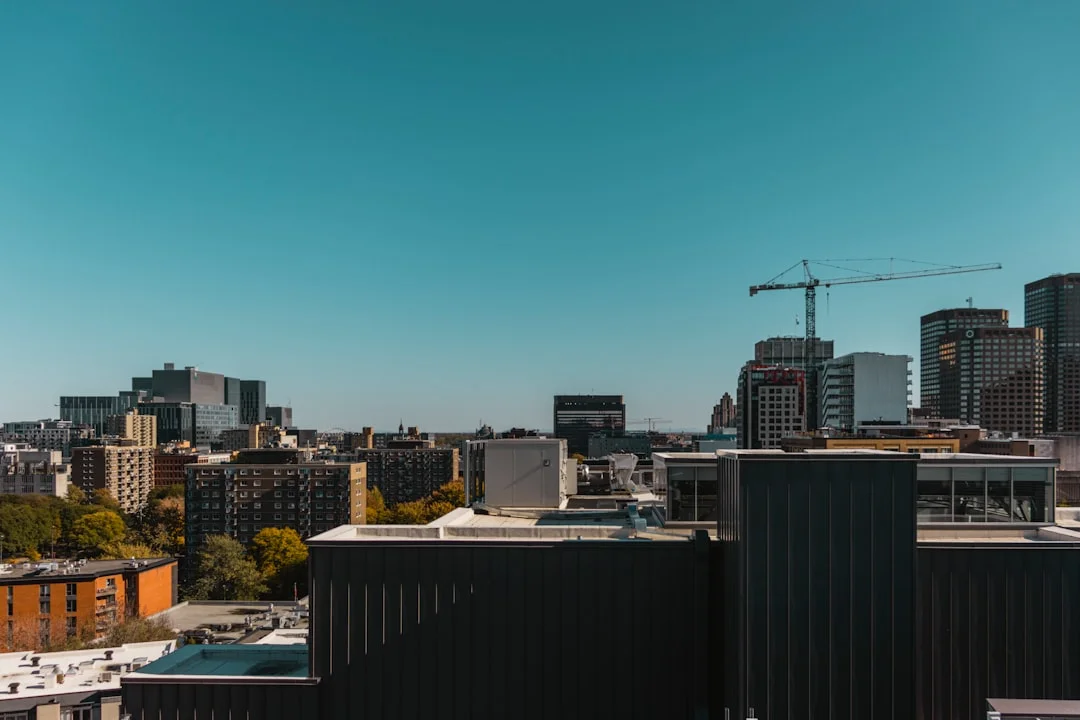
Photo by Jan Walter Luigi on Unsplash
Montreal’s urban agriculture agenda is entering a critical year as the city advances its 2021–2026 strategy, updates its governance framework, and expands on-the-ground projects that shift where and how food is grown in the urban fabric. The latest city-facing updates, mid-course assessments, and new rooftop and public-space initiatives collectively frame Montreal’s urban agriculture expansion 2026 as a data-driven effort to increase local production, boost biodiversity, and strengthen food resilience for residents. The city has periodically refreshed its policy levers to align with climate and urban planning objectives, and the momentum in 2026 reflects a broader push to integrate urban farming into everyday life—from rooftop greenhouses and community gardens to ecological food zones and participatory-budget projects. This evolving landscape matters for urban residents, policymakers, and market players alike, as it signals where investment, permits, and partnerships may flow in the near term. In short, Montreal is continuing to operationalize its urban agriculture ambitions in a way that blends policy, technology, and community engagement to fuel local food ecosystems.
Montreal’s current approach is anchored in an urban agriculture strategy that queries how residents can better participate in food production while ensuring ecological sustainability. The city notes that urban agriculture is evolving in step with environmental, social, and economic concerns, and it emphasizes a four-point policy direction designed to boost local production, educate the public, and improve governance. The strategy is positioned as part of Montréal’s Climate Plan for 2020–2030, underscoring how urban farming fits into broader climate and resilience objectives. The last update to the city’s strategy occurred in 2026, keeping the plan current and responsive to new projects and community needs. These governance and policy frames matter because they set the rules of engagement for community groups, private operators, and researchers who want to pilot or scale urban agriculture projects in Montreal. (montreal.ca)
What’s driving this momentum in 2026 is a combination of policy, public funding, and on-the-ground projects that collectively broaden the city’s urban agriculture ecosystem. Among the most tangible 2026 developments is the city’s ecological food zones initiative, a participatory-budget-driven project designed to create compact spaces for growing edible crops, pollinator-friendly plants, and trees on public property. The five-borough rollout—Ahuntsic-Cartierville, LaSalle, Outremont, Rivière-des-Prairies–Pointe-aux-Trembles, and Saint-Laurent—reflects a coordinated approach to expanding urban agriculture beyond traditional community gardens. The program carries a total budget of $2.9 million and includes multiple delivery dates across 2023–2026, with ongoing construction and completion in several boroughs. This initiative is touted as offering ecological and food-related alternatives to lawns, along with spaces for relaxation and nature access. The ecological food zones project is a clear signal that municipal resources are being funneled into tangible urban-farming assets across the city. (montreal.ca)
Montreal’s urban agriculture expansion 2026 is also anchored by a long-running rooftop-farming narrative that showcases the city’s leadership in high-tech, year-round production. Montreal’s rooftop greenhouse program began with Lufa Farms, a pioneering company that opened the world’s first commercial rooftop greenhouse in Montreal in 2011. Since then, Lufa Farms has expanded to multiple rooftops, with a major milestone in 2019–2020 when the company broke ground on its fourth rooftop greenhouse in Saint-Laurent and opened the larger facility in Ville Saint-Laurent in 2020, making headlines as one of the world’s largest rooftop farms. The company later announced additional expansion, including a fifth rooftop greenhouse at the Marché Central Walmart and Decathlon in Ahuntsic, with production capacity expansion and energy-efficient design updates. These rooftop initiatives illustrate how private sector innovation, supported by city policy, underpins the city’s broader urban agriculture expansion 2026. The rooftop-farm narrative also highlights the energy and production efficiency advances that are integral to scaling urban farming in dense urban environments. (montreal.lufa.com)
Section 1: What Happened
Policy continuity and strategic direction underpin recent urban agriculture activity in Montreal. The City of Montreal’s Urban Agriculture Strategy, updated in May 2026, foregrounds four key orientations: educate people about urban agriculture; increase agricultural production within the city; encourage resilient and ecological urban agriculture; and improve the management and governance framework for urban agriculture. This strategy, tied to Montréal’s Climate Plan 2020–2030, embodies a governance framework intended to operationalize urban farming across neighborhoods and boroughs while aligning with climate and biodiversity goals. The formal update underscores that Montreal remains committed to turning urban agriculture into a core component of the city’s resilience and ecological strategy. As a living document, the plan invites ongoing assessment and mid-course reviews as new projects unfold. (montreal.ca)
Background and policy framework
- The four policy orientations provide a blueprint for action. The city emphasizes education and awareness, expansion of production within Montreal, support for ecologically resilient practices, and governance improvements to better coordinate urban agriculture with other municipal programs. This approach helps clarify roles for residents, community groups, and commercial actors who want to participate in urban farming in Montreal. The presence of these four orientations in 2026 indicates that the city aims to translate policy into practice through a mix of public engagement, pilot programs, and scalable initiatives. The climate-planning tie-in reflects an integrated approach to urban food systems within broader decarbonization and biodiversity goals. (montreal.ca)
Ecological food zones: a public-space expansion
- The ecological food zones project, updated in June 2026, calls for creating diverse spaces dedicated to urban agriculture on public property. The project uses permaculture principles, prioritizes indigenous plants, and aims to include pollinator-friendly flora, mushroom farms, and orchards within five boroughs. The total budget for the project is $2.9 million, with construction and completion efforts across various phases extending from 2023 through 2026. The progress overview shows a range of activity by borough, including partially completed zones and completed installations, reflecting a multi-year ramp-up rather than a single-year rollout. The program’s focus on ecologically informed spaces highlights Montreal’s move to weave food production into the city’s public realm while delivering ecosystem and community benefits. “This project will be implemented in five boroughs, with a total budget of $2.9 million,” captures the scale of the investment and the public-facing nature of the initiative. (montreal.ca)
Rooftop farming milestones and the Lufa Farms ecosystem
- The rooftop farming narrative in Montreal remains one of the city’s most visible urban agriculture stories. Lufa Farms, the pioneer of rooftop-greenhouse farming, opened the world’s first commercial rooftop greenhouse in 2011 in the Ahuntsic-Cartierville borough. The company’s expansion accelerated in the 2019–2020 window, when it broke ground on its fourth rooftop greenhouse in Saint-Laurent, a project designed to double growing capacity and feed more Montreal families. The 163,800-square-foot facility represented a major scale-up and positioned Lufa as a global benchmark for urban agriculture via rooftop infrastructure. In 2020, the Saint-Laurent facility reached full production, adding to Montreal’s rooftop-farming footprint and demonstrating the model’s viability for year-round, high-yield production in an urban setting. The company later opened a fifth rooftop greenhouse in 2024 at the Marché Central Walmart and Decathlon complex in Ahuntsic, expanding production capacity and incorporating energy-efficient design elements. The sequence—first rooftop in 2011, fourth greenhouse ground-breaking in 2019, 2020 opening, and 2024 expansion—illustrates a sustained, multi-site growth that has helped redefine what is possible in urban farming in Montreal. The rooftop-farming story also intersects with notable milestones such as the construction and opening timeline described in industry and press coverage. (mcgill.ca)
Industry and market context
- Beyond city policy and private rooftop initiatives, the Montreal urban agriculture expansion 2026 is influenced by market dynamics around local food sourcing, distribution networks, and technology adoption. Lufa Farms’ growth trajectory—coupled with city-led projects like ecological food zones—points to a more integrated urban food system where rooftop production complements ground-level and indoor facilities. Industry coverage and independent analyses highlight the scale of rooftop operations in Montreal and their potential to augment local supply chains, with technology elements such as energy-efficient lighting, climate control, and hydroponics playing central roles in scale and sustainability. This alignment of policy, private innovation, and market trends is a defining feature of Montreal’s urban agriculture expansion 2026. (weforum.org)
Section 2: Why It Matters
Food security, resilience, and ecological value
- The Montreal urban agriculture expansion 2026 matters because it directly supports local food production and resilience in the face of supply-disruption risks and climate-related challenges. The city’s urban agriculture strategy emphasizes increasing production within Montreal and promoting ecologically resilient agricultural practices. The governance improvements aim to streamline permits, financing, and coordination among boroughs and partners—an important step toward scalable urban farming. This matters for residents who want closer-to-home access to fresh produce and for the city’s long-term resilience strategy, which ties urban agriculture to biodiversity, climate adaptation, and ecosystem services. The policy emphasis on education, production, resilience, and governance is designed to create an more robust urban food system that can adapt to changing conditions. (montreal.ca)
Biodiversity and ecosystem services
- Urban agriculture in Montreal is positioned within a broader biodiversity and natural-environment framework. The Master Plan and related environmental policies emphasize protecting and enhancing natural environments and creating ecological corridors, which intersect with urban farming in ways that can amplify pollinator populations and plant diversity within the urban fabric. The policy’s emphasis on ecological management, nature parks, and biodiversity corridors complements rooftop and ground-level farming by creating a more holistic urban ecology. This context helps explain why the city is pairing urban agriculture with ecological zoning, nature-based solutions, and habitat connectivity—trends that can increase resilience and offer multiple ecosystem services to residents. (ville.montreal.qc.ca)
Economic and employment signals
- The economic dimension of Montreal’s urban agriculture expansion 2026 is underscored by investment in public projects (e.g., $2.9 million for ecological food zones) and the scaling of private rooftop operations like Lufa Farms. These efforts signal opportunities for construction, operations, maintenance, and distribution networks tied to urban farming. In addition, the Lufa Farms expansion demonstrates how rooftop agriculture can drive job creation and supply-chain development while improving access to fresh produce for a growing urban population. The combination of public funding for ecological food zones and private-sector scaling of rooftop greenhouses indicates a diversified, multi-channel urban agriculture market in Montreal. For the broader region, these developments may influence supplier networks, real estate considerations for urban farming facilities, and demand for specialized equipment such as energy-efficient climate control and hydroponic systems. (montreal.ca)
Technology as a growth driver
- Montreal’s urban agriculture expansion 2026 is inseparable from technology adoption in rooftop farms and urban green projects. Lufa Farms’ rooftop greenhouses have historically integrated energy-efficient HVAC systems, advanced LED lighting, and hydroponics to optimize yields and reduce energy use, which is essential for year-round production in northern climates. The 2020 milestone that highlighted the world’s largest rooftop greenhouse being opened in Montreal is part of a broader technology-driven shift in urban agriculture—one that emphasizes efficiency, data-informed management, and scalable designs suitable for dense urban environments. The city’s policy framework also supports the use of innovative tools and data to monitor and optimize urban farming outcomes, aligning with the climate and biodiversity goals embedded in Montreal’s plans. (phys.org)
Section 3: What’s Next
Policy evolution and mid-course reviews
- The city’s Urban Agriculture Strategy 2021–2026 is designed as a living framework that is subject to mid-course evaluation and adaptation. The May 2026 update indicates ongoing refinement of policy levers, governance structures, and program priorities. The mid-course bilan (summary) of the strategy is expected to inform adjustments for 2026–2027, including potential adjustments to funding allocations and program timelines. This ongoing review process is essential for ensuring that policy remains aligned with on-the-ground outcomes and evolving market conditions, including shifts in consumer demand for local produce and advancements in urban farming technology. (montreal.ca)
Continued expansion of ecological food zones and public-space initiatives
- The ecological food zones program is still in motion in 2026, with ongoing progress updates by borough. The five-borough plan and its $2.9 million budget indicate a continued push to implement urban agriculture in public spaces as a core component of the city’s strategy. Watch for further deliveries in 2026 and 2027 as zones move toward completion and as additional boroughs or new sites come online through participatory budgeting cycles. The program’s ongoing timeline and outcomes will be important indicators of how the city translates the policy framework into tangible urban-farming assets. (montreal.ca)
Market signals and operator activity
- On the private side, the Lufa Farms expansion trajectory remains a key market signal for Montreal’s urban agriculture ecosystem. The development of rooftop greenhouses, a distribution network, and an indoor farm component in Ville Saint-Laurent demonstrates how private operators are leveraging rooftop and urban spaces to increase local production capacity. Policy signals, including the urban agriculture strategy and ecological zones, are likely to influence permitting, energy codes, and public-private collaboration opportunities in the near term. Industry watchers should monitor updates to Lufa Farms’ site network, any new rooftop initiatives, and potential collaborations with municipal programs that aim to locate more rooftop or public-space farms in 2026 and beyond. (montreal.lufa.com)
What to watch for in the near term
- In 2026–2027, expect continued updates to Montreal’s urban agriculture governance, potentially more public-space farming deployments, and ongoing assessments of the ecological zones’ performance. The city’s climate and biodiversity priorities suggest a growing emphasis on pollinator-friendly landscapes, soil and water stewardship, and the integration of urban farming into broader green infrastructure planning. The MAPAQ (Quebec Ministry of Agriculture) programs noted in research and policy discussions also point to potential provincial support for local-food initiatives, community development, and infrastructure investments tied to urban agriculture. In Montreal, watchers should track: (1) progress reports or mid-course bilan updates to the Urban Agriculture Strategy; (2) new or expanded ecological food zones and community gardens; (3) any additional rooftop-farm announcements from Lufa Farms or similar operators; and (4) municipal and provincial funding opportunities that could accelerate projects or make urban farming more scalable. (mdpi.com)
Closing
Montreal’s urban agriculture expansion 2026 presents a multi-faceted effort that blends policy, technology, and community action to expand local food production, biodiversity, and resilience. The city’s approach—anchored in policy guidance, ecological public-space projects, and a storied rooftop-farming ecosystem led by Lufa Farms—offers a practical blueprint for how a major North American city can grow food in dense urban environments. As 2026 unfolds, the combination of public investment in ecological zones and private-sector expansion on rooftops will continue to shape the city’s food landscape and market dynamics. For readers looking to stay informed, monitoring the city’s official urban agriculture updates, borough-by-borough project reports, and the Lufa Farms expansion timeline will provide timely, data-driven insights into how Montreal’s urban agriculture expansion 2026 is taking shape and where it is headed next.
As the city tracks progress across policy, public spaces, and rooftop production, Montréal Times will continue to report on the evolving intersection of technology, markets, and public governance in urban agriculture. Readers can expect continued updates on how these initiatives influence local food access, employment opportunities, and the urban ecosystem’s health as the 2026–2027 period progresses.
Note: The article draws on official city sources and credible industry reporting to present a data-driven view of Montreal’s urban agriculture expansion 2026. Primary policy documents include Montreal’s Urban Agriculture Strategy and related climate planning materials, while on-the-ground milestones are illustrated by the Lufa Farms rooftop-growth milestones and the ecological food zones initiative. For deeper context, consult City of Montreal materials on the ecological food zones project and the urban agriculture strategy, as well as independent analysis of rooftop farming developments in Montreal. (montreal.ca)