Montreal Urban Beekeeping Initiative 2026 Expands Bees

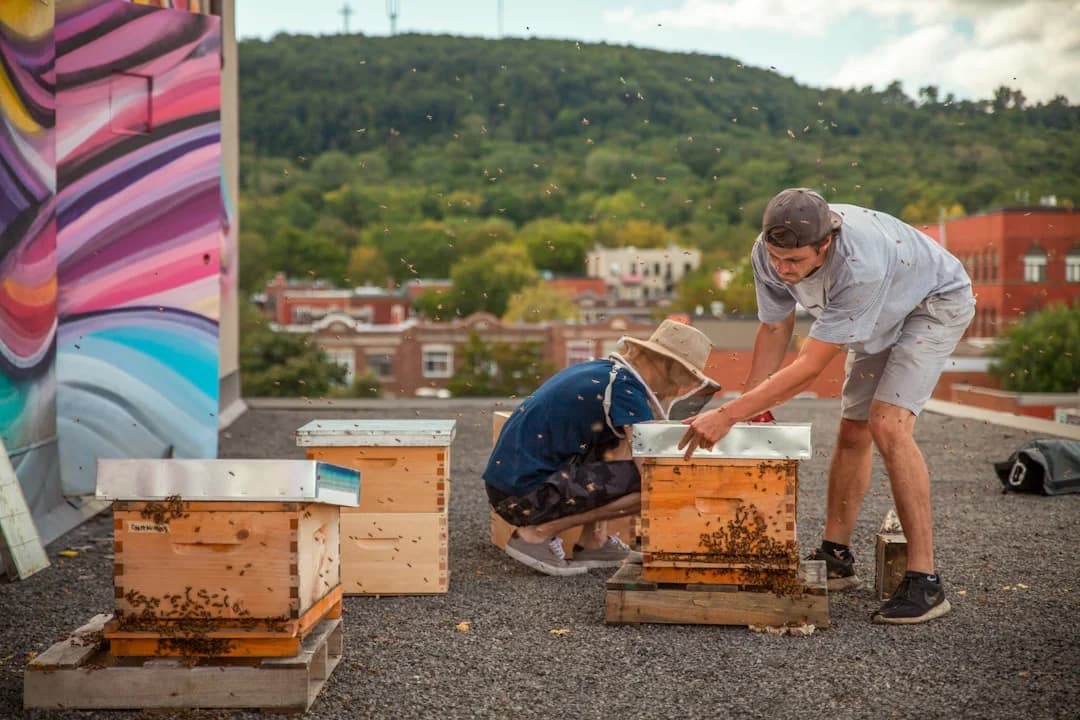
Photo by Alvéole Buzz on Unsplash
Montreal is advancing its bee-friendly ambitions in 2026, framing the Montreal urban beekeeping initiative 2026 as a pivotal moment for urban biodiversity, corporate responsibility, and community engagement. As the city continues to push for greener streets and rooftops, municipal leadership—guided by Montreal’s 2021–2026 Urban Agriculture Strategy—is coordinating with urban agriculture partners to expand the network of beehives across rooftops, community spaces, and commercial districts. This expansion isn’t simply about honey production; it’s a data-informed, ecosystem-wide effort to bolster pollinators in a dense urban environment and to model how cities can responsibly grow green infrastructure while balancing health, safety, and public space. (montreal.ca)
For years, Montreal has positioned itself as a hub for urban agriculture, with Alvéole—the Montreal-born urban beekeeping concept—playing a central role in deploying and maintaining hives on buildings throughout the city. The company’s Montreal program underscores how a private-sector partner can scale up urban beekeeping by turning rooftops and exterior façades into habitats, while delivering educational experiences and biodiversity data to landlords, tenants, and the broader public. In 2026, the Montreal urban beekeeping initiative 2026 is unfolding through continued expansion to hundreds of properties, as evidenced by Alvéole’s reported presence across a large number of buildings and its work with property owners to monitor biodiversity and tenant engagement. This context matters: it grounds the initiative in a real, city-wide network rather than a handful of isolated projects. (alveole.buzz)
City officials emphasize that the expansion aligns with Montreal’s climate-and-biodiversity commitments and its urban agriculture framework. The Urban Agriculture Strategy, part of the city’s Climate Plan 2020–2030, sets four primary orientations to grow local agriculture, educate residents, and improve governance around urban farming. The strategy is explicitly designed to promote biodiversity, resilience, and sustainable governance as Montréal scales urban agriculture activity. The Montreal urban beekeeping initiative 2026 sits squarely within this framework, which the city has characterized as a pathway to a greener, more resilient metropolis. (montreal.ca)
Beyond city hall, beekeeping in Montreal is supported by local collectives and service providers that emphasize community and education. Santropol Roulant’s Apiculture initiative describes a beekeeping collective operating rooftop hives and offering education, workshops, and hands-on learning opportunities to urban residents. The Roulant’s four rooftop hives, maintained by a diverse group of volunteers, illustrate how community organizations contribute to the broader beekeeping ecosystem that the Montreal urban beekeeping initiative 2026 seeks to strengthen. These community-driven efforts complement corporate partnerships and public sector aims, creating a multi-layered urban beekeeping landscape in Montreal. (santropolroulant.org)
As the city expands its urban beekeeping footprint in 2026, it’s useful to recognize the regulatory framework that governs beekeeping in Quebec and Montreal. The provincial Ministry of Agriculture, Fisheries and Food (MAPAQ) requires annual beekeeping registrations, with an enrollment window typically running from April 1 to June 1. Beekeepers must also maintain records and affix identifying inscriptions on their hives. This regulatory backbone—designed to monitor health, trace movement, and manage disease risk—shapes how the Montreal urban beekeeping initiative 2026 can scale, particularly in terms of compliance and coordination with municipal and provincial authorities. (quebec.ca)
Opening its doors to a broader audience, the Montreal urban beekeeping initiative 2026 is also about data and accountability. Alvéole provides biodiversity reports and hive data that are designed to support sustainability reporting, ESG disclosures, and city-level biodiversity monitoring. For example, their dashboards include metrics such as biodiversity indices and species composition, enabling partners to quantify progress in urban biodiversity and to incorporate this data into sustainability reporting. The expansion in 2026 is being framed not just as a feel-good initiative, but as a structured program with measurable outcomes that cities and landlords can track over time. (alveole.buzz)
Section 1: What Happened
Announcement Details
The Montreal urban beekeeping initiative 2026 is being carried forward through a collaborative network that includes Alvéole and Montreal-based urban agriculture actors, alongside city programs that promote biodiversity and green space in dense neighborhoods. Alvéole’s public-facing materials emphasize that Montreal remains the birthplace of their approach to urban beekeeping and that the city hosts a large and growing beekeeping network on rooftops and in urban spaces. The company highlights that in Montreal today there are hundreds of beehive habitats spread across a wide array of buildings, underscoring the scale of the initiative and its prominence in city life. This growth reflects the city’s ongoing commitment to urban biodiversity as part of the 2021–2026 Urban Agriculture Strategy and broader climate goals. (alveole.buzz)

Santropol Roulant’s apiculture program adds another layer to the “what happened” narrative. The group maintains rooftop hives on its facility in Montreal and uses beekeeping as a platform for community education and engagement. The collective’s work on urban rooftops and its commitment to training new beekeepers exemplify the social and educational dimension of the Montreal urban beekeeping initiative 2026, illustrating how local nonprofits participate in city-building through pollinator-focused activity. The Roulant’s model—seasonal involvement, public engagement, and hands-on hive management—offers a concrete case study within the broader city initiative. (santropolroulant.org)
Timeline
Key regulatory and strategic context helps anchor the 2026 timeline for the Montreal urban beekeeping initiative 2026. At the provincial level, MAPAQ requires annual hive registration and provides guidelines for managing beekeeping activities in urban contexts. The annual registration window (roughly April 1 to June 1) is a fixed cadence that cities and private hive owners must observe, shaping the timing of expansions and the onboarding of new hives within Montreal’s urban beekeeping ecosystem. The timing of these regulatory processes interacts with the city’s Urban Agriculture Strategy 2021–2026, whose ongoing mid-term review and implementation are central to the 2026 push. Montreal’s urban agriculture strategy emphasizes education, production, ecological resilience, and governance improvements, providing a framework within which the Montreal urban beekeeping initiative 2026 can scale responsibly. (quebec.ca)
From a structural standpoint, the city’s approach to urban beekeeping in 2026 continues to leverage established partners and expand the network. Alvéole’s Montreal program data show a substantial reach: hundreds of beehive habitats across dozens of neighborhoods and hundreds of partner-building engagements. The company’s public-facing metrics (330 buildings, 200 partners, 480 habitats) illustrate the scale at which Montreal’s beekeeping ecosystem operates and the potential for further growth under the 2026 push. Santropol Roulant’s rooftop hive activity and education programs further demonstrate how community groups can participate in the expansion, with the potential to train dozens of new beekeepers and to host workshops that reach residents citywide. (alveole.buzz)
Key Facts
- Montreal hosts a broad network of urban beehives, anchored by Alvéole, which reports engagement across hundreds of buildings and a growing ecosystem of partners and habitats. The Montreal program counts 330 buildings with beehive installations, 200 partner organizations, and 480 individual beehabitats, highlighting the scale of the city’s urban beekeeping activities. These figures help quantify the Montreal urban beekeeping initiative 2026 in concrete terms and provide a baseline for monitoring growth in subsequent years. (alveole.buzz)

- As part of the city’s Urban Agriculture Strategy, urban beekeeping is framed as a biodiversity and resilience initiative. The strategy’s four orientations emphasize education, production, ecological resilience, and governance, all of which can be advanced through beekeeping programs that connect residents with pollinators and urban ecosystems. The Montreal urban beekeeping initiative 2026 is thus positioned as a practical expression of these policy goals, integrated with community and private-sector partners. (montreal.ca)
- On the regulatory front, the MAPAQ framework requires annual hive registration and the maintenance of hive inscriptions. The provincial rules operate alongside municipal considerations, and the 2026 expansion will continue to align with these requirements, ensuring that beekeeping remains compliant, traceable, and safer for residents. This regulatory backbone is essential for scaling the Montreal urban beekeeping initiative 2026 in a way that preserves public health and aligns with broader environmental governance. (quebec.ca)
Section 2: Why It Matters
Biodiversity and Pollinators
Urban beekeeping is often framed as part of a broader strategy to support pollinators and biodiversity in cities. The Montreal urban beekeeping initiative 2026 sits within a global and regional context that emphasizes biodiversity targets and urban greening. The Kunming-Montreal Global Biodiversity Framework, adopted at COP15 in 2022, highlights targets to conserve biodiversity, restore ecosystems, and ensure sustainable use of natural resources. Montreal’s urban beekeeping activities align with those broader biodiversity ambitions by promoting pollinator presence in green spaces, rooftop habitats, and community gardens. This alignment helps Montreal contribute to biodiversity goals while showcasing practical urban biodiversity interventions. (alveole.buzz)

However, the expansion of urban beekeeping in dense urban settings also raises ecological questions. Researchers and policy commentators have cautioned that high honeybee densities in cities can compete with wild bee populations for floral resources, potentially impacting non-target pollinators if not managed carefully. The ongoing debate about how to balance honeybee populations with native bees is reflected in recent discussions among researchers and city researchers who look at urban beekeeping through a conservation lens. The Montreal urban beekeeping initiative 2026 faces this tension: it must deliver pollinator benefits for biodiversity without compromising indigenous wild bee communities. Policymakers and practitioners are increasingly emphasizing data collection, habitat diversity, and careful site selection to mitigate potential competition for resources. (phys.org)
In Montreal, this balance is being pursued through monitoring and reporting tools that accompany beekeeping programs. Alvéole’s biodiversity reporting and hive data offer a model for how urban beekeeping programs can quantify ecological outcomes and demonstrate their value to city sustainability reporting. By integrating with ESG metrics and biodiversity dashboards, the Montreal urban beekeeping initiative 2026 can provide actionable insights for city planners, property partners, and residents who want to understand how pollinator-friendly infrastructure translates into real ecological benefits. (alveole.buzz)
Economic and Social Dimensions
The Montreal urban beekeeping initiative 2026 has social and economic dimensions that go beyond ecological outcomes. Beekeeping programs in urban settings create opportunities for workforce development, volunteer engagement, and educational programming that can support community resilience. Santropol Roulant’s Apiculture program illustrates how beekeeping can function as a platform for civic education and leadership development, training new beekeepers through structured participation and rotating leadership roles. This approach aligns with Montreal’s broader urban agriculture strategy, which prioritizes education, community involvement, and governance that favors participatory, inclusive models of urban farming. The expansion in 2026 thus has the potential to foster local talent, build community capacity, and strengthen cross-sector partnerships that contribute to the city’s social and economic fabric. (santropolroulant.org)
On the corporate side, Alvéole’s work in Montreal includes partnerships with major property owners and developers who are pursuing sustainability and tenant engagement as part of their ESG commitments. The presence of hundreds of hives on commercial and residential buildings, coupled with biodiversity monitoring and educational programming, positions urban beekeeping as a tangible channel for real estate owners to demonstrate environmental stewardship, tenant engagement, and resilience in the face of climate-related urban challenges. This integration of biodiversity with corporate social responsibility is a hallmark of the Montreal urban beekeeping initiative 2026 in practice. (alveole.buzz)
Regulatory Context and Community Considerations
Quebec’s regulatory framework—primarily MAPAQ’s hive-registration requirement and the inscription on hives—sets clear expectations for beekeepers, whether they operate individually or as part of a broader urban beekeeping program. The annual registration window and record-keeping requirements help authorities monitor disease risk, movement of hives, and hive health, while inscriptions on hives support traceability for inspections and public safety. For the Montreal urban beekeeping initiative 2026, this means that expansion efforts must be coordinated with MAPAQ filings and local governance to ensure compliance and minimize risk to residents. This regulatory scaffolding is an essential enabler of scalable, responsible urban beekeeping in Montreal. (quebec.ca)
Montreal’s city-level framework for urban agriculture reinforces the alignment between policy and practice. The Urban Agriculture Strategy’s emphasis on education, biodiversity, and governance provides a policy context in which beekeeping is not a one-off activity but a component of a larger urban ecological strategy. The strategy’s focus on increasing production, promoting ecological resilience, and improving governance helps ensure that beekeeping activities are integrated with other green initiatives, such as urban forestry, pollinator corridors, and community gardens. In this sense, the Montreal urban beekeeping initiative 2026 is both a practical deployment of beekeeping services and a testbed for how cities can manage a growing network of pollinator habitats in dense urban environments. (montreal.ca)
Section 3: What’s Next
Next Steps
Looking ahead, the Montreal urban beekeeping initiative 2026 is likely to continue expanding the network of hives across a broader geographic swath of the city, leveraging partnerships with Alvéole, Santropol Roulant, and other urban agriculture actors. The expansion is expected to emphasize not only hive installation but also ongoing biodiversity monitoring, educational programming for residents and schools, and documentation of ecological outcomes. The scale of Alvéole’s Montreal program—hundreds of habitats and dozens of partner organizations—suggests that the city’s 2026 plan could push the envelope by increasing hive density in suitable sites while ensuring safe distances from public spaces and residences, in line with MAPAQ guidelines and municipal considerations. The 2026 push will continue to be anchored in Montreal’s strategic framework for urban agriculture, which explicitly aims to educate residents, increase production, and strengthen governance for urban farming activities. (alveole.buzz)
As the year unfolds, stakeholders will be watching for a few critical indicators that help gauge the success and safety of the Montreal urban beekeeping initiative 2026. First, the biodiversity monitoring outputs—hive health, honeybee and foraging diversity, and the relative abundance of pollinator species—will inform whether the program is delivering net biodiversity gains. Alvéole’s biodiversity monitoring capabilities align with this objective, providing structured data for sustainability reporting and for assessing progress toward city-wide biodiversity targets. Second, community engagement metrics—workshops attendance, school programs, and tenant participation—will reveal how effectively the initiative translates biodiversity benefits into social value and public buy-in. Finally, regulatory compliance indicators, including timely hive registrations and adherence to inscription requirements, will demonstrate the program’s ability to operate within the Quebec provincial framework while scaled to a city-wide footprint. (alveole.buzz)
Watch for Developments and Indicators
Public updates on the Montreal urban beekeeping initiative 2026 are likely to appear through a combination of city press releases, partner program announcements, and community organization communications. Given the city’s emphasis on urban agriculture as part of climate resilience, any expansion in 2026 is expected to be accompanied by data-driven reporting on biodiversity outcomes, educational impact, and economic considerations for participating buildings. Observers may also look for pilot programs in specific boroughs or districts that showcase the integration of beekeeping with other green infrastructure efforts—such as rooftop gardens, pollinator-friendly plantings, and urban forestry initiatives—that collectively contribute to Montreal’s biodiversity and climate objectives. (montreal.ca)
The Montreal urban beekeeping initiative 2026 also sits in a broader Canadian context of urban apiculture. Montreal’s beekeeping ecosystem is part of a growing national conversation about the role of urban beekeeping in sustainable cities, responsible business practices, and community engagement. Local services like Polliflora—one of the Montreal-based urban beekeeping service providers—illustrate how the private sector is expanding its offerings to help organizations install and maintain beehives, and to align beekeeping activities with corporate and community goals. As urban beekeeping becomes more embedded in city life, the Montreal urban beekeeping initiative 2026 will likely serve as a reference point for other Canadian cities seeking to calibrate the balance between pollinator support, public space usage, and ecological risk management. (polliflora.com)
Closing
The Montreal urban beekeeping initiative 2026 represents a concerted effort to weave pollinators into the fabric of city life, balancing ecological outcomes with community engagement, governance, and economic considerations. With the city’s Urban Agriculture Strategy as a compass, supported by provincial regulations and a growing network of partners, Montreal is positioning itself as a model for how urban spaces can host living ecosystems while delivering tangible social and economic value. As more rooftops host hives, as biodiversity dashboards expand, and as residents participate in workshops and educational programs, the city’s beekeeping initiatives will continue to illuminate the practical path toward greener, more resilient urban environments. This is not just about honey; it is about building a healthier urban ecology that can adapt to climate challenges while enriching everyday life in Montreal.
The collaboration among city authorities, Alvéole, Santropol Roulant, and countless community and corporate partners signals a durable approach to urban beekeeping in a major North American city. The Montreal urban beekeeping initiative 2026 stands as a testament to how urban agriculture policy, private-sector ingenuity, and strong community networks can converge to create pollinator-friendly infrastructure that benefits biodiversity, education, and local economies. As the year unfolds, observers will be watching how the program evolves, how biodiversity data translates into policy refinements, and how residents experience the pollinator-rich cityscape that Montreal is actively nurturing.
In the months ahead, the city will continue to publish updates, data briefs, and program reports that document the progress of the Montreal urban beekeeping initiative 2026. For residents seeking to participate, nearby community gardens, rooftop farm projects, and beekeeping clubs affiliated with institutions such as museums and universities offer entry points to learn more about beekeeping, pollination, and urban biodiversity—and to become part of Montreal’s growing pollinator network. MAPAQ’s registration guidance remains a practical touchstone for hobbyists and professionals alike, reminding all participants that responsible beekeeping in urban settings requires care, compliance, and a commitment to public health and ecological balance. (quebec.ca)