Montreal Urban Forest Expansion: New Steps and Timeline

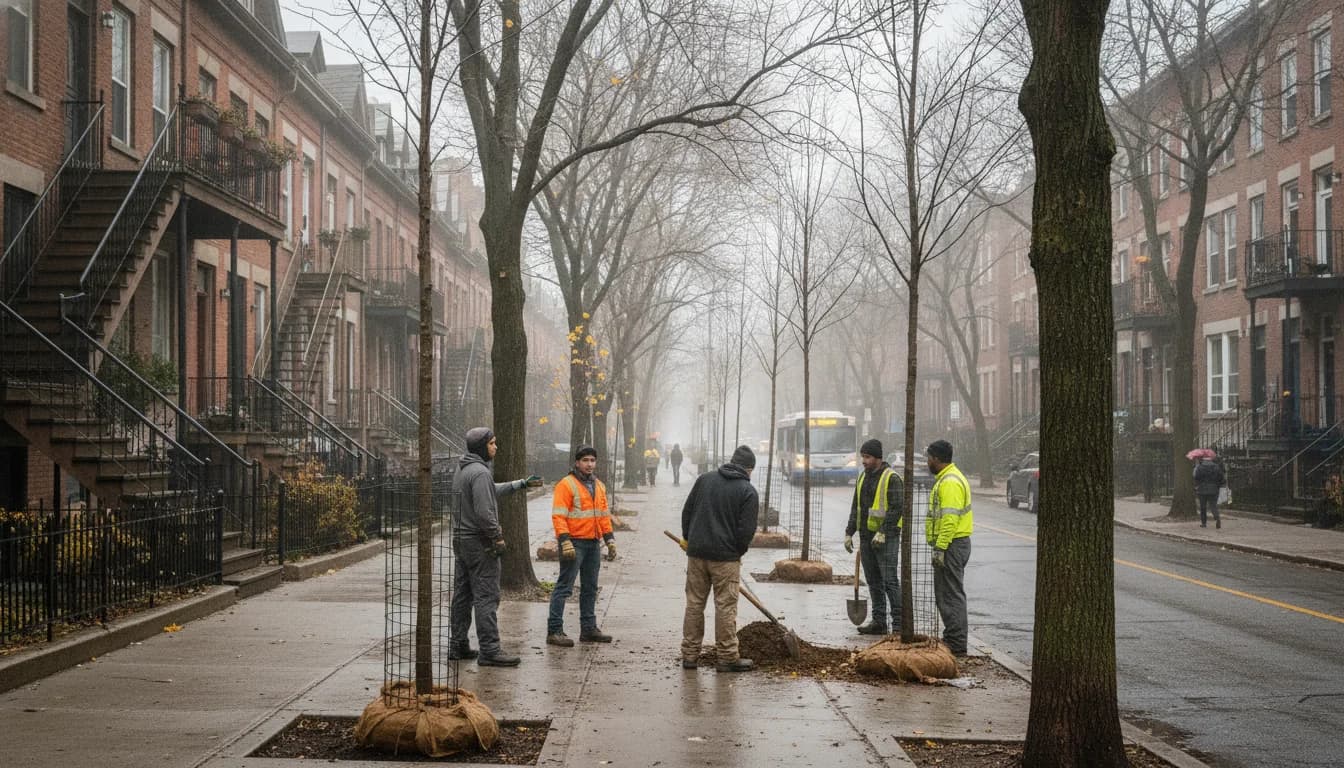
Montreal Times reports today on a sustained push to expand the city’s urban forest, signaling a shift from pilot projects to a broader, data-driven strategy known as montreal urban forest expansion. The city’s new microforests initiative, launched as part of a participatory budgeting effort, is laying the groundwork for increased canopy and biodiversity across several boroughs. With a total budget of about $1.4 million, the first phase will add more than 6,100 square meters of forested space and introduce over 6,500 trees and shrubs, creating islands of biodiversity in five boroughs and expanding access to nature for residents who live far from large parks. This development is set against a backdrop of climate action measures that directly tie urban forest expansion to resilience and air quality improvements. Last month, the city reaffirmed its climate ambitions, updating its Climate Plan with 52 concrete actions to green living environments and advance carbon neutrality by 2050, making montreal urban forest expansion an integral component of the city’s climate strategy. The pace and scale of the program reflect a broader municipal effort to harmonize growth with green spaces, as shown in neighborhoods like Saint-Léonard and Outremont, where local policies and management plans are aligning with the city’s overarching framework. This alignment signals not only a commitment to greener streets but also a data-driven approach that emphasizes accountability and measurable progress for residents and investors alike. montreal urban forest expansion is taking shape at a moment when technology, planning, and community engagement converge to redefine how cities grow greener, cooler, and more equitable.
Montreal’s microforests project is a central pillar of this expansion. Described by the city as a targeted effort to expand the canopy in walkable, accessible ways, the program envisions creating 15 microforests in five boroughs. The plan is designed to complement larger public-forest strategies by filling canopy gaps and delivering quick ecological and social benefits to neighborhoods with limited access to mature forest landscapes. The microforests initiative is explicitly framed as a city-building project, not merely a tree-planting exercise, with carefully mapped locations, defined delivery dates, and a transparent budget. For readers following the data, the project’s progress as of mid-2026 shows real, tangible outcomes: more than 6,100 square meters of forest, more than 6,500 trees and shrubs, and a multi-borough footprint that prioritizes accessibility and ecological resilience. The project’s status updates reveal that some boroughs have completed installations (e.g., Montreal-Nord and Pierrefonds-Roxboro), while others are in various stages of completion, with ongoing plantings scheduled through 2026. These specifics illustrate both the scale of ambition and the city’s willingness to publish progress openly, a hallmark of a data-driven approach to urban forestry. Last updated June 17, 2026, the microforests page underscores the program’s concrete benefits and its role in expanding Montreal’s green canopy in ways that residents can see, touch, and use for recreation and relaxation. (montreal.ca)
The climate connection is explicit. Montreal’s Climate Plan, updated as of July 29, 2026, embraces green space expansion as part of a broader strategy to reduce greenhouse gas emissions and improve resilience to heat, heavy rainfall, and other climate risks. The plan features 52 measures designed to accelerate sustainable transportation, decrease fossil fuel use in buildings, and, crucially, “make our living environments greener,” including the expansion and management of urban forests. The plan highlights a practical linkage between tree planting and carbon neutrality by 2050, including the mechanism of creating new green spaces that can serve as buffers against heat and flood impacts. In short, montreal urban forest expansion is not a standalone project; it is a core element of the city’s climate-job equation, with explicit targets and progress metrics that the public can track. (montreal.ca)
In parallel, municipal neighborhoods are advancing their own local forestry strategies that tie into the citywide expansion. Saint-Léonard published its local Urban Forestry Policy in 2019 and continues to implement a long-range plan aligned with the city’s tree policy. The policy articulates four strategic orientations—from protecting and enhancing public arboriculture to engaging private property owners and reducing urban heat islands—ensuring that forest health and canopy growth are considered across public and private spaces. Outremont offers another illustrated example: its canopy index stands at 34 percent with roughly 7,500 public trees and a target of about 130 plantings per year. The arrondissement reports 125 plantings in 2023 and 150 planned for 2025, signaling a steady, data-informed cadence of planting and maintenance that supports the broader expansion objectives. Inventory and planning practices in Outremont also demonstrate a commitment to georeferenced tree inventories and asset management, aligning local work with citywide data standards. Together, these local efforts reflect a coordinated approach to montreal urban forest expansion that scales from neighborhood plans to citywide policy. (montreal.ca)
What happened: a multi-pronged push to grow the city’s canopy through targeted, well-funded initiatives
-
Microforests roll-out across five boroughs: The city’s microforests project, conceived as part of participatory budgeting, calls for the creation of 15 microforests with a total budget of $1.4 million. The plan aims to add more than 6,100 square meters of forested area and more than 6,500 trees and shrubs, creating biodiversity islands in the urban fabric. Progress reports indicate concrete outcomes in several boroughs: Montreal-Nord completed a microforest in 2024 with a 1,500 square meter site and 194 trees and 544 perennials; Pierrefonds-Roxboro completed a microforest project in August 2023; Rosemont–La Petite-Patrie completed two microforests in the Parc Père-Marquette area by 2022; Outremont has several microforest components with work planned for 2026; Verdun’s microforests are cited as ongoing, with work spanning 2022–2025. These figures illustrate a staged but visible scale-up, with projects moving from planning to delivery across multiple boroughs. The initiative’s explicit planning and budgetary framework demonstrate a serious, data-backed approach to increasing green cover in neighborhoods that historically had less access to park space. Progress updates show a city translating citizen engagement into tangible green infrastructure outcomes. (montreal.ca)
-
A citywide policy framework supports expansion: The Montreal Climate Plan’s 52 actions identify urban greening and forest management as essential levers for climate resilience. The plan’s emphasis on “making our living environments greener” and its alignment with broader resilience objectives place urban forest expansion at the core of climate adaptation strategies. The plan’s 2020–2030 framing and the 2050 carbon-neutral target converge on a long-term commitment to integrating nature into urban development, rather than treating trees as a peripheral amenity. This policy context provides the mandate and accountability framework for ongoing canopy growth measured against climate metrics, vulnerability indices, and inventory data. (montreal.ca)
-
Neighborhood-level deployment and planning reinforce the citywide effort: Saint-Léonard’s local forestry policy establishes four strategic orientations designed to expand and protect the urban canopy across public and private spaces, with explicit attention to heat island mitigation and community engagement. Outremont’s urban forest management plan exemplifies how a district translates policy into operational steps: inventory, georeferencing, planning, and replacement when needed, all aimed at increasing canopy cover and diversifying species. The city’s approach to canopy management—driven by local plans, inventories, and a canopy-targeting mindset—illustrates the practical mechanism by which montreal urban forest expansion becomes a realized urban infrastructure project rather than a theoretical ambition. (montreal.ca)
Why it matters: the expansion is about resilience, air quality, equity, and the evolving forest economy
-
Climate resilience and urban heat mitigation: The Climate Plan links green space growth to climate resilience, highlighting the role of trees in reducing heat exposure and buffering the city from climate risks. By expanding the urban forest, Montreal is seeking to lower heat indices, improve stormwater management, and strengthen ecosystem services across neighborhoods. The explicit framing of urban greening as a resilience tool is critical for understanding the strategic importance of montreal urban forest expansion beyond aesthetic or recreational benefits. (montreal.ca)
-
Air quality, biodiversity, and public health: The urban forest expansion program contributes to air purification, pollutant capture, and urban biodiversity, which in turn support public health outcomes. The microforests’ design emphasizes biodiversity islands, which are intended to sustain a broader variety of plant and animal species within the urban core. The city’s investment in canopy expansion aligns with broader ecological and health objectives by increasing the green surface area available to intercept pollutants and mediate urban microclimates. While the public-facing documents emphasize ecological and recreational benefits, the underlying logic is that more forested cover in dense urban areas translates to measurable improvements in air quality and thermal comfort for residents. (montreal.ca)
-
Equity and access to nature: Local forestry initiatives in Saint-Léonard and Outremont illustrate a commitment to extending canopy and green space across neighborhoods with varying levels of access to nature. Outremont’s canopy index at 34 percent and the annual planting cadence underscore a deliberate effort to maintain and expand green infrastructure citywide, with attention to evading canopy deserts in areas historically underserved by urban forests. The inclusion of plantings in multiple years—125 in 2023, 150 planned for 2025—reflects a sustained investment in access to nature across diverse communities. These neighborhood-level actions demonstrate how montreal urban forest expansion translates into tangible benefits for residents across the city, not just in central districts. (montreal.ca)
-
Data-driven planning and governance: The use of inventories and georeferenced data in Outremont, the detailed district-level planning in Ahuntsic-Cartierville (Plan maître de plantation 2022-2031) and the city’s master planning documents collectively highlight how the expansion is anchored in robust data and governance. The Ahuntsic-Cartierville plan projects around 1,300 trees planted per year, illustrating a quantified, long-term objective that provides a framework for evaluation and accountability. The combination of district plans, city-level objectives, and participatory budgeting outcomes demonstrates a mature, data-driven governance model for urban forestry. (montreal.ca)
-
The broader urban forestry economy and technology trends: The expansion program sits at the intersection of urban planning, environmental policy, and technology-enabled forestry management. The presence of inventory practices, species diversification analyses, and canopy assessments in district plans shows how technology supports intelligent forestry decisions. While not all micro-level numbers come from a single central source, the recurring emphasis on inventory, diverse species portfolios, and canopy metrics signals a growing market for urban forestry tech, data analytics, and environmental services—areas likely to attract private- and public-sector investment as Montreal scales its urban forest expansion. The city’s climate plan and local forest-management documents reinforce that this is a data-driven priority with long-term budgeting and reporting expectations. (montreal.ca)
What’s next: timing, milestones, and what readers should watch for
-
Expanded microforests and canopy growth: The microforests program will continue expanding across the city, with 15 microforests already on the books and ongoing deliveries in several boroughs through 2026. The multi-borough approach means residents will begin to notice more shaded spaces and diverse plantings near parks and public spaces, with the potential to serve as models for other municipalities facing canopy gaps. The June 2026 progress report shows a concrete, measureable footprint in five boroughs, with ongoing projects in development stages in others. The explicit budget and delivery dates provide a clear public signal of ongoing investment in urban forest expansion. (montreal.ca)
-
Policy alignment and climate-monitoring infrastructure: With the Montreal Climate Plan updated in July 2026, the city intends to align urban greening with measurable climate outcomes, including vulnerability mapping and greenhouse gas inventories. Expect an ongoing cycle of progress reporting, dashboards, and annual progress updates that tie canopy growth to climate metrics. The plan’s vulnerability framework will inform where greening investments should occur to bolster resilience for the most exposed neighborhoods. This governance structure suggests regular public reporting, potentially including annual or biennial climate and forest-health reports. (montreal.ca)
-
District-level implementation and targets: Neighborhood plans, such as Ahuntsic-Cartierville’ 2022-2031 plan and Outremont’s forest-management framework, indicate a cadence of yearly planting targets and inventory updates. Montrealers should expect continued district-by-district expansion, with annual targets and progress updates published by each arrondissement, consistent with the city’s overall urban forest expansion goals. The Ahuntsic-Cartierville example specifically references a 1,300-tree-per-year objective, illustrating a clear growth target that will shape budgeting and contractor engagement in the years ahead. (montreal.ca)
-
Monitoring, reporting, and accountability: The city’s data-centric approach—inventory, species diversification, canopy assessments, and vulnerability indices—will likely lead to more granular public reports. Expect the introduction or expansion of dashboards and public data releases showing canopy cover changes over time, arborist inspections, replacement planting rates, and maintenance budgets. The climate plan’s emphasis on data instruments, including vulnerability maps and GHG inventories, points to a continued emphasis on transparency and data-driven decision-making in the urban forest sphere. (montreal.ca)
-
What to watch for in the coming months: Specific events to monitor include further microforest announcements and new district-level planting initiatives, updates to the climate plan’s state of progress (with annual or mid-year progress notes), and new or updated local forestry policies from other boroughs. The Saint-Léonard policy and the Outremont canopy-management plan provide a blueprint: each arrondissement will publish its own progress reports, inventory updates, and renewal strategies, while remaining aligned with the city’s 2050 carbon-neutral goal and its 52-action climate plan framework. These developments will shape where and how Montreal invests in urban forest expansion and how residents can participate in future planting opportunities. (montreal.ca)
Closing: staying informed and engaged with montreal urban forest expansion Montreal’s urban forest expansion is evolving from a series of pilot projects into a citywide, data-informed program designed to boost resilience, air quality, biodiversity, and equitable access to nature. The microforests initiative demonstrates a concrete, budget-backed plan to add thousands of trees and dozens of hectares of new canopy, while neighborhood plans show how a sprawling urban forest strategy translates into district-level action and governance. As the Climate Plan’s 52 actions unfold and as district forestry plans mature, Montrealers can expect ongoing updates, public dashboards, and more opportunities to participate in greening the city. For readers seeking a practical takeaway, stay alert for microforests project announcements in your borough, watch for new canopy maps or inventory reports, and consider engaging in local planting programs when offered. The city’s approach—combining participatory budgeting, urban planning, and climate action—offers a replicable blueprint for other cities pursuing montreal urban forest expansion.