Montreal Urban Microforests Expansion Boosts Canopy

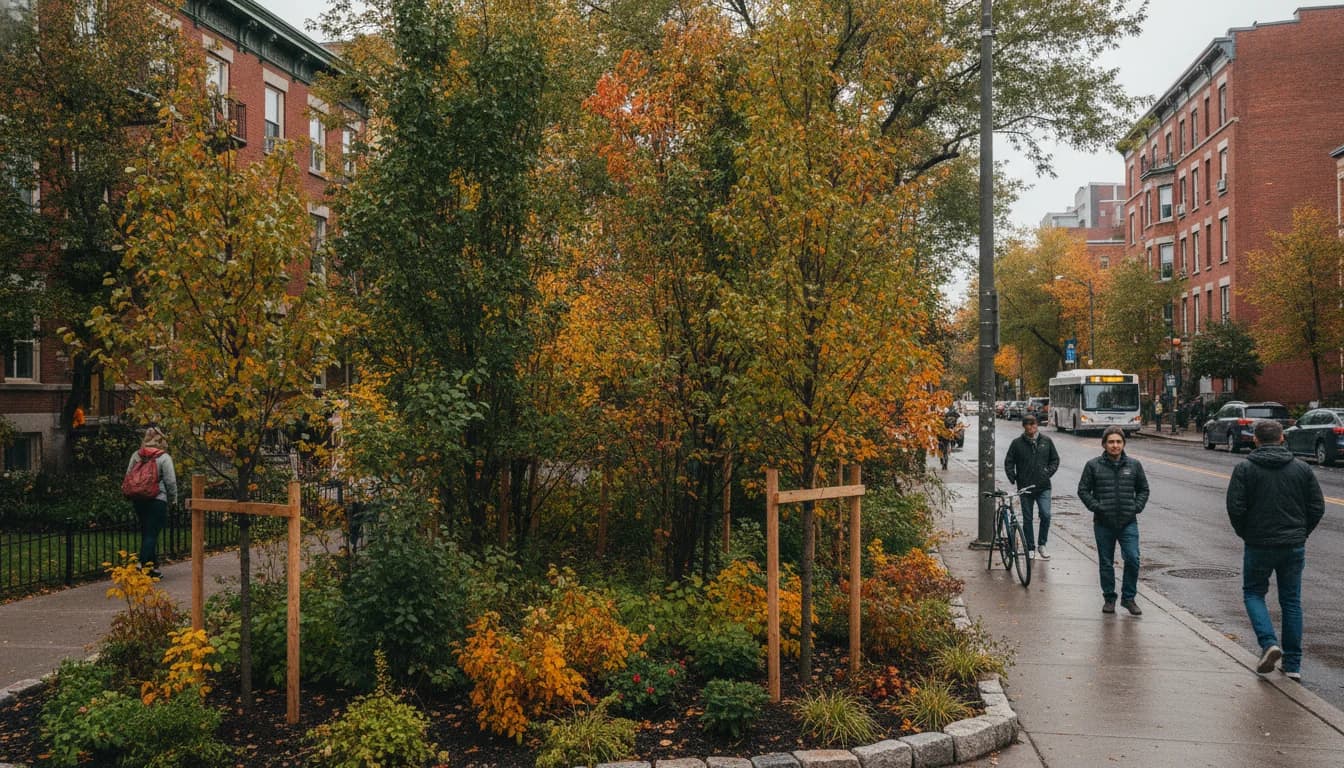
Montreal’s urban forest strategy took a concrete, data-driven step forward with a formal launch of what is being called the Montreal urban microforests expansion. The city today unveiled a plan to add 15 protected microforests across five boroughs, a project born from the first edition of Montréal’s participatory budget and now funded with a dedicated budget aimed at expanding the city’s green canopy. This initiative matters not only for the trees themselves but for the broader effort to improve access to nature in dense urban neighborhoods, bolster biodiversity, cool heat islands, and provide residents with tangible places to reconnect with nature within easy reach of home. The effort reflects a broader city strategy to weave nature into urban life as a core climate resilience and public health measure, aligning with Montreal’s 2030 planning horizon and climate plans that foreground ecological transition and social inclusion. This guide to the Montreal urban microforests expansion relies on official city updates and related climate planning documents to lay out what happened, why it matters, and what comes next for residents and businesses.
The initiative rests on a gardening and ecological engineering approach popularized in dense urban contexts: Miyawaki-inspired dense plantings designed to accelerate forest establishment in constrained spaces. The Saint-Laurent microforests page describes this method as a way to create “dense, fast-growing forests in small urban spaces,” leveraging high species diversity and tight spacing to jumpstart ecological benefits early in the life of a microforest. This approach informs the design choices across the Montreal urban microforests expansion and helps explain why these installations can deliver noticeable shade, cooler microclimates, and habitat value even in compact urban footprints. Beyond beautification, city officials emphasize ecosystem services such as air purification, carbon sequestration, and supporting urban biodiversity, all of which contribute to climate resilience and livability in Montreal’s neighborhoods. The city’s broader climate and nature plans envision similar outcomes, tying microforests to long-term resilience goals and to Montreal 2030 targets that include reducing greenhouse gas emissions and promoting ecological transition. This context underscores why the generated data—space, species mix, and delivery milestones—are meaningful for ongoing urban planning and public engagement. The program’s inception and ongoing expansion are also part of a broader narrative about turning participatory budgeting into measurable, policy-relevant green infrastructure.
Section 1: What Happened
Scope of the expansion
Montreal’s urban microforests expansion envisions creating 15 microforests that collectively expand the city’s forest canopy and biodiversity. The project is planned to span multiple boroughs, with a total budget of around $1.4 million dedicated to development in local parks and underused municipal spaces. In practical terms, the program will add more than 6,100 square meters of forested area and plant more than 6,500 trees and shrubs, creating a mosaic of green islands throughout the city. This scale signals a meaningful step beyond a handful of isolated installations to a citywide effort designed to deliver measurable canopy gains in high-need areas. The scale and budget are documented in the city’s progress update, which also notes that these microforests function as biodiversity islands and quiet retreat spaces for residents. The 15 installations are distributed across five boroughs as part of a coordinated roll-out that builds on earlier microforest work already completed in certain neighborhoods. This expansion aligns with the city’s climate and ecological goals, as outlined in the Montreál Climate Plan and Nature and Sports Plan, which emphasize expanding the urban forest as a climate adaptation strategy. (montreal.ca)
Borough-by-borough progress and delivery details
A detailed progress snapshot shows where each microforest effort stands in 2024–2026 and provides a window into the upcoming work:
- Montreal-Nord: A microforest development covering 1,500 square meters has been completed, featuring 194 trees and shrubs plus 544 perennials. The site is located at 4079 Boulevard Henri-Bourassa Est, northwest of the intersection with Rue Pie-IX. The delivery date for this installation was Summer 2024, with a known budget of approximately $217,851. This completed project represents a tangible early win for the five-borough strategy and demonstrates how the Miyawaki-inspired approach translates into urban space. (montreal.ca)
- Outremont: The borough has pursued a more expansive approach, with six microforests totaling 2,500 square meters, planted across multiple sites including intersections and parks. Deliveries span from Fall 2022 to Summer 2026, with a total project budget of about $532,500. Several sites are already completed, while others are slated for completion in 2026, reflecting a staged, long-tail rollout tied to urban space readiness and maintenance planning. (montreal.ca)
- Pierrefonds-Roxboro: This area saw completed development of three microforests totaling 900 square meters, with a cumulative plant count of about 2,500 trees and shrubs. The Parc de Deauville installation is a notable milestone, delivered in August 2023 with a budget around $220,136. The Pierrefonds-Roxboro work demonstrates how green infrastructure can be integrated into suburban-adjacent urban fabric with targeted site selection. (montreal.ca)
- Rosemont–La Petite-Patrie: Two microforests totaling 600 square meters were completed, housing roughly 1,730 trees. Sites include Parc Père-Marquette and the intersection of Boulevard Rosemont with Rue Garnier, with delivery completed in June 2022 and budgetary notes around $93,720. This neighborhood-level deployment illustrates how microforests can reinforce local biodiversity while serving as public spaces. (montreal.ca)
- Verdun: Verdun’s microforests are partially completed, with three microforests spanning 1,400 square meters across several sites, including locations along the Serres municipales and Parc Wilson. The delivery window ran from Fall 2022 to Fall 2025, and the current status reflects ongoing work under the broader expansion program. The Verdun installations are a key example of how the city’s approach extends into the more peripheral island areas of Montreal’s metropolitan region. (montreal.ca)
In addition to these status updates, the city’s public-facing materials emphasize that all microforests are sited on densely paved public land to create climate-resilient “cool islands” that promote biodiversity and offer residents accessible, contemplative green spaces. City officials note the program’s participatory budgeting origins: the microforests are among the winning projects from the first edition of Montreal’s participatory budget, which underscores the city’s commitment to citizen-led urban greening. The program’s current scope and status reflect both the ambition of a city-wide canopy expansion and the practical realities of installing green infrastructure across a diverse urban landscape. As the city frames it, these microforests are not just trees planted in parks; they are living community assets with maintenance protocols, exposure to climate risks, and ongoing lessons for urban ecology in a dense urban environment. (montreal.ca)
Key milestones and delivery dates
The Montreal urban microforests expansion has clear, published milestones that help stakeholders track progress and manage expectations. The city reports that by 2026, several boroughs have completed specific microforests while others are slated for completion in 2026. For example, the latest borough-by-borough status notes that Parc Père-Marquette’s microforest work was planned for Summer 2026, and Parc Félix-Garneau is similarly scheduled for Summer 2026 completion. These near-term milestones illustrate a phased approach designed to balance construction logistics, maintenance, and community engagement while accelerating canopy growth across multiple neighborhoods. The project’s multi-year climate and canopy goals underscore the importance of careful coordination among boroughs, contractors, and maintenance crews to ensure that each installation establishes a healthy, diverse plant community that can withstand climate stressors. (montreal.ca)
Section 2: Why It Matters
Climate resilience and canopy benefits
The Montreal urban microforests expansion is not just a collection of green spaces; it is a deliberate climate adaptation measure. City materials emphasize that expanding the green canopy reduces urban heat island effects, improves air quality, and provides shade, all of which contribute to a more comfortable and resilient urban environment during increasingly frequent heat events. The Saint-Laurent microforests page explicitly links the Miyawaki approach to rapid growth and dense canopy formation, which aligns with climate resilience goals by increasing evapotranspiration and reducing local temperatures in microclimates that experience intense heat loads. While these localized effects may vary by microforest site, the aggregated impact of 15 installations across five boroughs translates into a measurable enhancement of urban cooling and air quality in a city that seeks to mitigate climate risks in densely populated neighborhoods. This connection to climate resilience is echoed in Montreal’s Climate Plan, which foregrounds resilience alongside emissions reduction as a core objective of urban policy. (montreal.ca)
Biodiversity and ecosystem services
Beyond cooling effects, the microforests are designed to support biodiversity by providing habitat for birds, pollinators, and other urban wildlife. The city’s materials describe “islands of biodiversity” within the urban fabric, a concept that highlights how small, strategically placed green spaces can contribute to species survival and ecological connectivity in a city with limited green space per capita. The density and diversity of plantings—typical of Miyawaki-inspired designs—are intended to maximize ecological interactions within a compact footprint. The Rosemont–La Petite-Patrie and Pierrefonds-Roxboro installations illustrate how microforests can be integrated into mixed-use areas, parks, and transit-adjacent spaces, offering ecological and recreational value without displacing existing urban uses. The Saint-Laurent narrative underscores these benefits, noting the role of diverse tree species in supporting wildlife and buffering urban environments from climate stressors. (montreal.ca)
Social equity and access to nature
Public greening programs, including Montreal’s participatory budgeting-based microforests, emphasize equitable access to nature as a social good. The underlying principle is to bring nature closer to residents in varied neighborhoods, including those with higher urban density and fewer large parks. The five-borough rollout, with installations in districts ranging from Montreal-Nord to Verdun, demonstrates a geographic equity objective: distributing canopy and biodiversity benefits beyond a few affluent pockets. Climate and resilience planning documents further connect green space expansion to inclusive urban development, aligning with Montreal 2030 resilience targets that prioritize both climate mitigation and social inclusivity. In Ville-Marie and Saint-Laurent, the emphasis on placing microforests in dense urban contexts reflects a deliberate attempt to balance ecological gains with accessibility and education for residents. (montreal.ca)
The role of participatory budgeting in green infrastructure
The participatory budgeting origin of the microforests signals a broader movement to anchor environmental interventions in community voice. The city’s progress notes describe the project as one of the winning initiatives from the first edition of the participatory budget, providing a concrete example of how citizen input can translate into tangible green infrastructure projects. This approach has implications for how future climate resilience investments are proposed, approved, and implemented—potentially accelerating consensus around green projects while improving accountability through community oversight. The model suggests a replicable path for other cities seeking to combine citizen engagement with measurable ecological outcomes. (montreal.ca)
Section 3: What’s Next
Upcoming projects and timelines
Looking ahead, the Montreal urban microforests expansion continues to unfold with several near-term milestones projected for Summer 2026. The city’s status updates indicate that Outremont sites remain on track with work continuing through 2026, and that specific Parc Père-Marquette and Parc Félix-Garneau locations in Outremont are slated for completion in Summer 2026. Verdun sites have ongoing work with remaining installations planned to wrap up in the near term, depending on site readiness and maintenance scheduling. The explicit Summer 2026 timelines for these sites highlight the city’s intention to accelerate canopy growth while maintaining a reliable cadence of installation and post-planting care. The project remains aligned with municipal climate goals and the participatory budgeting framework that spawned the initiative, reinforcing a data-driven approach to urban greening with transparent milestones. (montreal.ca)
What to watch for next
Readers and stakeholders should pay attention to several indicators as the project advances:
- Site delivery dates and completion status by borough, particularly the Outremont and Ville-Marie pockets where multiple microforests are scheduled for 2026 completion. The city’s published timelines provide a concrete basis for monitoring progress and reallocating maintenance resources as needed. (montreal.ca)
- Maintenance practices and ecological performance data. While the city emphasizes canopy expansion and biodiversity, long-term success hinges on effective maintenance, adaptive management, and monitoring of plant survival, growth rates, and species diversification. The Saint-Laurent approach notes the density and diversity of plantings as a core design principle, which implies ongoing monitoring to ensure survival and resilience. Expect periodic updates from the city as crews evaluate plant health, pest management, and microclimate effects. (montreal.ca)
- Community engagement and education opportunities. As a participatory-budget project, the microforests present opportunities for neighborhood workshops, school field trips, and public education about urban ecology. Montreal’s climate and nature plans frame such engagement as essential for building lasting support and understanding of ecological benefits, which will influence future expansion decisions. (montreal.ca)
Closing
The Montreal urban microforests expansion represents a deliberate, data-informed step toward a greener, more resilient city. By converting underused spaces into forested microislands that host diverse species and provide shade, air purification, and public space, the program embraces a multi-faceted approach to urban climate adaptation. The initiative’s participatory budgeting roots, combined with a concrete, borough-level rollout, illustrate how citizens, planners, and ecologists can work together to create measurable ecological gains within a dense urban fabric. As projects advance through 2026 and beyond, stakeholders—from neighborhood associations to business districts—will be watching not only for the establishment of trees, but for signs of stronger microclimates, improved biodiversity, and enhanced quality of life for residents who live with Montreal’s climate realities every day. For residents seeking updates, the city’s official channels and borough websites will continue to provide milestone reports and site-specific progress, ensuring the Montreal urban microforests expansion remains transparent, accountable, and responsive to community needs.