Montreal Waterfront Development: Eco Districts and Tech Hubs

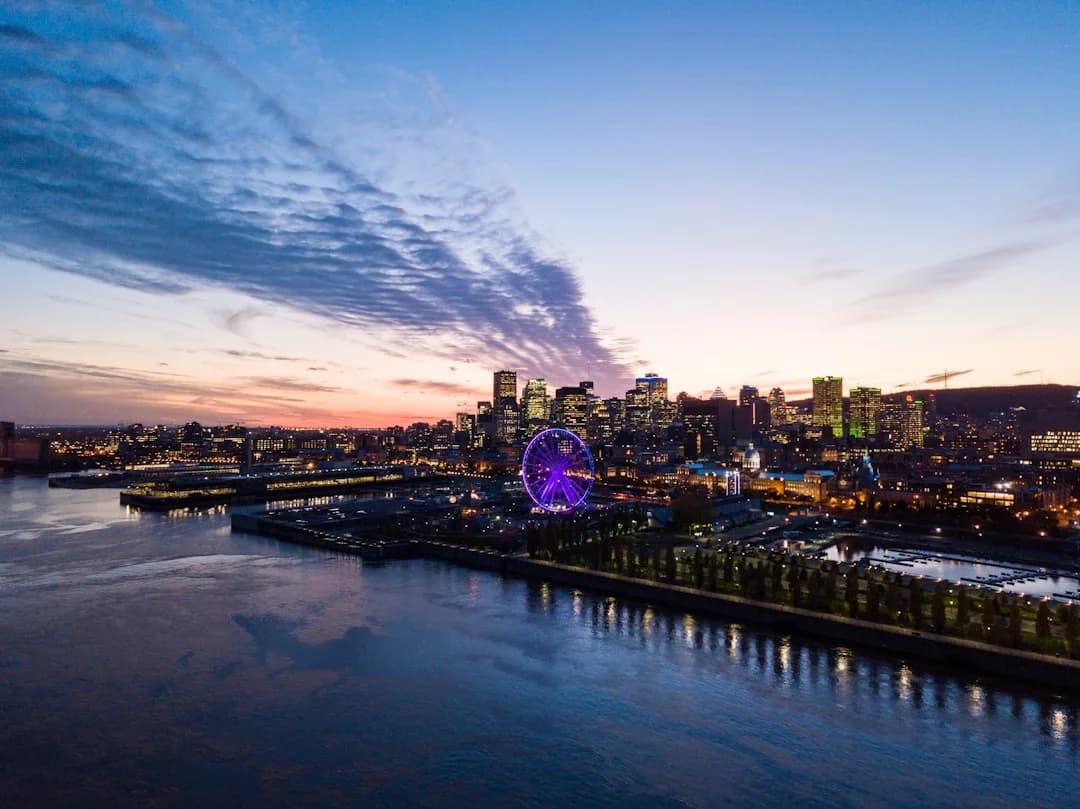
Photo by Samuel Charron on Unsplash
Montreal’s waterfront is entering a pivotal new phase, with a series of announced developments along the Lachine Canal and the broader Grand Montréal waterfront corridor designed to improve public access, resilience to climate change, and the integration of technology into urban life. City officials emphasize that this is not just about parks or promenades; it is about rethinking the edge of the city where river, rail, and road meet to create a more livable, data-informed urban fabric. The most visible signal of this shift in late spring 2026 is a comprehensive plan to open a long, public-facing waterfront park in Lachine, complemented by continuing upgrades to existing riverfront assets and the introduction of new, eco-friendly spaces. As with many large public works, the stakes are high: the projects touch property values, local businesses, tourism, commuting patterns, and environmental stewardship, all of which feed into broader discussions about Montreal’s future as a global river city. “Montreal waterfront development” is no longer a slogan; it is a portfolio of coordinated investments, policy shifts, and community engagement efforts that together aim to redefine how residents and visitors experience the river. (montreal.ca)
In Lachine, the headline project is a new waterfront park spanning more than a kilometer along a peninsula created to connect Parc René-Lévesque with Promenade Père-Marquette, delivering what city officials describe as significantly improved access to Lac Saint-Louis. The design includes environmental restoration components and plans to repurpose aging marina infrastructure as part of a broader climate adaptation strategy. City communications have highlighted that the park will be publicly accessible and free to all, signaling an emphasis on inclusivity and broad-based benefit rather than exclusive access. As the project advances, crews are scheduled to dismantle obsolete facilities and reallocate space for green and public-use functions, a process slated to unfold through spring and early summer of 2026. This approach aligns with Montreal’s broader climate and resilience objectives, which link waterfront revitalization with flood protection, green infrastructure, and reduced urban heat island effects. “Accessible free of charge to the entire population” is the guiding principle cited by municipal authorities for the Lachine waterfront transformation, a claim supported by city updates and public briefings. (montreal.ca)
Beyond Lachine, Montreal’s waterfront strategy includes other notable developments that collectively aim to knit the river’s edge into daily life. One prominent example is Quai 34 (Pier 34) in Lachine, which was reimagined as an ecological living environment through the city’s participatory budgeting process. The transformation of Quai 34 into a space oriented toward ecological living—designed to be accessible and attractive for relaxation, recreation, and small-scale events—illustrates how the city is coupling environmental objectives with public space design. This project, which earned recognition in the city’s first participatory budget cycle, demonstrates how citizen input is shaping waterfront redevelopment on the ground. The Quai 34 initiative complements broader park-and-promenade efforts by signaling that ecological design can coexist with user-friendly amenities and public programming. (montreal.ca)
As part of the same wave of improvements, the Promenade fluviale project — a long, bikeable riverside corridor — is undergoing a major modernization that will affect how residents move along the waterfront. The city and its partners have targeted improvements to a corridor that, when completed for the 2026 season, will feature upgraded surface treatments, safety enhancements, and enhanced connectivity to adjacent neighborhoods. In total, the cycle-friendly stretch along the Grand Montréal waterfront measures roughly 13.4 kilometers and is a centerpiece of the city’s multi-neighborhood mobility strategy. The modernization push reflects a broader trend in Montreal to elevate active transportation and create continuous, safe, and scenic routes for cyclists and pedestrians near the river. (cmm.qc.ca)
Opening of a new Lachine waterfront park and the associated upgrades are not isolated events; they fit into a coordinated set of initiatives that span public spaces, housing policies, and transportation planning. In late April 2026, the City of Montreal published details about the Lachine waterfront park initiative, including the schedule for decommissioning older marina infrastructure and repurposing the site for green space and public use. The city’s announcements emphasize an environmental restoration framework designed to address climate adaptation while enhancing recreational access. Taken together, these actions signal a push to turn the Lachine waterfront into a year-round destination that supports both daily life and longer-term economic development. (montreal.ca)
Section 1: What Happened
Announcement overview
Public launch and scope

In spring 2026, the City of Montreal publicly framed the Lachine waterfront initiative as a flagship component of the broader waterfront redevelopment plan. The new park, described as a long peninsula running between Parc René-Lévesque and Promenade Père-Marquette, is being designed to maximize water access while anchoring the area with green space, pedestrian-friendly amenities, and climate-resilient features. The city underscored that the project is about more than aesthetics; it is part of a strategic effort to reconfigure the waterfront for public use and ecological performance, aligning with climate adaptation and urban renewal objectives that Canada’s River City programs emphasize. The official English-language page notes the park’s public access model and environmental restoration framework, while French-language materials highlight the same priorities with a focus on accessible water access and site rehabilitation. These communications set expectations for how the park will function within the city’s riverfront network. (montreal.ca)
Key components and design intent
The Lachine project is anchored by several interlocking components: a public park, ecological restoration areas, and the repurposing of previously underused port infrastructure to support new uses. The broader plan frames the waterfront as a living laboratory for climate resilience and urban renewal, including potential programming such as seasonal markets, outdoor education spaces, and public art installations. City communications emphasize that the space will be designed for year-round use, with features intended to mitigate flood risk and provide shade, stormwater management, and habitat restoration where feasible. While the precise design details continue to evolve through public engagement and technical studies, the aim is to create a front-door experience to the river that is both welcoming to families and practical for commuters and workers who travel along the waterfront corridor. (montreal.ca)
Timeline highlights and immediate actions
Two critical dates frame the near-term actions: the dismantling of aging marina facilities and the transition of the site toward park configuration. City and agency communications indicate that demolition and deconstruction activities will proceed through spring 2026, with a targeted reopening of certain riverfront segments aligned to the 2026 season. The May 2, 2026 CNW press release confirms ongoing site work and reiterates that the project is proceeding on schedule, with a clear emphasis on safety, environmental remediation, and stakeholder engagement. In practical terms, this means that contractors will strip obsolete structures, remediate the site as needed, and reclaim space for new paths, lawns, and water-facing seating areas. The deconstruction work builds on earlier phases that began in 2025, illustrating a multi-year sequence of planning, permitting, and construction typical of large-scale waterfront projects. (newswire.ca)
Supporting waterfront assets and parallel initiatives
Quai 34 and the zero-emission design ethos
Quai 34’s transformation illustrates how Montreal’s waterfront upgrades extend beyond public parks to create mixed-use, ecologically oriented environments. As an example of participatory budgeting in action, the Quai 34 refurbishment converted a former industrial edge into a space that prioritizes ecological living, public access, and flexible use for gatherings and daily recreation. The project’s evolution demonstrates how public input and sustainability objectives can converge to produce tangible improvements along the riverfront that support both local residents and visitors. (montreal.ca)
The Promenade fluviale modernization
The Promenade fluviale project, a long circular narrative through multiple boroughs, is moving toward a more coherent, citywide cycling and pedestrian corridor. By the 2026 season, the corridor will have undergone a comprehensive refresh across approximately 13.4 kilometers of cycle paths, improving pavement conditions, safety features, and wayfinding. This work is essential for enabling safe, continuous access to the waterfront for cyclists and pedestrians, reducing friction in multi-modal travel along the river and supporting the city’s climate, health, and mobility goals. The upgrades also dovetail with broader efforts to connect Griffintown, the Lachine Canal corridor, and adjacent neighborhoods with a consistent, high-quality public realm. (cmm.qc.ca)
Lachine East Eco-district and urban-scale planning
Montreal’s waterfront redevelopment is not limited to parks and promenades; it is embedded in a broader urban planning framework that includes the Lachine East Eco-district and related infrastructure investments. City and borough planning documents describe ongoing decontamination work, sewer and water infrastructure upgrades, and green space integration as part of an ecosystem approach to waterfront development. The eco-district framework signals a long horizon of urban renewal that prioritizes environmental remediation, energy efficiency, and resilient land-use transitions along the riverfront. These threads show how the waterfront is being treated not as a single project but as an integrated district-scale transformation that affects housing, mobility, and public life. (projetmontreal.org)
Public access and equity considerations
A recurring theme in Montreal’s waterfront redevelopment is ensuring that improvements are widely accessible. City materials emphasize that new parks and riverfront facilities are intended to serve the entire population, with explicit statements about accessibility and inclusivity. In Lachine, this approach is embodied in a public park that will be free for everyone, as well as in the broader network of riverfront spaces designed to invite residents from across the city to enjoy the waterfront. These commitments to open access are part of a broader equity-oriented stance in Montreal’s urban development discourse, which links waterfront revitalization to social inclusion, mobility, and quality of life. (montreal.ca)
Why It Matters
Economic, social, and environmental impacts
Economic vitality and job creation

Montreal’s waterfront redevelopment is widely seen as a driver of economic activity, particularly in the Griffintown-Lachine Canal corridor where new parks, pedestrian zones, and enhanced public spaces can attract visitors, support local businesses, and stimulate small-scale events and markets. While project-specific job figures are still being refined, the momentum around Lachine’s park and the Quai 34 initiative signals potential for increased foot traffic, a more diversified mix of riverfront tenants, and longer dwell times in surrounding commercial areas. The city’s approach to participatory budgeting for waterfront projects also demonstrates an intention to align capital investments with community demand, which can foster greater local buy-in and sustainable economic returns over time. Industry observers note that well-executed waterfront revitalization often yields measurable gains in property values, tourism receipts, and retail performance, though outcomes depend on ongoing coordination with transportation networks and housing supply policies. (montreal.ca)
Mobility, access, and quality of life
The modernization of the Promenade fluviale and the expansion of riverfront access through the Lachine park are designed to improve mobility options for residents and visitors alike. By weaving together cycling paths, pedestrian routes, and river-edge access points, Montreal is advancing a multi-modal urban mobility vision that complements public transit investments and reduces car dependence along the waterfront. The 13.4-kilometer Promenade fluviale upgrade represents a concrete step toward a continuous, climate-resilient corridor that supports active transportation, outdoor recreation, and tourism experiences. This aligns with broader public health and urban livability goals, which position waterfront spaces as essential elements of a well-functioning city. (cmm.qc.ca)
Environmental stewardship and climate resilience
The Lachine park and related riverfront upgrades are framed as part of Montreal’s climate resilience agenda. The environmental restoration components, decontamination work in eco-districts, and green infrastructure investments are all intended to reduce flood risk, manage stormwater more effectively, and create habitats for urban biodiversity. The city’s published materials emphasize environmental restoration and climate adaptation as core motivations for the waterfront program, highlighting a recognition that public spaces can deliver ecological benefits while also enriching urban life. As Montreal continues to refine its waterfront plans, environmental stewardship remains a central criterion for evaluating project success, alongside accessibility, economic vitality, and community well-being. (montreal.ca)
Public access, equity, and stakeholder engagement
Inclusive access to riverfront amenities
The Lachine waterfront park initiative explicitly centers on universal access, with statements that the new spaces will be free and welcoming to all residents. This principle is critical for ensuring that waterfront redevelopment benefits are broadly shared and not limited to certain neighborhoods or demographic groups. The city’s public communications stress that the park will be publicly available to “the entire population,” which reinforces a values-based approach to urban development and can influence how local businesses, schools, and cultural organizations engage with the waterfront. The practical implications include more inclusive programming, such as community events, school field trips, and local markets that draw residents from across Montreal. (montreal.ca)
Community input and accountability
Quai 34’s participatory budgeting origin provides a concrete example of how residents can influence waterfront design decisions. While the scale and scope of voter-driven projects can vary, the Quai 34 experience demonstrates a path for citizen involvement in shaping the riverfront’s physical form and uses. This model, if replicated across other waterfront components, could enhance accountability for public investments and ensure that the spaces reflect diverse local needs. The experience also offers a template for how the city can translate community ideas into tangible public realm improvements along the river. (montreal.ca)
What’s Next
Upcoming milestones and next steps
Short-term actions through spring and summer 2026

The immediate horizon for the Lachine waterfront project involves the continuation of decommissioning activities and site transformation that began in 2025, with substantial progress expected through spring 2026 and into early summer. City communications emphasize that this period will see the park taking shape through the removal of outdated marina infrastructure and the establishment of foundational landscape elements, signage, and safety features. The CNW release from May 2, 2026 confirms ongoing site work and frames these months as a critical phase in moving from planning to on-the-ground construction. The sequencing suggests a staged opening of park components, with some segments becoming usable as soon as late spring or early summer, while others may follow later in the season or in subsequent years as additional infrastructure upgrades complete. (newswire.ca)
Parallel riverfront upgrades in 2026-2028
In addition to the Lachine park, the broader waterfront strategy includes continued work on the Promenade fluviale and other riverfront elements, with upgrades anticipated to extend into the next few years. The modernization of the Promenade fluviale is designed to finish ahead of or during the 2026 season, with additional improvements planned for connectors and interchanges that link the park with adjacent neighborhoods and transit hubs. City and partner agencies are expected to release more detailed implementation schedules as design choices solidify and as public engagement outputs influence final layouts. The multi-year nature of these projects means that Montreal’s waterfront development will continue to unfold beyond 2026, with the potential for new programmatic offerings, occupancy arrangements, and private-sector collaborations aligned with city policies. (cmm.qc.ca)
Housing and district-scale implications
While the primary focus of these early phases is parks and open spaces, the waterfront plan is embedded within broader district-level strategies that include housing and infrastructure investments. For example, eco-district planning efforts and related decontamination and sewer-work programs in Lachine reflect a longer horizon for the waterfront as a mixed-use edge of the city, capable of supporting residential growth, commercial activity, and cultural uses. In parallel with park creation, infrastructure upgrades and zoning adjustments in adjacent districts are expected to proceed, reinforcing a city-wide approach to waterfront development that ties public realm improvements to the economic engine of the riverfront. Stakeholders from the development, planning, and community sectors will likely remain engaged through 2026 and into 2027 as design choices mature and funding frameworks are finalized. (projetmontreal.org)
Closing
Montreal’s waterfront development is taking shape as a data-informed, multi-faceted strategy that seeks to blend public access, environmental stewardship, and economic opportunity along one of the city’s defining urban edges. The Lachine waterfront park, Quai 34, and Promenade fluviale upgrades illustrate how Montreal is translating ambitious planning into tangible public space and mobility improvements, while eco-district initiatives and infrastructure work lay the groundwork for a more resilient riverfront. For residents, business owners, and visitors, these developments promise improved river access, better cycling and pedestrian links, and a waterfront that feels integrated into daily life rather than confined to a single district or season. As the spring of 2026 gave way to summer, the sense of forward momentum was clear: the riverfront is evolving into a connected, citizen-centered spine of the city — one that will continue to be refined through ongoing planning, monitoring, and community dialogue. To stay updated, readers can monitor official Montreal city channels and local news outlets for the latest milestones, timelines, and public programs linked to the waterfront redevelopment. (montreal.ca)