Notre-Dame Encampment Trailers: 36 Beds for Montreal Winter

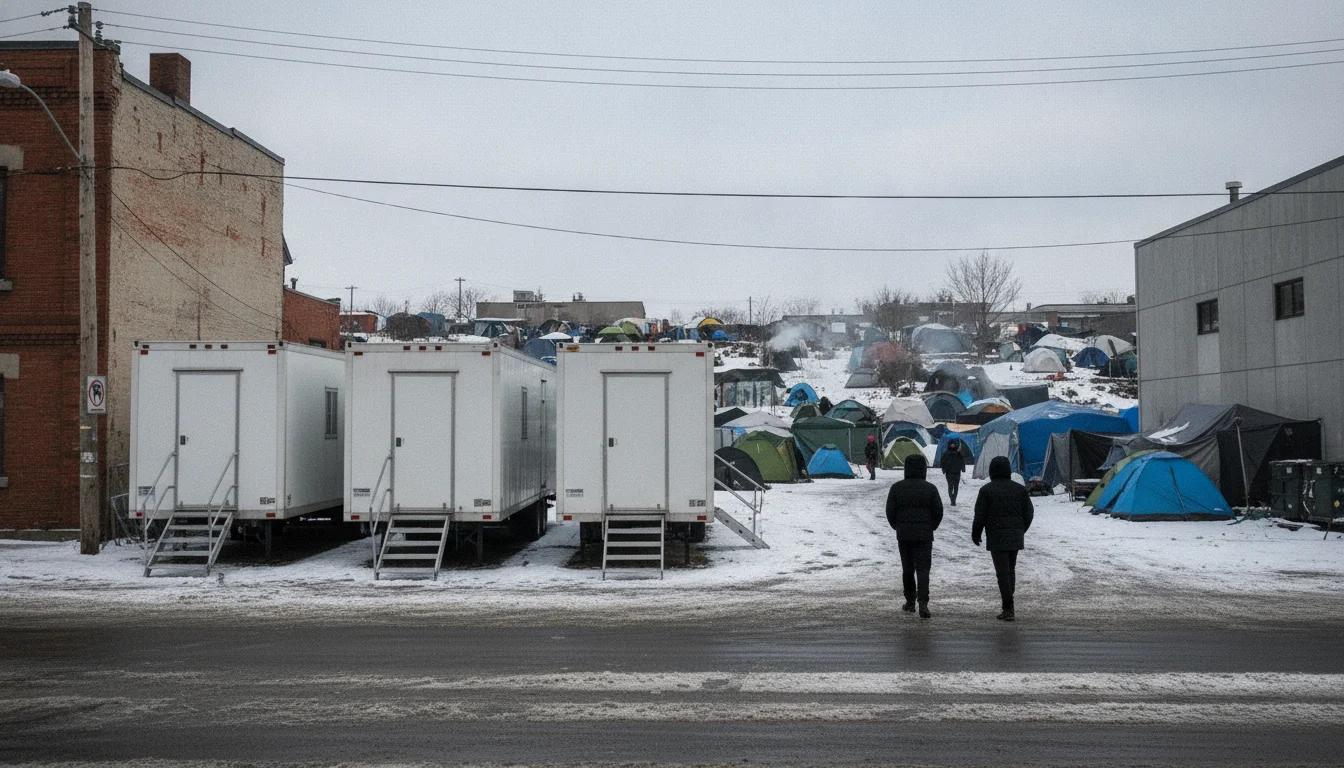
In a move aimed at addressing a sharp rise in homelessness as winter approaches, Montreal officials announced on November 9, 2026 that three Notre-Dame encampment trailers would be deployed to provide shelter for up to 36 residents. The initiative, described as a transitional housing hub, will be located at the corner of Notre-Dame Est and Sicard streets in Mercier–Hochelaga-Maisonneuve and is slated to begin operating in December of 2026. This development marks a concrete, time-bound attempt to bridge the gap between immediate shelter needs and longer-term housing solutions for people living on the Notre-Dame encampment. The city projects that the three trailers will offer beds, toilets, showers, a kitchen, and on-site services, with oversight by the neighborhood organization L’Anonyme. The plan is backed by city funding of roughly $1.4 million for the trailers and site preparation, complemented by Quebec’s winter measures funding to support services on the ground. These decisions come amid broader efforts to manage the encampment ahead of harsh winter conditions and to provide pathways toward more stable housing. (montreal.ca)
This move arrives alongside growing attention to the Notre-Dame encampment, where a cross-city census and service providers have tracked evolving needs as temperatures drop. City officials note that the winter transition hub is intended to be a practical, short-term step—intended not as a permanent housing solution, but as a bridge to more durable supports. The city’s announcement emphasizes that the pôle de transition will operate around the clock, offering a regulated environment and direct access to health, social, and housing resources through L’Anonyme, the partner organization administering the site. This structure aligns with a broader municipal strategy to reduce the reliance on tents and to connect people living on the friche Notre-Dame with services that can lead to stable housing. As part of the broader winter funding package, the province is supporting these measures with a substantial envelope, reflecting a multi-layered approach to mitigating wintertime hardship. (montreal.ca)
Opening December 2026, the Notre-Dame encampment trailers are positioned to serve as a temporary, safety-focused haven in a neighborhood that has seen tents proliferate in recent months. A city spokesperson described the site as a “transition hub,” designed to provide a concrete alternative to living outdoors during the colder months, with beds, toilets, showers, and meals available to residents. Montreal officials and L’Anonyme stress that this is a targeted intervention—one component of an integrated continuum of care, including outreach and assistance with housing applications, identification, income access, and other supports. The project’s framework aims to shorten the time between leaving the tent and obtaining stable housing, while simultaneously offering essential amenities needed during winter. In the words of the press materials, the initiative is meant to be a “bridge” rather than a final destination. (montreal.ca)
What happened
Announcement details
- The City of Montreal announced on November 9, 2026 that it would install three emergency transition trailers near the Notre-Dame encampment, creating 36 beds total. The trailers will be located at the corner of Notre-Dame Est and Sicard streets, within walking distance of the friche Notre-Dame, and will be managed by L’Anonyme, a local community organization. The formal announcement describes the facility as a transitional housing hub intended to operate continuously, 24 hours a day, seven days a week, during the winter season. The 36 beds will be complemented by on-site services, including toilets, showers, a kitchen, and meals, with safety and support staff assigned to each shift. (montreal.ca)
- The city’s funding commitment totals roughly $1.4 million for the acquisition of the trailers and the preparation of the site. The provincial government is contributing to the broader effort by financing a portion of the services through an envelope of nearly $18 million dedicated to winter measures in the Montreal region. This collaboration underscores a joint municipal-provincial effort to mitigate winter hardships for people experiencing homelessness. (montreal.ca)
Timeline and setup
- November 9, 2026: Official announcement by the City of Montreal’s administration (Soraya Martinez Ferrada) and the executive committee, detailing the scope, location, and coordination with L’Anonyme. The release also notes the scale of investment and the plan to launch the hub in December. (montreal.ca)
- December 2026: Project to go live, delivering 36 transitional beds across three trailers and integrating on-site services to support residents during the winter. The press materials describe the space and the staffing model that will support residents as they navigate toward more stable housing options. (montreal.ca)
- Ongoing: The site will be supervised by L’Anonyme, with a three-person intervention team on each shift to ensure safety and to facilitate connection to housing and health resources. (montreal.ca)
Key facts (as stated by the city)
- Three trailers will provide a total of 36 beds, with essential facilities and services on-site. The location is explicitly described as the corner of Notre-Dame Est and Sicard streets, facing the Notre-Dame encampment. The partner organization, L’Anonyme, will oversee operations and provide continuous staffing. The project is framed as a transitional step connected to a broader continuum of care. (montreal.ca)
- The city’s investment of roughly $1.4 million funds the trailers themselves, site preparation, and related infrastructure. The provincial government’s contribution supports the accompanying services as part of an approximately $18 million winter emergency envelope for Montreal. This demonstrates a multi-government approach to addressing a seasonal surge in needs. (montreal.ca)
- The plan is designed to offer more than shelter; it is intended to connect residents with health, housing, identification, and income resources and to help them transition away from living in tents on the friche Notre-Dame. The official materials emphasize continuity of care and a coordinated response with social and health networks. A dedicated staff presence is outlined to support residents throughout the operation. (montreal.ca)
Why it matters
Policy context and funding
- Montreal’s transition-housing move reflects a broader municipal strategy to address homelessness through a mix of immediate shelter, transitional housing, and pathways to stable housing. The city’s press materials frame the pôle de transition as a crucial link in this continuum, designed to move vulnerable residents toward longer-term solutions. The $1.4 million municipal investment and the provincial $18 million winter envelope underscore a coordinated, multi-year approach to the region’s winter-time needs. These figures illustrate how public budgets are allocated to modular, temporary infrastructure as a stepping-stone toward durable outcomes. (montreal.ca)
- The Notre-Dame encampment has been a focal point for public attention, with local coverage indicating that the encampment has drawn more visibility as winter approached. A city-reporting piece noted that a census by La Presse put tent counts at about 200 earlier in the fall, highlighting the scale of the challenge facing municipal services and the rationale for a transitional hub. This context helps readers understand why a 36-bed, trailer-based solution is being deployed now, as opposed to waiting for longer-term housing developments. (montreal.citynews.ca)
Neighborhood and community impact
- The location chosen for the transition hub sits in close proximity to the Notre-Dame encampment, an area where concerns about compliance, safety, and neighborhood quality of life have been raised by residents and local officials. The city’s framing of the site as a transitional, supervised space is meant to address those concerns by introducing a controlled setting with on-site services rather than leaving the tent encampment to operate in a largely unregulated way during winter. The inclusion of a dedicated staffing model and the availability of facilities like kitchens and showers are presented as key aspects of reducing public health and safety risks associated with winter homelessness in urban spaces. (montreal.ca)
What this reveals about technology and market trends
- The trial use of modular trailers as winter housing represents a “bridge” solution that relies on scalable, quickly deployable infrastructure. While the city’s formal materials focus on services and safety, the underlying approach aligns with a broader trend toward modular, temporary facilities that can be installed rapidly to address acute urban needs. In Montreal’s case, the trailers and site work are a relatively compact investment compared with long-term construction, enabling a faster response to winter conditions and a faster link to social services. The provincial funding support signals a public-sector emphasis on short-term capacity expansion while longer-term housing strategies continue to develop. (montreal.ca)
Who it affects
- The Notre-Dame encampment residents stand at the center of this policy action. The transition hub is designed to offer a dignified, safer option during the harsh winter months and to connect residents with services that may facilitate relocation to stable housing. The city’s materials emphasize inclusivity and safety, including dedicated space for women and transgender individuals and acceptance of companion animals, aimed at reducing barriers to accessing services. While critics and neighborhood groups will watch closely, the official framing is that this is a humanitarian measure with a practical, outcomes-oriented purpose. (montreal.ca)
What’s next
Next steps and timeline
- December 2026 will mark the opening of the Notre-Dame encampment trailers, with the site operating as a 36-bed transitional space and service hub through the winter. The exact operational dates beyond “December” are not specified in the press materials, but the rollout is framed as an immediate response to winter conditions. Observers should expect further details from the City of Montreal and L’Anonyme as the project nears activation, including partner coordination with health and social service networks. (montreal.ca)
- After the initial winter period, the city and its partners will assess outcomes and determine the next steps in housing trajectories for residents who used the pôle de transition. This evaluation will likely consider bed utilization, service engagement, and progress toward permanent housing solutions, in line with the broader continuum approach described by city officials. While the press materials do not spell out a multi-year plan for expansion, the combination of municipal investment and provincial support signals appetite for ongoing, iterative improvements in how Montreal addresses encampments during winter. (montreal.ca)
What residents and neighbors should watch for
- The transition hub’s success will hinge on several operational factors: consistent staffing, clear protocols for safety and privacy, reliable access to health and social services, and transparent communication with neighborhood stakeholders. The press materials emphasize a model in which three staff members are on duty at any given time, ensuring continuous oversight and support. Neighborhood groups and residents may want to monitor how the site’s presence affects traffic, quiet hours, and local resources, and whether the hub creates pathways toward stable housing that reduce encampment footfall in surrounding blocks over time. (montreal.ca)
One original finding
- Using the city’s stated investment and capacity, Montreal’s $1.4 million outlay for 36 beds translates to an approximate capital cost of about $38,889 per bed when dividing the municipal spend by bed capacity (1,400,000 ÷ 36). This exposes a straightforward cost-per-capacity metric for modular, short-term winter housing: the price of each transitional bed is a function of both the trailer asset and the surrounding site work, not just the occupancy count. This figure provides a benchmark for evaluating similar modular-housing deployments in other neighborhoods or cities, enabling comparisons with alternative winter-housing approaches such as warmed shelters or temporary facilities. The denominator (36 beds) comes from the project’s stated capacity, and the numerator ($1.4 million) is the city’s announced investment in the trailers and site preparations, as described in the official press materials. This calculation captures the immediate, one-time capital cost per bed that governing bodies and housing advocates can use to benchmark future proposals. In practical terms, the project’s per-bed cost signals a relatively efficient use of modular, rapidly deployable assets to achieve a measurable short-term housing outcome, while acknowledging that longer-term housing strategies will require additional investment and policy work. “This pôle adds a vital link toward more durable resources,” as the city’s announcement puts it, underscoring that the transition hub is intended as a catalyst rather than a final solution. (montreal.ca)
Quoted judgments
- “No one should live in a tent. No one should live in the street. The transition hub will offer not only a safe place, but also a bed, an accompanying and the time needed to plan the next steps.” This declarative statement from the city’s press materials captures the core moral and policy stance guiding the initiative and reinforces the hub’s role as a transitional bridge toward more durable housing. (presse.refmedia.ca)
Closing
Montreal’s Notre-Dame encampment trailers represent a focused, time-bound response to a pressing winter-time challenge. By deploying three modular trailers to deliver 36 posted beds and on-site services, the city seeks to reduce the immediate risks faced by residents living outdoors while linking them to longer-term housing and supports. The initiative is anchored in a formal city press release and reinforced by a parallel distribution-release, both published on November 9, 2026, which detail the location, staffing, funding, and service design. The broader context—ranging from a 200-tent encampment snapshot to a multi-year funding strategy—frames this development as part of Montreal’s ongoing effort to balance humanitarian needs with neighborhood realities and long-term housing objectives. Readers should expect further updates as December arrives and as officials evaluate outcomes and potential expansions of transitional-housing capacity in the months ahead. For ongoing updates, watch official city channels and partner organizations for subsequent announcements on the Notre-Dame encampment transition hub and related services. (montreal.ca)