Olympic Stadium Montreal Roof Renovation Advances

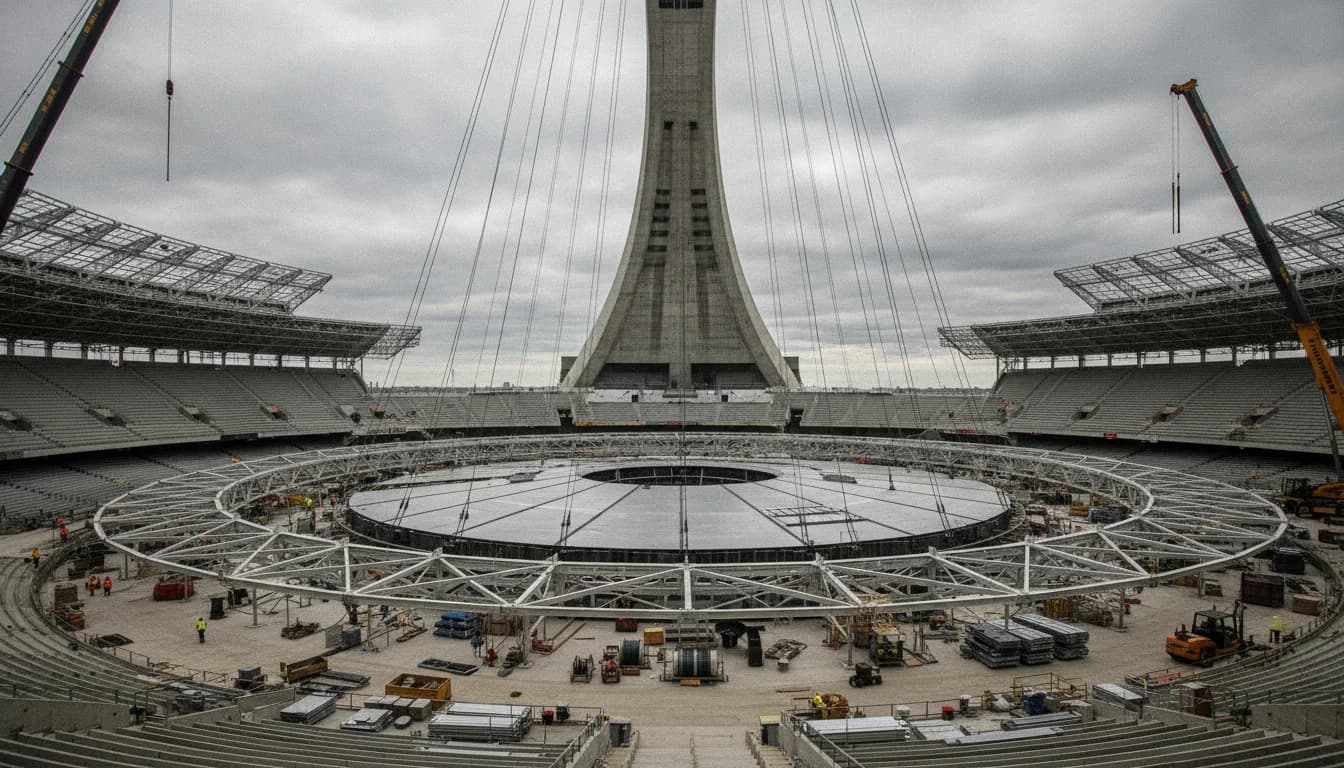
Montreal’s iconic Olympic Stadium Montreal, often referred to as the Big O, is moving into a new era of modernization. The roof renovation project, a centerpiece of Quebec’s infrastructure agenda, continues to progress as construction activity intensifies around the arena. The work is part of a broader plan to refresh interior spaces and related systems, with an eye toward preserving the stadium’s role in Montreal’s event ecosystem for decades to come. The timing matters not just for sports fans, but for local businesses, tourism, and the city’s ability to attract major international events in the future. Amid ongoing roof work, Montreal is also gearing up to host the UCI Road World Championships Montréal 2026, a world-class cycling event slated for September. This combination of high-profile sport and large-scale construction places Olympic Stadium Montreal at the center of a data-driven debate about urban infrastructure, public investment, and economic impact in the post-pandemic era. The world championships are scheduled from September 19 to 27, 2026, and organizers emphasise the event’s potential to attract hundreds of millions of television viewers and visitors alike, underscoring the stadium’s strategic importance to Montreal’s global visibility. (montreal.ca)
As the roof project advances, public officials and project partners stress the broader benefits of modernization for the city’s event calendar. The roof replacement, a cornerstone of the interior renovation program, carries a price tag reported at $870 million, and officials say the work is designed to keep the stadium functional while upgrading its capacity to host contemporary events. The project’s planners anticipate the new roof will enable the venue to welcome a broader mix of concerts, sports, and cultural programming and, importantly, help Montreal bid for and host international tours in the years ahead. At the same time, Interior renovations—such as bleacher rehabilitation, dressing room upgrades, luxury box additions, and modernization of washrooms and concessions—have received government approval, signaling a significant step toward a refreshed visitor experience once the roof is secure and the venue is ready for a new era of occupancy. The long-term goal cited by officials is to reopen the Olympic Stadium in 2028, positioning the site to resume a high volume of events annually. (globalnews.ca)
What Happened
Roof overhaul gains formal approval and progress
The roof overhaul at Olympic Stadium Montreal is the defining feature of the current modernization push. In late 2024, government and park authorities publicly framed the roof replacement as a necessary measure to preserve the stadium’s viability and to prevent potential closure caused by structural concerns. The project has been described as the third roof in the stadium’s 48-year history, reflecting both the challenges and the resilience of maintaining such a large iconic venue. Construction updates show cranes and ground-level assembly activities progressing through early 2026, with work slated to culminate in a roof capable of withstanding Montreal’s climate and enabling year-round use. The price tag for the roof and related technical infrastructure has been reported as $870 million, a figure that underscores the scale of the undertaking and the long-term investment in the park’s flagship venue. The government and Parc Olympique have emphasized that this is a strategic investment intended to preserve the stadium’s core function as a hub for national and international events well into the 2030s. (globalnews.ca)
Interior renovations receive formal clearance
While the roof project garners the most attention, interior renovations at Olympic Stadium Montreal are also moving forward. In July 2026, Quebec’s Tourism Minister confirmed government approval for modernizing the interiors of the stadium, including rehabilitation of bleachers, upgrades to dressing rooms, and the addition of luxury boxes, along with updates to washrooms and concession areas. Officials and industry partners highlight that these changes are designed to align the stadium with contemporary standards for major events, improving spectator experience and revenue opportunities. Financing for the interior improvements is noted as a separate component from the roof project, with private funding expected to reduce the taxpayer burden. The decision to proceed with interior modernization signals a broader strategy to keep Montreal competitive as an event destination, particularly as the city prepares for a busy calendar beyond 2026. (montreal.citynews.ca)
Montreal’s 2026 UCI Road World Championships anchor the moment
The UCI Road World Championships Montréal 2026 will place Olympic Stadium Montreal in a global spotlight as part of a multi-day, multi-venue celebration of cycling. The event is scheduled for September 20–27, 2026, and is described by organizers as one of the city’s most significant international sports showcases since the 1976 Olympic Games. Premier Tech’s status as a Main Partner of the championships underscores the scale of corporate involvement and the strategic importance of the event for Montreal’s economy and tourism sector. The organizing committee notes that the championships will feature 13 different races across city routes, attracting athletes from more than 80 countries and tens of thousands of spectators. The return of a major international event of this scale marks a critical milestone for Montreal’s post-Games era and tests the capacity of public infrastructure to support large, complex events. (montreal2026.org)
The broader Parc Olympique renovation program and related milestones
The Parc Olympique site has been the focus of a broader sequence of major renovations beyond the stadium roof. The organization’s “Grands chantiers” page highlights ongoing work to refresh multiple park attractions, including the Tour de Montréal, which is undergoing its own transformation with a new funicular and elevated walkway, intended to open new visitor experiences in 2027. The roof project is presented as part of a larger strategy to upgrade the entire Park Olympique complex, reinforcing the city’s ability to stage high-profile events and attract large-scale tourism activity. These holistic improvements are framed as essential for maintaining Montreal’s reputation as a world-class host city for sports and culture. (parcolympique.qc.ca)
Context: historical significance and legacy
The Olympic Stadium Montreál site anchors a broader context in which Montreal’s 1976 Games are remembered for leaving a lasting infrastructure and sporting footprint. In a 2026 press release marking the 50th anniversary of Montreal 1976, Olympic leadership and national sports bodies emphasize the stadium’s enduring role in Montreal’s event ecosystem, including its continued use for diverse events and its status as a benchmark for event hosting in Canada. The release also notes that the city expects to leverage this legacy as it pursues new opportunities in the coming years, including the Olympic Q-Series slated for 2028. The historical narrative reinforces the value of the ongoing capital investments as a way to preserve and expand a proven model for event tourism. (olympic.ca)
Why It Matters
Economic and tourism implications for Montreal
Montreal’s decision to invest in roof replacement and interior modernization at Olympic Stadium Montreal is not just about preserving a single venue; it is about sustaining an entire ecosystem around major events. Government and business groups highlight potential economic benefits from large-scale improvements, including enhanced ability to host international tours and increased visitor traffic to nearby neighborhoods, hotels, restaurants, and cultural venues. While precise short-term job figures or visitor projections for the renovations are not all publicly disclosed in every source, a consensus theme across provincial and city communications is that a modernized, multi-use stadium supports longer event calendars and can contribute to broader economic activity. The City of Montreal’s event-impact updates for the UCI Road World Championships emphasize coordinated street closures and access planning to accommodate tens of thousands of attendees, illustrating how infrastructure investments intersect with urban mobility and local commerce during major events. (montreal.ca)
Positioning Montreal as a global events hub
The UCI Road World Championships Montréal 2026—backed by significant corporate partnerships and city support—positions Montreal as a global hub for major sport and related tourism. The official organizers describe the event as a major milestone for Canadian cycling and for Montreal’s capacity to host large-scale international competitions. The close alignment between roof and interior renovations and a world-class events calendar reflects a deliberate strategy: modern infrastructure, public investment, and private sponsorship coalesce to maintain Montreal’s competitive edge in the global events landscape. The partnership announcements, including Premier Tech’s role as a main sponsor, underscore the sense that the city is building a legacy around a portfolio of marquee events, with potential spillover benefits for smaller sports and cultural programming throughout the year. (montreal2026.org)
Spectator experience and safety considerations
A central rationale for upgrading Olympic Stadium Montreal is to deliver a contemporary spectator experience while ensuring safety and reliability for future events. Interior renovations are framed as improving hospitality spaces, donor and corporate seating areas, and guest amenities, all of which contribute to increased revenue opportunities and broader audience appeal. Alongside the roof replacement, these changes aim to reduce risk factors associated with older infrastructure and to position the stadium as a dependable venue for multi-sport and multi-genre events. Observers note that a modernized facility also enhances Montreal’s ability to compete for high-profile tours and residencies—an important differentiator in a crowded event market. (montreal.citynews.ca)
The legacy factor: a 50-year retrospective and 2028 milestones
The 50th anniversary of Montreal’s 1976 Olympic Games carries symbolic weight as the city resets around a revitalized stadium and renewed event offerings. The Olympic story, as presented by national bodies and Parc Olympique, frames the current investments as a continuation of a long-standing commitment to place Montreal at the center of North American sporting life. The plan to reopen Olympic Stadium Montreal in 2028, following roof completion and interior upgrades, is presented as a catalyst for further event hosting and a signal of continued confidence from public and private partners. The fact that the 2028 Olympic Q-Series is anticipated in the same breath as ongoing renovations reinforces the city’s strategic aim: to sustain a pipeline of high-impact events that deliver both cultural value and measurable economic impact. (olympic.ca)
What’s Next
Roofing and interior renovation milestones
Looking ahead, the roof replacement project is on a multi-year trajectory designed to deliver a structurally sound, energy-efficient envelope for the stadium. The latest reporting indicates that the roof construction will progress in a staged manner, with the ground-level assembly taking place prior to raising the new structure into place. The timeline for opening is anchored to a 2028 reopening, a target repeatedly referenced by provincial ministries, Parc Olympique, and industry observers. In parallel, interior renovations are moving forward with government approval, but funding for certain components remains contingent on private sector support and ongoing planning. The sequencing matters for large-scale events like the UCI Road World Championships Montréal 2026, which requires reliable access to the site and stable facilities for both athletes and spectators. (globalnews.ca)
Event preparation and the 2026 calendar
With the UCI Road World Championships Montréal 2026 on the near horizon, city planners and event organizers emphasize careful traffic management, venue readiness, and public communications to minimize disruption while maximizing the spectacle for visitors. The city’s impact briefing outlines street closures, a central Bonjour Montréal Fan Village, and a venue footprint that includes a major site at the foot of Mont Royal. The event calendar for 2026 also serves as a proving ground for the stadium’s renewed capacity to host high-profile activities in a post-Games era, thereby informing future bids and partnerships. The championship’s schedule and logistics are being coordinated with multiple municipal agencies, reinforcing the broader urban planning framework that underpins the stadium modernization program. (montreal.ca)
The 2028 horizon and beyond
As the roof project advances, the 2028 reopening remains the pivotal milestone for Olympic Stadium Montreal. City and provincial officials frame this as a turning point that will unlock a more robust event cadence and a reimagined visitor experience. The interior modernization, the planned improvements to hospitality spaces, and the anticipated operations after the roof is completed together aim to create a venue that can host a wider array of events, attract new sponsors, and bolster the city’s ability to host world-class competitions. The 50th-anniversary context, the ongoing redevelopment of Parc Olympique, and the broader regional economic ambitions all point toward a multi-year strategy in which the stadium is both a symbol and a driver of Montreal’s modern event economy. (montreal.citynews.ca)
Closing
Montreal’s Olympic Stadium Montreal stands at a crossroads of heritage and modernization. The roof renovation, interior upgrades, and a calendar of marquee events—most notably the UCI Road World Championships Montréal 2026—signal a deliberate effort to preserve a landmark while expanding its relevance for the next generation of fans and visitors. As the city advances toward a 2028 reopening, stakeholders will watch closely how funding, timelines, and public-private partnerships align to deliver on the promise of a revitalized stadium and a more resilient event ecosystem. For residents and travelers alike, the coming years will reveal how Montreal’s iconic venue adapts to contemporary demands while honoring the legacy of the Games that gave it life.
As updates unfold, readers can expect continued coverage from Montréal Times, with a data-driven lens on infrastructure investments, event economics, and the evolving role of Olympic Stadium Montreal in the city’s broader technology and market-trend narrative. The ongoing partnership commitments, the schedule for the World Championships, and the progress of related Parc Olympique projects will shape not only a stadium’s future but the trajectory of Montreal’s status as a premier global events city. In the meantime, observers should remain attentive to official briefings and local reporting as new milestones emerge on this transformative project. (globalnews.ca)